
PUMP INSIGHTS: Global Trends, Engineering Deep Dives & B2B Sourcing Tips
Stay ahead of the curve with Liqen official blog – your essential source for the latest pump technology innovations, fluid mechanics expertise, and global market trends. We share valuable insights tailored for B2B buyers, distributors, and large project specifiers, helping you maximize efficiency, reduce sourcing risk, and gain a competitive edge.
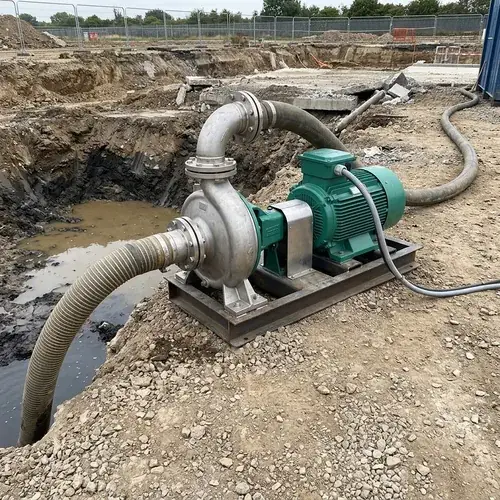
Self-Priming vs Submersible Pump vs End-Suction: Dewatering Selection Guide
This B2B selection guide compares self-priming, submersible, and end-suction centrifugal pumps for dewatering, water transfer, and drainage. It explains how installation geometry, suction lift limits, solids handling, maintenance access, and total cost of ownership determine the right pump. Readers get a quick decision framework, side-by-side comparison table, common engineering mistakes, a manufacturer RFQ checklist, and answers to frequent technical questions. The article reinforces when a pump can safely lift water and when a flooded-suction or submersible design is the only viable option.
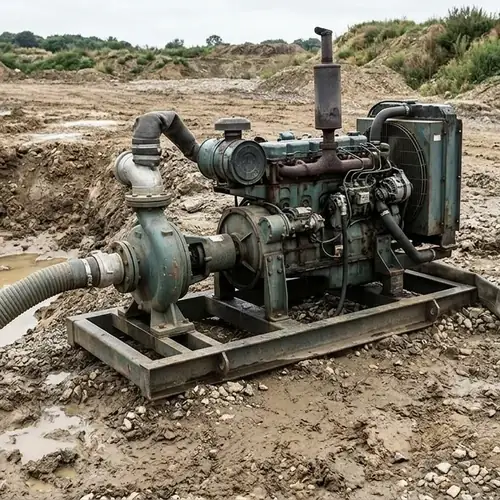
Diesel Engine Driven Water Pump: When It Beats Electric & Sizing Guide
This buyer guide explains when a diesel engine driven water pump beats an electric motor pump, with a practical sizing method from hydraulic power to required engine power and service margin. It covers fuel consumption estimation from g/kWh and load profiles, skid/trailer mounting, cooling and coupling, irrigation, dewatering and fire pump duty, TCO comparison, common mistakes, RFQ checklist, and supplier verification. Readers get a decision framework for specifying diesel pumps without inventing fuel or capacity numbers.
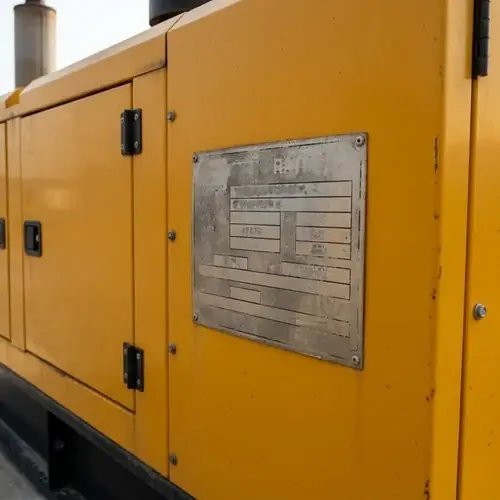
Generator Prime vs Standby Rating: ESP, PRP, and COP Explained (ISO 8528)
B2B buyers often misread generator nameplate ratings and end up with a standby set for continuous duty or a continuous set for pure backup. This guide explains ISO 8528-1 ESP, PRP, and COP classes, their allowed run hours, average load limits, and overload rules. It shows how ratings change the kVA you must buy, how to match the rating to your application, common mistakes such as wet stacking and the 70% average load rule, and an RFQ checklist for comparable supplier quotes.
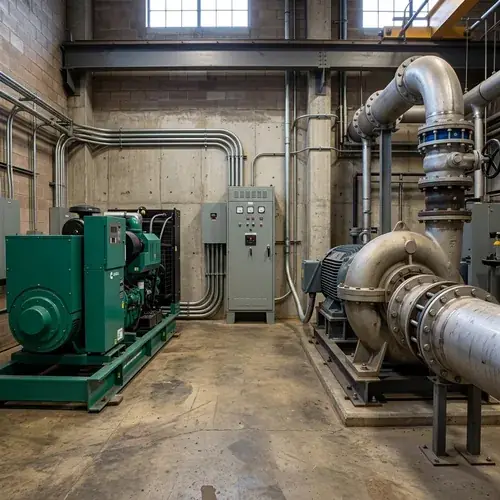
Generator Sizing for Water Pump: Motor Starting kVA, Inrush & Worksheet
Generator sizing for water pump stations hinges on motor starting kVA, inrush current and allowable voltage dip—not steady running kW. This engineer-focused guide teaches buyers to decode motor nameplate FLA, LRA, NEMA code letters and power factor; compare DOL, star-delta, soft starter and VFD starting methods; follow a step-by-step sizing worksheet; sequence multiple pumps; apply prime vs standby and altitude/temperature derating; and verify suppliers with an RFQ checklist.
Off-Grid Solar Submersible Pump Sizing Guide: Flow, Head, Panels & Cables
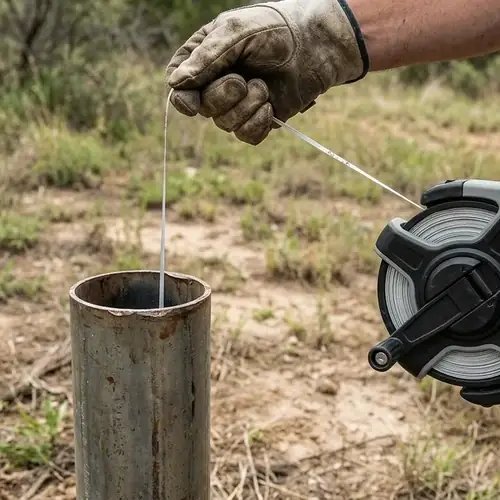
This guide gives B2B buyers, contractors, and importers a step-by-step sizing workflow: converting daily water demand into required flow with Peak Sun Hours, building Total Dynamic Head with drawdown and friction, matching pump curves, sizing the solar array and MPPT controller, selecting cable for under 3% voltage drop, and specifying dry-run protection. The article includes worksheets, common mistakes, FAQ, and an RFQ checklist so supplier quotes reflect real field conditions.
Slurry Pump Wear Parts Guide: Materials, Wear Signs & Rebuild vs Replace
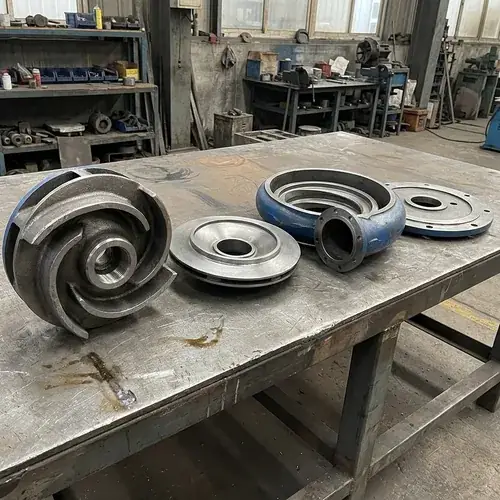
This B2B guide explains how to identify, select, and source slurry pump wear parts, including the impeller, throatbush, volute liner, and frame plate liner. Readers learn early wear signs, high-chrome versus rubber material selection by solids and pH, rebuild vs replace thresholds, OEM and aftermarket verification, and spare parts stocking. The focus is predictable wear life, lower downtime, and clear QC documentation for purchasing decisions.
Industrial Pump Selection Risk Checklist: 12 Checks Before You Approve a Quote
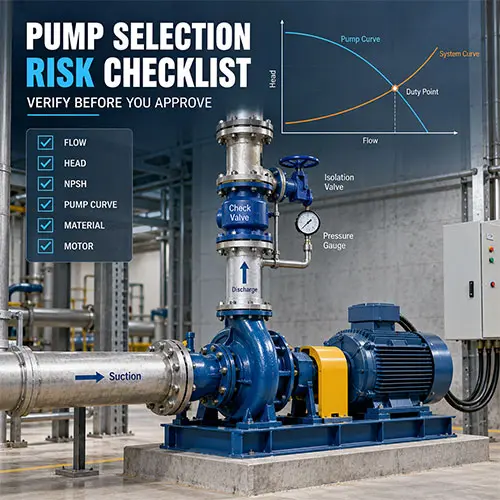
Industrial pump selection should verify the whole system, not just the pump. This checklist helps buyers identify missing data, quotation red flags and technical approval risks.
Pump Installation Checklist: Stop Cavitation, Vibration, Early Failure
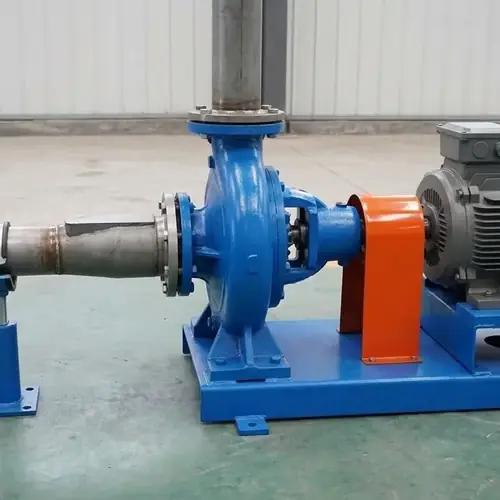
This field-ready pump installation checklist helps contractors, commissioning engineers, and plant maintenance teams catch installation errors before startup. It covers foundation and grouting checks, suction piping geometry, eccentric reducer placement, pipe strain prevention, shaft alignment tolerances, soft foot correction, rotation verification, priming, and pre-startup commissioning. The article connects those mistakes to cavitation, vibration, seal failure, and early bearing damage so teams can protect performance, warranty, and lifecycle.
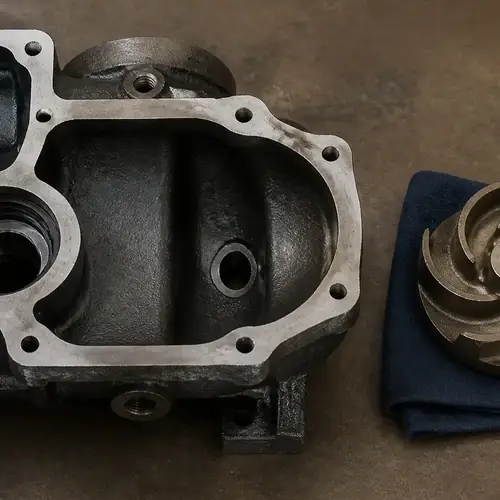
Self Priming Pump Guide: How It Works, 25-Foot Lift Limits, and RFQ Specs
This B2B guide explains how a self priming pump removes air at startup, where the practical 25-foot suction lift limit applies, and when a trash or wastewater self priming pump is the correct specification. It covers the priming cycle, installation rules that prevent priming failures, material choices, ISO 9906 test requirements, and a buyer-ready RFQ checklist. Engineering and procurement readers can use it to avoid cavitation, dry-seal damage, and supplier performance curve risk before quoting or shortlisting a supplier.
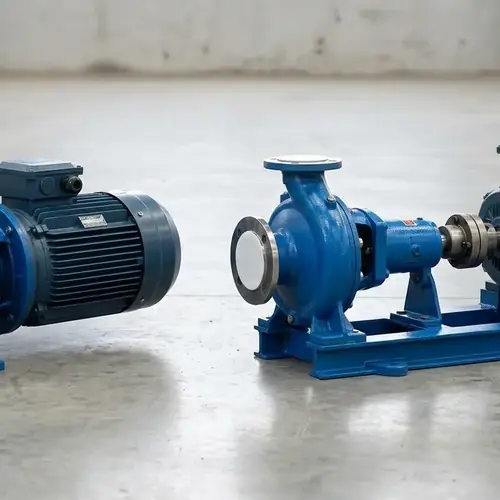
End Suction Pump Selection Guide: Flow, Layout, NPSH, and Maintenance
This engineering-focused selection guide helps B2B buyers specify an end suction pump with confidence. It covers practical flow and head limits, ANSI B73.1 and ISO 2858 standards, NPSHa/NPSHr margin logic, close-coupled vs frame-mounted layouts, correct suction piping with eccentric reducers, and the back pull-out maintenance advantage. The article includes an RFQ data sheet checklist and supplier verification checks so procurement and maintenance teams can avoid cavitation, vibration, and costly downtime before issuing a quote request.
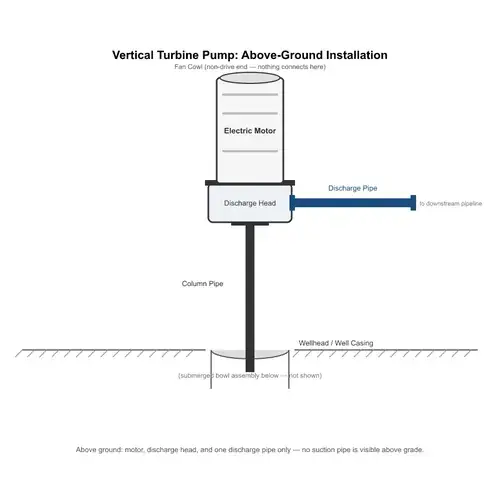
Vertical Turbine Pump Selection Guide: Bowl Design, NPSH & Maintenance
This engineering guide helps municipal, irrigation, and industrial water system buyers specify a vertical turbine pump that matches site conditions and avoids cavitation, vortexing, and premature wear. It explains how to calculate setting depth from dynamic water level, select bowl stages and materials by fluid, choose open or enclosed line shaft lubrication, verify NPSH margin, and specify factory testing standards such as ANSI/HI, API 610, and ISO 9906. The article includes an RFQ checklist and common specification mistakes so buyers can prepare accurate supplier inquiries.
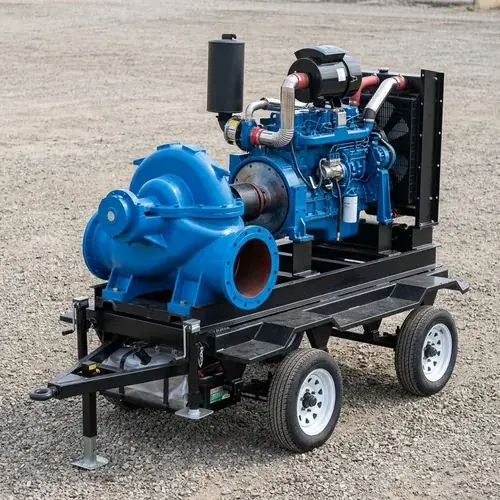
Pump Rental vs Purchase: Compare Cost, Utilization, Maintenance & Risk
Industrial buyers often compare pump rental vs purchase using daily rate or purchase price alone, but the real decision turns on utilization, downtime risk, maintenance capability, and repeat duty. This guide walks construction, municipal, and maintenance teams through a practical decision framework, realistic dewatering and bypass scenarios, rental supplier verification, and an RFQ checklist. It shows when rental fits short-term, emergency, or seasonal pumping and when ownership makes sense for high-utilization fleets with in-house maintenance.

Third Party Pump Inspection Guide: What to Verify Before Shipment
Third-party pump inspection is an independent quality and risk-control process for industrial pump buyers. This guide explains how factory audits, in-process hold points, witness tested FAT, material traceability, dimensional checks, and pre-shipment inspection work together before final payment. Readers learn which documents to require, how to spot test manipulation, how to manage NCRs, and how to choose an inspection agency with rotating equipment expertise. It differentiates low-risk utility pumps from critical process pumps using practical checkpoints and acceptance logic.

ANSI vs API vs ISO Pump Standards: How Industrial Buyers Specify the Right Centrifugal Pump
This pump standards guide helps industrial buyers and EPC engineers select the correct centrifugal pump standard by comparing ANSI/ASME B73.1, API 610, ISO 5199, and ANSI/HI. It explains how each standard affects reliability, interchangeability, testing, documentation, maintenance, and lifecycle cost for refinery, chemical, water, and international process applications. The guide includes practical specification boundaries, RFQ checklist items, and supplier verification steps to prevent over-specification, under-specification, and costly tender compliance failures.
Slurry Pump NPSH Explained: How to Prevent Cavitation in Abrasive Pumping Systems
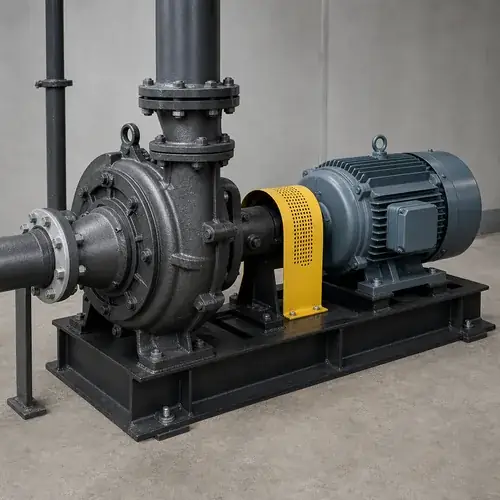
This technical guide breaks down slurry pump NPSH and cavitation prevention for abrasive systems. It clarifies NPSHa vs NPSHr, how slurry density and solids increase suction losses, step‑by‑step NPSHa calculation, suction piping recommendations, warning signs, and an RFQ supplier checklist. Mining engineers and pump buyers get a practical, calculation‑backed workflow to reduce downtime, prevent premature wear, and verify suction design before procurement.

Slurry Pump Sizing Guide: How to Calculate Flow, Head, Solids, and Wear Requirements
This engineering guide walks B2B buyers and engineers through the complete slurry pump sizing process: from collecting slurry characterization data, calculating volumetric flow from dry solids, and correcting total dynamic head for slurry friction losses, to verifying NPSH margin and selecting liner materials for abrasive or corrosive service. It includes a pre-RFQ checklist, common sizing mistakes, and real-world mining examples to help EPCs and procurement teams avoid undersized, oversize, or short-life pump installations.
Types of Submersible Pumps: Sewage, Slurry, Drainage & Deep Well Selection
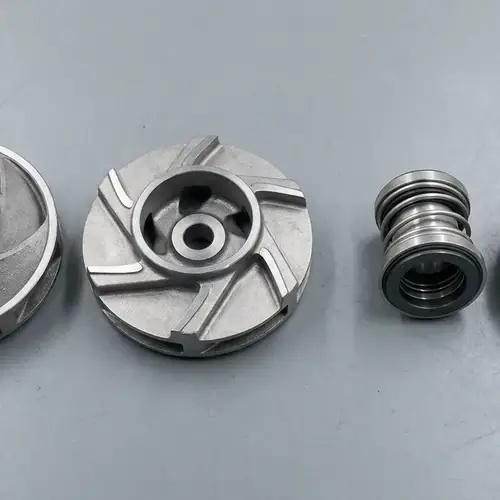
This B2B guide explains how sewage, slurry, drainage, and deep well submersible pumps differ by liquid condition, solids content, head range, cooling method, and installation access. It links category selection to real procurement risks: clogging, abrasive wear, seal failure, dry-running, and downtime. The reader can compare impeller geometry, materials, seal systems, and motor protection, then use the RFQ checklist and supplier verification points to shortlist the right pump for wastewater, dewatering, mining, or borehole applications.
Industrial Sewage Pump Guide: Pump Types, Components, and Wastewater Applications
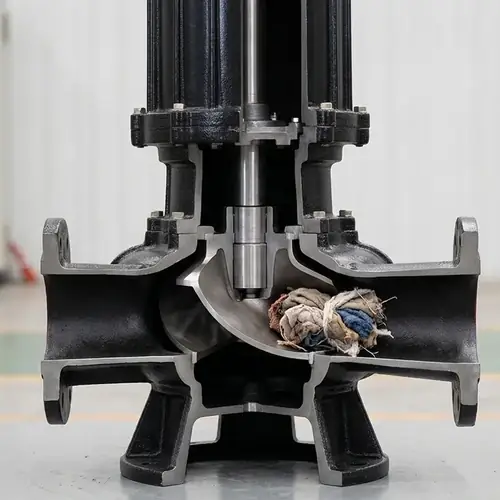
This guide shows how to select an industrial sewage pump for real wastewater duty. It compares submersible, dry-pit, grinder, vortex, channel, and positive displacement designs, explaining solids handling, clogging risk, materials, and controls. The article maps pump types to influent, sludge, effluent, and recirculation stages, then provides a practical RFQ checklist and supplier verification criteria. Buyers can use it to avoid costly mismatches in wastewater plants and industrial lift stations.
Boiler Feed Pump Selection: Why Multistage Pumps Are Used in High-Pressure Steam
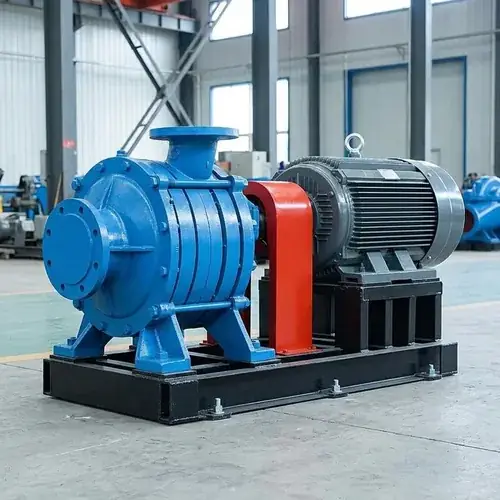
This guide explains why multistage centrifugal pumps are required for boiler feed duty in high-pressure steam systems. Engineers learn how to calculate discharge pressure, control cavitation, manage axial thrust, select materials for hot feedwater, prepare accurate RFQ data, and verify supplier performance before shipment. It covers ASME pressure margin requirements, NPSH analysis, and factory testing criteria to help procurement teams avoid common specification errors and downtime risks.
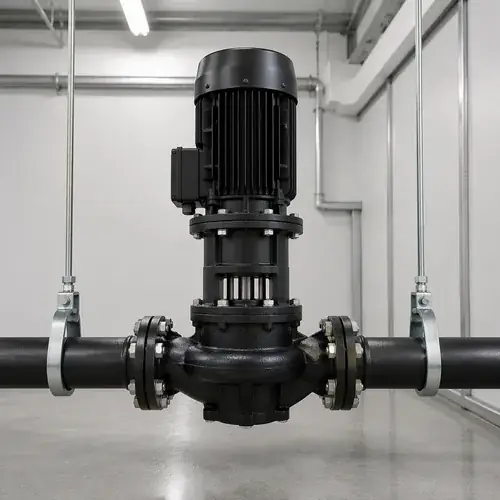
Vertical Inline Pump Guide: Working Principle, Applications, and Selection Criteria
This guide covers vertical inline pump working principle, applications in HVAC and cooling, and selection logic. It compares inline vs frame‑mounted pumps, explains sizing, NPSH, VFD control, material options, installation best practices, and maintenance. An RFQ checklist helps building services engineers and industrial buyers prepare accurate supplier inquiries.
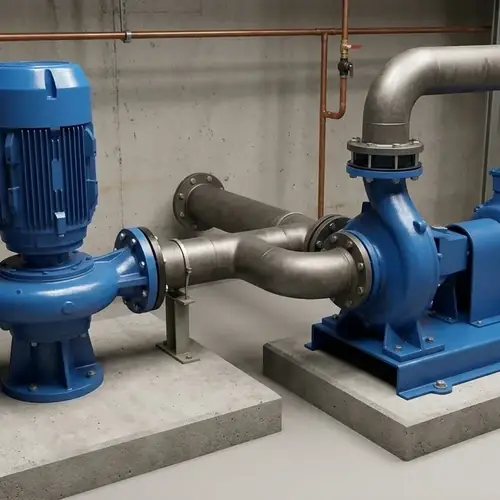
Inline Pump vs End Suction Pump: How to Choose for HVAC and Booster Systems
This B2B engineering guide compares inline pump vs end suction pump selection for HVAC circulation, booster systems, and industrial water transfer. It covers structural differences, footprint and piping layout, hydraulic suitability, maintenance access, vibration and pipe stress risks, and installed versus lifecycle cost. The article includes decision tables, a supplier RFQ checklist, and application-specific guidance to help MEP contractors, facility engineers, and OEM buyers avoid pipe load, NPSH, and downtime risks before shortlisting pump configurations.
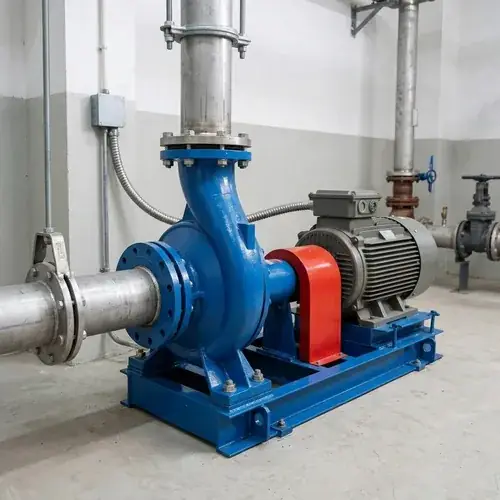
Split Case Pump Troubleshooting: Vibration, Seal & Bearing Guide
This troubleshooting guide helps maintenance teams diagnose root causes of vibration, seal leaks, bearing failure, and cavitation in split case pumps. It covers mechanical and hydraulic causes, alignment checks, suction conditions, repair-vs-replace decisions, and a practical inspection checklist for double-suction pumps used in HVAC, municipal water, and industrial systems.

Split Case Pump Guide: When to Choose Double-Suction for High-Flow Systems
This technical selection guide helps engineers and buyers evaluate split case pumps versus end suction pumps for high-flow HVAC, municipal, and cooling water systems. It explains how double-suction impellers reduce axial thrust, covers NPSH and suction piping design risks, maintenance access, lifecycle cost analysis, and supplier verification steps including ISO 9906 testing and RFQ documentation requirements.
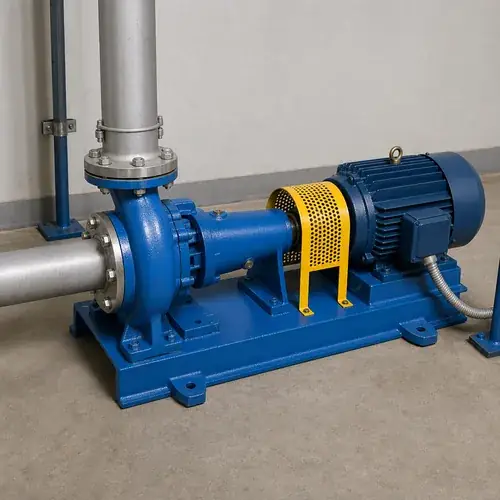
Open vs Closed Impeller Pump: Efficiency, Solids, and Wear Decision Guide
Guide for industrial pump buyers comparing open, semi-open, and closed impeller designs. Covers efficiency, solids passage, clogging risk, wear clearance growth, abrasive behavior, and NPSH. Includes a buyer checklist, application mapping, and RFQ verification questions to reduce downtime and stop overbuying catalog efficiency. The focus is lifecycle cost, maintenance access, and solids tolerance.
How to Reduce Wear in Slurry Pump and Slurry Pipeline Systems
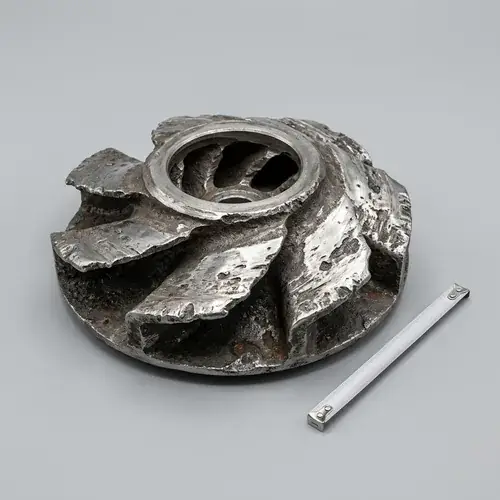
A practical reliability guide for engineers managing abrasive slurry transport systems. Covers velocity control, pump operating point alignment, liner material selection, pipeline routing, and preventive maintenance to reduce downtime and spare consumption. Key topics include wear mechanisms, critical settling velocity, cavitation misdiagnosis, and long-radius bends to reduce particle impact. Also provides an RFQ checklist and supplier verification framework to help buyers specify wear-resistant slurry pumps and piping with confidence.
Horizontal Multistage Pump Buyer’s Guide: Design, Pressure, Applications
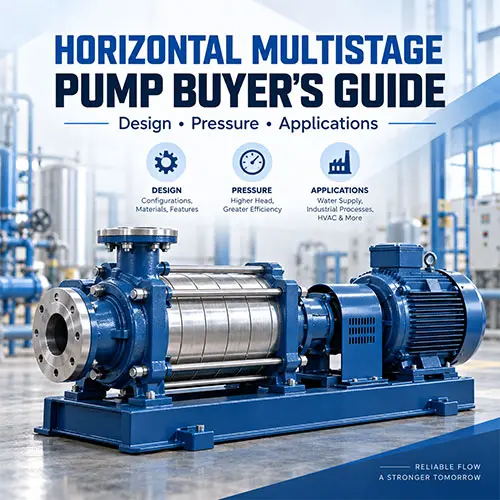
This industrial buyer’s guide explains how horizontal multistage pumps generate high pressure stage by stage and what engineers must verify before ordering for high-head systems. It covers design types (ring-section vs barrel), axial thrust balancing, efficiency, NPSH, material selection, and mechanical seals. The article also provides a buyer checklist, RFQ data requirements, and application guidance for boiler feed, RO, high-rise, and fire systems.
Plunger Pump vs Centrifugal Pump: Pressure, Dosing & Transfer Selection
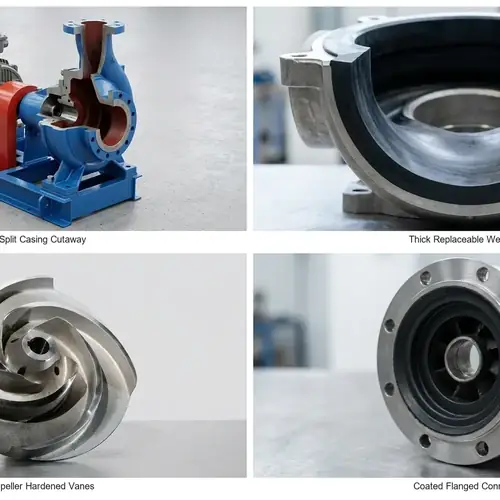
This industrial pump selection guide compares plunger pumps and centrifugal pumps across pressure capability, flow stability, dosing accuracy, pulsation, solids and viscosity handling, maintenance, and lifecycle cost. It helps engineers, procurement teams, and maintenance managers identify which technology fits high-pressure, metering, or high-flow transfer duties, and what RFQ data and supplier documents to request before purchase. Application examples cover water treatment, chemical dosing, oilfield injection, pressure washing, and slurry transfer.

Centrifugal Pump Material Selection: Avoid Corrosion & Abrasion Failure
This guide helps industrial buyers select centrifugal pump materials to avoid corrosion, abrasion, and chemical failures. It covers fluid chemistry, slurry solids, temperature, chloride limits, seal materials, and lifecycle cost. Buyers will learn how to specify casings, impellers, shafts, and what verification documents to request before purchase. The article includes a material comparison table, decision flow for fluid conditions, and an RFQ checklist.
How Does a Centrifugal Pump Work? Components & Selection Basics
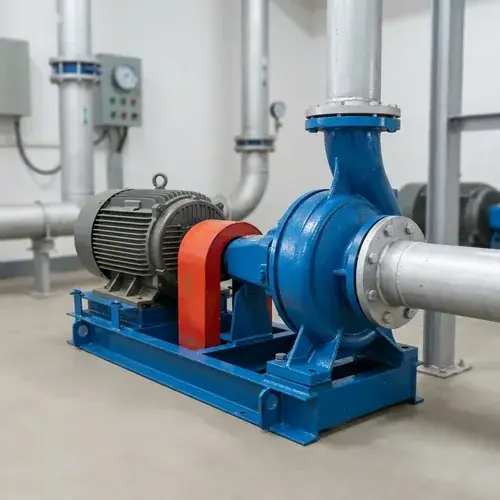
Centrifugal pumps are the workhorse of industrial transfer, water supply, and process systems. This guide explains how a centrifugal pump works step by step—from impeller velocity generation to volute pressure conversion—and connects that principle to real selection decisions. Readers learn key components and failure risks, how flow, head, NPSH, and pump curves interact, and what supplier verification documents to request before an RFQ. The goal is to help industrial buyers, engineers, and OEMs avoid cavitation, off-BEP operation, and costly misselection while building a defensible pump specification.
What Is NPSH in Pumps? Calculate NPSHa, Read NPSHr & Prevent Cavitation
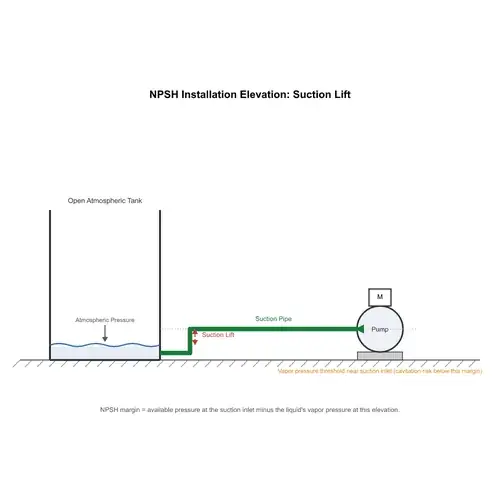
This practical engineering guide explains what NPSH is, why NPSHa must exceed NPSHr, and how to calculate NPSHa for centrifugal pump systems. It shows buyers and project engineers how to read NPSHr on a pump curve, apply realistic safety margins, identify suction piping mistakes, and verify NPSH during RFQ and commissioning to prevent cavitation and downtime. The focus is on selection and supplier verification, not basic pump theory.