
Generator Prime vs Standby Rating: ESP, PRP, and COP Explained (ISO 8528)
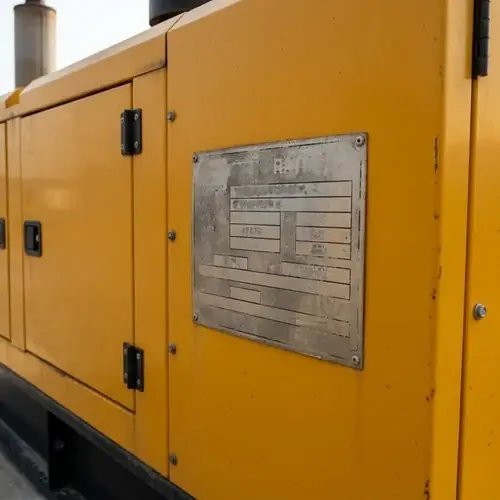
Generator prime vs standby rating is a duty-cycle question. ISO 8528-1 defines three main commercial rating classes — Emergency Standby Power (ESP), Prime Power (PRP), and Continuous Power (COP) — plus a fourth limited-time running power class (LTP). These classes cap how many hours a generator may run per year, what average load it may carry, and whether it may overload. Emergency Standby Power (ESP) allows roughly 200 hours per year under a variable load with no overload, a commonly cited ISO 8528-1 reference that buyers should confirm against the current OEM TDS and the ISO edition applied by the supplier. Prime Power (PRP) allows unlimited hours with a limited 10% overload. Continuous Power (COP) allows unlimited hours at a constant 100% load with no overload.
The difference carries real commercial risk. A buyer who specs an ESP-rated set for a prime power application can wear out the engine early and may leave the warranty exposed. A buyer who over-specs a COP set for simple outage backup tends to waste capital on a machine built for a harder job than it will ever do. Neither mistake shows up on the quote itself; both show up later, on the balance sheet or in a failed startup.
This guide gives you the buyer-side framework: the exact ISO 8528-1 limits, a worked derating example so you can compare quotes apples-to-apples, a decision table for matching rating to application, a supplier verification checklist, and an RFQ block you can copy into your procurement document. Before you pay for a single kVA, confirm the rating class in writing.
Quick Answer / 30-Second Buyer Decision
Quick decision: if the grid normally supplies your site and the generator only covers outages for a few hundred hours per year, specify an ESP (standby-rated) generator. If the generator is the main or only power source for a variable load and it will run for unlimited hours per year, specify PRP (prime-rated). If your load is steady at or near 100% of the generator’s output for unlimited hours per year, specify COP (continuous-rated).
| Your site condition | Rating to specify in the RFQ |
|---|---|
| Grid is available; genset only covers outages; load is variable; total run time roughly ≤200 h/year | ESP (Emergency Standby Power) |
| Generator is the primary power source; load varies day to day; unlimited annual hours | PRP (Prime Power) |
| Load is constant at or near nameplate output; generator runs 24/7 for unlimited annual hours | COP (Continuous Power) |
That table is the fast answer. The real decision turns on two details most buyers never check: the 70% average load rule and the annual hour cap. A standby set is constrained by the rating definition and often by warranty terms to an average load no higher than 70% of its nameplate value over any rolling 24 hours. That one number changes the kVA you actually need.
Scope of This Guide
This guide focuses on the buying decision, not the physics lecture. It covers the ISO 8528-1 rating classes, the load and run-hour limits that define them, how those limits change the kVA you must purchase, and how to write a specification that gets comparable supplier quotes.
It does not cover alternator winding design, emissions compliance such as Stage V or Tier 4, or residential portable inverter generators. Those are separate procurement decisions with their own decision logic. What I do draw on here is the same duty-cycle discipline used in diesel engine-driven industrial equipment: the logic that separates an engine that can run all day from one that delivers short bursts. If you specify engine-driven equipment the same way, you avoid over- or under-rating the machine for the real workload.
Why Generator Ratings Matter to Buyers (Cost & Reliability)
A single engine-alternator pairing can carry three different kVA values on its data plate depending on whether it is rated as ESP, PRP, or COP.
Most comparison pages gloss over this. The physical machine may be near-identical; the rating is a declared thermal and durability limit shown on the nameplate. The same set that carries a 110 kVA ESP (standby) plate will typically carry a lower PRP (prime) value — often around 100 kVA — and sometimes a still lower COP (continuous) value. The raw engine may not differ; what differs is the operating limit the manufacturer is willing to support for that duty cycle.
Apply that to your budget. A standby rating is a short-duration rating. The engine is allowed to reach a higher output because it only does so for a few hundred hours a year and then cools down. Prime rating pulls that same engine back to a level it can sustain day after day without accelerated wear. Continuous rating applies to the narrow case where the load never varies — a harder thermal condition than a variable prime load in some respects, because there is no relief from partial-load operation.
For the buyer, this has three direct consequences:
- A quote can look cheaper because the supplier quoted a standby-rated set for a prime power job. The kVA number looks plenty on paper; the engine is not built to deliver it continuously.
- A standby-rated engine run as prime power will typically not fail on day one. It can wear faster, consume oil, and may eventually fail mid-outage — exactly when you need it. A 201st hour doesn’t destroy the engine, but repeated continuous running can put the manufacturer’s warranty at risk and accumulate wear.
- Over-buying a COP set for pure backup spends more capital up front without any reliability payoff. You’re paying for thermal margin you will never use.
None of the three ratings is inherently better. The right one is the one whose limits match your actual load profile and annual run time.
ISO 8528-1 Generator Ratings Defined
ISO 8528-1 is the international standard that defines the application ratings for reciprocating internal combustion engine driven alternating current generating sets. It matters to buyers because it gives you a common language to verify a supplier’s claim instead of relying on marketing adjectives. Every rating below is defined by the same four dials: annual run hours, load variability, allowable average load over 24 hours, and overload capability.
The machines themselves still differ from one manufacturer to another. Two brands can both print “PRP” on a nameplate and still deliver different durability, fuel consumption, and alternator thermal margin. ISO 8528-1 tells you what the label means; it does not make all suppliers equal.
Here are the three main commercial ratings, in plain procurement language.
Emergency Standby Power (ESP)
ESP, or Emergency Standby Power, is a short-duration rating for a generator that only runs during a utility outage — typically up to about 200 hours per year under commonly cited ISO 8528-1 guidance, subject to confirmation on the current OEM TDS and applied ISO edition — under a variable load with no overload capability.
The load profile is what trips up first-time buyers. ESP does not mean the generator sits at 100% load. It means the generator may peak near its nameplate value but must average no more than 70% of that value over any 24-hour period. So a 100 kVA ESP set can spike toward 100 kVA briefly, but its rolling 24-hour average must stay at or below 70 kVA.
The annual hour cap is the second constraint. ISO 8528-1 defines ESP with a general limit of up to 200 hours per year, although some OEMs may publish stricter annual limits for specific engine platforms. The buyer’s job is to confirm the exact OEM limit on the technical data sheet rather than assume the general ISO reference automatically applies.
If your project expects long uninterrupted outage events, confirm any continuous-run guidance, maintenance interval requirements, or cool-down recommendations directly on the current OEM TDS and project specification. Do not assume all ESP-rated sets are intended for extended multi-day operation without verifying the published operating limits.
Prime Power (PRP)
PRP, or Prime Power, is an unlimited-hours rating for a generator that serves as the primary power source under a variable load, allowing a short 10% overload for 1 hour in every 12 hours.
PRP is the workhorse rating for off-grid sites, construction camps, remote mining, and anything where the generator is the main supply rather than a backup. The engine is expected to run every day of the year, and the annual hour limit is effectively unlimited.
That does not mean unlimited load. PRP carries the same 70% average load rule as ESP: the rolling 24-hour average must stay at or below 70% of the nameplate PRP rating. The difference is the overload allowance. A PRP set is permitted to deliver 10% above its nameplate value for 1 hour in every 12 hours. Some OEMs may also impose an annual overload-hour cap depending on the engine platform and ISO 8528-1 edition referenced, so buyers should confirm the exact limit on the current engine TDS and supplier documentation. Put simply, the generator can absorb a short demand spike without the buyer having to buy the next size up.
The 10% overload rule matters in the RFQ. If a site’s occasional peak exceeds the nameplate by 8% for three minutes, a PRP rating covers it. If the peak exceeds by 15%, it does not — the buyer must step up a size or accept that the overload window sits outside the rating.
Continuous Power (COP)
COP, or Continuous Power, is an unlimited-hours rating for a generator that runs at a constant, non-variable load at or near 100% of its nameplate output, with no overload capability.
COP is the narrowest and least understood of the three. It doesn’t mean “best.” It means the generator is engineered for a load that never drops and never spikes — a base load, process line, or isolated grid carrying a near-steady draw. Because the load is constant, the engine has no partial-load relief, and the thermal design must absorb continuous full output.
The practical consequence is that COP-rated sets often carry a lower kVA number than the same machine’s PRP plate. A machine rated 100 kVA PRP may only justify 80 kVA COP in some manufacturer lineups. That derating is not a marketing discount; it reflects the thermal cost of running flat-out forever.
COP is the wrong purchase for backup and the wrong purchase for a variable off-grid site. It is the right purchase only when the load curve looks like a flat line.
Limited Time Running Power (LTP)
LTP is a fourth ISO 8528-1 class for limited time running, intended for applications with a restricted annual operating window and typically no overload allowance. The exact annual hour cap, load profile, and operating conditions can vary by OEM and current standard edition, so buyers should confirm the published limits on the engine TDS and against the current ISO text. It rarely appears in ordinary commercial buyer RFQs. If a supplier quotes LTP, ask why and confirm the operating conditions, because LTP is not a safe default for either backup or base load.
Prime vs Standby vs Continuous: Key Differences
| Rating | Annual run hours | Load profile | 24h average load | Overload | Typical application |
|---|---|---|---|---|---|
| ESP (Standby) | ~200 h/year maximum, often restricted by OEM to 100–150 h — confirm | Variable, outage-driven | ≤70% of ESP nameplate | None | Hospital backup, data center outage, telecom tower, commercial standby |
| PRP (Prime) | Unlimited | Variable, day-to-day primary supply | ≤70% of PRP nameplate | +10% for 1h in every 12h; some OEMs impose annual overload limits — confirm on TDS and ISO edition | Off-grid farm, mine camp, construction site, island grid |
| COP (Continuous) | Unlimited | Constant, near-steady | 100% of COP nameplate, no average reduction | None | Base-load power station, process line, constant industrial draw |
| LTP (Limited Time) | Strictly limited; confirm OEM limit | Application-specific | Confirm per OEM | Confirm per OEM | Limited-duration or intermittent operating cases |
The single row buyers most often get wrong is the ESP average load. A contractor may think, “my hospital peak is 300 kVA, so I’ll buy a 300 kVA standby set.” If that hospital’s rolling 24-hour average is 240 kVA, that’s 80% of the ESP nameplate — above the 70% limit. The correct ESP set is larger, or the load profile needs rethinking. The average rule, not the peak, is what sizes the machine.
How Power Ratings Change Your kVA Sizing and Quotes
Here is a worked example worth keeping on your desk.
A supplier quotes you 110 kVA. You assume that’s the number you buy. But a single engine-alternator pair may carry 110 kVA on an ESP plate, 100 kVA on a PRP plate, and possibly 80–90 kVA on a COP plate depending on the manufacturer’s derating policy.
The numbers are illustrative, not universal — the actual derating chain varies by engine series, alternator insulation class, cooling design, and OEM policy. The point is the direction of travel: as the duty gets harder from short backup to continuous 100% load, the plated output drops.
This is why two suppliers can both send you “100 kVA” and one quote is meaningfully cheaper. Supplier A quoted 100 kVA ESP — a short-burst rating you can’t run continuously. Supplier B quoted 100 kVA PRP — the same physical output level but with unlimited-hour prime duty. The second quote usually costs more because the engine is rated to deliver that power day after day without accelerated wear. You are not overpaying for the second; you’re paying for a different duty contract.
The same logic runs through diesel engine power matching in engine-driven equipment: the engine that can produce a short peak is not the engine you’d select for continuous-rated duty.
The second number to check in the same conversation is fuel consumption at part load. Generator data sheets often show fuel consumption curves at several load points, but the rating basis — ESP, PRP, or COP — must be stated and confirmed by the buyer. Do not assume a curve published for a PRP-rated set automatically transfers to the same machine’s ESP or COP rating. The financial difference is real: a set running well below roughly 30% of its prime rating burns fuel inefficiently and can develop wet stacking — a build-up of unburned fuel and soot in the exhaust system when a diesel engine runs lightly loaded for long periods.
Matching the Rating to Your Application (Decision Guide)
The table below turns the application into a specification choice. For each case, I’ve included the risk of picking the wrong rating, because that’s what actually drives buyer fear.
| Power supply status | Load type | Recommended rating | What gets wrong if you choose incorrectly |
|---|---|---|---|
| Grid normally available | Variable, outage-driven; commonly around ≤200 h/year under ISO 8528-1 guidance, but confirm OEM and edition limits; avg ≤70% of nameplate | ESP (Standby) | A PRP or COP set costs more up front without a reliability benefit for this duty profile |
| Generator is sole power source | Variable day-to-day load | PRP (Prime) | An ESP set wears prematurely and likely voids warranty; a COP set ignores the natural partial-load relief and may be unnecessarily expensive |
| Generator is sole power source | Constant 100% load, 24/7 | COP (Continuous) | A constant 100% load would exceed PRP’s rolling 24-hour average limit of 70%, so a PRP set is unsuitable without significant oversizing; COP is the rating intended for constant near-100% load |
| Generator runs only evening peaks, variable | Variable peak load, many hours | PRP (Prime) | An ESP set caps the annual hours; a COP set over-spends since the load is not constant |
| Agricultural irrigation, off-grid pumping | Variable duty tied to pump demand | PRP (Prime) | Standby caps hours; continuous over-engineers for a variable hydraulic load |
For sites that run diesel engine driven equipment like irrigation or drainage pumps alongside the generator, the engine rating logic carries directly: the engine that matches a pump curve at continuous duty follows the same prime-vs-standby reasoning as a genset.
Two application notes. First, hospitals and data centers often fall under code or project specifications that call for a standby-class set with a transfer switch; however, local code and project requirements govern, and a PRP set may be acceptable in some cases. Confirm the applicable duty and rating requirement with the authority having jurisdiction before substituting or up-rating. Second, a telecom tower with a very unreliable grid may actually run the generator enough hours per year to exit the standby envelope entirely — in that case, the buyer should price a PRP set and compare the total cost of ownership against a larger ESP set that wants to pretend it can do the job. The honest answer there is often PRP, not a bigger ESP.
Common Buyer Mistakes When Specifying Generators
Here are the mistakes I see repeatedly in RFQs and supplier negotiations — and the concrete fix for each.
- Mistake: comparing quotes by kVA without pinning the rating class. Fix: force every quote to state the ISO 8528-1 rating (ESP, PRP, or COP) next to the kVA/kW figure before you compare prices.
- Mistake: sizing for peak load instead of the 70% average. Fix: calculate the rolling 24-hour average load. Divide that by 0.70 to get the minimum PRP or ESP nameplate rating you actually need. For example, if the average is 80 kW, you need at least about 115 kW PRP — not an 80 kW set sized to average, and not a 100 kW set sized to a guessed peak.
- Mistake: running a PRP set almost constantly below 30% load. Fix: if the real load is that light for long stretches, either right-size the machine or add a load bank. Below roughly 30% load, diesel engines risk wet stacking, where unburned fuel condenses and carbon deposits build in the exhaust and combustion chamber. It raises maintenance, reduces efficiency, and can eventually force a service call.
- Mistake: assuming a 200-hour ESP limit means the engine is unharmed for the first 200 hours. Fix: recognize that hour limits and wear are not the same thing. A standby set repeatedly run near the top of its envelope ages faster than the same hours on a prime set. The commonly cited 200-hour cap depends on the OEM TDS and applied ISO 8528-1 edition; it is a rating boundary, not a magic shield.
- Mistake: ignoring altitude and ambient temperature derating. A generator rated 100 kVA PRP at sea level and moderate ambient produces less at high altitude and high ambient temperature. The rating class doesn’t disappear; the deliverable kVA drops. Ask for the derating table for the site altitude and temperature, then re-check the rating class at that effective kVA.
- Mistake: assuming a “continuous” rating automatically covers variable load. Fix: COP is specifically for constant load. A variable load belongs on PRP.
Most of these mistakes are invisible at the quote stage. They all become visible in fuel bills, maintenance downtime, or a warranty rejection.
Supplier Verification: How to Confirm the Rating Is Real
A supplier can write “PRP 100 kVA” in an email. The nameplate and technical data sheet are where the claim gets tested.
Here’s what to request and check before you pay a deposit.
- Ask for the manufacturer’s technical data sheet (TDS) for the exact model, not a brochure page. The TDS must state the ISO 8528-1 rating class for each kVA/kW line.
- Check that the nameplate on the actual unit carries the same rating class. If the set hasn’t been built yet, ask at what stage the nameplate is stamped and request a photo at pre-shipment inspection.
- Ask for the engine OEM’s published annual hour limit for the rating class. Some OEMs may publish stricter ESP annual limits than the general ISO 8528-1 reference, depending on the engine platform and application profile. The published OEM limit, not a generic assumption, is the one buyers should confirm on the TDS and in warranty documentation.
- Ask for the fuel consumption curve at 50%, 75%, and 100% load, and require the rating class to be stated on the curve. Confirm the curve applies to the quoted rating class rather than assuming a PRP curve transfers automatically to ESP or COP.
- Verify that the alternator temperature rise and insulation class are consistent with the quoted ISO 8528-1 rating, and request this on the TDS. A continuous-rated set should have the thermal margin for constant full load, so do not assume the alternator selection is identical across ESP, PRP, and COP quotes.
- Ask for the engine-alternator pairing documentation. Some larger sets may use a different turbocharger or cooling configuration for standby versus continuous duty; ask the supplier to state which configuration is actually quoted.
- If the generator is for critical supply, ask whether the factory can provide a performance test report or statement of ISO 8528-1 compliance before shipping and whether that report states the rated class.
One practical habit: write “rating class to be confirmed on nameplate at pre-shipment inspection” into your PO terms. That gives you a contractual hook if the delivered plate says something different from the quote.
RFQ Checklist: How to Specify Generator Ratings to Suppliers
Use this block when preparing the RFQ. It forces the supplier to commit to a rating class and load profile before quoting, which is the only way to get comparable prices.
| RFQ field | What to specify |
|---|---|
| Required kVA and kW | State both, and state the required power factor; 0.8 lagging is a common industrial genset assumption, but project specifications may differ and must be confirmed |
| ISO 8528 rating class | Explicitly pick one: ESP, PRP, or COP — never leave it open |
| Expected annual run hours | Give the real number, including worst-case outage duration for backup sites |
| Load profile | State peak load, rolling 24-hour average, and whether the load is variable or constant |
| Overload requirement | If short peaks above nameplate are expected, state the percent and duration, and require the supplier to confirm PRP 10% rule compliance |
| Site conditions | Altitude, maximum ambient temperature, and humidity — these trigger derating tables |
| Fuel consumption requirement | Request the fuel curve at 50%, 75%, and 100% load with the rating class stated |
| Nameplate verification | Require a pre-shipment photo of the nameplate showing the rating class |
| Standards compliance | Require ISO 8528-1 and any relevant local wiring or safety codes |
| Documentation | TDS, engine OEM published annual hour limit or written confirmation, test report |
If you’re comparing multiple suppliers, the same discipline you’d use to evaluate pricing and lead time applies here: pin the technical baseline before you discuss money. Two “100 kVA” quotes with different rating classes aren’t the same product, and the cheaper one is often the one that will fail first on the wrong duty cycle.
FAQ
Here are the questions buyers ask most often once they see the ESP/PRP/COP distinction.
Can I run a standby generator continuously?
By the ISO 8528-1 definition, no. An ESP (standby) rated generator is intended for outage-driven use with an annual cap of roughly 200 hours under a variable load averaging at most 70% of nameplate over 24 hours, but buyers should confirm the current OEM TDS and the ISO 8528-1 edition applied by the supplier because some platforms publish different limits. Running it continuously moves you outside the rated envelope, accelerates engine wear, and can give the manufacturer grounds to reject a warranty claim. A standby set won’t necessarily fail on hour 201, but the operating profile is outside the design contract. If the site truly runs the generator as a primary supply, specify PRP from the beginning.
What happens if I run a generator at 100% load?
It depends on the rating class and how long you hold it there. A COP set is designed to hold 100% load continuously, so that’s normal. A PRP set may peak at 100% of nameplate but must average at most 70% over 24 hours; holding 100% for hours on end pushes the average above the allowed figure. An ESP set can spike toward nameplate only briefly and has no overload allowance at all — sustained 100% load on a standby set sits outside the rating. In all cases, short-term overload beyond the allowed window triggers higher exhaust temperature, faster oil degradation, and cumulative thermal stress.
What’s the difference between prime and continuous power?
Prime Power (PRP) is unlimited-hours operation under a variable load, with a rolling 24-hour average at or below 70% of nameplate and a limited 10% overload. Continuous Power (COP) is unlimited-hours operation under a constant load at or near 100% of nameplate, with no overload. Prime suits a load that rises and falls during the day; continuous suits a flat, process-style load. The same engine family can carry both ratings, but the COP plate is usually lower because constant 100% load is a harder thermal condition.
Does a standby generator use more fuel than a prime one of the same kVA?
For the same physical machine, the ESP rating tends to carry a higher nameplate kVA than the PRP rating. Specific fuel consumption is usually worst at light load; at high load it depends on the engine and rating basis. The cleaner comparison is per actual delivered kVA at the site load, not per nameplate kVA. Compare the fuel curves at the actual site load and rating class, and require the supplier to state the rating basis on the curve. For any long-duration duty, use the fuel curve at the rating class you are actually specifying in your TCO calculation.
How do I know if a quoted kVA is standby or prime?
Demand that the kVA/kW figure on every quote carry the ISO 8528-1 rating class next to it, in writing, on the TDS, and on the nameplate. If the quote just says “100 kVA” with no class, assume it’s the seller’s most flattering number and ask again. A standby plate on the same machine is higher than the prime plate, so a supplier quoting standby by default looks cheaper. The fastest verification is the TDS line item and a pre-shipment nameplate photo.
Official Sources and Compliance References
This article’s rating definitions draw from ISO 8528-1, the international standard covering reciprocating internal combustion engine driven alternating current generating sets — specifically the part that defines application, ratings, and performance. When reviewing a generator prime vs standby rating quote, confirm the exact ISO 8528-1 edition/year referenced in the supplier’s TDS, test report, warranty language, and contract documents, because OEM hour limits and overload allowances may differ between editions and engine platforms. The standard provides the baseline framework for what ESP, PRP, COP, and LTP mean and the load/hour relationships that define them. ISO 8528-1 compliance is not the same as ISO certification; the standard defines ratings and performance, so buyers should request a test report or written declaration that ties the exact quoted rating class to the tested or rated set, rather than treating a generic ISO reference as a certificate.
These figures are based on ISO 8528-1 definitions, including the general ESP annual hour limit, the 70% average load rule, and the PRP overload allowance. Confirm the current standard text and the exact OEM-published limits on the technical data sheet before purchase. Individual engine manufacturers may impose stricter limits on some of these numbers, particularly the ESP annual hour ceiling. Buyers who need a formally binding specification should purchase or license the current ISO 8528-1 text directly from ISO or an authorized national standards distributor, because standards documents are updated periodically and local adoption rules vary.
Conclusion
Generator prime vs standby rating decides how long the machine may run, how hard it may be loaded, and how much you should pay for it. Choose the rating envelope that matches your real load profile; “better” is not the point.
Take the two numbers you can actually control: the rolling 24-hour average load and the expected annual run hours. From those, derive the minimum nameplate kVA using the 70% average load rule, then pin the rating class in the RFQ.
Then make every kVA carry a class label. Request the TDS with the ISO 8528-1 class on every kVA line, and require a pre-shipment nameplate photo. That single step moves you out of the “cheap quote” trap and into a defensible procurement position — and it’s the difference between a generator that starts on schedule and one that turns into a maintenance claim.
Get A Quote

Get A Quote
0 Comments