
Types of Submersible Pumps: Sewage, Slurry, Drainage & Deep Well Selection
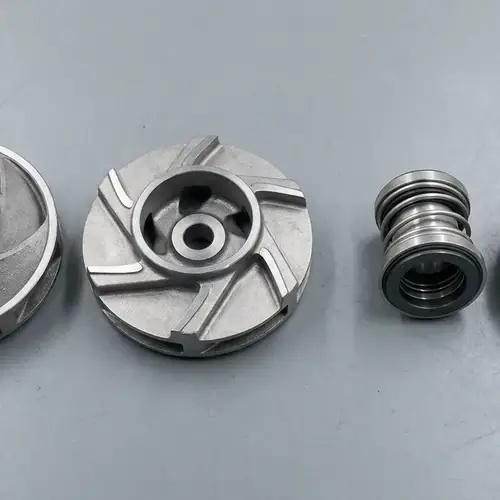
A submersible pump has a simple job—push liquid, often dirty and abrasive, from a flooded sump, borehole, or deep excavation—but the “right” pump for one site can destroy itself on another quickly. Many pump failures observed on project sites come from selecting the wrong category, not from a manufacturing defect. The market splits submersible pumps into four main families: sewage, slurry, drainage/dewatering, and deep well. These types of submersible pumps are each designed around a specific mix of liquid condition, solids content, abrasion level, head requirement, and installation method. If you treat them as interchangeable, you’ll probably end up buying downtime.
This page is a B2B sourcing reference, not a classroom lecture. It will walk you through what each type of submersible pump is actually built for, where it works and where it fails, what design differences matter to your RFQ, and how to verify that the pump you’re about to order won’t become a site-level liability. By the end, you’ll be able to map your application to the correct pump category, ask suppliers the right pre-order questions, and avoid the common procurement errors that lead to early seal failure, clogging, overheating, or motor burnout.
Quick Answer: Which Type of Submersible Pump Matches Your Application?
If you’re reading this mid-selection and need a fast commercial mapping, here’s where the four major categories sit:
- Sewage submersible pump → municipal/commercial wastewater, lift stations, effluent with soft solids and fibrous material. Built for non-clog impeller geometry, guide-rail removal, and continuous or intermittent duty in a wet well.
- Slurry submersible pump → mining, dredging, mineral processing, tailings, sand-heavy water. Built for high abrasion resistance, often with high-chrome alloy wet ends and heavy-duty seal protection. Low maintenance access but impossible to inspect without pulling the unit.
- Drainage/Dewatering pump → construction pits, flooded excavations, stormwater, clean or lightly muddy water. Designed for portability, high flow, and temporary duty. Not built for sustained solids or fibrous loads.
- Deep well submersible pump → borehole water supply, municipal wells, irrigation wells, high-head clean water. Multi-stage design, slim diameter, sensitive to sand ingestion and dry-running.
Still with me? Good. Now I’ll walk through the engineering logic behind each category and the selection mistakes that buyers keep making.
What Are the Main Types of Submersible Pumps?
The classification isn’t academic—it’s operational. You can’t spec a pump for a 40-meter-deep lift station the same way you spec one for a 200-meter borehole or an abrasive mine sump. The four categories below separate the market by the hardest variable each pump design is optimized for: solids content, abrasion, head, and installation geometry.
Sewage Submersible Pumps
A sewage pump handles domestic or industrial wastewater—think raw sewage, screened effluent, sludge return. The fluid contains soft solids, rags, fibrous material, and sometimes grit. The pump doesn’t need to grind everything (that’s a grinder pump’s job), but it absolutely must pass a certain solid sphere size without clogging. Common non-clog impeller designs are vortex, single-channel, and two-channel. A vortex impeller creates a large free passage and reduces contact with solids, which lowers clogging risk but costs some hydraulic efficiency. A single-channel impeller gives higher efficiency and good solids passage but can wrap long-fiber material if not balanced with a generous through-let.
Most sewage submersible pumps in lift stations are installed with a guide-rail system and auto-coupling discharge elbow, which lets the crew lift the pump for inspection without draining the wet well or entering a confined space. This matters because municipalities and contractors track maintenance hours closely—if you buy a cheap pump that needs a chain block and manual coupling every time, the lifecycle cost jumps fast. For deeper lift stations, verify that the guide-rail arrangement, cable support, and lifting chain are rated for the total submerged depth plus sludge accumulation weight. If you’re comparing impeller types and solids-passage capacity, our submersible sewage pump selection guide walks through vortex, single-channel, and two-channel trade-offs.
Motor cooling in sewage duty relies on the surrounding liquid—if the pump runs dry or the liquid level drops below the motor housing, heat dissipation collapses and the motor can overheat quickly. That’s one reason why lift station controls often include a low-level cut-off and thermal protection in the motor winding. But don’t assume thermal protection alone saves the pump; repeated short-cycling wears the motor insulation just as surely as overheating.
Slurry Submersible Pumps
A slurry submersible pump moves an abrasive mixture—water loaded with sand, gravel, coal fines, tailings, or mineral particles. The wear mechanism is aggressive, and the pump internals become consumable items. Unlike a sewage pump, where the impeller often sits in a large volute with clearance, a slurry pump is designed with replaceable wear liners, hard metal impellers (often high-chrome white iron), and a heavy-duty seal chamber that can run in a sand-laden sump without immediate seal failure.
The two biggest killers of slurry submersible pumps are insufficient flow past the motor and inadequate seal protection. Slurry can settle around the motor, insulating it and causing overtemperature even when the pump is submerged. Some pumps use a cooling jacket or an external clean-water flush to keep the area around the motor clear. Others rely on the operator to reposition the pump periodically—not ideal for unattended mining sumps.
Maintenance access is poor by design. The pump sits at the bottom of a flooded pit or dredge pond, often suspended by a chain or cable. Pulling it for inspection means shutting down dewatering and lifting a heavy unit covered in abrasive paste. That’s why you need to verify the wear-life data from the supplier: ask for the expected impeller and liner life in hours at a given slurry density and particle size distribution, and ask what reference they’re basing that on. Wear projections are highly application-dependent—slurry density, particle hardness, particle shape, velocity, and duty cycle can change service life dramatically—so a wear-hour estimate from one mine or dredging project may not transfer to another. Ask the supplier whether the estimate comes from comparable site conditions, lab testing, or documented field references. Real mining buyers don’t accept “it’s wear-resistant” as an answer. If your application involves mine dewatering with significant solids, our slurry pump selection guide breaks down abrasion, material choice, and head loss in detail.
Drainage and Dewatering Pumps
Drainage pumps (often called dewatering pumps) are the construction industry’s workhorse for removing clean or slightly dirty water from excavations, trenches, foundation pits, and flooded basements. They’re built light, portable, and high-flow. A typical drainage submersible pump has an open impeller or semi-open impeller, a simple mechanical seal, and a strainer at the suction to keep out large debris that would clog the pump. Many models can run partially submerged or even fully submerged, but they cannot handle sustained abrasive solids. Muddy water with fines? Usually yes. Hard, angular sand at high concentration? That’s asking for shortened impeller life and seal failure.
The selection trap here is assuming that “drainage” covers every dewatering situation. Contractors frequently put light drainage pumps into a pit where construction traffic kicks up heavy silt, and within a short time the impeller clearance opens up and the pump starts cavitating. If your water carries suspended sand, specify a wear-resistant impeller and a stainless steel or hard-coated wear plate. Also, check the pump’s minimum submergence depth—some pumps need 100 mm of water above the suction to maintain prime and cooling, and in shallow trench dewatering that margin can disappear. For a systematic look at water quality, solids, and backup planning, refer to our construction dewatering pump selection guide.
Deep Well Submersible Pumps
A deep well submersible pump (borehole pump) is a multi-stage centrifugal pump designed to fit inside a narrow well casing, often 4″ to 8″ in diameter, and push clean water from depths of 50 meters up to several hundred meters. Every additional stage adds head; a 10-stage pump might deliver 100 meters of head at a given flow, while a 30-stage version of the same diameter reaches 300 meters. The pump body is usually stainless steel (304 or 316), and the impellers are engineering plastic or stainless depending on sand content and water chemistry.
Three things break deep well pumps faster than anything else: sand ingestion, dry-running, and overheating from insufficient flow across the motor. A deep well pump relies on the water flowing past the motor for cooling. If the well drawdown drops below the pump intake (dynamic water level below the pump setting), the motor can lose cooling and overheat rapidly, potentially failing in a short time. If the well produces fine sand and the pump lacks sand-resistant bearings and a sand shroud, the impellers erode and the pump loses stage performance. The remedy is a properly sized pump matched to the borehole’s sustainable yield, with an adequately set low-level protection device. If you’re selecting a pump for borehole supply, our deep well pump selection guide goes deeper into dynamic water level, yield, and TDH calculation.
Deep well pumps are also sensitive to installation damage: kinking the drop cable, misaligning the discharge pipe threads, or lowering the pump too fast into the well can crack the body or damage seals. Every installation should include a review of cable length, waterproof splice kits, and proper electrical protection at the control panel. See our submersible water pump selection guide for the full TDH and site-risk checklist.
How Pump Design Changes Based on Liquid and Solids Conditions
You can’t see the most important differences from the outside. The real categorization happens inside the wet end—the impeller type, the volute or diffuser geometry, the seal arrangement, and the materials that live in constant contact with the pumped fluid. Here’s how each type of submersible pump adapts to its primary load:
| Pump type | Impeller style | Solids passage | Key material zones | Seal configuration | Continuous duty viability |
|---|---|---|---|---|---|
| Sewage | Vortex, single-channel, two-channel | 50–100 mm sphere typical; handles fibrous solids | Cast iron body, stainless shaft, replaceable wear rings | Double mechanical seal with oil chamber; SiC faces common | Yes, with proper cooling and controls |
| Slurry | Semi-open or closed high-chrome | Limited solids size but high concentration; passage sized for largest particle | High-chrome alloy wet end, hardened liners, tungsten carbide seal faces | Double seal with separate oil chamber; external flush optional | Yes if cooling flow is maintained |
| Drainage | Open or semi-open | Small solids, typically ≤ 10 mm; not designed for fibrous material | Cast iron or aluminium body, standard seal elastomers | Single mechanical seal; low-cost construction | Intermittent duty typical; extended running requires cooling margin check |
| Deep well | Closed multi-stage | Minimal solids; clean water or very fine sand with protection | Stainless steel stages, engineered plastic impellers, chrome steel or stainless bearings | Slim mechanical seal at discharge; relies on water-lubricated bearings | Yes, with adequate well yield and motor cooling flow |
What this table hides is the interaction between abrasion and seal life. In a drainage pump, the single seal is cheap and easy to replace—acceptable if the pump runs 200 hours a year on a construction site. In a slurry pump, a single seal failure means the motor cavity fills with gritty water and the winding burns. That’s why slurry pumps use a tandem arrangement with an oil-filled chamber that lubricates the seals and provides a buffer if the outer seal leaks. When you’re comparing supplier quotes, don’t just check the seal material—ask whether the seal chamber has a leak detection sensor or moisture probe wired back to the control panel. That sensor can save you from a catastrophic failure between scheduled inspections.
Head Range, Cooling Method, and Installation Differences
A pump that handles solids perfectly can still fail if the system head is wrong or the motor overheats. The four categories diverge sharply in how they manage hydraulic load and thermal load.
Sewage pumps in municipal lift stations commonly fall in the 5–40 meter head range, though larger engineered models may reach 60–80 meters. The installation is fixed: the pump sits on a discharge elbow at the sump floor, held by guide rails. Cooling comes from the surrounding liquid, which means the liquid level must stay above the motor housing when the pump runs. If you’re installing in a wet well that fluctuates widely, specify a pump with a cooling jacket or confirm that the motor’s rated submergence depth matches your lowest operating level.
Slurry pumps often see moderate to medium head (10–50 meters) but with high-density liquid. The mass of the slurry increases power draw, so the motor must be sized for the maximum specific gravity you expect, not just water. Cooling is a constant fight—sediment can pack around the motor and insulate it, even in a fully submerged pit. Some pump designs include an agitator attached to the shaft above the impeller to keep solids suspended around the motor. That agitator also adds load, so the pump curve must account for it. Ask the supplier to show you the performance curve with and without the agitator running.
Drainage pumps span a wide head range, from a few meters for shallow trench pumping to roughly 30–50 meters for deep excavation, depending on the model. They’re almost always portable: a hose coupling, a lifting handle, and a flexible cable. Because they’re moved frequently, cable damage is common. The cable entry gland must be mechanically robust and sealed against water ingress. An IP68 motor rating alone is not enough if water can wick along a nicked cable sheath and enter through the terminal box or gland area. Specify a cable with a heavy-duty rubber jacket (e.g., H07RN-F type) and insist on a strain relief system that protects the gland from pulling and bending.
Deep well pumps push water vertically from a narrow borehole—head can exceed 200 meters in large municipal wells. The pump is suspended on the discharge pipe, with the motor at the bottom. Cooling depends entirely on water flowing past the motor; if the well drawdown drops below the pump intake, the motor can overheat quickly. A pump set too high in the well may also vortex air into the suction, causing loss of prime and bearing damage from vibration. The power cable runs down the well alongside the drop pipe and must be sized for voltage drop over the full length—a long cable run can cause enough drop to reduce motor performance and life, without the overcurrent protection always catching it.
Common Selection Mistakes That Cause Early Pump Failure
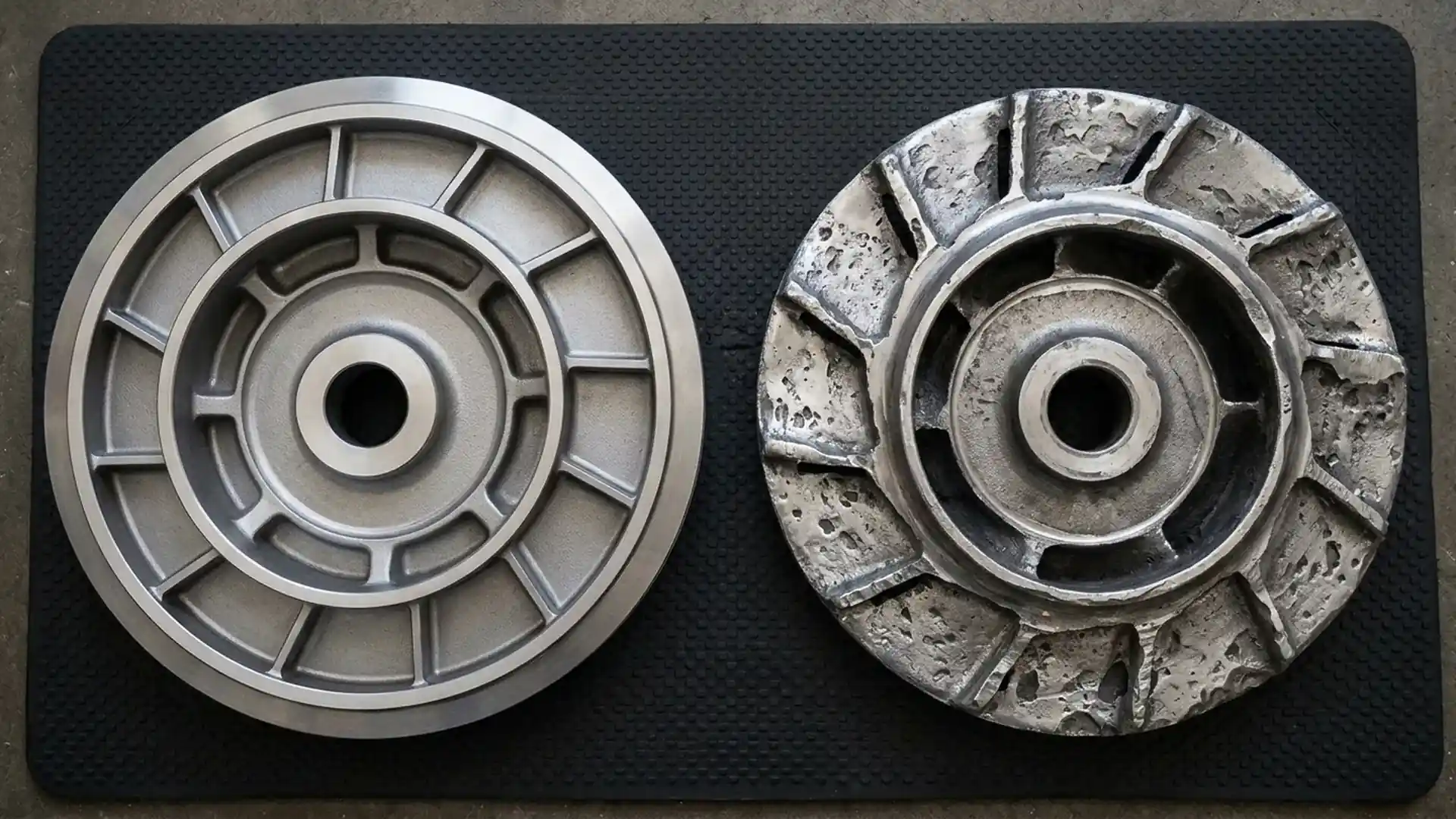
Years of reviewing project failures make one thing clear: the same mistakes repeat across industries, and they almost always trace back to the RFQ stage. Here are the most frequent and expensive ones.
1. Running a drainage pump in abrasive solids
Contractors borrow a drainage pump from another job, drop it in a muddy excavation full of sharp sand, and then wonder why the impeller clearance is gone and the seal leaks after a couple of hundred hours. Drainage pumps have limited wear resistance because they’re built to be cheap and portable. If your water carries more than a trace of fine suspended solids, either upgrade to a pump with a hard-coated wear plate or move to a slurry-rated pump.
2. Selecting a pump by horsepower, not by the performance curve
Buyers still send RFQs that say “10 HP submersible pump” with no flow or head. Horsepower is a consequence of the hydraulic design, not a selection criterion. Two pumps can both be 10 HP—one delivers 100 m³/h at 8 meters, the other 20 m³/h at 60 meters. If you don’t start with flow, TDH, and liquid density, you’re guessing.
3. Ignoring TDH when spec’ing a deep well pump
A buyer sees “120-meter well depth” and asks for a pump that reaches 120 meters. But the dynamic water level drops to 90 meters during pumping, and the discharge pipe friction and surface pressure requirement add another 20 meters of head. The actual TDH needed is 110 meters, not 120. If the pump is oversized and runs too far left on its curve, it will surge, vibrate, and wear thrust bearings. If undersized, the system won’t meet demand.
4. Assuming all “IP68” ratings are equal
IP68 means the motor is protected against continuous immersion, but the test depth and duration are defined by the manufacturer, not a single universal standard. One supplier may test at 1 meter for 24 hours; another at 30 meters for 7 days. For your project, you must verify the supplier’s declared test parameters against your actual immersion depth and duration. The cable entry and mechanical seal are the weak points, not the motor housing. Ask for the specific test conditions and whether the pump has been tested with the actual cable assembled.
5. Short-cycling sewage pumps in a lift station
A lift station with too small a wet well or a poorly tuned level control will start and stop the pump every few minutes. Each start heats the motor windings; if the pump runs only 30 seconds before stopping, the winding never reaches thermal equilibrium. Insulation degrades progressively. The fix is proper wet well sizing, a soft starter or VFD where needed, and a minimum run-time setting in the control panel.
What Buyers Should Verify Before Ordering a Submersible Pump
At the supplier negotiation stage, you’re not just buying a pump; you’re buying a documentation package that proves the pump will survive in your application. Weak documentation usually means weak QA, regardless of how good the factory photos look.
Here’s a reference table for what to request and why:
| Verification item | What to ask the supplier | What it protects against |
|---|---|---|
| Performance curve | Factory-tested H-Q curve at rated speed, with power and efficiency | Hydraulic mismatch; inflated efficiency claims; wrong duty point |
| Material certificates | Mill certificates for major components (casing, impeller, shaft, wear liners) | Inferior alloy substitution; reduced wear life |
| Seal arrangement drawing | Cross-section showing seal type, faces, elastomers, and oil chamber volume | Seal incompatibility with solids, temperature, or chemical exposure |
| Cable specification | Cable type, jacket material, gland IP test report, voltage drop consideration for your length | Water ingress via cable; undervoltage at motor terminals |
| Motor protection details | Insulation class, temperature sensor type and wiring, IP test depth and duration | Overheating in high-ambient or low-flow conditions; voided warranty |
| Dimensional drawing with installation clearances | Full outline with minimum sump diameter, rail spacing, and lifting clearance | Installation interference; inability to install or remove the pump without structural modification |
| Test records | Hydraulic performance test, pressure test, insulation resistance test, vibration (if specified) | Receiving a pump that never passed factory acceptance |
| Spare parts availability | Recommended wear parts list, lead time for first set, interchangeability across models | Asset stranded without parts during peak season |
Many established manufacturers will provide a standard factory acceptance test (FAT) package with the pump. If a supplier hesitates to share a performance curve or material certs, walk away. That hesitation usually means they don’t have the test capability or they’re sourcing from multiple workshops without traceability.
When reviewing test documents, confirm which standards and test grades actually apply to the quoted pump. Hydraulic performance testing is commonly referenced against ISO 9906, but the acceptance grade, test tolerance, and witness requirements may vary by project and supplier. ANSI/HI guidance is also widely used for pump selection, installation, and performance interpretation, especially in industrial and municipal work. Likewise, IP68 immersion protection is not a single universal condition—the manufacturer defines the immersion depth, duration, and cable assembly configuration used during testing. Buyers should request the declared test conditions and verify that they match the real installation depth, operating cycle, and cable arrangement on site.
RFQ Data Checklist:
When you send an RFQ, include these fields as a structured list so the supplier can quote accurately:
- Flow rate (m³/h or L/s) at duty point
- Total Dynamic Head (TDH) at duty point, with static and friction components if possible
- Liquid type and description (sewage, slurry, clean water, etc.)
- Solids size (maximum particle diameter) and concentration (% by weight or volume)
- Slurry specific gravity or density if applicable
- Liquid temperature range and pH
- Installation method (guide-rail, suspension, borehole, or portable)
- Maximum immersion depth
- Required cable length
- Power supply: voltage, phase, frequency
- Duty cycle: continuous or intermittent (and estimated hours/day)
- Control interface requirements (float switch, level transducer, control panel)
- Dry-run protection needed
- Applicable standards or certifications required (e.g., ISO 9906 Grade 1 test)
- Spare parts expectations (impeller, wear rings, seals, bearings)
- Packing requirement (e.g., plywood case for sea freight)
- Required documentation (performance curve, material certs, test reports, dimensional drawing)
This list does two things: it weeds out suppliers who can’t meet your technical threshold, and it creates a paper trail that protects you if the pump doesn’t perform. If the supplier ignores the cable length and quotes a standard 10-meter cable for a 60-meter borehole, you know that RFQ didn’t get proper engineering review.
FAQ: Types of Submersible Pumps and Their Application Limits
The questions below come from real procurement conversations—engineers trying to avoid the exact misapplications I’ve described above. Use them as a final sanity check before you push an order through.
What is the difference between a sewage pump and a slurry pump?
A sewage pump handles wastewater with soft solids and fibrous material and is designed for non-clog passage rather than abrasion resistance. It typically uses a vortex or channel impeller inside a cast iron body. A slurry pump is built for abrasive solids—sand, gravel, mineral tailings—and uses hard metal wear parts (such as high-chrome iron) and a heavy-duty seal system. Using a sewage pump in slurry service will wear the impeller and volute rapidly and destroy the seals.
Can a drainage pump handle muddy water?
A drainage pump can usually handle lightly muddy water with fine suspended solids, but it’s not designed for high solids concentration or angular hard particles. Mud heavy with sand or sharp gravel will accelerate impeller and seal wear. If the water carries enough sediment to feel gritty between your fingers, you should either use a pump with a hard-coated wear plate or move up to a slurry-rated dewatering pump.
What type of submersible pump is used for deep wells?
A multi-stage deep well submersible pump (borehole pump) is used for deep wells. These pumps stack several impellers in series to generate high head from a narrow-diameter pump body that fits inside the well casing. They are designed for clean water with minimal solids; sand ingestion or dry-running can destroy the pump quickly.
Why is IP68 protection important for submersible pumps?
IP68 means the motor is rated for continuous immersion in water at a specified depth and duration. Because submersible pumps operate underwater, any water ingress into the motor housing or cable entry can cause insulation failure and motor burnout. However, IP68 alone is not enough—you must also verify the test depth, the seal arrangement, and the cable gland sealing method, because those are the actual water-entry paths. Always match the supplier’s declared IP68 test depth and duration to your site’s expected immersion conditions.
Can submersible pumps run dry?
Most standard submersible pumps are not built to run dry for more than a few seconds; doing so risks thermal damage because they rely on the pumped liquid for motor cooling and shaft seal lubrication. Some models include dry-run protection sensors or a cooling jacket that extends safe run time, but even those have limits. If your application has a risk of the pump running dry (e.g., a sump that empties unpredictably), you must specify a pump with integrated dry-run protection and confirm the maximum allowable dry-run time with the supplier.
What information should be included in a submersible pump RFQ?
A complete RFQ should include flow rate, total dynamic head (TDH), liquid type, solids size and concentration, liquid temperature, installation method, immersion depth, cable length, power supply, duty cycle, required controls, applicable standards, documentation requirements, and spare parts expectations. A summary table of these fields is provided earlier in the article under the supplier verification section.
Conclusion
The phrase “types of submersible pumps” covers four distinct engineering solutions, each with its own failure mode if applied wrong. Sewage pumps fight clogging and fibrous solids. Slurry pumps fight abrasion and seal destruction. Drainage pumps fight temporary site water and portability constraints. Deep well pumps fight high head and narrow diameter limits. A pump that works brilliantly on one site can disintegrate on another because the solid particles, the cooling path, or the installation geometry didn’t match.
Before you finalize a purchase order, slow down and map your project’s liquid condition, solids profile, true TDH, installation access, and duty cycle against the category descriptions and verification checklist in this guide. If the supplier can’t produce a factory performance curve, material certificates, or a seal arrangement drawing that matches your worst-case operating condition, keep looking. The pump that saves you a little money at the RFQ stage often costs far more in downtime and parts within the first year.
Get A Quote

Get A Quote
0 Comments