
Pump Rental vs Purchase: Compare Cost, Utilization, Maintenance & Risk
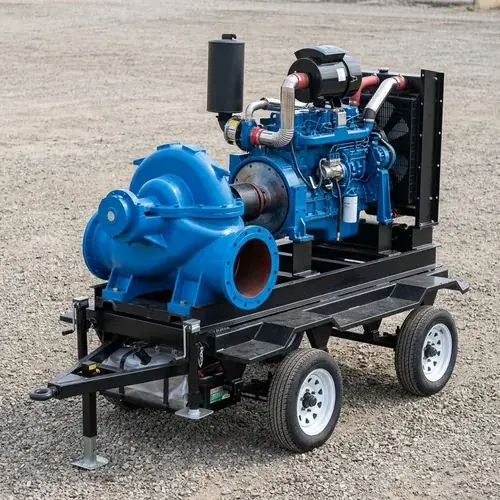
The fastest way to settle a pump rental vs purchase decision is to stop leading with the purchase price. Rent when the application is short-duration, seasonal, emergency-driven, or low-utilization—typically dewatering, bypass, shutdown support, and flood response. Buy when you expect high annual runtime across multiple years and your team can handle maintenance, spare parts, and repairs. The decision hinges on utilization rate, downtime risk, maintenance capability, and lifecycle cash flow, not the cheapest unit cost.
Many contractors and utilities already have a gut feel for this. The mistake usually shows up later: one team buys pumps for a few months of dewatering, then stores them for years while seals harden and bearings rust. Another plant runs a rented bypass for half the year and may end up paying more in rental fees than the unit would have cost to own. Neither failure is obvious at quote stage because both teams compared only one number—daily rental rate against invoice price.
This guide gives you a practical decision framework: utilization logic first, then real project examples, then the operational risks that usually get ignored, followed by supplier verification criteria and an RFQ checklist. By the end, you should be able to put the right rent-vs-buy argument in front of your project manager or finance team and get a defensible answer, not a guess.
Quick Answer: When Does Pump Rental vs Purchase Make More Sense Than Ownership?
The core logic is simple. Pump rental is usually more economical for short-duration, seasonal, emergency, or low-utilization applications. Pump ownership generally becomes more cost-effective when annual utilization is high and the operator has maintenance capability. The correct decision depends more on utilization rate, downtime risk, and support capability than on purchase price alone.
But "short" and "high" need numbers attached, and those numbers change by duty. A small dewatering pump running a few weeks for a commercial excavation leans heavily toward rental. A sewer bypass that runs for the same few weeks every year is a much stronger ownership candidate even if the annual hours look low, because the cycle repeats, the standby value is high, and the team knows the exact duty.
The table below gives you the fast sorting logic used by field engineers and procurement managers.
| Decision factor | Lean toward rental | Lean toward purchase |
|---|---|---|
| Project duration | Days to a few months | Multiple seasons or permanent duty |
| Annual utilization | Low, intermittent, weather-dependent | High, repeat, or continuous |
| Maintenance capability | No in-house pump mechanics | Trained maintenance team and spare-part shelf |
| Emergency readiness | Ad-hoc, short-notice response | Standby asset required every year |
| CAPEX availability | Limited budget approval window | Capital approved and depreciation acceptable |
| Downtime cost | Backup replacement only if contractually committed | Buyer must stock critical spare parts and have a repair plan |
| Post-project asset plan | No storage, no residual-value expectation | Asset reused or redeployed internally |
One caution before moving on: no table replaces a calculated comparison. The threshold between rent and buy is a range, not a single number. Use the quick answer only to decide which direction you should defend in your commercial proposal. The next section gets into the actual cost logic.
The Real Cost Difference Is Utilization, Not Purchase Price
The biggest reframe on pump rental vs purchase is that the invoice price of a pump is rarely the dominant cost. A low purchase price can still create higher total lifecycle cost if spare parts, maintenance labor, and downtime are not controlled. For continuous-duty industrial pumps over a multi-year lifecycle, energy or fuel consumption, maintenance labor, downtime, spare parts, and mobilization commonly outweigh the purchase price. This is not universal across every duty, but it is the right default perspective when ownership is on the table. Rental fees look expensive per day, but they bundle many of those costs for a short period. Ownership spreads them over years and leaves them on your maintenance ledger. Rental reduces upfront capital exposure but may increase long-term operating cost in continuous-duty applications.
Utilization rate is the variable that usually decides the outcome. It is essentially how many effective operating hours a year the pump will log against the hours you planned for it. A pump that logs a few hundred hours a year and sits idle the rest of the time is an expensive asset. A pump that logs well over a thousand hours and earns its keep every season is a very different machine. Hydraulic Institute's Pump Life Cycle Costs guide has long made this point, and field reality hasn't changed it: you should evaluate rent-vs-buy based on lifecycle pump cost factors—hours, load, maintenance, spares, storage, and downtime—not the unit price.
Here is a practical starting filter used by many field teams when comparing pump hire vs buy. As an assumption to verify—not a universal rule:
| Utilization band (effective hours/yr) | Typical default logic |
|---|---|
| Under roughly 300–500 h/yr | Rental usually stronger; ownership hard to justify unless strategic standby |
| 500–1,500 h/yr | Judgment zone—maintenance capability, downtime cost, and spare-parts lead time decide |
| Above roughly 1,500–2,000 h/yr | Ownership typically wins; more detailed lifecycle comparison needed |
These utilization bands are illustrative planning prompts, not universal thresholds. Large, high-pressure, or high-capital engineered pumping systems need a project-specific lifecycle and downtime calculation before using the same ranges. The middle band is also where most bad decisions happen. A pump that runs a few hundred hours a year for a municipal bypass may justify ownership because downtime risk is high and the cycle repeats annually. The same pump running the same hours on a speculative construction job may not justify the capital and storage burden. This is why the decision framework must include operational factors, not just runtime.
Example Scenario: Construction Dewatering for a 4-Month Project
Take a site contractor dewatering a deep excavation over four months. The groundwater is silty, the sump will be re-cut multiple times as the dig progresses, and the duty point will shift as the excavation deepens and the discharge elevation changes. Here the duty is illustrative; the exact flow, head, and suction lift must be confirmed from the site groundwater survey and the pump curve.
The rental logic is strong:
| Cost or risk line item | 4-month rental (typical) | 4-month purchase (typical) |
|---|---|---|
| Upfront commitment | Deposit or first month fee | Full invoice or down payment |
| Mobilization | Supplier delivers trailer-mounted unit | Buyer arranges freight or stores after delivery |
| Setup time | Fast when unit and transport are locally available; can take days in remote sites, during peak season, or with difficult access | Baseplate, alignment, wiring, and mechanical checks |
| Fuel during run | Buyer pays fuel unless contract says otherwise | Buyer pays fuel |
| Routine checks | Rental company covers scheduled service only where the written contract includes it | Buyer's crew handles checks and oil/filter changes |
| Major repair exposure | Depends on rental agreement and wear/damage clauses | Buyer absorbs seal, bearing, impeller damage |
| De-mobilization | Included or fixed fee | Buyer arranges crane/truck |
| Post-project asset | No residual value or storage obligation | Residual value but storage, corrosion, and obsolescence risk |
The line-item table works even without local prices. The important point is that buying a pump for four months leaves you holding an asset whose next job is unknown, while renting removes that tail risk entirely. That is exactly what you want on a dewatering job where the pump may not be used again for months or even years.
Example Scenario: Municipal Wastewater Bypass Used Every Year
A wastewater utility bypasses a lift station for four weeks each year during planned maintenance on the wet well. The duty is moderate, pumping raw sewage. The cycle repeats every year, the operations team knows the exact duty point, and there is a mechanical workshop on site.
This often becomes the ownership case. The pump logs relatively few hours per year, but those hours are highly predictable, and the standby-readiness value is high. The spare seal and impeller kits can be planned and stocked on the shelf—which is exactly what pump spare parts planning is for. Annual reuse spreads the purchase price and maintenance setup across many years, and the utility avoids the seasonal rental-market scramble when other utilities in the region are trying to book bypass pumps at the same time.
But even here, the answer can flip. If the utility has no qualified pump mechanics and must outsource every seal change and alignment check, a long-term rental with a service contract may still be defensible. The ownership decision should never be made without an honest internal answer to "who does the 2:00 AM breakdown," not just "who writes the purchase order."
Operational Factors Buyers Often Ignore
The financial model is only one side of the decision. The field side has at least as much influence, and it's where procurement teams repeatedly get surprised.
Here's what to audit before you pick a direction: setup speed, maintenance responsibility, fuel logistics, hose compatibility, operator skill, and site support. Each one can add days to a schedule or turn a cheap rental into an expensive failure.
Think of the pump as the center of a small system, not a standalone machine. A trailer-mounted diesel pump still needs a fuel source, a suction hose with a foot valve or self-priming casing, a discharge hose routed away from the excavation, and someone to check it every shift. If any one of those is missing, the pump is just a large paperweight.
Rental Fleet Availability During Flood or Rainy Seasons
This is the operational risk that catches buyers worst. When a regional rainy season starts, many contractors and municipalities in the same area call the same rental yards for dewatering and flood pumps. The best trailer-mounted units tend to go first. What's left may be the wrong size, the wrong power source, or a unit with questionable maintenance history.
If your project has a hard start date tied to the wet season, do not assume rental availability. Reserve early with a confirmed mobilization date, or keep a small own-fleet backup for the truly critical sump. For emergency bypass or flood response, supplier response time may matter more than the hourly rental rate. Make the supplier's response time and backup-unit commitment part of the contract, not an oral promise. A cheap daily rate with no contractual equipment commitment is not a saving; it is a schedule risk.
Maintenance Capability and Spare Parts Access
Ownership makes you the maintenance department. You need to handle or contract out mechanical seal replacement, bearing lubrication, impeller wear inspection, alignment checks, and seasonal lay-up. That is not a vague responsibility—it shows up as a hard cost and a hard skill requirement. Many buyers use an industrial pump maintenance checklist to audit whether their team can actually support ownership before approving the capital request.
A rental agreement may keep scheduled major maintenance on the rental company's side only where the written contract includes it, but the boundary shifts materially by contract. Common questions to settle in writing: who replaces a worn impeller after pumping abrasive groundwater, who pays for a damaged seal caused by running the pump dry, who supplies filters and engine oil, and what happens to a unit that fails at night. Do not accept "we'll sort it out" as an answer. Damage and wear clauses decide who eats the cost when the dirty water is dirtier than the quote assumed.
Pump Types Commonly Rented for Temporary Applications
Matching the pump type to the application matters more than the rental brand or daily price. A clean-water pump sent into trash-laden excavation water tends to clog or wear fast. A trash pump over-sized for clear water tends to burn extra fuel and churn the sump.
The table below connects common temporary pumping duties to the pump categories usually found in rental fleets.
| Temporary application | Commonly rented pump type | Typical configuration |
|---|---|---|
| Construction dewatering | Self-priming centrifugal pump | Trailer-mounted, diesel or electric, small to medium solids tolerance |
| Excavation mud and silt | Trash pump / solids-handling pump | Semi-open impeller, large suction inlet, diesel-driven |
| Municipal sewage bypass | Self-priming sewage pump or submersible pump | Diesel engine, level control, backup unit often added |
| Flood and stormwater response | High-flow portable pump | Trailer or skid-mounted, high flow at lower head |
| Process plant shutdown bypass | End-suction centrifugal pump | Skid-mounted electric or diesel, matched to existing pipe flange |
| Seasonal irrigation / water transfer | Clean-water self-priming pump | Trailer-mounted, electric or diesel, large volume |
Getting this wrong changes the site risk profile immediately. The dewatering pump selection differences between clean-water, trash, and dewatering units have real bearing on whether the rented pump clears the sump or stalls the excavation. A clean-water pump of the same suction size usually won't handle the same solids load as a trash pump, even if both claim similar flow on paper. That distinction belongs in the RFQ, not after delivery.
How Industrial Buyers Should Compare Rental Suppliers
Once the rental path looks right, the next question is not "who is cheapest" but "who will keep the site dry." Rental supplier verification should run like any critical procurement: documented, criteria-based, and hard on vague answers.
| Supplier criterion | What to check | Red flag |
|---|---|---|
| Fleet condition | Rental unit runtime hours and last service date | No maintenance logs available |
| Hydraulic performance | Model curve and available service or runtime records for normal rental; for critical bypass, flood-response, or contractually warranted duty, buyers may request recent performance verification, rebuild records, or witnessed testing where available | "It should do that flow" without performance reference |
| Response time | Written breakdown-response and backup-unit commitment | Vague "24/7 service" with no contract clause |
| Spare parts | Local stock of seals, impellers, starters, filters | All parts ship from overseas with long lead time |
| Commissioning support | Site technician available for startup and handover | Drop-and-go delivery with no startup support |
| Contract clarity | Wear/damage, overtime, fuel, insurance, and standby clauses | Open-ended wear liability on the buyer |
| Backup availability | What happens if the unit fails at 2:00 AM | No backup commitment or no cross-hire arrangement |
For a normal rental, ask whether the supplied curve is a model curve or unit-specific, and request available maintenance history, service records, or runtime information where the supplier tracks it. Do not treat a catalog curve as proof of the actual unit's present condition. For critical bypass, flood-response, or other high-downtime-cost duties, buyers may request recent performance verification, rebuild documentation, or witnessed testing where the contract specifically warrants performance. Factory acceptance documentation is more common on new or recently rebuilt pumps than on every used rental unit in active fleet rotation. If little or no service history is available, treat the pump as higher operational risk and confirm what backup support the supplier can provide before deployment.
RFQ Checklist for Pump Rental or Purchase Evaluation
A complete RFQ lets you compare rental and purchase offers on the same operating basis. Use this table as the internal work order before you approach suppliers.
| Field | Your input / options |
|---|---|
| Application | Construction dewatering / bypass / flood response / seasonal transfer |
| Liquid description | Clean water / groundwater with silt / sewage / slurry / chemical |
| Required flow rate | m³/h or L/s at duty point |
| Required total dynamic head | m, including static lift and friction |
| Suction lift / NPSHa available | m — critical for self-priming or suction-lift layouts |
| Solid size / concentration | mm maximum particle size, % by volume |
| Liquid temperature | °C |
| pH / chemical compatibility | pH range, corrosive agents present |
| Drive preference | Diesel / electric / either |
| Voltage, phase, frequency if electric | V / ph / Hz |
| Expected daily run hours | hours per day |
| Total project duration | days, weeks, or months |
| Number of pumps + backup | Unit count and standby requirement |
| Site location / access constraints | Crane access, trailer access, ground condition, lifting height |
| Suction/discharge connection size and type | Camlock / flange / Storz / threaded, diameter |
| Hose length / lay-flat requirement | m, including site routing |
| Fuel supply responsibility | Supplier / buyer / site tank |
| Noise / environmental restrictions | dB limits, local permit conditions, spill containment |
| Monitoring / control | Float switch, level control, telemetry, VFD compatibility |
| Maintenance responsibility | Daily checks, major repair, wear parts |
| Documentation | Model curve, maintenance/runtime records, unit-specific test record if critical duty |
| Mobilization / de-mobilization date | Date or range |
| Pricing basis | Daily / weekly / monthly / job-based |
| Service response commitment | Hours to site, backup availability |
| Warranty / damage liability | Contractual liability for wear, abuse, and defects |
Sending this full set to both rental companies and pump manufacturers forces both to answer the same technical questions. That process alone tends to filter out the suppliers who only want to talk about price. If you are also comparing a purchase option, have the purchase quote include commissioning support and a spare seal/impeller kit so the rental and ownership offers are comparable on risk, not just headline cost.
Common Mistakes When Comparing Pump Hire vs Buy
Ask any field engineer who has cleaned up after a bad rent-vs-buy call, and the same six or seven mistakes come up again and again:
- Comparing only the daily rate against the purchase price. That misses fuel, mobilization, hoses, operator time, and downtime.
- Ignoring downtime cost. A failed pump that floods a live excavation or halts a plant bypass can cost far more per hour than the rental fee.
- Sizing by experience instead of duty point. Guessing the flow without the head and NPSHa calculation is how sites end up with a pump that cavitates or never drains the sump.
- Assuming rental includes all maintenance. Read the damage and wear clauses first. Abrasive water usually moves liability back to the buyer.
- Underestimating logistics. Trailer turning radius, crane reach, fuel access, and hose routing can each delay a job by a day.
- Buying for one project and paying storage forever. The "cheap purchase" becomes an expensive stranded asset the moment the job ends.
- Waiting until flood season to book rental pumps. The good units are gone; what remains may be the wrong size or condition.
- Skipping spare-parts lead time on owned pumps. Seal and impeller kits should be on the shelf before the pump arrives, not ordered after the first failure.
FAQ: Pump Rental vs Purchase Questions Buyers Ask
These are the exact questions contractors, utilities, and procurement teams raise before they will commit to a rent-vs-buy position. The answers assume you have already collected the duty data in the RFQ checklist above.
Is pump rental cheaper than ownership?
The pump rental vs purchase answer is not universal. Rental is usually cheaper for short-duration, seasonal, emergency, and low-utilization applications because it avoids capital, storage, maintenance capability, and post-project asset burden. Ownership typically wins when annual utilization is high and the duty repeats. The correct comparison is total cost for the projected service life, not the rental day-rate against the purchase price. Use the RFQ table and ask both rental and purchase suppliers for the same duty point.
What utilization rate usually justifies buying a pump?
There is no universal number, but field teams often start the discussion below about 300–500 effective operating hours per year for rental and above about 1,500–2,000 hours per year for purchase. Between those points, maintenance capability, downtime cost, spare-parts access, and annual repeat use decide the answer. Those ranges are starting assumptions to be confirmed with your specific duty cycle, not a rule. Large, high-pressure, or high-capital pumps require a project-specific lifecycle and downtime calculation.
Who is responsible for maintenance in rental agreements?
That varies by contract, and there is no industry-wide default. Many standard rental contracts cover the base machine only for normal wear, but written wear and damage clauses govern whether abrasive liquids, solids beyond the quoted condition, misuse, dry running, or excessive overtime shift repair cost back to the renter. The buyer usually remains responsible for daily checks, refueling, site electrical connections, hose routing, and preventing dry running or abuse. Before delivery, confirm in writing exactly who replaces a worn impeller, who pays for a damaged seal, and who responds to a night failure.
Are diesel pumps better for temporary applications?
Diesel is often the practical default for temporary deployment because the site may not have suitable power and the unit needs to move between sumps or remote locations. Electric pumps can be simpler and quieter where stable power exists, and they may work well with VFD control for varying flow. The better choice depends on power availability, run hours, noise restrictions, and the cost of fuel versus electricity at the specific site. Ask for both options in the RFQ.
What should buyers verify before renting a bypass pump?
Confirm whether the supplied head-flow curve is a model curve or unit-specific, plus suction lift capability, solids tolerance, suction and discharge connection type and size, backup-unit availability, response time commitment, fuel and maintenance responsibility, and the specific damage and wear clauses. For normal rental, request available maintenance or service history where the supplier tracks it, but understand that documentation depth varies by fleet size, region, and pump age. For critical bypass or high-downtime duty, buyers may request recent performance verification, rebuild records, or witnessed testing where the rental contract specifically warrants performance. Do not book the cheapest rental without a documented backup plan.
Official Sources and Compliance References
The reasoning in this article aligns with standard industrial practices and accepted reference frameworks, but every operational claim must be verified against the actual project specification and supplier contract:
- Hydraulic Institute, Europump, and U.S. Department of Energy, Pump Life Cycle Costs: A Guide to LCC Analysis for Pumping Systems—supports the claim that maintenance, downtime, and energy costs usually exceed the initial purchase price across a pumping system's service life, and provides the standard cost-category methodology for owned and rented assets.
- ISO 9906—supports the request for tested pump-performance information and acceptance grades when comparing rental fleet units before deployment.
- Project specification and rental agreement clauses—the ultimate compliance source for wear and damage liability, mobilization, response time, and backup-unit commitments.
No claimed utilization threshold, cost ratio, or payback period in this article is a universal rule. Each must be confirmed with local rental pricing, duty cycles, fuel costs, and supplier terms before you commit.
Conclusion: Put Utilization and Downtime Ahead of the Daily Rate
The pump rental vs purchase question is not really about pumps. It is about how many hours the unit will work, who fixes it when it fails, and how expensive one night of downtime is. Rent for temporary duty, seasonal peaks, emergency response, and jobs where you cannot prove the next use. Buy when the same duty repeats year after year and your team can support the machine.
Next step: draft the RFQ from the checklist above, send it to both rental and purchase suppliers, and compare offers on total project cost and downtime risk—not on the lowest line item. If the ownership path looks stronger, Liqen's industrial pump products provide a starting point to review configurations, engine options, and build-to-order choices. If rental is the likely answer, use the supplier-verification table to shortlist companies that can prove fleet condition, tested performance, and emergency response—not just quote a daily rate.
Get A Quote

Get A Quote
0 Comments