
Open vs Closed Impeller Pump: Efficiency, Solids, and Wear Decision Guide
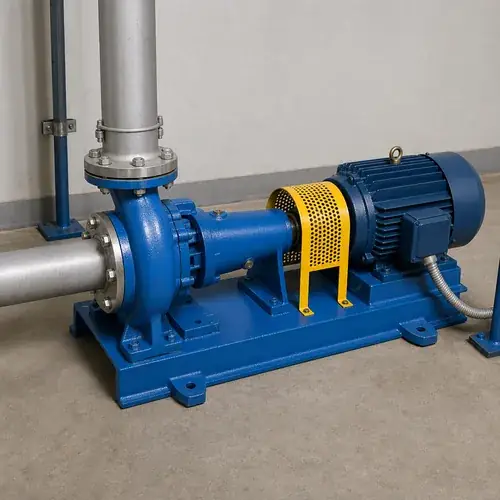
If you’re sourcing a centrifugal pump for anything other than clean cold water, the open vs closed impeller pump decision matters more than the brand on the nameplate. A closed impeller can achieve peak hydraulic efficiency perhaps 10–15% higher than an open design when tested with clean water, but that advantage often shrinks or disappears the moment solids, stringy waste, or abrasive particles enter the picture. An open impeller sacrifices some initial efficiency — often in the range of 5–10 percentage points below a closed design at best efficiency point — in exchange for far lower clogging risk, easier internal access, and more predictable behavior in tough liquids. A semi-open impeller splits the difference. This guide walks you through exactly when each configuration pays off financially, where the hidden lifecycle costs hide, and what to demand from your supplier’s performance data before you commit to a pump order — whether you’re specifying for a municipal lift station, a mining slurry transfer line, a food-processing waste stream, or an industrial water supply loop.
Too many RFQs lead with “bid a closed-impeller end suction pump” without ever checking whether the liquid condition actually supports that choice. What happens next is predictable: the pump arrives, runs a few weeks at decent efficiency, then starts clogging, wearing, or cavitating because the internal clearances were never right for what was really going through the pipe. The real question isn’t “which impeller is most efficient” — it’s “which impeller keeps your operations running with the fewest surprises, measured over two or three years of actual duty, not one hour on a factory test loop.”
By the time you finish this article, you’ll know how to read an impeller specification the way a maintenance manager reads it — through the lens of wear clearance, solids passage, clogging sensitivity, and lifecycle cost — and you’ll have a practical checklist you can hand directly to your supplier or use internally to filter pump quotations before anything gets ordered.
Quick Answer: When Should Buyers Choose Open, Semi-Open, or Closed Impellers?
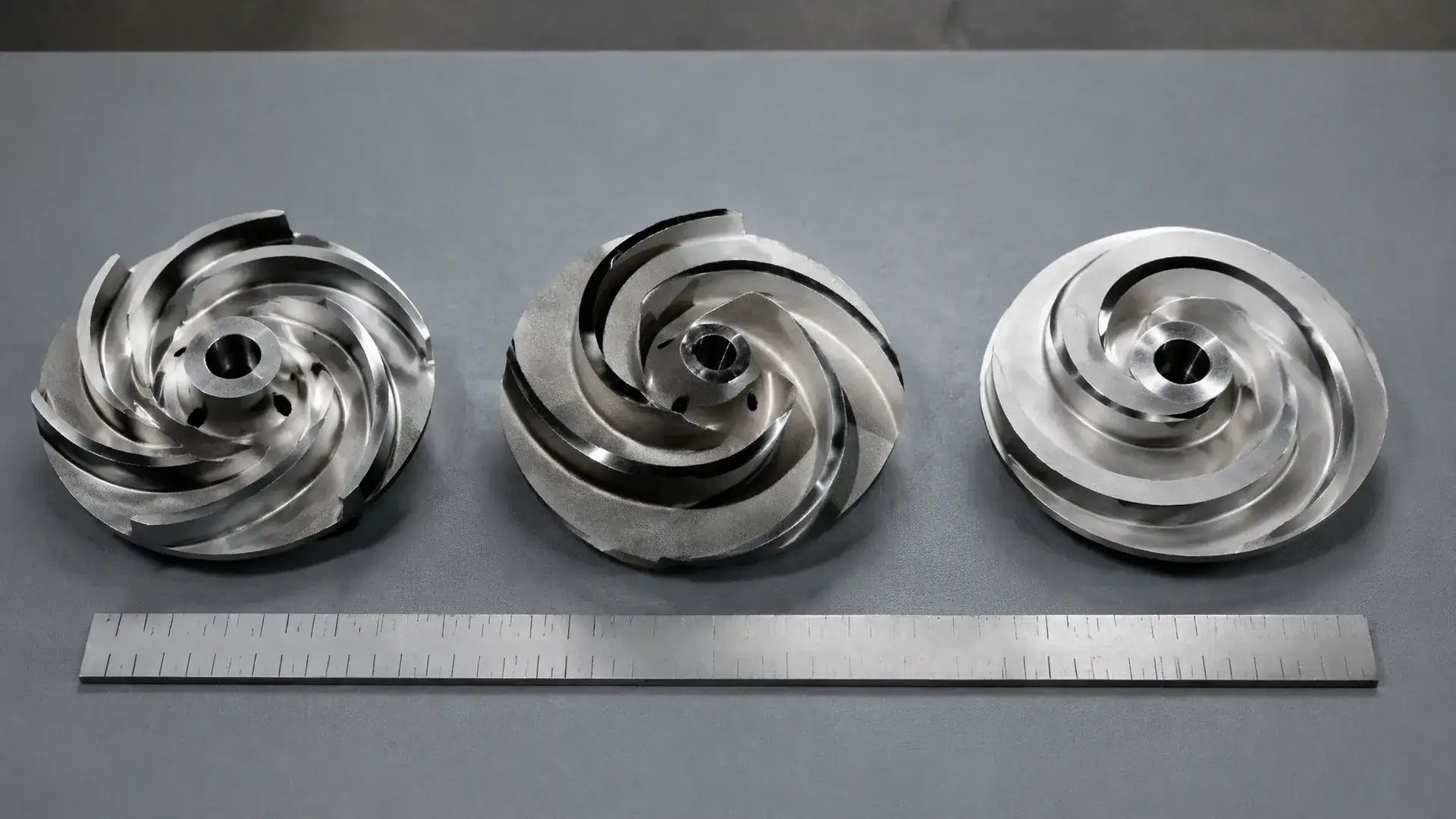
If you need a single decision you can run with right now: pick a closed impeller for clean water, thin non-abrasive industrial liquids, or HVAC chilled/hot water loops where efficiency dominates your operating cost calculation and there’s essentially zero solids threat. Choose an open impeller when you’re pumping anything that contains rags, wipes, stringy fibrous material, mud, sand, or unpredictable solids — municipal raw wastewater, industrial effluent with textile waste, food-processing sludge, stormwater, or light slurry. Go with a semi-open impeller when you have moderate solids (say, roughly 5–10 mm soft solids at low concentration) but still need better hydraulic performance than a fully open design can deliver, or when the liquid is mildly abrasive but doesn’t warrant a full slurry pump rebuild schedule.
The table below gives you the direct comparison. Use it when you’re triaging a stack of pump datasheets and need to spot the mismatches fast.
| Decision Factor | Open Impeller | Semi-Open Impeller | Closed Impeller |
|---|---|---|---|
| Peak Hydraulic Efficiency | Lowest (often 55–70% depending on size) | Moderate (often 60–80%) | Highest (often 70–90% in clean water) |
| Solids Handling Capability | Best — large free passages, few internal pinch points | Moderate — can pass limited solids; some recirculation behind the shroud | Worst — tight clearances trap debris easily |
| Clogging / Ragging Risk | Low (solids pass or flush easily) | Medium (fibrous material can wrap behind the shroud) | High in wastewater or any service with stringy material |
| Abrasive Wear Tolerance | Good — wear spreads across vanes and casing; clearance is often adjustable | Moderate — casing wear affects efficiency; shroud protects one side | Poor in abrasive service — wear ring clearance grows quickly; efficiency drops fast |
| Maintenance Accessibility | Easy — vanes exposed when volute cover is removed | Moderate — one side accessible; shroud side requires disassembly | Hardest — requires full impeller removal to inspect or clean internal passages |
| Clearance Adjustment | Simple — typically a bolt or screw adjustment on the suction cover | Possible on some designs but less common | Wear ring replacement; clearance set by machining |
| NPSH Requirement | Often lower (less restrictive eye geometry) | Moderate | Can be higher; tighter eye clearances demand more NPSH |
| Typical Best-Fit Applications | Raw wastewater, sludge, slurries, stormwater, dredging, food waste, paper stock | Light slurry, industrial effluent with small suspended solids, some chemical processes | Clean water supply, HVAC circulation, boiler feed, irrigation with screened water, fire pumps |
This comparison holds across most standard centrifugal pump families, including back pull-out end suction pumps. But keep in mind: the numbers in that efficiency column are catalog numbers on clean water. Once you introduce real solids or abrasive into the equation — which is exactly when you’d consider an open impeller — the gap between open and closed often shrinks fast. More on that in the lifecycle efficiency section, because it’s where most procurement spreadsheets get the math wrong.
What Is the Difference Between Open, Semi-Open, and Closed Impellers?
You can’t select intelligently without understanding what you’re actually looking at inside the pump casing. The three impeller types differ in one fundamental feature: whether the vanes are exposed, partially covered by a shroud, or fully enclosed between two shrouds. That single design choice determines everything else — flow path, efficiency, clearance sensitivity, solids tolerance, and maintenance behavior.
Open Impeller Structure and Flow Path
An open impeller has no shrouds — the vanes stand fully exposed, attached only to the central hub at the back. When the pump runs, liquid enters the eye, moves into the spaces between the vanes, and gets flung outward directly against the stationary casing wall. There’s no front cover plate to guide the flow, no enclosed channel to trap debris, and no tight wear ring clearance to foul.
The benefit is obvious: solids that enter the impeller eye have a wide, unobstructed passage to the discharge. Ragging — where fibrous material wraps around a rotating component and builds up — is significantly reduced because there are few edges for material to snag on. The downside is hydraulic inefficiency: without a front shroud, some liquid recirculates back from the high-pressure side of each vane to the low-pressure side, and the flow isn’t as tightly controlled as in a closed channel.
Practical buyers choose open impellers when a few hours of unplanned downtime for de-ragging costs more in lost production or fines than a year’s worth of energy savings from a slightly more efficient closed impeller. That calculation is routine in wastewater and sludge services.
Semi-Open Impeller Structure and Tradeoffs
A semi-open impeller adds a single shroud on the back side — sometimes called the rear shroud — while leaving the front face of the vanes exposed. This gives partial hydraulic guidance (better efficiency than a fully open design) while still maintaining a relatively open flow path on the casing side.
The front clearance between the exposed vane tips and the casing wall is a critical dimension here. Too tight, and solids wedge between the impeller and casing, causing wear or seizure. Too loose, and efficiency drops because of recirculation losses across that gap. Semi-open impellers often include an adjustable wear plate or suction cover so the site maintenance team can restore clearance as the vanes wear down — but not every pump model offers this feature, so you need to check.
Semi-open impellers make sense in medium-duty industrial applications: effluent with fine suspended solids, light chemical slurries, pulp and paper stock with moderate consistency, or return activated sludge where solids loading is present but not extreme. They’re also common in some end suction pump configurations where the manufacturer wants to offer a “solids-tolerant” option without designing a completely different hydraulic profile.
Closed Impeller Structure and Hydraulic Control
A closed impeller encloses the vanes between a front shroud and a rear shroud, creating fully formed flow channels from the eye to the outer diameter. The liquid doesn’t touch the casing wall at all along the side surfaces; it’s guided entirely by the shrouded passages. Wear rings — replaceable rings mounted on the casing and/or the impeller — form the close-clearance seal between the rotating front shroud and the stationary pump casing.
This design gives the pump designer precise control over the hydraulic profile, which translates directly into higher peak efficiency. It also means that everything must stay clean and within tight dimensional tolerances for that efficiency to hold. Introduce solids, and they get trapped in the narrow passages between shrouds. Introduce abrasives, and the wear rings erode, clearance opens up, and efficiency falls off faster than most catalog curves suggest. In clean water, high-head boiler feed, or large-volume cooling water, closed impellers are the obvious best choice — the problem is when nobody asks “what’s actually in this liquid?” before the order goes in.
Efficiency vs Solids Handling: What Tradeoff Matters Most?
The catalog will tell you a closed impeller is 10–15% more efficient than an open impeller in clean water. It won’t tell you what happens to that efficiency advantage after six months of pumping gritty process water, or how much a single clogging event erases a year’s worth of fractional energy savings.
Why Closed Impellers Usually Deliver Higher Efficiency
Closed impellers win on clean-water efficiency for two reasons. First, the fluid is fully contained inside the shrouded passages, so there’s almost no leakage flow spilling from the pressure side of one vane to the suction side of the adjacent vane. Second, the wear rings restrict recirculation from the discharge back to the suction side along the front shroud — as long as the ring clearance stays within design spec. In a large cooling-water pump running 24/7 at 200 kW shaft power, a few efficiency points can matter — but this calculation holds only if the liquid stays clean and non-abrasive. If the water contains suspended silt or scale particles, the actual efficiency tends to drift downward between maintenance intervals, and you need to budget for ring replacement.
Why Open Impellers Handle Solids Better
Open impellers don’t trap solids because there’s nothing to trap solids between. The vane passages are open on the front side, so a particle that enters the eye has a direct path to the volute — it isn’t forced through a narrow channel where it can wedge between two shrouds. Even large, irregular solids that would stall a closed impeller can often pass through an open impeller without causing damage. The tradeoff is fundamental: what makes an open impeller forgiving to solids (lack of flow containment) is exactly what reduces its hydraulic efficiency (recirculation, less controlled flow guidance). You don’t fix one without sacrificing the other.
For more on what specifically causes solids to jam pumps and how to think about prevention across the entire system, the strategies in our Wastewater Pumping: How to Reduce Ragging, Clogging, and Unplanned Downtime guide go well beyond impeller type alone and are worth reading before you finalize a wastewater pump specification.
Where Semi-Open Impellers Fit
A semi-open impeller is usually the right call when you have moderate solids loading but still care about operating cost. Think return activated sludge in a treatment plant, light chemical slurries with particles under about 3 mm, or industrial process water that occasionally carries scale or debris but isn’t heavily loaded day to day. It’s not the extreme performer in either direction — not as clog-resistant as a full open design, not as efficient as a closed one — but it spans a useful middle ground that covers a surprising number of real industrial applications.
Why Lifecycle Efficiency Matters More Than Initial Efficiency
A closed impeller running in mildly abrasive water can lose perhaps 5–10% of its efficiency within 12–18 months as wear ring clearances open up. An open impeller in the same service — assuming the casing material is appropriately hard — may lose only 2–4% over the same period, and if the design includes an adjustable clearance feature, you can often recover most of that without replacing parts.
The table below puts typical ranges to this for a medium-sized industrial pump (say, 20–50 kW range) so you can run your own back-of-envelope comparison.
| Performance Metric | Open Impeller | Semi-Open Impeller | Closed Impeller |
|---|---|---|---|
| Catalog Clean-Water Efficiency (typical) | 60–72% | 65–80% | 72–88% |
| Estimated Efficiency After 18 Months in Mildly Abrasive Water | Often still 57–69% (assuming clearance adjustment) | Often 58–72% | May drop to 60–75% (wear ring wear, no adjustment) |
| Clogging Downtime Risk per Year | Uncommon (0–1 events) | Rare to occasional (0–2 events) | Frequent in fibrous/solids service (1–5+ events possible) |
| Wear Part Replacement Frequency | Casing wear plate may need service every 1–3 years | Wear plate + occasional impeller refurbishment | Wear rings likely needed annually or more often; impeller replacement if passages erode |
| Maintenance Access Time | Low (visual inspection through suction cover) | Medium | High (full disassembly) |
| Primary Lifecycle Cost Driver | Energy cost dominates | Balanced energy and wear parts | Downtime and wear part replacement in non-clean service |
The bold line in that last row is the key takeaway. If your application is clean water 365 days a year, a closed impeller’s lifecycle cost will usually be lowest because energy savings accumulate reliably. Push a closed impeller into abrasive or solids-laden service, and maintenance and downtime can wipe out every dollar the efficiency supposedly saved. The right choice depends on your actual liquid, not the one you wish you were pumping.
To go deeper into how to audit real system efficiency and separate catalog claims from what your pump actually delivers in the field, Pump Efficiency Improvement Checklist: A Practical Guide for Industrial Buyers and Engineers gives you a step-by-step verification workflow.
How Wear, Clearance, and Abrasion Affect Impeller Performance
If you only read the pump curve once — when you buy the pump — you’re setting yourself up for a surprise. Every impeller wears, and wear always changes the performance. The question is how fast, how much, and whether you can do anything about it without pulling the entire pump apart.
Clearance Growth and Efficiency Loss
In a closed impeller pump, the critical clearances are the wear ring gaps between the rotating front shroud and the stationary casing ring. When those gaps are tight (often about 0.25–0.50 mm depending on pump size), recirculation is minimal and efficiency is high. As abrasives pass through, both the wear ring and the impeller shroud surface erode, the gap widens, and an increasing portion of the flow simply recirculates from discharge back to suction instead of going out the discharge nozzle.
A rough field-planning estimate: for every doubling of wear ring clearance beyond the original design value, the pump can lose roughly 2 to 4 percent of its volumetric efficiency at BEP — but actual losses vary with pump specific speed, hydraulic design, and clearance ratio, so treat this as a maintenance-budget prompt, not a universal prediction. An open impeller pump isn’t immune to clearance effects either — the vane-to-casing front clearance matters — but in many designs you can adjust that clearance externally or with minimal disassembly, something you can’t do with internal wear rings on a closed impeller.
Abrasive Slurry and Sand Wear Behavior
Pumping sand, mining tailings, or abrasive process slurries changes the game entirely. Particles carried at high velocity between the impeller and casing act like a grinding paste. In a closed impeller, the wear concentrates on the wear ring surfaces and the internal vane passages — which are hard to inspect without full disassembly. In an open impeller, wear spreads across the exposed vane tips and the facing casing wall, which is typically a replaceable wear plate.
An experienced mining pump buyer looks for a few things: the ability to adjust impeller clearance from outside the pump, replaceable wear plates on the casing side, and a material spec that matches the particle hardness. For abrasive service, a Slurry Pump Selection Guide: Abrasion, Solids Size, Material Choice, Head Loss, and Maintenance Risk goes into material grade selection and wear part planning in much more depth — the impeller type decision is only the starting point for a complete slurry pump specification.
Wear Ring and Adjustable Clearance Considerations
Some open and semi-open impeller pumps offer a simple external clearance adjustment: a set of bolts on the bearing housing or suction cover lets you move the entire rotating assembly slightly forward or backward relative to the casing, tightening the gap between the impeller vanes and the wear plate. It’s not an infinite repair — eventually you run out of adjustment range or the vanes themselves get too worn — but it can extend the service run by months or years.
Most standard closed impeller pumps don’t have this luxury. When the wear rings wear, replacement is usually the normal maintenance path, which means more labor, more parts cost, and more downtime. Some specialty designs do use adjustable wear-ring arrangements or service-adjustable clearances, but buyers should confirm whether that feature is actually included on the quoted pump. Buyers evaluating pumps for abrasive duty should explicitly ask the supplier whether the pump offers external clearance adjustment and what the adjustment range is in millimeters.
Material Selection for Pump Wear Resistance
Impeller material matters just as much as impeller geometry when abrasion is present. A cast iron open impeller pumping sand will wear out almost as fast as a cast iron closed impeller — the material fails before the geometry advantage kicks in. For abrasive services, buyers typically move to high-chrome white iron alloys — often in the roughly 20–30% chromium range depending on slurry duty and manufacturer formulation — or in severe cases to Ni-hard or even ceramic-coated components. Stainless steel (304 or 316) offers corrosion resistance but is softer than high-chrome alloys and will wear faster under pure abrasion. Duplex stainless steels sit somewhere in between and are worth evaluating when both corrosion and moderate abrasion are present.
| Material | Wear Resistance (Abrasion) | Corrosion Resistance | Typical Impeller Types Available | Relative Cost Factor |
|---|---|---|---|---|
| Cast Iron (standard) | Low | Low (rusts) | All three | 1x |
| 304 Stainless Steel | Low–Moderate | Good (general) | All three | 2–3x |
| 316 Stainless Steel | Low–Moderate | Better (chlorides) | All three | 2.5–3.5x |
| Duplex Stainless Steel | Moderate | Excellent | Closed, semi-open (less common in open) | 3–5x |
| High-Chrome White Iron Alloy (composition varies by duty) | Excellent | Moderate (not for strong acids) | Open, semi-open (common in slurry pumps) | 2–4x |
| Ni-Hard | Very High | Low | Open (slurry pump impellers) | 2–3x |
The best material for your pump depends on what’s in the liquid, not just the impeller type. Ask the supplier for a material certificate and — if you’re buying for abrasive slurry — request a hardness test report on the actual impeller casting, not just a brochure claim.
Clogging, Ragging, and NPSH Risk in Different Impeller Designs
Operators don’t lose sleep over pump efficiency curves. They lose sleep over 3 AM callouts when a pump clogs. If you’re buying pumps for anything that touches wastewater, sludge, or fibrous process streams, this section is the one that keeps your phone from ringing on weekends.
Which Impeller Handles Stringy Waste Better?
Stringy material — rags, wipes, hair, textile fibers, vegetable matter — is the nemesis of closed impellers. The material enters the eye, gets caught on the leading edge of a shroud, and wraps around the hub like thread around a spool. Once a wad forms, it progressively blocks the flow passages, imbalances the impeller, and eventually stalls the pump or trips the motor on overload.
Open impellers don’t completely eliminate ragging — there’s still a hub to wrap around — but the exposed vanes leave far fewer snag points. Some open-impeller wastewater pump designs go a step further with swept-back vane leading edges specifically profiled to shed fibrous material. If your waste stream includes flushable wipes (which aren’t actually flushable, but they end up in the wet well anyway), an open impeller is the baseline.
Solids Passage and Blockage Risk
The solids passage size — the diameter of the largest spherical solid that can pass through the impeller — is something buyers should request directly from the supplier for the specific impeller design they’re quoting. Closed impellers generally have the smallest passage relative to pump size; open impellers have the largest. As manufacturer-dependent field examples only, a 100 mm (4-inch) discharge wastewater pump with a closed impeller might pass a 35–50 mm solid, while an open impeller in the same frame size might pass 65–80 mm depending on the hydraulic geometry. Because actual passage capacity varies significantly by manufacturer and impeller profile, specifying a minimum solids passage diameter in your RFQ is the safest way to avoid a mismatch.
NPSH and Cavitation Considerations
Impeller design affects Net Positive Suction Head Required (NPSHr). Open impellers often have a slightly lower NPSHr than closed impellers of the same size, because the eye geometry can be more open and less restrictive. That’s not a universal rule — it varies with specific hydraulic design — but it’s common enough to matter when your suction conditions are marginal.
If you’re pumping from a sump with limited submergence or a tank with low liquid level, ask the supplier for the NPSHr curve across the full flow range, not just at BEP. An open impeller might buy you enough NPSH margin to avoid cavitation without redesigning the suction piping — a real cost advantage that doesn’t show up on a simple efficiency comparison.
Which Industries Commonly Use Each Impeller Type?
Seeing what your industry peers actually install — and why — gives you more confidence than any theoretical argument. The table below is sourced from typical field practice in industrial, municipal, and mining pump applications. Use it as a starting point, not a final specification; your specific liquid condition always trumps the industry norm.
| Industry / Application | Typical Liquid Condition | Solids Size & Type | Preferred Impeller Type | Key Risk If Wrong Type Is Selected |
|---|---|---|---|---|
| Municipal Raw Wastewater | Sewage with rags, wipes, grit, organic solids | Up to 75 mm sphere; fibrous | Open | Clogging, ragging, daily maintenance callouts |
| Municipal Treated Effluent | Screened, mostly clean water with fine suspended solids | Under 3 mm | Semi-open or Closed | Overspecifying open impeller loses efficiency unnecessarily |
| Mining Slurry (tailings, ore) | High-density abrasive slurry with hard particles | 1–30 mm rock particles; highly abrasive | Open (with high-chrome materials) | Closed impeller wears rings rapidly; efficiency collapses |
| Dredging (sand, silt) | Sand-water mixture, variable density | Fine to coarse sand | Open | Closed impeller passages choke; wear ring life is extremely short |
| Industrial Water Supply | Clean or lightly treated water | Negligible solids | Closed | Open impeller wastes energy for no solids-handling benefit |
| HVAC Chilled/Hot Water | Clean closed-loop water | None | Closed | Open impeller gives lower efficiency with zero solids-handling need |
| Food Processing Waste | Organic solids, fibrous vegetable matter, fat, occasional bones | Variable; often fibrous | Open or Semi-open | Closed impeller clogs on fibrous waste; production downtime |
| Pulp and Paper Stock | Fibrous slurry, moderate consistency | Fibrous, 0–15% consistency | Semi-open or Open | Closed impeller rags on fiber; requires frequent cleaning |
| Chemical Process (clean) | Clean corrosive liquids | None | Closed (in corrosion-resistant material) | Open impeller loses efficiency with no solids to justify it |
| Chemical Slurry | Corrosive with fine abrasive solids | Under 5 mm; abrasive + corrosive | Semi-open (in duplex SS or alloy) | Closed impeller wears internally; open may erode too fast without material upgrade |
In end suction pumps — which cover a huge chunk of industrial pump applications — you’ll find all three impeller types available. The casing remains the same basic design; the impeller and possibly the suction cover or wear plate change between configurations. That’s why a End Suction Pump Guide: How to Choose, Use, and Troubleshoot It in Real Industrial Systems is a useful companion read if you’re selecting across pump types as well as impeller designs — the two decisions interact directly.
What Should Buyers Verify Before Ordering an Impeller Pump?
By the time a pump quotation lands on your desk, the impeller type should already be a deliberate choice backed by liquid data, not a default setting the supplier picked because it was the standard offer. This section turns your selection criteria into a verification workflow — first what you provide, then what you demand back.
RFQ Data Buyers Should Provide
If you send a pump RFQ that says “pump for wastewater” with no further detail, you’ll get whatever the supplier has in stock. A complete liquid specification protects you from that. Here’s the minimum data set to include:
| RFQ Field | What to Provide | Why It Matters for Impeller Selection |
|---|---|---|
| Liquid type | Exact description (raw sewage, return activated sludge, cooling water, 15% kaolin slurry, etc.) | Determines whether solids handling is needed |
| Maximum solids size | Diameter of largest spherical solid expected (mm or inches) | Sets minimum impeller passage size requirement |
| Solids concentration | Percentage by weight or volume | Affects wear rate and efficiency expectation |
| Particle hardness / abrasiveness | Description or Mohs hardness if known (e.g., “silica sand, Mohs ~7”) | Determines material grade and wear ring/plate strategy |
| Fibrous content | Yes/no + description (rags, wipes, plant fiber, hair, textile) | Clogging risk assessment |
| Liquid temperature | °C or °F | Material compatibility, NPSH calculation |
| pH / chemical composition | If corrosive — pH range, chloride content | Materials selection (stainless grade, duplex, or high-chrome) |
| Required flow and head | m³/h or GPM, plus meters or feet of head | Sizing the pump to operate near BEP |
| NPSH available (NPSHa) | Calculated from system conditions | Ensures pump NPSHr is below available margin |
| Duty cycle | Continuous, intermittent (hours/day), standby | Affects how much efficiency truly matters vs. reliability |
| Power supply | Voltage, phase, frequency | Motor selection |
Supplier Questions About Testing and Wear
Once the quotation arrives, ask these questions before you approve the order. They separate suppliers who understand impeller selection from those who just fill in a template:
- What is the guaranteed solids passage diameter for the quoted impeller? (Get a number in mm, not a verbal assurance.)
- What was the test liquid used for the efficiency curve you provided? (If it’s clean cold water and your service is viscous or contains solids, the actual field efficiency will be lower — ask for a correction factor if available. Hydraulic Institute guidance and ISO 9906 test conditions describe how clean-water performance curves should be interpreted and what correction factors may apply.)
- Can the impeller clearance be adjusted in the field without major disassembly? If yes, what is the adjustment range in mm?
- What wear parts are included, and what is the recommended replacement interval under the quoted service conditions? (Ask for a spare parts price list with the quotation — if the supplier hesitates, the long-term parts cost is probably higher than you’d like.)
- Is the impeller dynamically balanced, and is a balance report provided? (An unbalanced impeller wears faster and vibrates — this is standard for industrial pumps but worth confirming.)
Spare Parts and Maintenance Access
Open impeller pumps generally have fewer internal parts to replace — typically a wear plate and the impeller itself — and you can inspect the internals just by removing the suction cover. Closed impeller pumps add wear rings, and accessing the impeller interior for inspection usually requires pulling the entire rotating assembly.
When I’m evaluating a pump for a site with limited maintenance resources, I lean toward open or semi-open designs partly because the maintenance team will actually look at the internals during planned shutdowns — instead of avoiding disassembly because it’s too much work and then being surprised by a failure later.
Common Purchasing Mistakes
Avoid these three errors, which I’ve seen cost buyers real money across multiple projects:
- Specifying a closed impeller for wastewater or fibrous service because “the efficiency is higher.” The downtime cost from clogging can exceed the energy savings, often within the first year. Calculate both sides before you decide.
- Ignoring impeller-casing clearance adjustment capability when buying for abrasive service. If the clearance can’t be restored without replacing parts, your maintenance budget is going to be higher than it needs to be. Ask about external adjustment.
- Assuming all open impellers have the same solids-handling capability. Open impeller geometry varies by manufacturer — vane count, vane profile, and eye diameter all affect what passes and what jams. Request solids passage data instead of assuming.
FAQ: Open, Semi-Open, and Closed Impeller Decisions
These are the questions that come up most often from buyers evaluating impeller configurations for real projects. The answers stay practical — no generic textbook definitions.
Is an open impeller universally better for wastewater?
No, but it’s the safer default when the waste stream contains rags, wipes, or unpredictable solids. If your wastewater is thoroughly screened (solids under 3–5 mm, no fibrous content), a semi-open or even a closed impeller can work — and the efficiency gain might be worth it. The key is knowing what’s actually in the liquid. A treatment plant with good headworks screening upstream has more impeller options than one taking raw sewage straight into the wet well.
Why do closed impellers lose efficiency over time?
Wear ring clearance grows as abrasives pass through, creating a recirculation path from discharge back to suction. The wider the gap, the more flow leaks internally instead of going out the discharge nozzle. Volumetric efficiency drops, and the pump delivers less output for the same power input. This happens in all pumps with wear rings, but it’s more significant in closed impeller designs because the wear rings are the primary seal — there’s no secondary flow containment. Open impellers lose efficiency from vane tip clearance growth too, but in many designs that clearance can be adjusted back to spec without replacing parts.
Can semi-open impellers handle sand?
They can handle moderate sand concentrations with acceptable wear life — if the material specification is right. A semi-open impeller in standard cast iron will erode quickly in sandy water. Move to a high-chrome alloy or at least a hardened cast iron, combine it with a replaceable wear plate, and the same design can run for years with manageable maintenance. The concentration and particle size matter: fine silt is much less aggressive than coarse sharp sand at the same concentration.
Which impeller is easier to clean?
Open impellers win here by a wide margin. Remove the suction cover (or volute cover, depending on design), and the vanes are fully exposed for visual inspection, manual cleaning, or flushing. Closed impellers require full disassembly — pull the impeller from the shaft — just to see whether anything is packed inside the internal passages. For a pump that’s expected to handle debris-laden liquid, that accessibility difference translates directly into how often the pump actually gets cleaned versus how often it runs until it fails.
Are open impellers used in end suction pumps?
Yes — end suction pump designs are available with open, semi-open, and closed impellers from many manufacturers. The back pull-out casing design doesn’t constrain the impeller type; the impeller and the suction cover/wear plate configuration change to match the application. When you’re sourcing an end suction pump for anything other than clean liquid, ask the supplier whether they offer open or semi-open impeller variants in the same pump frame — the answer sometimes reveals whether they’re a generalist vendor or one with real experience in solids-handling applications.
How should buyers compare efficiency claims from suppliers?
When comparing open vs closed impeller pump designs, demand three things: (1) a test curve run on the actual pump, not a generic family curve from a catalog; (2) the test liquid and temperature stated on the report so you know the curve is for water, not your process fluid — Hydraulic Institute guidelines and ISO 9906 define accepted clean-water test conditions and acceptance grades that set a minimum floor for verifying performance; (3) if your application involves viscous or solids-laden liquid, ask the supplier to provide a corrected efficiency estimate and explain their correction method. A supplier who can’t or won’t discuss test conditions and correction factors is selling you a number, not verified performance. Also compare the guaranteed efficiency at your actual operating point (not just at BEP), because pumps rarely run exactly at best efficiency in real systems.
Conclusion: The Safe Buyer’s Decision Logic
Here’s the mental checklist I’d use if I were placing the order myself.
If the liquid is clean, non-abrasive, and will stay that way for the pump’s service life, buy a closed impeller and take the efficiency advantage. You’re in the minority of pump applications, but it’s a simple, correct call.
If the liquid contains solids, fibers, or abrasives — even intermittently — start with the question “what’s the cost of a single clogging or unplanned shutdown event?” If the answer is more than a year’s worth of energy-cost difference between an open and closed impeller (and it usually is), specify an open or semi-open impeller and confirm the solids passage size, wear material spec, and clearance adjustment capability in the RFQ.
Don’t let a supplier’s catalog efficiency number override your own downtime cost calculation. Catalog efficiency is measured in a test lab with clean cold water. Your pump will run in a ditch, a sump, or a slurry pit — and the impeller that saves you the most money over five years isn’t always the one with the highest number on page one of the brochure.
The real skill in pump procurement is matching the internal geometry to what’s actually coming down the pipe. Now you’ve got the framework to do exactly that.
Get A Quote

Get A Quote
0 Comments