
PUMP INSIGHTS: Global Trends, Engineering Deep Dives & B2B Sourcing Tips
Stay ahead of the curve with Liqen official blog – your essential source for the latest pump technology innovations, fluid mechanics expertise, and global market trends. We share valuable insights tailored for B2B buyers, distributors, and large project specifiers, helping you maximize efficiency, reduce sourcing risk, and gain a competitive edge.
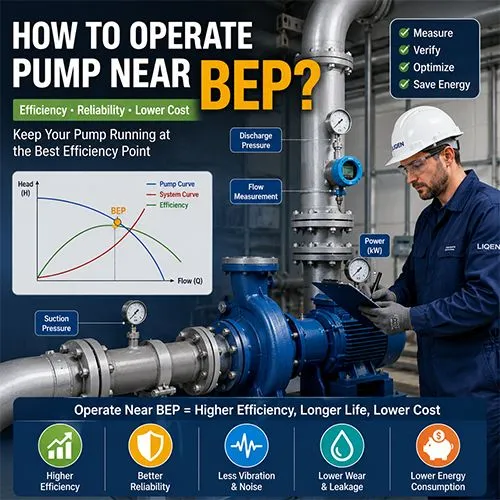
How to Operate Pump Near BEP: A Practical Guide for Efficient and Reliable Pump Operation
This article explains how buyers and engineers can operate a pump near BEP by measuring actual flow, suction pressure, discharge pressure, kW, vibration, valve position, and pump speed, then plotting the real duty point on the pump curve. It covers BEP definition, preferred operating range, left-of-BEP and right-of-BEP symptoms, correction methods, supplier verification, RFQ questions, commissioning checks, and maintenance actions.
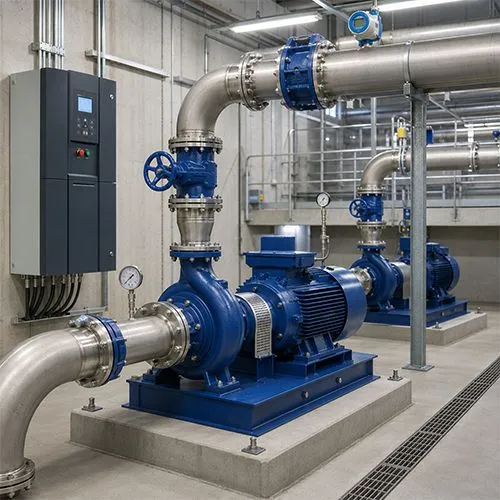
Best Energy Saving Pump Systems: A Practical Buyer’s Guide to Lower Pump Electricity Cost
This article explains how industrial buyers can choose the best energy saving pump systems by matching real duty point, pump curve, system curve, Best Efficiency Point, control method, pipe resistance, operating hours, and supplier verification data. It compares VFD pump systems, multi-pump systems, right-sized fixed-speed pumps, high-efficiency pump and motor systems, low-loss piping, and monitoring systems.
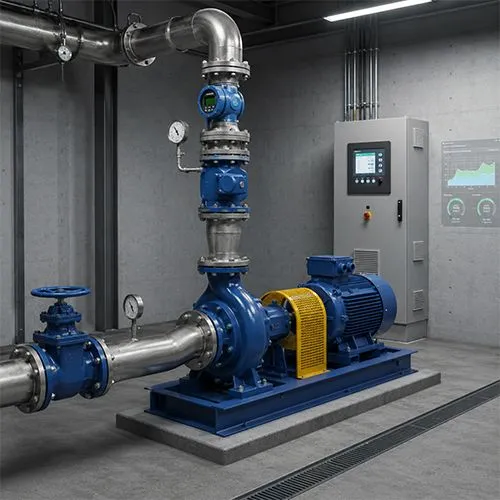
How to Reduce Pump Electricity Cost: A Practical Buyer’s Guide to Lower Pump Energy Bills
This article explains how industrial buyers can reduce pump electricity cost by verifying the real duty point, comparing pump and system curves, avoiding oversizing, reducing throttling and bypass losses, selecting the right control method, maintaining pump efficiency, and requiring supplier energy-performance data before purchase.
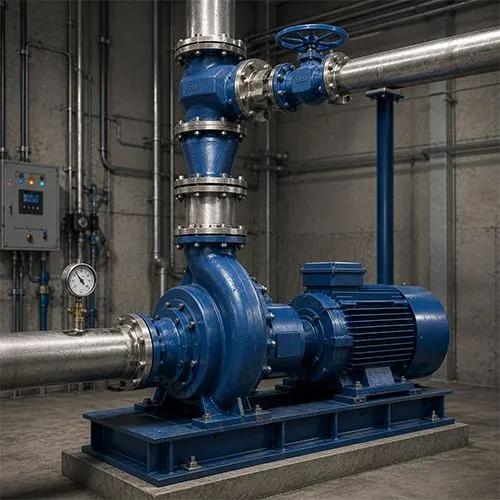
Why Oversized Pumps Waste Energy and How Buyers Can Avoid Costly Pump Oversizing
Oversized pumps waste energy when selected flow, head, or motor capacity exceeds the real system demand. This guide explains how throttling, bypass flow, off-BEP operation, frequent cycling, and poor control strategy increase electricity cost and maintenance risk. It helps industrial buyers verify duty point, pump curve, system curve, BEP range, NPSH margin, and supplier quotation data before approving a pump purchase.

Best Pump for Municipal Projects: Water Supply, Wastewater, Drainage, and Flood Control Pump Selection Guide
The best pump for municipal projects depends on service duty. Clean water transfer often uses split case, end suction, pipeline, or vertical turbine pumps; high-head booster stations often use multistage pumps; wastewater lift stations usually need submersible sewage pumps; and stormwater or flood control systems often require mixed-flow or axial-flow pumps.

Best Pump for High-Rise Buildings: Booster, Transfer, Fire, Drainage, and HVAC Pump Selection Guide
The best pump for high-rise buildings is usually a variable speed multi-pump booster system for domestic water pressure, combined with separate transfer pumps, fire pumps, drainage pumps, sewage pumps, and HVAC circulation pumps for different building services. Buyers should verify building height, pressure zoning, flow demand, tank arrangement, control method, standby capacity, and maintenance access before ordering.
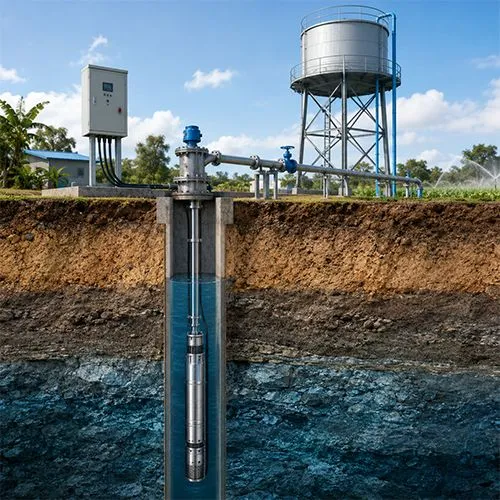
Best Pump for Borehole Water Supply: Deep Well Pump Selection Guide for Farms, Municipal, and Industrial Projects
The best pump for borehole water supply is usually a multistage submersible borehole pump when the water level is deep and groundwater must be lifted from below the dynamic water level. Buyers should verify dynamic water level, safe borehole yield, total dynamic head, flow demand, borehole diameter, sand content, cable sizing, motor protection, and dry-run protection before ordering.
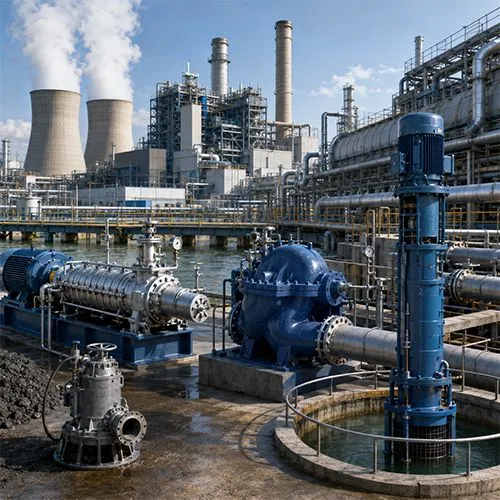
Best Pump for Power Plants: How to Choose Pumps for Cooling Water, Boiler Feed, Condensate, Drainage, and Auxiliary Systems
The best pump for power plants depends on the service duty, including boiler feed water, cooling water circulation, condensate extraction, raw water intake, ash slurry, sump drainage, fire water, auxiliary cooling, and emergency backup. This guide helps buyers compare pump types, verify NPSH margin, check material compatibility, plan redundancy, and reduce outage risk.

Best Pump for Greenhouses: How to Choose the Right Pump for Irrigation, Fertigation, Drainage, and Water Recycling
The best pump for greenhouses depends on the real application, including drip irrigation, fertigation, hydroponic circulation, misting, drainage, water recycling, and emergency backup. This guide helps greenhouse buyers compare pump types, calculate zone flow, check total dynamic head, verify chemical compatibility, and reduce crop risk caused by pump failure.
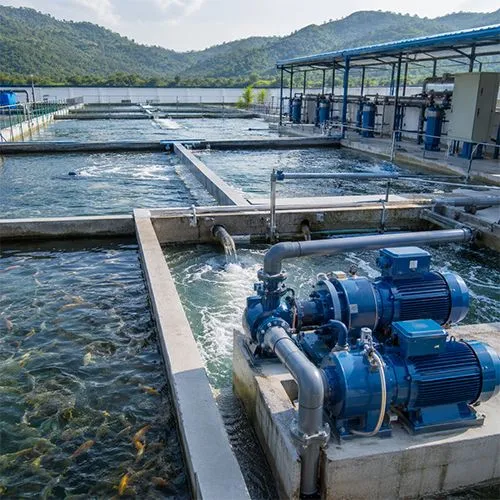
Best Pump for Fish Farms: How to Choose the Right Pump for Aquaculture Water Circulation, Drainage, and Oxygen Support
The best pump for fish farms depends on the real pumping task, including pond circulation, water transfer, filtration supply, drainage, wastewater removal, sludge handling, and emergency backup. This guide helps aquaculture buyers compare pump types, calculate flow and head, check solids handling, verify material compatibility, and reduce fish mortality risk caused by pump failure.

What Makes a Reliable Pump Manufacturer? A Buyer’s Guide to Factory Evaluation
A reliable pump manufacturer is a supplier that can consistently select, manufacture, test, document, deliver, and support pumps according to the buyer’s real operating conditions. This guide helps industrial buyers evaluate engineering capability, manufacturing control, testing evidence, material traceability, delivery reliability, spare parts support, and after-sales response before placing an order.
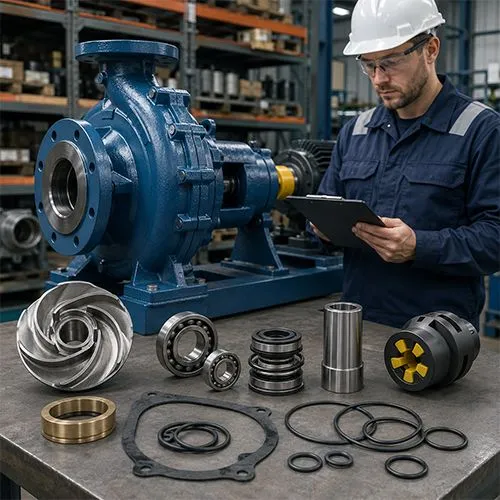
Pump Spare Parts Planning Guide: How Buyers Can Reduce Downtime Without Overstocking
Pump spare parts planning is the process of classifying pump components by failure risk, replacement frequency, supplier lead time, and downtime impact so buyers can keep the right parts available without overstocking unnecessary inventory. This guide helps industrial buyers plan seals, bearings, gaskets, impellers, wear parts, and long-lead components before pump failure causes production loss.
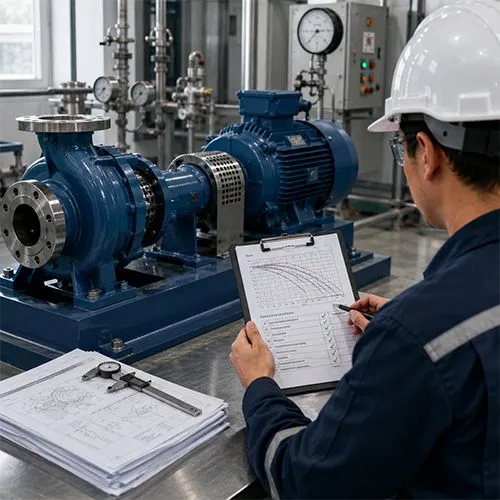
How to Verify Pump Test Reports: A Buyer’s Guide Before Pump Acceptance
A pump test report is acceptable only when the tested pump can be traced to the exact supplied unit and the report clearly shows the duty point, test speed, impeller diameter, performance curve, absorbed power, test standard, and acceptance tolerance. This guide helps industrial buyers verify pump test reports before shipment, final payment, or pump acceptance.
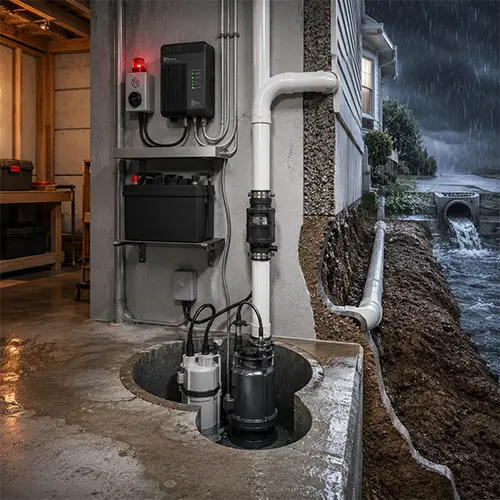
Best Pump for Basement Flood Control: How to Choose the Right Pump System for Flooded Basements, Stormwater, and Emergency Drainage
The best pump for basement flood control depends on water type, inflow rate, actual discharge head, sump pit size, solids content, power reliability, and failure consequence. Clean groundwater usually requires a submersible sump pump, basement sewage requires a sewage pump, and commercial basements or underground garages often need a duplex drainage system with alarm and backup power.

Best Pump for Fire Protection Systems: Fire Pump Selection Guide for Buildings, Industrial Sites, and High-Risk Facilities
fire pump selection guide, fire protection pump, fire pump system, electric fire pump, diesel fire pump, jockey pump, vertical turbine fire pump, horizontal split-case fire pump, fire pump for high rise building, fire pump for warehouse, fire pump for industrial plant, fire pump water source, fire pump acceptance test, fire pump controller, fire pump maintenance checklist, fire pump RFQ
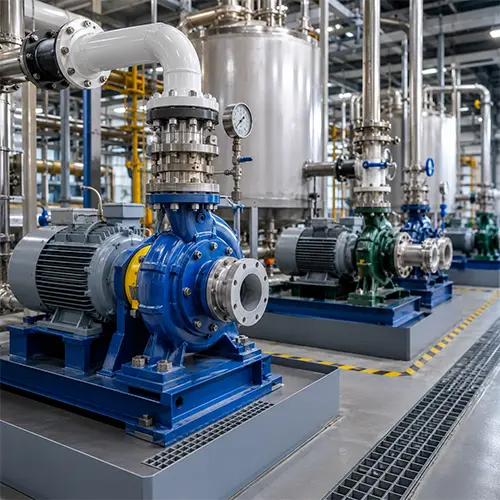
Best Pump for Chemical Plants: Chemical Pump Selection Guide by Medium, Corrosion Risk, Safety, and Process Duty
This chemical plant pump selection guide explains how to choose the best pump for chemical plants by evaluating chemical name, concentration, temperature, pH, vapor pressure, viscosity, density, solids content, corrosion risk, toxicity, flammability, leakage consequence, NPSH, material compatibility, seal strategy, process duty, and supplier documentation. It helps plant owners, process engineers, EHS teams, maintenance managers, and procurement buyers reduce corrosion, leakage, cavitation, dry running, crystallization, overload, wastewater failure, environmental risk, and worker exposure.
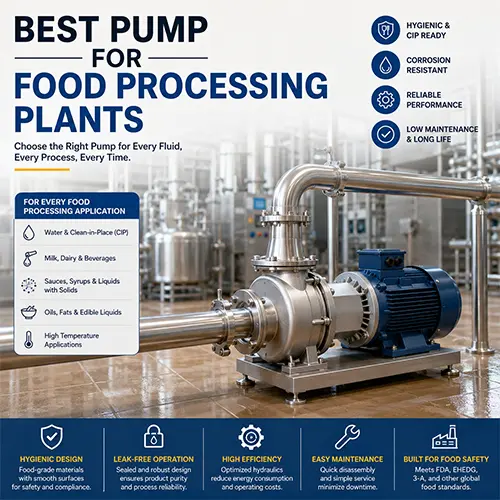
Best Pump for Food Processing Plants: Sanitary, Utility, Wastewater, and Process Pump Selection Guide
This food processing pump selection guide explains how to choose the best pump for food processing plants by evaluating food medium, product-contact status, viscosity, temperature, particles, shear sensitivity, CIP method, material compatibility, hygienic design, flow, pressure, utility duty, wastewater condition, and supplier documentation. It helps food plant owners, engineers, QA teams, maintenance managers, and procurement buyers reduce contamination risk, product damage, cleaning failure, pump overload, corrosion, clogging, downtime, and audit problems.
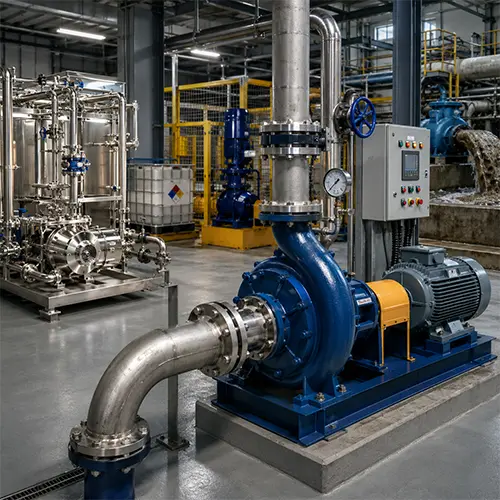
Best Pump for Factories: 2026 Industrial Pump Selection Guide by Factory Type, Fluid, Process, and Risk
This factory pump selection guide explains how to choose the best pump for factories by evaluating factory type, fluid condition, process duty, required flow, total head, corrosion risk, solids content, hygiene requirement, operating hours, VFD suitability, redundancy, supplier verification, and commissioning. It helps factory owners, engineers, maintenance teams, and procurement buyers avoid wrong pump selection, clogging, corrosion, leakage, overload, downtime, and production risk.
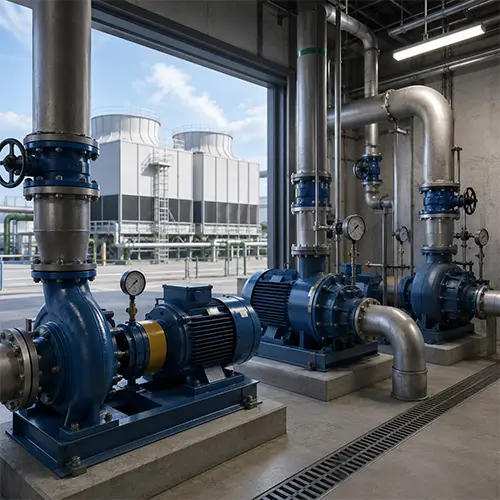
Best Pump for Cooling Towers: Guide to Cooling Water Pump Selection for HVAC and Industrial Systems
This cooling tower pump selection guide provides a practical decision framework for choosing cooling water pumps in HVAC condenser water loops, open cooling towers, closed cooling towers, commercial buildings, hotels, hospitals, shopping malls, and industrial process cooling systems. It covers flow calculation, TDH, pump curves, NPSH, condenser pressure drop, corrosion control, standby pumps, RFQ preparation, supplier red flags, and commissioning checks.

Best Pump for Shopping Centers: 2026 Guide to Water Supply, HVAC, Drainage, Sewage, and Stormwater Systems
The best pump for shopping centers is not one single pump model but a coordinated pump system designed around stable water pressure, reliable HVAC circulation, basement flood protection, sewage lifting, food court wastewater control, energy efficiency, and maintenance continuity. This guide provides application-specific selection logic, risk classification, calculation examples, supplier verification, RFQ guidance, and commissioning checks.

Best Pump for Hospitals: A 96+ Reference Guide for Reliable Water Supply, HVAC, Drainage, Hot Water, Backup, and Critical Operation
The best pump for hospitals is not one single pump model but a coordinated pump system designed around stable water pressure, reliable drainage, HVAC performance, hot water availability, emergency readiness, and business continuity. This guide provides selection logic, risk classification, calculation examples, troubleshooting steps, commissioning checks, and supplier verification guidance.
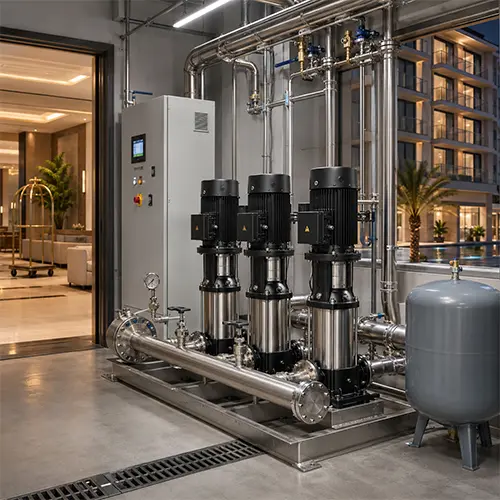
Best Pump for Hotels: A Practical Selection Guide for Stable Water Pressure, Hot Water, Drainage, HVAC, and Guest Comfort
The best pump for hotels is not one single pump model but a complete pump system designed around stable water pressure, fast hot water delivery, reliable sewage drainage, quiet operation, and business continuity. This guide provides practical selection logic, calculation examples, troubleshooting advice, supplier verification points, and RFQ preparation guidance.

Best Pump for Wastewater Plants: How to Choose the Right Pump for Influent, Sludge, Solids, Corrosion, Energy Cost, and Plant Reliability
There is no single best pump for every wastewater plant. Raw sewage usually needs submersible sewage pumps or dry-installed non-clog pumps, screened wastewater can often use non-clog centrifugal pumps, grit-heavy wastewater needs abrasion-resistant pump design, RAS needs stable low-shear flow, WAS and thickened sludge often need progressive cavity, screw, or rotary lobe pumps, and treated effluent can often use efficient centrifugal pumps if solids are removed.
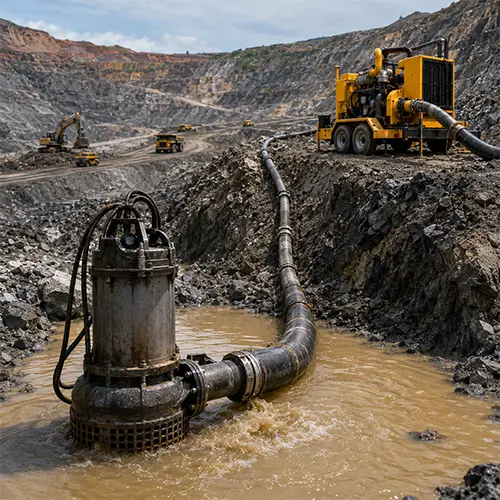
Best Pump for Mining Dewatering: How to Choose the Right Pump for Pit Water, Slurry, Head, Abrasion, and Site Reliability
There is no single best pump for every mining dewatering application. Clean seepage water may use submersible dewatering pumps, muddy water with sand may require heavy-duty dewatering pumps, abrasive slurry usually needs slurry pumps, deep pits or long pipelines may need high-head or staged pumping systems, and emergency flooding may require diesel self-priming or trailer-mounted pumps.
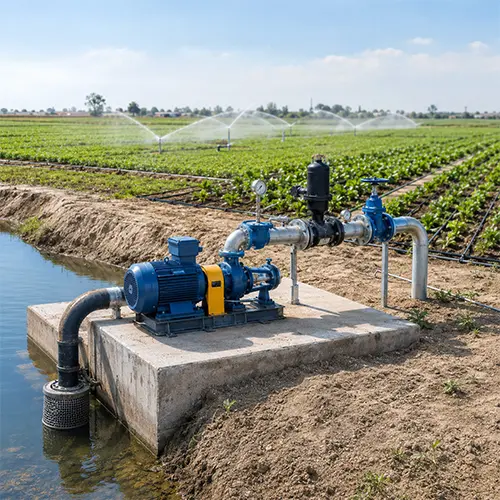
Best Pump for Irrigation Farms: How to Choose the Right Pump for Flow, Head, Water Source, and Crop Reliability
There is no single best pump for every irrigation farm. Surface water farms often use end suction centrifugal pumps, large canal-fed farms may use split case or mixed flow pumps, deep well farms usually need submersible deep well pumps, hilly farms may need multistage pumps, and remote farms may use diesel or solar pumps depending on power conditions.
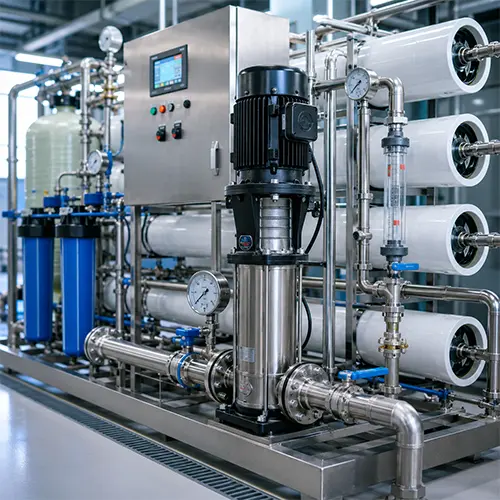
Best Pump for RO Water Systems: How to Choose the Right Pump for Pressure, Flow, and Membrane Protection
There is no single best pump for every reverse osmosis system. Domestic RO systems often use diaphragm booster pumps, commercial drinking water RO systems commonly use stainless steel multistage pumps, industrial brackish water RO systems need multistage centrifugal high-pressure pumps, and seawater RO systems require specialized corrosion-resistant high-pressure pumps.
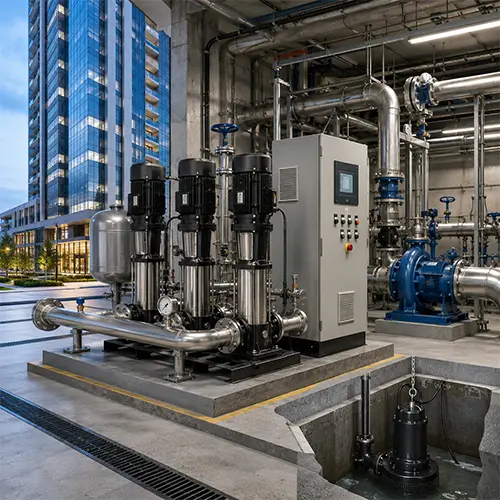
Best Pump for Commercial Buildings: How to Choose the Right Pump System
There is no single best pump for every commercial building. Domestic water supply usually needs a multistage booster pump system, high-rise buildings often need pressure zoning, HVAC circulation may use inline, end suction, or split case pumps, basement drainage uses submersible drainage pumps, and sewage systems require submersible sewage pumps.
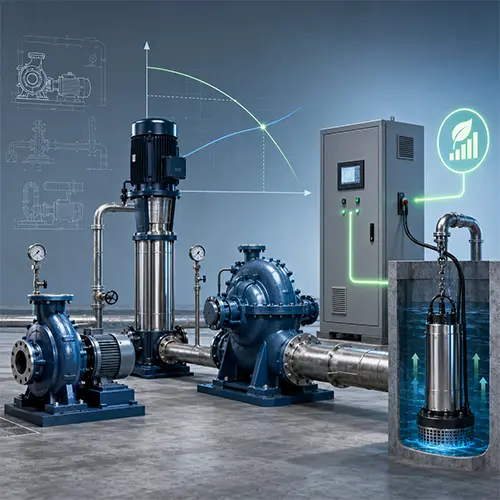
Which Pump Type Saves More Energy? A Practical Guide for Pump Buyers
No single pump type saves the most energy in every system. The most energy-efficient pump is the one that operates near its Best Efficiency Point, matches the required flow and head, handles the real liquid correctly, avoids unnecessary throttling, and uses the right control method.
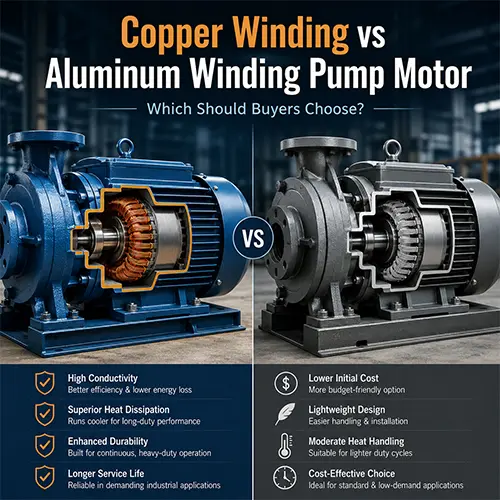
Copper Winding vs Aluminum Winding Pump Motor: Which One Should Buyers Choose?
A copper winding pump motor is usually safer for long-running, high-load, high-temperature, frequent-start, industrial, submersible, deep well, irrigation, booster, sewage, and critical pump applications. Aluminum winding may be acceptable for light-duty, intermittent, easy-to-replace, and low-risk pumps when supplier data is transparent.
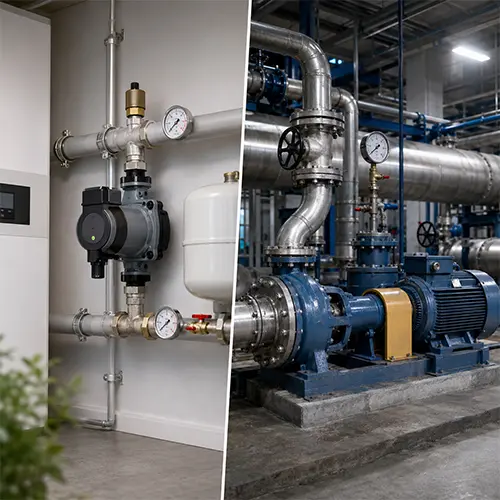
Wet Rotor vs Dry Rotor Circulation Pump: Which One Is Better for Your System?
A wet rotor circulation pump is usually suitable for clean, quiet, compact, small to medium closed-loop heating, hot-water, and HVAC circulation systems. A dry rotor circulation pump is usually better for larger commercial HVAC, district heating, industrial cooling, and long-running circulation systems that require stronger serviceability and maintenance planning.