
Best Pump for Fish Farms: How to Choose the Right Pump for Aquaculture Water Circulation, Drainage, and Oxygen Support
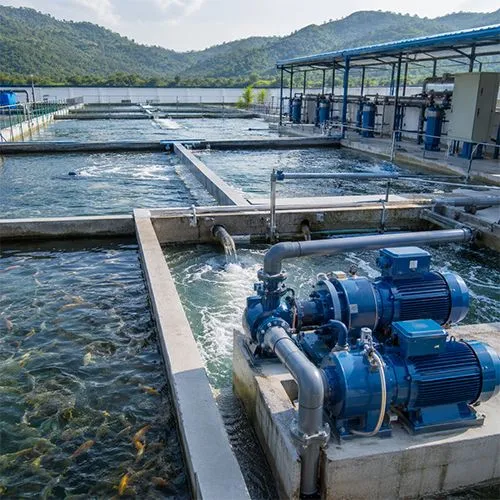
The best pump for fish farms is not a single universal pump model. It depends on whether the farm needs pond circulation, water transfer, pond drainage, filtration supply, wastewater removal, sludge handling, or emergency backup. A fish farm usually needs more than one pump type because circulation water, dirty wastewater, filter supply, and emergency pumping have different hydraulic and maintenance requirements.
Fish farm pump selection directly affects water quality, dissolved oxygen stability, fish stress, energy cost, maintenance frequency, and emergency risk. A pump that works well for clean irrigation water may fail quickly in a fish pond if the water contains fish waste, uneaten feed, algae, sludge, sand, or organic solids. A pump that moves a large volume of water may still be wrong if it creates excessive water velocity, wastes energy, or cannot handle long daily operation.
The best pump for a fish farm is the pump that can move the required water volume reliably while protecting water quality, oxygen stability, fish safety, energy cost, and maintenance access under the farm’s real operating conditions.
For most fish farms, the safest decision is not to ask “Which pump is best?” but to ask “Which pump is best for this specific task?” Pond circulation, filtration, drainage, wastewater discharge, and backup pumping should be selected separately. This guide helps aquaculture buyers, fish farm owners, project engineers, and pump distributors choose the right pump type, avoid common selection mistakes, and verify supplier recommendations before purchasing.
Quick Answer: What Is the Best Pump for Fish Farms?
The best pump for fish farms depends on the pumping task. Large ponds usually need low-head, high-flow circulation pumps. Filtration systems need stable continuous-duty pumps. Pond drainage may require submersible drainage pumps or self-priming pumps. Wastewater and sludge handling require sewage or slurry-capable pumps. High-density farms and RAS systems should include backup pumping because pump failure can quickly become a fish mortality risk.
A single cheap clean-water pump should not be expected to handle every fish farm task. Clean water transfer, pond circulation, dirty water removal, sludge handling, and emergency backup have different pump requirements.
| Fish Farm Need | Best Pump Type | Why It Fits | Main Risk If Wrong |
|---|---|---|---|
| Pond water circulation | Axial flow pump / mixed flow pump / low-head centrifugal pump | Moves large water volume at low head | Poor circulation and oxygen imbalance |
| Water transfer between ponds | End suction centrifugal pump / self-priming pump | Practical for controlled transfer | Flow loss if suction condition is poor |
| Pond drainage | Submersible drainage pump / self-priming pump | Handles temporary drainage and water removal | Slow drainage or clogging |
| Filtration system supply | Inline pump / centrifugal circulation pump | Stable flow to filters | Filter underperformance |
| Recirculating aquaculture system | Energy-efficient centrifugal / inline pump | Continuous circulation with stable pressure | High energy cost or system instability |
| Wastewater or sludge removal | Submersible sewage pump / slurry-capable pump | Handles solids and organic waste | Blockage and seal failure |
| Emergency backup | Diesel pump / standby electric pump | Protects fish during power failure | Fish loss during outage |
For most fish farms, the best system is a combination of pumps: one or more circulation pumps for water movement, a drainage or sewage pump for dirty water, a filter supply pump for treatment systems, and a backup pump or diesel-powered unit for emergency operation.
Scope of This Guide: Which Fish Farm Pump Applications Does This Article Cover?
This guide applies to fish farm pump selection for freshwater ponds, aquaculture tanks, drainage systems, filtration loops, wastewater discharge, and emergency pumping. It is written for buyers who need practical selection logic before speaking with a pump supplier or approving a quotation.
Applicable Fish Farm Types
This guide is suitable for common aquaculture applications where pumps are used to move, circulate, drain, filter, or discharge water. The exact pump model should still be confirmed by flow, head, water quality, solids content, power supply, and operating hours.
Applicable fish farm types include:
- Earthen pond fish farms
- Concrete pond fish farms
- Tilapia farms
- Catfish farms
- Carp farms
- Shrimp and prawn farms
- Hatcheries
- Nursery tanks
- Recirculating aquaculture systems
- Flow-through aquaculture systems
- Aquaculture wastewater handling systems
- Fish farm emergency water transfer systems
These applications often share similar pump selection questions, but their risk levels are different. A low-density earthen pond can tolerate more variation than a high-density hatchery or recirculating aquaculture system.
Applicable Pump Tasks
Fish farm pumps are used for different duties, and each duty should be evaluated separately. A pump selected for pond drainage may not be suitable for continuous filtration circulation.
This guide covers:
- Pond circulation
- Water intake
- Water transfer
- Pond drainage
- Filtration supply
- Wastewater discharge
- Sludge handling
- Oxygen support circulation
- Backup pumping during power outage
The correct pump choice depends on whether the buyer needs continuous operation, temporary pumping, solids handling, low-head high-flow movement, or emergency protection.
Not Suitable as the Only Selection Method
This guide should not replace project-specific hydraulic design for large or sensitive aquaculture systems. It provides buyer decision logic, but some projects require detailed engineering calculation, supplier verification, or third-party design review.
Do not use this guide as the only selection method for:
- Large industrial aquaculture projects
- High-density RAS systems
- Seawater fish farms
- Biosecurity-sensitive hatcheries
- Projects requiring government approval
- Systems with strict water quality control
- Pumping corrosive chemical-treated water
- Sites with long pipelines or complex elevation changes
- Farms where pump failure could cause immediate large-scale fish mortality
In these cases, buyers should combine this guide with hydraulic calculations, pump curves, pipe loss calculations, backup power planning, material verification, supplier testing records, and site-specific aquaculture engineering input.
Why Fish Farm Pump Selection Is Different From General Water Transfer
Fish farm pump selection is different because the pump affects a living system, not only a water delivery task. A general water transfer pump only needs to move water from one point to another. A fish farm pump must move water in a way that protects oxygen stability, water quality, fish behavior, filtration performance, and long-term operating cost.
Fish farm water is also rarely perfect clean water. Even when it looks clear, it may contain organic particles, algae, fish waste, uneaten feed, fine sand, plant debris, or biofilm fragments. These materials can clog an ordinary clean-water pump, damage seals, reduce impeller efficiency, or block the intake screen.
| Fish Farm Condition | Why It Affects Pump Choice |
|---|---|
| Large water volume | Requires efficient low-head circulation |
| Fish sensitivity | Sudden flow or oxygen change can stress fish |
| Organic solids | May clog ordinary clean-water pumps |
| Continuous operation | Energy efficiency and motor reliability matter |
| Remote farm location | Backup pumps and easy maintenance are important |
| Seasonal water change | Pump duty may vary by rain, temperature, and stocking density |
| High stocking density | Pump failure can quickly affect dissolved oxygen and mortality risk |
| Filtration dependency | Unstable flow can reduce biofilter and solids removal performance |
A fish farm pump should therefore be selected by system duty, not just by pipe diameter or pump price. The buyer should confirm the real flow at the required total head, the type of water being pumped, the solids content, the operating schedule, and the consequence of pump failure.
Main Types of Pumps Used in Fish Farms
Fish farms use several pump types because water circulation, transfer, drainage, wastewater handling, and emergency backup have different operating conditions. The best pump type depends on flow, head, water quality, solids content, installation method, and runtime.
Centrifugal Pumps for Fish Farm Water Transfer
Centrifugal pumps are commonly used for fish farm water transfer, filter supply, and general circulation where the water is relatively clean or only lightly contaminated. They are practical, widely available, and easier to maintain than many special-purpose pumps.
A centrifugal pump works by using a rotating impeller to add energy to the water and move it through the discharge line. In fish farms, centrifugal pumps are often used for pond filling, pond-to-pond transfer, clean water intake, filter system supply, and moderate-flow circulation.
The main advantage of centrifugal pumps is availability and ease of maintenance. They can be cost-effective when the water does not contain large solids or heavy sludge. However, buyers should not assume that all centrifugal pumps can handle fish waste or sediment.
Key risks include:
- Limited self-priming ability if installed above water level
- Cavitation if suction conditions are poor
- Seal damage if the pump runs dry
- Clogging if fish waste or debris enters the impeller
- Efficiency loss if the pump runs far from its designed duty point
A centrifugal pump is a good choice when the buyer can provide stable suction, suitable intake protection, and water quality that matches the pump design.
Submersible Pumps for Pond Drainage and Wastewater
Submersible pumps are useful for fish pond drainage, sump pumping, emergency water removal, and temporary transfer because they can operate directly in water. They are often easier to install for seasonal or harvest-related drainage tasks.
A submersible pump can be lowered into a pond, sump, drainage pit, or collection chamber. For fish farms, it may be used for pond drainage after harvest, emergency flood removal, dirty water transfer, or temporary dewatering.
The main advantage is simple installation. The pump does not require long suction piping because it is already submerged. This reduces suction priming problems. However, submersible pumps have their own risks: cable damage, seal leakage, motor water ingress, and blockage.
For dirty fish farm water, buyers should choose the correct submersible pump type. A clean-water submersible pump may not handle fish waste, feed residue, sludge, or soft solids. If the water contains organic solids, a submersible sewage pump or non-clog design is usually safer.
Axial Flow and Mixed Flow Pumps for Large Pond Circulation
Axial flow and mixed flow pumps are suitable for large-volume, low-head fish pond circulation. They are often used when the farm needs to move a large amount of water without generating high pressure.
An axial flow pump moves water mainly parallel to the pump shaft. It is suitable for low-head, high-flow applications. A mixed flow pump combines axial and centrifugal flow characteristics and can handle slightly higher head than a pure axial flow pump.
These pumps are useful for large pond circulation, broad water movement, low-head water exchange, shrimp pond circulation, oxygen distribution support, and flow-through aquaculture water movement.
The main advantage is efficiency at large flow and low head. The main limitation is that they are not suitable for high-head pumping. If the pipeline is long, the pipe diameter is small, or the discharge elevation is high, an axial flow pump may lose performance quickly.
Buyers should verify actual total head before selecting this pump type. A pump designed for low head may not work well if the system has high pipe friction or elevation difference.
Self-Priming Pumps for Fish Farms With Difficult Suction Conditions
Self-priming pumps are useful when the pump is installed above the water level or when suction conditions change. They are commonly used for pond water transfer, temporary pumping, and farm sites where submerged installation is not convenient.
A self-priming pump can remove air from the suction line after initial priming, allowing it to start more easily than a standard centrifugal pump. It can be useful for ground-mounted pond transfer, temporary water movement, pumping from ponds or canals, and applications where maintenance access is important.
Self-priming does not mean unlimited suction ability. Buyers still need to control suction lift, suction pipe diameter, foot valve condition, air leakage, and inlet blockage. If suction lift is too high or the intake line leaks air, flow will drop and the pump may fail to prime reliably.
Self-priming pumps are practical, but they should not be used as a shortcut to ignore suction design.
Sewage Pumps for Fish Wastewater and Organic Solids
Sewage pumps are better suited for fish farm wastewater, organic solids, soft sludge, and feed residue than ordinary clean-water pumps. They are commonly used for settlement tanks, dirty water collection, fish waste discharge, and aquaculture wastewater handling.
Fish farm wastewater may contain fish feces, uneaten feed, algae, soft organic solids, sediment, biofilm fragments, and plant debris. A sewage pump usually has a larger passage, non-clog impeller design, and stronger solids handling capability than a clean-water pump.
However, a sewage pump is not always the best choice for clean continuous circulation because it may be less efficient than a properly selected clean-water circulation pump. Sewage pumps are best used where solids handling matters more than hydraulic efficiency.
Pump Type Decision Boundary: Which Pump Fits Which Fish Farm Task?
Pump type boundaries help buyers avoid the common mistake of using one pump for every fish farm task. Each pump type has an appropriate operating range and a clear unsuitable range.
| Pump Type | Best For | Not Suitable For | Buyer Decision Note |
|---|---|---|---|
| Axial flow pump | Large low-head pond circulation and water movement | Long pipelines, high head, high pressure transfer | Choose when flow is large and head is very low |
| Mixed flow pump | Low-to-medium head aquaculture water movement | High-pressure filtration loops | Useful when axial flow is too low-head but centrifugal is inefficient |
| End suction centrifugal pump | Clean water transfer, pond filling, filter supply | Heavy sludge, fish waste, high solids | Needs good suction and intake protection |
| Inline centrifugal pump | Filtration loops, tank circulation, compact installation | Dirty water with solids | Good for controlled clean-water circulation |
| Self-priming pump | Surface-mounted pond transfer and mobile pumping | Excessive suction lift, heavy solids, dry running | Easier maintenance, but suction design still matters |
| Submersible drainage pump | Temporary pond drainage and emergency dewatering | Precision circulation, heavy sludge unless rated | Good for drainage but not always ideal for continuous main circulation |
| Submersible sewage pump | Fish waste, settlement tank water, soft solids | High-efficiency clean-water circulation | Choose when solids handling is more important than efficiency |
| Slurry-capable pump | Sediment, heavy sludge, abrasive solids | Clean water energy-saving circulation | Needed when solids are abrasive or heavy |
| Diesel pump | Emergency backup and power outage protection | Routine 24/7 circulation | Backup solution, not the first choice for normal continuous duty |
The best fish farm pump decision should start from duty type: circulation, transfer, filtration, drainage, wastewater, sludge, or emergency backup. Once the task is clear, buyers can narrow the pump type and then confirm flow, head, solids, material, motor protection, and maintenance access.
How to Choose the Best Pump for Fish Farm Water Circulation
The best fish farm circulation pump should move enough water to prevent poor circulation, oxygen imbalance, and waste accumulation without creating excessive water velocity or energy waste. The buyer should size the pump based on water volume, required turnover, total head, fish species, stocking density, and system layout.
Step 1: Calculate Required Water Turnover
The first step in fish farm circulation pump selection is to estimate how much water must be moved within a target time. The buyer should not start with pump horsepower or outlet size. The correct starting point is the water volume and the circulation objective.
Key factors include:
- Pond volume
- Fish species
- Stocking density
- Water temperature
- Oxygen demand
- Filtration capacity
- Whether aerators are installed
- Daily or hourly turnover target
- Whether the pump is for circulation, filtration, or full water exchange
A low-density pond may only need moderate circulation and water movement. A high-density pond or hatchery tank may need more stable circulation because oxygen demand and waste loading are higher.
| Fish Farm System | Typical Circulation Priority | Pump Selection Focus |
|---|---|---|
| Low-density pond | Moderate | Energy cost and basic circulation |
| High-density pond | High | Stable circulation and oxygen support |
| Hatchery tanks | Very high | Gentle flow and filtration stability |
| RAS system | Critical | Continuous duty, efficiency, redundancy |
| Shrimp pond | High | Large-volume low-head water movement |
The buyer should also consider whether circulation is supported by aerators. Pumps can help move water and distribute oxygen, but they do not replace the need for proper aeration in high-density systems.
Step 2: Confirm Total Head, Not Only Flow Rate
Fish farm buyers often make the mistake of asking only for flow rate, such as “100 cubic meters per hour.” This is not enough. A pump’s real flow depends on the total head, which includes elevation difference and pipeline resistance.
Total head may include:
- Static lift
- Pipe length
- Pipe diameter
- Elbows and valves
- Filter resistance
- Discharge height
- Water level variation
- Screen or strainer loss
- Flow control valve loss
A pump may deliver high flow at low head but much less flow when connected to a long pipeline, narrow pipe, or filter system. This is why the supplier should provide a pump curve, not only a catalog flow value.
If the fish farm has long pipelines or many elbows, the buyer should ask the supplier to estimate friction loss or provide a selection based on the actual pipe layout.
Step 3: Match Flow Pattern With Fish Safety
The correct fish farm pump should create useful water movement without causing stress or uneven water quality. More flow is not always better. Excessive velocity can stress fish, interfere with feeding, disturb pond sediment, and waste power.
| Flow Condition | Fish Farm Result | Buyer Action |
|---|---|---|
| Too weak | Dead zones, low oxygen, poor waste movement | Increase circulation or improve layout |
| Too strong | Fish stress, uneven feeding, energy waste | Reduce velocity or redesign outlets |
| Uneven flow | Some zones become poor water quality areas | Adjust pump placement and outlet direction |
| Stable controlled flow | Better oxygen distribution and waste movement | Preferred target |
Outlet direction and water movement pattern are as important as pump capacity. A correctly selected pump can still perform poorly if the discharge layout creates short-circuit flow, where water moves directly from inlet to outlet without circulating the pond.

Best Pump by Fish Farm Scenario
The best pump for a fish farm should be selected by scenario because pond size, fish density, water quality, filtration design, and emergency risk are different. A pump that works well for pond drainage may be inefficient for continuous circulation, and a clean-water circulation pump may clog when used for sludge removal.
| Fish Farm Scenario | Recommended Pump Choice | Why |
|---|---|---|
| Large earthen pond circulation | Axial flow or mixed flow pump | Large water volume at low head |
| Small concrete pond transfer | End suction centrifugal pump | Practical and easy to maintain |
| Hatchery water circulation | Low-noise inline or centrifugal pump | Stable controlled flow |
| RAS filtration loop | Energy-efficient inline / centrifugal pump | Continuous flow and efficiency |
| Pond drainage after harvest | Submersible drainage pump | Easy temporary installation |
| Wastewater with fish waste | Sewage pump | Better solids handling |
| Remote fish farm | Electric pump + diesel backup pump | Reduces outage risk |
| High-density fish farming | Redundant circulation pump system | Prevents fish loss during failure |
| Shrimp pond water movement | Axial flow / low-head high-flow pump | Supports broad water circulation |
| Emergency flood removal | High-flow submersible or diesel pump | Fast drainage under abnormal conditions |
For low-density farms, simple and maintainable equipment may be more important than advanced control. For high-density or RAS farms, reliability, redundancy, efficiency, and alarm integration become more important than initial price.
Pump Selection for Recirculating Aquaculture Systems
Pump selection for RAS (Recirculating Aquaculture System) must be stricter than ordinary pond pumping because the system depends on continuous water movement through filtration and treatment units. In a RAS system, pump failure can affect circulation, dissolved oxygen, solids removal, biofiltration, ammonia control, and fish survival.
A RAS pump should not be selected only by maximum flow. The buyer must check the actual operating point after all filter resistance, pipe friction, UV sterilizer pressure loss, elevation, valves, and water level variation are considered.
RAS pump selection should focus on:
- Continuous-duty motor design
- Stable flow at the real total head
- Energy efficiency for long daily operation
- Low vibration and acceptable noise
- Easy access for maintenance
- Compatibility with filters, UV units, and treatment devices
- Backup pump or N+1 redundancy
- Alarm and emergency response planning
- Spare parts availability
| RAS Pump Selection Factor | Why It Matters |
|---|---|
| Continuous operation | RAS pumps may run nearly 24/7 |
| Filter resistance | Biofilters, drum filters, UV units, and pipes add head loss |
| Stable flow | Flow instability affects water quality control |
| Energy efficiency | Pump power cost becomes a major operating cost |
| Redundancy | Pump failure can quickly create biological risk |
| Maintenance access | Pumps must be serviceable without shutting down the entire farm |
For RAS systems, the lowest-price pump is rarely the safest choice. Buyers should ask the supplier to mark the selected duty point on the pump curve and confirm whether the pump can operate continuously under the real system head.
When NOT to Choose a Standard Clean-Water Pump for Fish Farms
A standard clean-water pump should not be used when fish farm water contains significant waste, sludge, sand, debris, or corrosive treatment chemicals. Clean-water pumps are designed for relatively clear water and may clog, leak, overheat, or lose efficiency when used in dirty aquaculture conditions.
Do not choose a standard clean-water pump when:
- The water contains large amounts of fish waste and feed residue.
- The pump must move settlement tank wastewater.
- The pump must handle sludge or mud.
- Sand content is high.
- The pump may run dry.
- The water contains corrosive treatment chemicals.
- The pipeline or intake is likely to clog.
- Emergency sewage or dirty water removal is required.
- The pump must operate continuously but is not continuous-duty rated.
| Wrong Pump Choice | Likely Problem |
|---|---|
| Clean-water pump used for fish waste | Clogging and seal damage |
| Small pump selected only by pipe size | Insufficient flow |
| High-head pump used for low-head circulation | Energy waste |
| No backup pump in high-density farm | Fish loss during outage |
| Cheap pump with weak sealing | Water ingress and motor failure |
| Pump without solids handling | Frequent blockage |
| Non-continuous-duty pump used 24/7 | Motor overheating and premature failure |
A clean-water pump can still be used in a fish farm when the water is clean enough, the intake is protected, and the pump is selected for the real flow and head. The problem is not the pump category itself; the problem is using it outside its design limits.
Fish Fry and Nursery Tank Pump Protection
Fish fry and nursery tank pump selection requires extra care because small fish can be harmed by excessive suction velocity, poor intake protection, or sudden flow changes. A pump that is safe for adult fish ponds may be too aggressive for hatcheries and nursery systems.
The intake design is often more important than the pump brand. The pump should not directly pull water from an area where fish fry gather. The intake screen should have enough surface area to reduce suction velocity, but it must not be so fine that it clogs quickly with algae, feed residue, or biofilm.
Buyers should check:
- Whether the intake screen prevents fry from entering the pump
- Whether the screen area is large enough to reduce suction velocity
- Whether the screen can be cleaned without stopping the system for too long
- Whether the pump outlet creates gentle and even flow
- Whether backup circulation is available for sensitive tanks
- Whether the pump can maintain stable low-flow conditions if needed
| Nursery Pump Risk | Possible Result | Buyer Action |
|---|---|---|
| Intake screen too coarse | Fish fry may be sucked into the pump | Use suitable screen opening and larger intake area |
| Intake screen too fine | Frequent blockage and flow reduction | Increase screen area and cleaning access |
| Suction velocity too high | Fish stress or physical injury | Reduce velocity by increasing intake area |
| Outlet flow too strong | Uneven feeding and fish stress | Use diffusers or redirect outlets |
| No backup pump | Rapid oxygen and circulation risk | Keep standby pump ready |
For hatcheries and nursery tanks, gentle flow, stable circulation, safe intake design, and easy cleaning are more important than simply choosing the highest-flow pump.
Energy Efficiency: Why Fish Farm Pump Power Cost Matters
Fish farm pump energy cost matters because many aquaculture pumps run for long hours every day. A low-price pump can become expensive if it is inefficient, oversized, throttled heavily, or operated far from its best efficiency range.
A buyer should evaluate lifecycle cost, not only purchase price. The pump price is paid once, but electricity cost continues every day. In high-density farms and RAS systems, pump efficiency can directly affect production cost.
A simple energy cost formula is:
Annual Energy Cost = Motor Power × Operating Hours × Electricity Price
For example, if two pumps both meet the required duty but one uses more power every day, the cheaper pump may become more expensive over a full production cycle.
| Pump Option | Motor Power | Runtime | Result |
|---|---|---|---|
| Oversized pump | Higher kW | Long daily runtime | Higher operating cost |
| Correctly selected pump | Proper kW | Stable circulation | Better lifecycle cost |
| Undersized pump | Lower kW | Fails to move enough water | Water quality risk |
| Pump throttled by valve | Higher actual energy waste | Long runtime | Heat, inefficiency, and operating cost increase |
Oversizing is common because buyers fear insufficient flow. However, a larger pump is not automatically safer. If the pump is too large, the operator may throttle the discharge valve, waste electricity, create excessive velocity, and increase stress on pipes and fittings.
A correctly selected pump should operate close to its efficient range at the real duty point.
Solids Handling: Can the Pump Handle Fish Waste, Feed Residue, and Sludge?
Fish farm pump selection must consider solids because aquaculture water often contains organic matter even when it looks visually clean. Ignoring solids is one of the fastest ways to cause clogging, seal failure, impeller damage, and unstable flow.
Clean Water vs Dirty Water in Fish Farms
Fish farm water quality varies by location and duty. Water from a clean intake channel may be suitable for a centrifugal pump, while water from the pond bottom, settlement tank, or sludge zone may require a sewage or slurry-capable pump.
Fish farm water may contain:
- Fish waste
- Uneaten feed
- Algae
- Fine sand
- Organic sludge
- Plant debris
- Biofilm particles
- Small shells or pond debris
- Soft solids from settlement tanks
A buyer should describe the water honestly to the supplier. Calling all fish farm water “clean water” can lead to wrong pump selection.
Which Pump Handles Solids Better?
Different pump types handle solids differently. The buyer should match the pump to the solids type, not only to the water volume.
| Water Condition | Suitable Pump Type |
|---|---|
| Clean intake water | Centrifugal pump |
| Light organic particles | Non-clog centrifugal / drainage pump |
| Wastewater with soft solids | Submersible sewage pump |
| Sludge or heavy sediment | Slurry-capable pump |
| Large debris risk | Pump with screen and proper intake design |
A sewage pump is usually better for soft organic solids. A slurry-capable pump is more suitable when abrasive solids, sand, or heavier sediment are present. A standard drainage pump may not survive heavy sludge service.
Intake Protection Matters
Fish farm pump intake design is critical because the intake is where many pump problems begin. A good pump can still clog or damage fish if the intake is poorly designed.
Buyers should check:
- Whether the intake screen is correctly sized
- Whether the screen opening is too large for fish or debris risk
- Whether the screen is too fine and easy to clog
- Whether the intake is too close to sludge
- Whether the intake velocity may harm fish fry
- Whether the intake can be cleaned easily
- Whether plant debris or feed residue can accumulate
For hatcheries and nursery tanks, intake velocity and screen protection are especially important because small fish are vulnerable.
If the farm handles dirty water, fish waste, or organic solids, buyers can also compare pump type risks through this submersible vs surface pump guide before deciding between submerged drainage and surface-mounted transfer.
Pump Materials for Fish Farms: What Should Buyers Check?
Fish farm pump materials should be selected according to water chemistry, salinity, corrosion risk, abrasion, and outdoor exposure. Material selection is especially important for brackish water, seawater, chemical-treated water, high-organic-load systems, and farms using disinfectants or water treatment chemicals.
Common factors include:
- Freshwater or seawater
- pH value
- Salinity
- Chemical treatment
- Organic load
- Abrasion
- Temperature
- Outdoor exposure
- Cable exposure for submersible pumps
- Fastener corrosion risk
| Component | What to Check | Why |
|---|---|---|
| Pump casing | Cast iron, stainless steel, coated material | Corrosion resistance |
| Impeller | Cast iron, stainless steel, bronze, engineering plastic | Wear and corrosion |
| Shaft | Stainless steel grade | Long-term corrosion resistance |
| Mechanical seal | Face material and elastomer | Leakage control |
| Cable | Submersible-rated cable | Prevents water ingress |
| Fasteners | Stainless or coated fasteners | Outdoor corrosion prevention |
Freshwater farms may use cast iron or coated cast iron in many normal applications. Brackish water farms should be more careful with ordinary cast iron because chloride and salinity can accelerate corrosion if coating, shaft material, fasteners, and seal components are not suitable. Seawater fish farms may require stainless steel, bronze, duplex stainless steel, engineered plastics, or special coatings depending on budget, salinity, temperature, and corrosion severity.
Buyers should not check only the pump casing material. The impeller, shaft, bolts, mechanical seal spring, elastomer, cable sheath, and fasteners may fail earlier than the casing if they are not compatible with the water.
If the fish farm uses brackish water, seawater, or chemical-treated water, this pump corrosion troubleshooting guide can help buyers understand why material selection should be verified before ordering.
Pump Installation Issues That Affect Fish Farm Performance
Fish farm pump performance depends on installation as much as pump selection. A correctly selected pump can still deliver poor flow if the suction pipe leaks air, the intake is blocked, the outlet direction is wrong, or the pipeline is too small.
Common installation problems include:
- Suction pipe too small
- Pump installed too far from water source
- Air leakage in suction line
- Wrong foot valve
- Blocked strainer
- Too many elbows
- Discharge pipe too narrow
- Pump running off the curve
- No check valve
- No backup power
- No dry-run protection
- Intake too close to pond bottom sludge
- Outlet placed where water short-circuits back to the inlet
| Installation Problem | Result in Fish Farm |
|---|---|
| Air leakage at suction | Pump loses prime |
| Intake too close to sludge | Frequent clogging |
| Outlet direction wrong | Poor pond circulation |
| No screen protection | Fish or debris may enter pump |
| Pipe too small | Flow drops and power use rises |
| No standby pump | High mortality risk during failure |
| Too many elbows | Higher friction loss and lower real flow |
| No dry-run protection | Seal and motor damage during low water condition |
For self-priming and surface-mounted centrifugal pumps, suction design is especially important. The suction pipe should be short, airtight, correctly sized, and protected from blockage. For submersible pumps, cable protection, lifting method, and intake location are more important.
Reliability and Backup: Why Fish Farms Need Pump Redundancy
Fish farms need pump redundancy because pump failure is not only an equipment problem. In high-density aquaculture, circulation or filtration failure can quickly affect dissolved oxygen, waste concentration, fish stress, and mortality risk.
A low-density pond may tolerate a short pump stoppage. A hatchery, nursery tank, or RAS system may not. The higher the fish density and the more the system depends on mechanical circulation, the stronger the backup plan should be.
| Fish Farm Risk Level | Backup Recommendation |
|---|---|
| Low-density pond | Spare pump recommended |
| Medium-density pond | Standby pump strongly recommended |
| High-density pond | Redundant pump system required |
| Hatchery | Backup pump and alarm required |
| RAS system | N+1 redundancy and emergency power |
| Remote farm | Diesel or generator-backed pump |
N+1 redundancy means the system has one extra pump beyond the number required for normal operation. For example, if two pumps are required for normal circulation, a third standby pump may be installed or kept ready. This reduces the risk of total circulation failure.
Remote farms should also consider power reliability. If the local power supply is unstable, a diesel pump, generator-backed pump, or standby power system may be necessary.
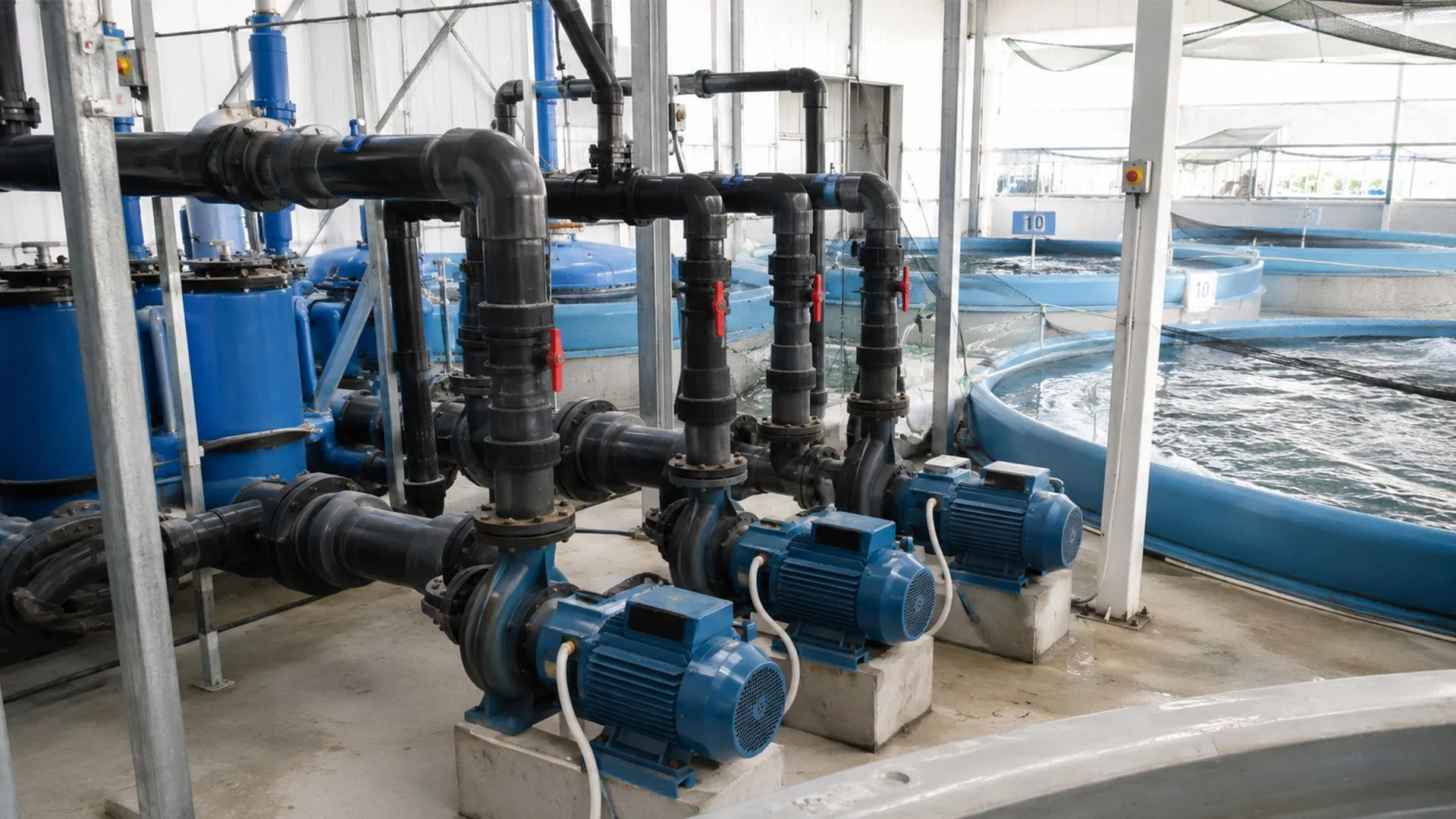
How to Size a Pump for Fish Farms
Fish farm pump sizing should start with the water volume and pumping target, then add total head and pipeline loss. Buyers should not size the pump only by pipe diameter, motor power, or another farm’s pump model.
Step 1: Estimate Water Volume
The first step is to estimate the water volume that the pump must circulate, transfer, drain, or filter. For a pond, the simple volume formula is:
Pond Volume = Length × Width × Average Depth
For example, a pond that is 40 meters long, 20 meters wide, and 1.5 meters average depth has an approximate water volume of:
40 × 20 × 1.5 = 1,200 cubic meters
This volume does not automatically mean the pump must move all water every hour. The required turnover depends on fish species, density, water quality strategy, aeration, and filtration design.
Step 2: Decide Turnover or Pumping Target
Pump sizing depends on the task. A circulation pump, drainage pump, filter supply pump, and emergency pump all have different targets.
| Purpose | Sizing Target |
|---|---|
| Circulation | Required hourly turnover |
| Drainage | Required drainage time |
| Filtration | Filter system design flow |
| Water transfer | Transfer volume and time |
| Emergency pumping | Fastest acceptable recovery time |
For example, a drainage pump may be sized based on how many hours the farm can accept for pond emptying after harvest. A filter supply pump should be sized based on the filter’s required design flow, not only the pond volume.
Step 3: Add Head and Pipeline Loss
After estimating the flow target, the buyer must calculate or estimate the total head. A pump that meets the flow target at zero head may deliver much less after pipe friction and elevation are included.
Total head includes:
- Static head
- Friction loss
- Filter pressure loss
- Valve and elbow loss
- Water level fluctuation
- Outlet elevation
- Intake screen loss if significant
The buyer should provide pipe length, pipe diameter, number of elbows, valves, filters, and elevation difference to the supplier. Without this information, the supplier may select a pump that looks correct on paper but underperforms on site.
Step 4: Choose Pump Near Efficient Operating Range
A fish farm pump should operate near its efficient range, not at the extreme edge of the pump curve. Long-term operation far from the efficient range can increase energy cost, vibration, heating, seal wear, and motor load.
Buyers should ask the supplier to show the duty point on the pump curve. The selected point should be realistic under actual site conditions. For continuous-duty fish farm pumps, this is especially important because small inefficiencies accumulate into large operating costs over time.
Example: Choosing a Pump for a 1,200 m³ Fish Pond
A practical fish pond example helps buyers understand why the “best pump” depends on the task. A 1,200 m³ pond may need one pump for circulation, another for drainage, and another for dirty water or emergency handling.
Assume the pond is 40 m long, 20 m wide, and 1.5 m deep. The approximate water volume is:
40 × 20 × 1.5 = 1,200 m³
If the purpose is broad pond circulation with low head, a low-head high-flow axial flow or mixed flow pump may be considered. If the purpose is supplying a filter, the buyer should size the pump according to the filter’s design flow and total head. If the purpose is draining the pond after harvest, a submersible drainage pump or self-priming pump may be more practical. If the water contains sludge or fish waste, a sewage or slurry-capable pump may be safer.
| Pumping Task for 1,200 m³ Pond | Better Pump Direction | Why |
|---|---|---|
| General circulation | Axial flow / mixed flow / low-head pump | Moves large water volume efficiently |
| Filter supply | Centrifugal / inline circulation pump | Stable flow through treatment equipment |
| Seasonal drainage | Submersible drainage / self-priming pump | Easy temporary operation |
| Dirty bottom water | Sewage or slurry-capable pump | Better solids handling |
| Emergency outage | Diesel or generator-backed standby pump | Protects fish during power failure |
This example shows why buyers should not choose one pump only by pond volume. The same pond may require different pumps for different operating needs.
Maintenance Requirements for Fish Farm Pumps
Fish farm pump maintenance should focus on preventing flow reduction, blockage, leakage, electrical risk, and emergency failure. Pumps used in aquaculture often face organic contamination, outdoor exposure, long runtime, and variable water levels.
Routine checks should include:
- Intake screen
- Impeller blockage
- Seal leakage
- Bearing noise
- Cable condition
- Motor temperature
- Flow reduction
- Vibration
- Pipe leakage
- Valve condition
- Backup pump readiness
| Maintenance Item | Check Frequency | Why It Matters |
|---|---|---|
| Intake screen | Daily / weekly | Prevents clogging |
| Flow condition | Weekly | Detects performance loss |
| Seal leakage | Weekly | Prevents motor damage |
| Cable | Monthly | Prevents electrical hazard |
| Bearing noise | Monthly | Early warning of failure |
| Backup pump | Monthly | Confirms emergency readiness |
| Valve and pipe leakage | Monthly | Prevents hidden flow loss |
| Motor temperature | Monthly or during heavy use | Detects overload risk |
Fish farms should not wait until the pump stops completely. A small reduction in flow may already indicate blockage, impeller wear, air leakage, filter resistance, or pipe problems.
If a fish farm pump starts leaking around the seal area, this pump seal leak troubleshooting guide can help buyers separate seal wear, dry running, misalignment, and operating-condition causes.
Troubleshooting: Wrong Pump or Wrong Installation?
Fish farm pump problems are not always caused by the pump itself. Low flow, clogging, overheating, seal leakage, or fish stress may come from wrong pump selection, poor installation, incorrect operation, or changing water conditions.
| Problem | Possible Cause | First Check |
|---|---|---|
| Flow is lower than expected | Total head underestimated, pipe too small, blocked screen | Check pressure, pipe layout, and intake screen |
| Pump clogs often | Wrong pump for solids, intake too close to sludge | Check impeller type and intake location |
| Fish show stress | Flow velocity too high, outlet direction wrong | Check discharge layout and water movement |
| Pump loses prime | Suction leakage, foot valve issue, suction lift too high | Check suction pipe and foot valve |
| Motor overheats | Pump running off curve, voltage issue, overload | Check current, voltage, and pump curve |
| Seal leaks repeatedly | Dry running, abrasive solids, wrong seal material | Check water level, solids, and seal compatibility |
| Filter flow unstable | Pump not matched to filter resistance | Check filter pressure loss and duty point |
This troubleshooting logic helps buyers avoid blaming the pump too quickly or replacing parts without fixing the real cause. A reliable supplier should help review site data before recommending replacement.
Common Mistakes When Choosing Pumps for Fish Farms
Fish farm pump mistakes usually happen when buyers treat aquaculture pumping like ordinary water transfer. The real risk is not only pump failure but water quality deterioration, fish stress, high energy cost, and emergency downtime.
Mistake 1: Choosing by Price Only
Choosing by price alone can lead buyers to pumps with weak sealing, poor motor protection, unsuitable materials, low efficiency, or limited continuous-duty capability. A low-cost pump may be acceptable for temporary low-risk drainage, but it is risky for continuous circulation or high-density fish farming.
A buyer should compare total cost, including electricity, maintenance, spare parts, downtime risk, and fish mortality risk.
Mistake 2: Ignoring Solids in Fish Farm Water
Ignoring solids leads to clogging, impeller damage, seal wear, and flow reduction. A pump that handles clean water well may fail when exposed to fish waste, feed residue, algae, sludge, or sediment.
The buyer should describe the water condition clearly and choose a pump with suitable solids handling, intake protection, and maintenance access.
Mistake 3: Oversizing the Pump
Oversizing the pump is a common mistake because buyers assume a bigger pump is safer. In fish farms, an oversized pump can increase energy cost, create excessive water velocity, stress fish, disturb sediment, and require throttling.
The correct pump should match the actual duty point, not the buyer’s fear of insufficient flow.
Mistake 4: No Backup Pump
No backup pump is dangerous for high-density fish farms, hatcheries, RAS systems, and remote sites. Fish may tolerate some system variation, but oxygen and circulation failures can become serious quickly.
A backup pump, diesel pump, or generator-backed system should be considered part of risk management, not an optional luxury.
Mistake 5: Ignoring Suction Conditions
Poor suction conditions can cause low flow, loss of prime, cavitation, dry running, and unstable operation. Surface pumps are especially sensitive to suction lift, air leakage, foot valve condition, and intake blockage.
The suction line should be properly sized, airtight, and protected from debris.
Mistake 6: Using One Pump for Every Task
One pump type cannot handle every fish farm task efficiently. Circulation, drainage, wastewater discharge, filtration supply, and emergency backup often require different pump designs.
A clean-water circulation pump should not be used as a sludge pump. A sewage pump should not be used as the most efficient clean-water circulation pump unless the system duty justifies it.
Supplier Verification Checklist for Fish Farm Pump Buyers
Fish farm pump buyers should verify supplier recommendations before ordering because the wrong pump may still look acceptable in a quotation. A reliable supplier should ask about real site conditions and explain why the recommended pump fits the application.
| Supplier Question | Why It Matters |
|---|---|
| Is this pump suitable for continuous operation? | Fish farms often run pumps for long hours |
| Can it handle fish waste or solids? | Prevents blockage |
| What is the real flow at my required head? | Avoids catalog flow misunderstanding |
| What material is used for casing, impeller, shaft, and seal? | Prevents corrosion |
| Can you provide pump curve? | Confirms duty point |
| What protection does the motor have? | Reduces failure risk |
| What spare parts should I keep? | Reduces downtime |
| What is lead time for seals, bearings, impellers? | Supports maintenance planning |
| Can this pump work with generator or diesel backup? | Supports emergency planning |
| What applications are not suitable? | Reveals supplier honesty and expertise |
A buyer should be cautious if the supplier says “yes” to every condition but does not ask about flow, head, water quality, solids, salinity, pipe length, operating hours, or backup requirements.
Acceptable Supplier Answers Buyers Should Expect
Fish farm pump buyers should not only ask questions. They should also know what a professional answer looks like. Vague answers such as “yes, it can work” are not enough for high-density or continuous-duty aquaculture systems.
| Buyer Must Ask | Acceptable Supplier Answer |
|---|---|
| What is the real flow at my total head? | Shows the duty point on the pump curve |
| Can this pump run continuously? | Confirms duty rating, motor protection, and cooling condition |
| What solids size can it pass? | Provides solids passage, impeller type, or application limit |
| What material touches the water? | Lists casing, impeller, shaft, seal, cable, and fastener materials |
| Is this pump suitable for brackish or seawater? | Explains material compatibility and corrosion limits |
| What spare parts should I keep? | Provides seal, bearing, impeller, cable, gasket, or O-ring list |
| What is not suitable for this pump? | Clearly states application limits |
| What happens if power fails? | Recommends standby pump, diesel backup, or generator connection |
| Can I clean the intake easily? | Explains screen design and maintenance access |
For buyers comparing manufacturers before a large aquaculture project, this reliable pump manufacturer evaluation guide can help verify supplier testing, documentation, spare parts, and after-sales capability.
FAQ About the Best Pump for Fish Farms
Fish farm pump buyers usually ask practical questions because the wrong pump can affect fish health, water quality, maintenance workload, and operating cost. These answers help buyers separate circulation, drainage, filtration, wastewater, and backup pump decisions.
What is the best pump for fish farm water circulation?
The best pump for fish farm water circulation depends on pond size, required flow, total head, and system design. Large ponds often use axial flow or mixed flow pumps for low-head, high-volume water movement. Smaller concrete ponds, filtration loops, and tank systems may use centrifugal or inline pumps.
For high-density systems, the pump should be selected for continuous operation, energy efficiency, stable flow, and backup protection. A circulation pump should not create excessive velocity that stresses fish.
Can I use a clean-water pump in a fish farm?
A clean-water pump can be used in a fish farm only when the water is relatively clean, solids are low, and the intake is properly protected. It may be suitable for clean intake water, pond filling, or filter supply in low-solids conditions.
A standard clean-water pump should not be used for fish waste, sludge, settlement tank discharge, or dirty pond bottom water. In those cases, a sewage pump, drainage pump, or slurry-capable pump may be more suitable.
What pump is best for draining fish ponds?
A submersible drainage pump or self-priming pump is often best for draining fish ponds. A submersible pump is easy to place directly in the water, while a self-priming pump is practical when the pump must stay on the bank or be moved between ponds.
If the water contains fish waste, feed residue, or soft solids, buyers should consider a submersible sewage pump instead of a clean-water drainage pump.
How do I calculate pump size for a fish pond?
To calculate pump size for a fish pond, first estimate pond volume using length × width × average depth. Then decide whether the pump is for circulation, filtration, drainage, or transfer. After that, calculate the required flow and add total head, including elevation, pipe friction, filter loss, valves, and elbows.
The final pump should be selected from a pump curve based on real flow at real head, not only catalog maximum flow.
Do fish farms need a backup pump?
Fish farms strongly need backup pumps when fish density is high, power supply is unstable, the site is remote, or the system depends on continuous circulation. Hatcheries and RAS systems should have redundancy and emergency power planning.
For low-density ponds, a spare pump may be enough. For high-density or high-value fish, a standby pump and alarm system are usually safer.
Which pump is better for fish waste and sludge?
A sewage pump or slurry-capable pump is better for fish waste and sludge than a standard clean-water pump. The correct choice depends on solids type, particle size, sludge concentration, and abrasiveness.
Soft organic solids may be handled by a non-clog sewage pump. Heavy sediment or abrasive solids may require a slurry-capable pump.
Is a bigger pump better for fish farms?
A bigger pump is not always better for fish farms. Oversized pumps can waste energy, create excessive water velocity, stress fish, disturb sediment, and require throttling.
The best pump should match the required flow and total head while operating near its efficient range. Correct sizing is better than oversizing.
What material is best for fish farm pumps?
The best pump material depends on water chemistry. Freshwater farms may use cast iron or coated materials in many applications. Brackish water, seawater, or chemical-treated water may require stainless steel, corrosion-resistant coatings, special seals, or compatible elastomers.
Buyers should confirm casing, impeller, shaft, seal, cable, and fastener materials before ordering.
Can one pump handle circulation, drainage, and wastewater in a fish farm?
One pump can sometimes handle temporary water transfer and simple drainage, but it is usually not the best long-term solution for circulation, drainage, wastewater, and emergency backup at the same time. Each duty has different requirements for flow, head, solids handling, efficiency, and reliability.
For professional fish farms, circulation pumps, drainage pumps, wastewater pumps, and backup pumps should be selected separately when failure risk or fish value is high.
What is the biggest pump selection mistake in fish farms?
The biggest fish farm pump selection mistake is choosing by maximum flow or low price without confirming total head, water quality, solids content, continuous-duty capability, material compatibility, and backup risk.
A pump that looks powerful in the catalog may deliver much less flow on site if pipe loss, filter resistance, suction condition, and water level variation are ignored.
How often should fish farm pumps be maintained?
Fish farm pumps should be checked regularly because intake blockage, seal leakage, flow reduction, cable damage, and bearing noise can lead to system failure. Intake screens may need daily or weekly inspection, especially in dirty water.
Continuous-duty pumps should be checked at least weekly for flow condition and leakage, and monthly for cable, bearing noise, motor temperature, valves, and backup pump readiness.
What information should I give a pump supplier?
A fish farm pump buyer should provide farm type, pond or tank volume, required task, flow target, total head, pipe length, water quality, solids content, salinity, temperature, operating hours, power supply, and backup requirements.
The supplier should also know whether the pump is for circulation, filtration, drainage, wastewater, sludge, or emergency use because each duty may require a different pump type.
Conclusion: The Best Pump for Fish Farms Depends on Water Quality, Flow Duty, Solids, and Backup Risk
The best pump for fish farms depends on the actual pumping duty, not only the pump brand, price, or motor power. Pond circulation, filtration supply, water transfer, pond drainage, wastewater discharge, sludge handling, and emergency backup should be evaluated separately.
For large low-head pond circulation, axial flow or mixed flow pumps may be the best choice. For clean water transfer and filter supply, centrifugal or inline pumps may be suitable. For pond drainage, submersible drainage pumps or self-priming pumps are practical. For fish waste and sludge, sewage pumps or slurry-capable pumps are safer. For high-density farms, hatcheries, RAS systems, and remote sites, backup pumping is essential.
A fish farm pump should be selected by real flow, total head, water quality, solids content, material compatibility, continuous-duty capability, energy cost, maintenance access, and failure consequence. Buyers should ask suppliers for pump curves, material details, solids handling limits, motor protection, spare parts recommendations, and unsuitable application boundaries before ordering.
The final goal is to protect fish health, stabilize water quality, reduce energy cost, prevent unexpected downtime, and make the pumping system easy to maintain throughout the production cycle.
Get A Quote

Get A Quote
0 Comments