
Best Pump for RO Water Systems: How to Choose the Right Pump for Pressure, Flow, and Membrane Protection
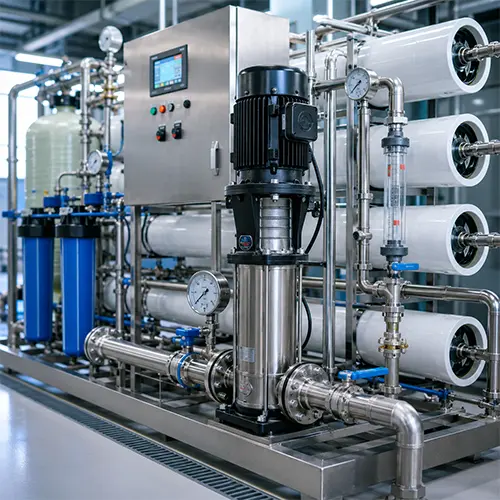
The best pump for an RO water system is not simply the pump with the highest pressure or the lowest price. It is the pump that delivers stable membrane pressure and feed flow, matches the feed water chemistry, protects the RO membrane from pressure shock and cavitation, resists corrosion, operates near the correct duty point, and keeps lifecycle cost under control. For most commercial and industrial RO systems, the main RO pump is usually a stainless steel multistage centrifugal high-pressure pump. For small domestic RO systems, a diaphragm booster pump is often used. For seawater RO systems, a specialized high-pressure pump with seawater-grade corrosion resistance is required.
RO, or Reverse Osmosis, is a membrane separation process that needs stable pressure to push water through semi-permeable membranes. Because the membrane is sensitive to pressure, flow, scaling, fouling, and water chemistry, the pump selection directly affects permeate flow, salt rejection, recovery rate, energy cost, membrane life, and maintenance frequency.
For buyers, water treatment contractors, plant engineers, hotel facility teams, factory utility managers, and RO system integrators, the real question is not: “Which pump is best for RO?” The better question is: “Which pump can provide the exact flow, pressure, material compatibility, and control stability required by my RO membranes and feed water quality?”
A pump that is too weak may cause low permeate flow, unstable recovery, poor water quality, and membrane underperformance. A pump that is too strong may create excessive pressure, higher energy cost, seal leakage, membrane stress, and shorter membrane life. A pump made from the wrong material may corrode when exposed to chloride, low pH, oxidants, or aggressive chemicals. A pump selected only by motor power may fail to match the real membrane duty point.
Select the RO pump by membrane duty first, verify water chemistry second, check pump curve and material third, and compare lifecycle reliability before choosing the supplier.
Direct Answer: What Is the Best Pump for RO Water Systems?
For most commercial and industrial RO water systems, the best main RO pump is usually a stainless steel multistage centrifugal high-pressure pump because it provides stable pressure, suitable flow, compact structure, and good efficiency for membrane operation. For small domestic RO systems, a diaphragm booster pump is often used because the flow is low and the installation space is limited. For seawater RO systems, a specialized high-pressure pump with corrosion-resistant material and, in many larger systems, energy recovery compatibility may be required.
The best pump for RO water systems depends on system size and water quality. Small domestic RO systems usually use diaphragm booster pumps. Commercial drinking water RO systems often use stainless steel multistage booster pumps. Industrial brackish water RO systems usually need multistage centrifugal high-pressure pumps. Seawater RO systems require specialized high-pressure pumps with corrosion-resistant materials. Dosing pumps, feed pumps, raw water pumps, backwash pumps, and CIP pumps serve different functions and should not replace the main RO high-pressure pump.
The best RO pump is the pump that matches:
- required permeate flow;
- calculated feed flow;
- membrane operating pressure;
- feed water TDS;
- chloride level;
- pH and temperature;
- recovery rate;
- pretreatment pressure loss;
- available inlet pressure;
- pump material;
- seal compatibility;
- control strategy;
- operating hours;
- membrane protection requirements.
For buyers, the most important point is: RO pump selection must start from membrane requirements, not from motor kW, pipe diameter, or pump price.
Quick Selection Table for RO Water System Pumps
This table helps buyers quickly match common RO system applications with the right pump direction. It is not a substitute for membrane design or pump curve verification, but it prevents the most common mistake: using one general water pump for every RO function.
| RO System Application | Recommended Pump Type | Why |
|---|---|---|
| Domestic under-sink RO | Diaphragm booster pump | Compact, low flow, pressure boosting |
| Commercial drinking water RO | Stainless steel multistage booster pump | Stable pressure and hygienic material |
| Industrial brackish water RO | Multistage centrifugal high-pressure pump | Suitable for higher pressure and continuous duty |
| Seawater RO | Specialized high-pressure pump | Requires high pressure and corrosion resistance |
| Raw water transfer before pretreatment | End suction pump or feed pump | Moves feed water to pretreatment system |
| Low inlet pressure before RO | Feed booster pump | Prevents insufficient suction pressure |
| Chemical dosing | Dosing pump | Accurate chemical injection |
| CIP membrane cleaning | CIP pump | Circulates cleaning solution safely |
| Filter backwash | Backwash pump | Provides required backwash flow |
| High TDS or corrosive water | Stainless steel duplex or suitable alloy pump | Reduces corrosion risk |
The table shows that RO systems are not built around only one pump. A reliable RO package may require multiple pump types, each selected for its specific duty.
Key Takeaway for Buyers
The best pump for an RO water system should be selected by RO system function first. Raw water transfer pumps move water into pretreatment. Feed booster pumps stabilize inlet pressure. High-pressure RO pumps provide membrane operating pressure. Dosing pumps inject antiscalant, acid, alkali, or chlorine-removal chemicals. CIP pumps circulate cleaning solution during membrane maintenance. Each pump must match its own flow, pressure, material, and control requirement.
This is why buyers should not ask only, “What kW pump do I need?” A 5.5 kW pump, for example, may produce very different pressure and flow depending on pump design. The same motor power does not mean the same membrane pressure, efficiency, corrosion resistance, seal compatibility, or duty point.
A correct RO pump selection process should confirm:
- RO system type: domestic, commercial, industrial, brackish water, or seawater.
- Required permeate flow.
- Recovery rate and calculated feed flow.
- Feed water TDS, chloride, pH, temperature, hardness, and pretreatment condition.
- Required membrane pressure.
- Available inlet pressure before the pump.
- Pretreatment pressure loss.
- Pump material and seal compatibility.
- Control method: fixed speed, VFD, pressure control, or staged operation.
- Operating hours and lifecycle energy cost.
- Membrane protection requirements.
- Supplier proof: pump curve, duty point, material specification, NPSH, minimum flow, test data, and warranty terms.
30-Second RO Pump Decision Table
This decision table helps buyers diagnose which pump direction to evaluate first. It is especially useful when an existing RO system has low production, unstable pressure, pump noise, corrosion, or high energy cost.
| If Your RO System Has... | Check First | Likely Pump Direction |
|---|---|---|
| Low permeate flow | RO membrane pressure and feed flow | Main RO high-pressure pump sizing |
| Low inlet pressure | Feed pressure before RO pump | Feed booster pump |
| Pressure fluctuation | Control method and pressure sensor | VFD or stable multistage pump |
| High TDS feed water | Required membrane pressure | Higher-pressure multistage pump |
| Seawater feed | Chloride and pressure requirement | Seawater high-pressure pump |
| Frequent membrane scaling | Dosing and pretreatment | Dosing pump and pretreatment review |
| Pump corrosion | Chloride, pH, material | Stainless steel or duplex material |
| High electricity cost | Duty point and pump efficiency | Correctly sized high-efficiency pump |
| Cavitation noise | Suction pressure and NPSH | Improve feed pressure or suction design |
| CIP cleaning needed | Cleaning flow and chemical compatibility | CIP pump |
| Filters clog quickly | Pretreatment condition | Raw water pump / backwash pump review |
| Pump seal leaks often | Pressure or chemical compatibility | Seal material and pressure control review |
A buyer should not replace an RO pump blindly. Low permeate flow may come from insufficient pump pressure, but it may also come from clogged filters, membrane fouling, low water temperature, excessive recovery, or poor pretreatment. A pump review should always be combined with a system review.
Scope of This Guide: Applicable RO Systems and Pump Types
This guide applies to common RO water systems where buyers need to select or replace pumps for stable membrane pressure, feed flow, material compatibility, and lifecycle reliability. It is written for B2B buyers, water treatment companies, industrial users, commercial facility managers, and system integrators.
This guide applies to these RO systems:
- domestic RO systems;
- commercial drinking water RO;
- industrial brackish water RO;
- boiler feedwater RO;
- food and beverage process water RO;
- hotel RO systems;
- hospital RO systems;
- school and campus RO systems;
- factory process water RO;
- containerized RO systems;
- water treatment plants;
- pure water production systems;
- pretreatment and post-treatment support systems.
This guide applies to these pump types:
- raw water pump;
- feed pump;
- feed booster pump;
- multistage centrifugal pump;
- RO high-pressure pump;
- diaphragm booster pump;
- dosing pump;
- CIP pump;
- backwash pump;
- end suction pump;
- stainless steel pump;
- seawater high-pressure pump.
This guide needs separate engineering verification for:
- large seawater desalination plants;
- ultra-pure water systems;
- pharmaceutical water systems;
- food-grade sanitary systems;
- hazardous chemical dosing systems;
- explosion-proof systems;
- very high-pressure RO systems;
- systems requiring ASME, FDA, NSF, or local code compliance;
- energy recovery turbine systems;
- multi-stage desalination systems;
- critical process water systems where shutdown creates safety or production risks.
This article is for pump selection guidance. Final RO pump selection should be verified using actual water analysis, membrane projection data, system P&ID, pressure vessel arrangement, pump curve, NPSH conditions, material compatibility, and qualified engineering review.
RO System Pump Architecture: Where Each Pump Is Installed
An RO system usually uses different pumps at different process stages. Understanding where each pump is installed helps buyers avoid confusing a raw water pump, feed booster pump, high-pressure RO pump, dosing pump, backwash pump, and CIP pump.
A typical RO flow path may look like this:
Raw Water Tank → Raw Water Pump → Pretreatment Filters → Feed Booster Pump → Cartridge Filter → RO High-Pressure Pump → RO Membrane Array → Permeate Tank / Concentrate Discharge → CIP System / Dosing System
| RO System Stage | Pump Used | Main Function | Selection Risk |
|---|---|---|---|
| Raw water intake | Raw water pump | Moves source water to pretreatment | Insufficient feed to filters |
| Pretreatment feed | End suction pump or feed pump | Supplies sand filter, carbon filter, softener, or pretreatment skid | Too much or too little flow affects pretreatment |
| Pretreatment outlet | Feed booster pump | Stabilizes inlet pressure before RO pump | Cavitation at RO pump suction |
| Chemical injection line | Dosing pump | Injects antiscalant, acid, alkali, or dechlorination chemicals | Scaling, overdosing, or chemical incompatibility |
| Before membrane array | RO high-pressure pump | Provides membrane operating pressure | Low production, overpressure, membrane stress |
| Filter backwash system | Backwash pump | Provides flow for filter cleaning | Poor pretreatment performance |
| Cleaning loop | CIP pump | Circulates cleaning solution through membranes | Poor cleaning or membrane damage |
| Permeate transfer | Transfer pump if needed | Moves treated water to storage or distribution | Wrong material or unstable downstream flow |
This architecture is critical because the “best pump for RO” changes by location. A dosing pump cannot move the main water flow. A raw water pump cannot replace the RO high-pressure pump. A CIP pump should not be used as the production pump. Each pump must be selected for its own hydraulic duty and chemical exposure.
RO Pump Type Definitions
RO pump selection becomes easier when buyers clearly define each pump type by function. The table below helps procurement teams, contractors, and engineers communicate with suppliers more accurately.
| RO Pump Type | Definition | Main Function | Common Selection Risk |
|---|---|---|---|
| Raw water pump | A pump that moves source water from tank, well, reservoir, or municipal inlet | Feed pretreatment | Undersized flow or unsuitable source-water handling |
| Feed booster pump | A pump that stabilizes pressure before the RO high-pressure pump or membrane section | Protect high-pressure pump suction | Cavitation if suction pressure remains low |
| RO high-pressure pump | The main pump that provides membrane operating pressure | Main RO production | Wrong pressure, wrong material, or wrong duty point |
| Multistage centrifugal pump | A pump with multiple impellers to generate higher pressure | Commercial / industrial RO pressure generation | Corrosion or poor curve match if selected carelessly |
| Diaphragm booster pump | A compact low-flow booster pump | Domestic RO pressure boosting | Not suitable for large-flow industrial duty |
| Dosing pump | A metering pump for chemical injection | Antiscalant, pH, dechlorination, chemical dosing | Overdosing or underdosing |
| CIP pump | A pump for Clean-in-Place membrane cleaning | Membrane cleaning circulation | Wrong flow, pressure, or chemical compatibility |
| Backwash pump | A pump used to clean pretreatment filters | Filter backwash | Poor backwash flow reduces pretreatment quality |
| Seawater RO high-pressure pump | A high-pressure corrosion-resistant pump for seawater desalination | Seawater membrane pressure | Severe corrosion or pressure mismatch |
This definition table improves RFQ quality because it prevents vague requests such as “quote one RO pump” when the buyer actually needs several different pumps.
Main Pump Types Used in RO Water Systems
A complete RO water system may use several pumps, and each pump has a different role. Buyers should understand where the pump is installed in the process before deciding pump type, material, pressure, or control method.
Raw Water Pump
A raw water pump moves source water from a tank, well, reservoir, or municipal inlet into the pretreatment system. Its job is not to create membrane pressure. Its job is to deliver enough water to sand filters, carbon filters, softeners, cartridge filters, or other pretreatment equipment.
Raw water pumps are suitable for:
- raw water transfer;
- pretreatment feed;
- storage tank transfer;
- sand filter feed;
- carbon filter feed;
- low-to-medium pressure transfer;
- general clean or pretreated water movement.
They are not suitable for:
- direct RO membrane high-pressure operation;
- seawater RO high-pressure duty;
- accurate chemical dosing;
- dirty water with heavy solids unless designed for that duty.
A raw water pump should be selected by flow demand, suction condition, pipe loss, pretreatment pressure requirement, and source water quality. If this pump is undersized, the entire RO system may starve for feed water. If it is oversized, pretreatment equipment may experience excessive flow, pressure fluctuation, or premature media disturbance.
Feed Booster Pump
A feed booster pump stabilizes pressure before the RO high-pressure pump or before the membrane system. It is commonly needed when municipal pressure is unstable, the RO system is tank-fed, or pretreatment creates significant pressure loss.
Feed booster pumps are suitable for:
- low municipal inlet pressure;
- tank-fed RO systems;
- systems with pressure drop before RO;
- protecting the suction side of the RO high-pressure pump;
- stabilizing feed pressure before membrane operation;
- reducing risk of cavitation in the main pump.
They are not suitable for:
- replacing the main RO high-pressure pump;
- chemical dosing;
- dirty water without pretreatment;
- severe solids or sludge transfer.
A feed booster pump is especially important when the main RO pump requires positive suction pressure. If suction pressure is too low, the high-pressure pump may cavitate. Cavitation is the formation and collapse of vapor bubbles inside the pump, which can cause noise, vibration, impeller damage, unstable pressure, and reduced pump life.
RO High-Pressure Pump
The RO high-pressure pump is usually the most important pump in commercial and industrial RO systems because it provides the pressure needed to push water through the membranes. If this pump is wrong, the RO system may suffer from low production, unstable recovery, poor salt rejection, high energy cost, or membrane damage.
RO high-pressure pumps are suitable for:
- commercial RO systems;
- industrial RO systems;
- brackish water RO systems;
- high recovery RO systems;
- continuous-duty membrane operation;
- process water production;
- boiler feedwater pretreatment.
They are not suitable for:
- raw sewage;
- dirty water before pretreatment;
- unfiltered water with solids;
- chemical dosing;
- pumping water with incompatible chemistry.
The high-pressure pump must match required feed flow and membrane pressure. It should not operate at the extreme end of the pump curve. A pump selected too close to its maximum pressure or flow may have poor efficiency, short service life, and limited operating stability.
Multistage Centrifugal Pump
A multistage centrifugal pump is one of the most common choices for commercial and industrial RO high-pressure service because it uses multiple impellers to generate pressure efficiently. This design is compact and well suited for clean water applications that require moderate-to-high pressure.
Multistage centrifugal pumps are suitable for:
- commercial RO;
- industrial RO;
- brackish water RO;
- medium-to-high pressure clean water;
- continuous operation;
- RO systems requiring stable pressure;
- compact skid-mounted systems.
They are not suitable for:
- high solids;
- severe corrosion without correct material;
- very small domestic RO systems;
- seawater without proper material selection;
- unfiltered raw water;
- chemical dosing.
For many RO buyers, a vertical stainless steel multistage pump is a practical option because it saves space, provides stable pressure, and is commonly available in water treatment packages. However, material selection still matters. Stainless steel does not mean all water chemistry is safe.
Diaphragm Booster Pump
A diaphragm booster pump is common in small domestic or compact RO systems because it provides pressure boosting at low flow. It is often used in under-sink RO units or small drinking water systems where the municipal pressure is too low for stable membrane performance.
Diaphragm booster pumps are suitable for:
- under-sink RO;
- small drinking water RO;
- low-flow compact RO units;
- low-pressure municipal water;
- small intermittent-duty systems.
They are not suitable for:
- industrial continuous operation;
- large-flow RO systems;
- high-temperature water;
- corrosive water;
- large membrane arrays;
- high-pressure brackish or seawater RO.
For small RO systems, the diaphragm pump should match membrane size, power supply, noise requirement, and automatic start-stop control. For larger systems, a multistage centrifugal pump is usually more suitable.
Dosing Pump
A dosing pump injects chemicals accurately into the RO system or pretreatment process. It is not designed to move the main water flow. Its purpose is controlled chemical addition.
Dosing pumps are suitable for:
- antiscalant dosing;
- pH adjustment;
- dechlorination;
- sodium metabisulfite dosing;
- acid dosing;
- alkali dosing;
- chemical pretreatment;
- CIP chemical dosing.
They are not suitable for:
- main RO feed pumping;
- high-flow water transfer;
- RO membrane pressure generation.
Dosing pump accuracy affects membrane protection. If antiscalant dosing is too low, scaling risk increases. If chemical dosing is too high, operating cost rises and water quality may be affected. The dosing pump should be selected based on chemical type, concentration, required dosing rate, back pressure, and material compatibility.
CIP Pump
A CIP pump circulates cleaning solution through RO membranes during clean-in-place procedures. CIP means Clean-in-Place, a maintenance process used to clean membranes without removing them from the system.
CIP pumps are suitable for:
- membrane cleaning;
- chemical cleaning circulation;
- maintenance systems;
- cleaning tank circulation;
- low-to-moderate pressure cleaning loops.
They are not suitable for:
- continuous RO high-pressure operation;
- raw water transfer;
- normal permeate production;
- uncontrolled chemical pumping.
A CIP pump must be compatible with cleaning chemicals, temperature, flow, and membrane cleaning pressure. If the CIP pump is too small, cleaning may be ineffective. If it is too strong, it may damage the membrane or create unsafe pressure during cleaning.
Seawater RO High-Pressure Pump
A seawater RO high-pressure pump requires much higher pressure and stronger corrosion resistance than a brackish water RO pump. Seawater contains high chloride, which creates serious corrosion risk for unsuitable pump materials.
Seawater RO high-pressure pumps are suitable for:
- seawater desalination;
- high chloride feed water;
- offshore and coastal RO systems;
- high-pressure membrane operation;
- energy recovery systems;
- industrial desalination skids.
They are not suitable for:
- low-pressure commercial drinking RO where a simpler pump is enough;
- systems without corrosion-resistant materials;
- poor pretreatment conditions;
- applications where material compatibility is not verified.
For seawater RO, pump selection should be based on water analysis, membrane design, pressure requirement, corrosion risk, energy recovery design, and supplier experience. Ordinary stainless steel pumps may not be enough.
Best Pump by RO System Type
Most buyers choose RO pumps based on their system type, not pump theory. This section helps buyers identify the most likely pump direction before confirming detailed flow, pressure, material, and control requirements.
Best Pump for Domestic RO Systems
For domestic RO systems, a diaphragm booster pump is usually the most practical choice when inlet pressure is too low. Domestic RO systems have low flow, compact installation space, and intermittent operation. They do not need industrial multistage high-pressure pumps.
Domestic RO pump selection should consider:
- low flow;
- compact size;
- low noise;
- stable pressure;
- automatic start-stop;
- power supply;
- compatibility with small RO membranes;
- safe operation under household conditions.
If the domestic RO unit has adequate municipal pressure, it may not need a booster pump. If inlet pressure is low, a small diaphragm booster pump can improve permeate flow and water production stability.
Best Pump for Commercial Drinking Water RO
For commercial drinking water RO, the first pump direction to evaluate is a stainless steel multistage centrifugal pump or compact multistage booster pump. This pump direction is common because commercial RO systems need stable pressure, hygienic material compatibility, and reliable operation for hotels, schools, hospitals, restaurants, office buildings, and commercial water stations.
Commercial RO pump selection should consider:
- required permeate flow;
- drinking water material compatibility;
- stainless steel material;
- stable membrane pressure;
- noise level;
- continuous or intermittent operation;
- pressure control;
- easy maintenance;
- spare parts availability.
A commercial RO pump should not only meet pressure. It should also reduce pressure fluctuation because unstable pressure can affect permeate flow, recovery, and membrane life.
Best Pump for Industrial Brackish Water RO
For industrial brackish water RO, the first pump direction to evaluate is a stainless steel multistage centrifugal high-pressure pump selected by membrane pressure, feed flow, TDS, and recovery rate. Brackish water has higher TDS than ordinary low-salinity feed water, so membrane pressure requirements are usually higher.
Industrial brackish water RO pump selection should consider:
- feed water TDS;
- required membrane pressure;
- feed flow;
- recovery rate;
- operating hours;
- pretreatment pressure loss;
- material corrosion risk;
- pump efficiency;
- motor efficiency;
- VFD suitability;
- maintenance plan.
For factories, boiler feedwater systems, process water systems, and water treatment plants, energy cost can be significant because pumps may run many hours per day. A correctly sized pump operating near its duty point can reduce lifecycle cost.
Best Pump for Seawater RO
For seawater RO, the first pump direction to evaluate is a specialized seawater high-pressure pump with corrosion-resistant wetted materials. Seawater RO is a high-risk application because it requires much higher operating pressure and stronger corrosion resistance than commercial or brackish water RO.
Seawater RO pump selection should consider:
- very high TDS;
- chloride corrosion;
- required membrane pressure;
- energy recovery design;
- high-pressure piping;
- mechanical seal compatibility;
- duplex or super duplex material;
- pretreatment quality;
- continuous-duty operation;
- qualified engineering review.
For large seawater systems, energy recovery devices may be part of the design. The pump must be compatible with the overall pressure and recovery strategy. For seawater applications, buyers should not approve material only by the word “stainless steel.” The specific stainless steel grade and chloride compatibility must be checked.
Best Pump for Containerized RO Systems
For containerized RO systems, the first pump direction to evaluate is a compact vertical multistage pump with stable pressure, integrated controls, and serviceable layout. These systems are often used for remote sites, temporary water treatment, industrial process water, emergency water supply, or modular desalination.
Containerized RO pump selection may include:
- vertical multistage high-pressure pump;
- compact feed booster pump;
- dosing pumps;
- CIP pump;
- VFD control when demand varies;
- stainless steel materials;
- integrated control panel.
The pump should fit both the hydraulic duty and the container layout. A pump that meets pressure requirements but is difficult to service inside the container can increase downtime and maintenance cost.
Best Pump for Boiler Feedwater RO Pretreatment
For boiler feedwater RO, the first pump direction to evaluate is a reliable stainless steel multistage high-pressure pump supported by proper dosing, pretreatment, and CIP design. Boiler feedwater RO requires stable water quality because poor RO performance can affect downstream boiler operation.
Common pump directions include:
- multistage high-pressure pump;
- stainless steel RO pump;
- dosing pump for antiscalant or pH control;
- CIP pump for membrane cleaning;
- feed pump before pretreatment.
For boiler-related RO, buyers should pay attention to scaling risk, silica, hardness, pretreatment, dosing accuracy, and membrane cleaning. A pump cannot compensate for poor pretreatment. If scaling increases, pressure demand may rise, but simply increasing pump pressure is not a long-term solution.
TDS and Pressure Direction Table for RO Pump Selection
Feed water TDS strongly affects RO pump pressure direction. TDS means Total Dissolved Solids, or the dissolved salt and mineral content in the water. Higher TDS usually requires higher membrane pressure, but final pressure must always be confirmed by membrane design data.
| Feed Water Type | Typical TDS Direction | Pump Pressure Direction | Buyer Risk |
|---|---|---|---|
| Low TDS tap water | Low | Low to moderate pressure | Oversizing may waste energy and stress membranes |
| Commercial drinking RO | Low to medium | Moderate pressure | Wrong pump may cause unstable permeate flow |
| Brackish water RO | Medium to high | Higher pressure | Low-pressure pumps may fail to meet production |
| High-recovery industrial RO | Medium to high | Higher and more carefully controlled pressure | Scaling and pressure rise may occur |
| Seawater RO | Very high | Very high pressure, special pump required | Ordinary stainless steel or low-pressure pumps may fail quickly |
| Variable feed water quality | Changing TDS | Flexible pressure control may be needed | Fixed assumptions may cause unstable operation |
This table gives direction, not final design pressure. A supplier should review actual water analysis, membrane model, temperature, recovery rate, and system arrangement before confirming pump selection.
Membrane Array and Recovery Rate: Why They Change Pump Selection
RO pump selection is affected by membrane array design, not only by the target permeate flow. The number of membranes, pressure vessels, stages, recovery rate, concentrate flow, and pressure loss all influence the required feed flow and pump pressure.
Why Feed Flow Is More Important Than Permeate Flow Alone
The RO high-pressure pump must usually be selected by feed flow, not only permeate flow. Permeate flow is the clean water output. Feed flow is the water entering the membrane system. Because some feed water leaves as concentrate, feed flow is higher than permeate flow.
A practical formula is:
Feed Flow = Permeate Flow ÷ Recovery Rate
If a system needs 10 m³/h permeate at 50% recovery:
10 ÷ 0.50 = 20 m³/h feed flow
If the buyer selects the pump only for 10 m³/h, the system may be undersized.
How Recovery Rate Changes Pump Duty
Higher recovery means more feed water is converted to permeate, but it can increase scaling risk and pressure demand. A high recovery rate may look attractive because it reduces concentrate discharge, but it can also increase salt concentration near the membrane surface.
If recovery is too aggressive, the system may experience:
- higher pressure demand;
- faster scaling;
- increased differential pressure;
- more frequent CIP cleaning;
- unstable permeate quality;
- shorter membrane life.
The pump should not be oversized to force unrealistic recovery. Recovery must match water chemistry, pretreatment quality, membrane design, and scaling control.
How Membrane Quantity and Vessel Arrangement Affect Pump Selection
More membranes do not simply mean choosing a larger motor. The membrane array determines feed flow distribution, pressure drop, concentrate flow, and stage behavior.
Buyers should ask:
- How many membranes are installed?
- How many pressure vessels are used?
- Is the RO system single-stage or multi-stage?
- What is the feed flow per vessel?
- What is the concentrate flow?
- What is the expected pressure drop across the membrane array?
- What recovery rate is designed?
- Is concentrate recirculation used?
- Does the pump operate in one fixed mode or multiple modes?
A pump selected without membrane array information may appear correct on paper but fail under real operation.
How to Size an RO Pump Correctly
RO pump sizing should be based on permeate flow, recovery rate, required membrane pressure, available inlet pressure, system pressure losses, water quality, and pump curve verification. Selecting by motor power alone is one of the most common causes of RO system problems.
Step 1: Confirm RO System Capacity
The first sizing step is to confirm required permeate flow and recovery rate. Permeate flow is the amount of purified water the system must produce. Recovery rate is the percentage of feed water converted into permeate.
A practical formula is:
Feed Flow = Permeate Flow ÷ Recovery Rate
For example, if the required permeate flow is 10 m³/h and the recovery rate is 50%, the feed flow should be:
10 ÷ 0.50 = 20 m³/h
This means the RO high-pressure pump must be evaluated at the feed flow, not only the permeate flow. If the buyer sizes the pump only for permeate output, the pump may be undersized.
Step 2: Confirm Required Membrane Pressure
Required membrane pressure depends on TDS, membrane type, temperature, recovery rate, fouling condition, and system design. Higher TDS usually requires higher pressure to push water through the membrane.
General principles include:
- Low TDS water usually needs lower pressure.
- Brackish water needs higher pressure than low-TDS water.
- Seawater needs much higher pressure than brackish water.
- Colder water may require higher pressure because membrane permeability decreases.
- Higher recovery can increase pressure demand.
- Fouled membranes need more pressure, but this is a warning sign, not a good long-term operating strategy.
Buyers should use membrane design data, not guesswork. The membrane supplier or RO system designer should provide the required operating pressure range.
Step 3: Calculate Total Pump Head
The pump must provide enough pressure after accounting for system losses and available inlet pressure. Buyers should not look only at membrane pressure because pretreatment filters, valves, piping, flow meters, pressure vessels, and control devices all create pressure loss.
A practical formula is:
Total Pump Head = Required Membrane Pressure + Pipe/Fitting Loss + Filter Loss + Control Valve Loss + Safety Margin − Available Inlet Pressure
This formula shows why feed pressure matters. If available inlet pressure is stable and sufficient, the main pump may need less head. If pretreatment filters are clogged or inlet pressure is low, the pump may experience unstable operation or cavitation.
The safety margin should be reasonable. Too little margin may cause insufficient pressure. Too much margin can create higher energy cost, overpressure, membrane stress, and control instability.
Step 4: Check Pump Curve and Duty Point
The selected pump should operate near the required flow and pressure, not at the extreme end of the curve. The duty point is the actual operating point where required flow and required head meet on the pump curve.
Buyers should ask suppliers to show:
- pump curve;
- duty point marking;
- efficiency at duty point;
- motor load at duty point;
- NPSH requirement;
- minimum flow requirement;
- VFD operating range if VFD is used;
- material and seal options;
- test data if required.
NPSH means Net Positive Suction Head. In simple terms, it is related to whether the pump has enough suction pressure to avoid cavitation. If NPSH conditions are not met, the pump may be noisy, unstable, and damaged over time.
If you are not sure whether your RO problem is caused by insufficient pressure or insufficient flow, this high head pump vs high flow pump guide can help clarify the difference before pump selection.
Step 5: Confirm Material Compatibility
RO feed water may contain chloride, chemicals, low pH, high TDS, oxidants, or antiscalants, so material compatibility must be checked before purchase. Stainless steel is common, but the grade must match the water chemistry.
| Water Condition | Material Direction |
|---|---|
| Low TDS clean water | 304 or 316 stainless steel may be acceptable |
| Higher chloride | 316 or duplex review |
| Seawater | Duplex, super duplex, or specialized alloy |
| Acid dosing nearby | Chemical-compatible seal and material |
| Chlorinated water | Check seal and corrosion compatibility |
| High scaling risk | Improve pretreatment before oversizing pump |
Material selection should be based on water analysis. If the feed water contains chloride, chemicals, or aggressive water, this pump corrosion troubleshooting guide can help buyers check whether the selected pump material matches the real liquid condition.
RO Pump Pressure: What Happens If It Is Too Low or Too High?
RO pump pressure must be controlled carefully because the membrane needs enough pressure to operate, but excessive pressure can damage components and increase operating cost. Both low pressure and high pressure can cause serious system problems.
If RO Pump Pressure Is Too Low
If RO pump pressure is too low, the membrane cannot produce the expected permeate flow. The system may still run, but output and water quality may become unstable.
Possible results include:
- low permeate flow;
- poor recovery rate;
- unstable water quality;
- increased concentrate discharge;
- membrane underperformance;
- higher operating time to produce the same water volume;
- possible pump cavitation if suction is poor;
- system alarms or shutdowns.
Low pressure does not always mean the pump is too small. It may also come from clogged filters, insufficient feed pressure, suction restrictions, low water temperature, membrane fouling, wrong recovery setting, or control valve problems.
If RO Pump Pressure Is Too High
If RO pump pressure is too high, the RO system may produce water, but the membrane and pump system may suffer. Higher pressure is not automatically better.
Possible results include:
- membrane stress;
- seal leakage;
- higher energy cost;
- more scaling risk;
- pressure vessel stress;
- shorter membrane life;
- more frequent maintenance;
- excessive concentrate pressure;
- control instability;
- increased risk during start-up and shutdown.
Oversized pressure often happens when buyers select a pump with too much head “for safety.” In RO systems, excessive safety margin can become a long-term cost and reliability problem.
Correct Pressure Control
Correct RO pressure control protects both the pump and the membrane. A stable RO system usually requires proper sensors, controls, valves, and start-up logic.
Pressure control should include:
- pressure sensor at the right location;
- pressure relief or safety protection where required;
- VFD control when useful;
- control valve adjustment;
- anti-shock start-up;
- monitoring of differential pressure;
- low-pressure protection;
- high-pressure protection;
- minimum flow protection for the pump.
Differential pressure is the pressure difference across a filter, membrane stage, or system component. Rising differential pressure often indicates filter blockage, membrane fouling, scaling, or flow restriction.
Why RO Pump Material Matters
RO pump material matters because feed water chemistry can corrode pump parts, damage seals, contaminate water, or shorten pump life. Material selection should be based on actual water analysis, not only on the general phrase “clean water.”
Stainless Steel Selection
Stainless steel is common in RO pumps, but not all stainless steel grades perform the same in RO feed water. The correct grade depends on chloride, pH, temperature, chemicals, and operating pressure.
General material direction:
- 304 stainless steel may be acceptable for some low-chloride clean water.
- 316 stainless steel provides better corrosion resistance than 304 in many water treatment applications.
- Duplex or super duplex stainless steel may be required for seawater or high-chloride applications.
- Special alloys may be needed for aggressive chemical conditions.
- Material must be matched to actual water analysis.
Buyers should request the exact material specification for casing, impeller, shaft, and wetted parts. “Stainless steel pump” is not enough for serious RO procurement.
Seal and Elastomer Compatibility
Mechanical seals, O-rings, and elastomers must be compatible with water chemistry and dosing chemicals. The pump casing may be stainless steel, but the seal can still fail if elastomers are not compatible with oxidants, acid, alkali, antiscalant, or cleaning chemicals.
Buyers should check:
- mechanical seal type;
- O-ring material;
- EPDM compatibility;
- FKM compatibility;
- chemical exposure;
- chlorine exposure;
- acid dosing location;
- antiscalant compatibility;
- cleaning chemical compatibility;
- dry-run protection.
If seal material is wrong, the pump may leak even when the pump body material is acceptable.
Corrosion Risk from Chloride and Chemicals
Chloride, low pH, high temperature, oxidants, and chemical dosing can accelerate corrosion. RO systems may treat water that looks clear but is chemically aggressive.
Corrosion risk increases when:
- chloride is high;
- pH is low or unstable;
- water temperature is high;
- oxidants are present;
- chemical dosing is close to the pump;
- the pump operates intermittently and traps aggressive water;
- material grade is too low;
- pretreatment is poor.
For high chloride or seawater applications, buyers should not rely on ordinary stainless steel without engineering review. Pump failure from corrosion can contaminate the system, reduce pressure, damage seals, and create downtime.
CIP and Pretreatment: Why They Affect RO Pump Selection
RO pump performance depends heavily on pretreatment and membrane cleaning design. A correctly selected high-pressure pump cannot compensate for clogged filters, poor antiscalant dosing, untreated hardness, residual chlorine, or missing CIP capability.
How Pretreatment Pressure Loss Affects the RO Pump
Pretreatment pressure loss can reduce the suction pressure available to the RO high-pressure pump. If sand filters, carbon filters, softeners, cartridge filters, or pipework create more pressure drop than expected, the high-pressure pump may operate with insufficient suction pressure.
This can cause:
- cavitation noise;
- unstable pressure;
- low permeate flow;
- pump vibration;
- reduced pump life;
- motor overload in some conditions;
- frequent system trips.
Buyers should check pressure before and after pretreatment equipment, especially when the system performance declines over time.
Why Dosing Pumps Protect the RO Pump and Membrane
Dosing pumps help control scaling, pH, chlorine removal, and membrane protection. If chemical dosing is inaccurate, the high-pressure pump may appear to be the problem, but the real issue may be scaling, fouling, or chemical attack.
Dosing pump errors can cause:
- scaling on membranes;
- rising differential pressure;
- lower permeate flow;
- higher required pump pressure;
- membrane damage;
- chemical corrosion;
- unstable water quality.
A good RO pump package should include correct high-pressure pump selection and correct dosing pump selection.
Why CIP Pump Selection Matters
A CIP pump must circulate cleaning solution at the correct flow and safe pressure. If CIP flow is too low, cleaning may be ineffective. If cleaning pressure is too high, membranes can be damaged. If material is incompatible with cleaning chemicals, the pump may corrode or leak.
CIP pump selection should check:
- cleaning flow;
- cleaning pressure;
- cleaning chemical compatibility;
- temperature;
- tank size;
- membrane cleaning recommendations;
- seal and elastomer material;
- safe recirculation path.
CIP is not optional for many commercial and industrial RO systems. If cleaning cannot be performed correctly, membrane fouling becomes a long-term performance and energy problem.
Energy Efficiency in RO Pump Selection
RO pumps can consume significant energy because membranes require pressure, especially in brackish water and seawater systems. Energy efficiency matters, but the pump must still protect membrane performance and system stability.
Why RO Pumps Consume Significant Energy
RO pumps consume energy because they must create enough pressure to overcome osmotic pressure, membrane resistance, system losses, and recovery requirements. Higher TDS generally means higher pressure. Higher recovery can also increase pressure demand and scaling risk.
Energy consumption increases when:
- required membrane pressure is high;
- TDS is high;
- recovery rate is too aggressive;
- pretreatment filters are clogged;
- membranes are fouled;
- pump is oversized;
- pump runs far from duty point;
- control valves waste pressure;
- motor efficiency is low;
- system runs continuously.
For long-hour industrial RO systems, energy cost can exceed the pump purchase price over time. Buyers should compare lifecycle cost, not only initial price.
VFD vs Fixed-Speed RO Pump
VFD control can help when pressure or flow demand varies, but fixed-speed control may be enough for stable continuous RO systems. VFD means Variable Frequency Drive, a device that adjusts motor speed to control pump output.
VFD may help when:
- feed pressure varies;
- production demand changes;
- multiple operating modes are used;
- soft start is needed;
- pressure stability is important;
- energy saving under partial load is possible.
Fixed-speed may be acceptable when:
- flow and pressure are stable;
- RO system operates continuously at one duty point;
- pump is correctly sized;
- control valves and protection devices are properly designed;
- added VFD cost does not provide meaningful payback.
VFD cannot compensate for wrong pump sizing, poor pretreatment, incorrect material, or membrane fouling. For buyers comparing control methods, this VFD pump vs fixed speed pump guide explains when speed control reduces energy and when fixed-speed pumps may be enough.
Energy-Saving Checklist
This checklist helps buyers reduce RO pump energy cost without sacrificing membrane protection.
| Check Item | Why It Matters |
|---|---|
| Correct membrane pressure | Avoids overpressure |
| Pump near duty point | Improves efficiency |
| Stable pretreatment pressure | Prevents cavitation |
| Clean filters | Reduces pressure loss |
| Correct recovery rate | Avoids excessive pressure |
| VFD where useful | Matches variable demand |
| Proper material | Prevents corrosion-related efficiency loss |
| Regular membrane cleaning | Reduces pressure rise |
| Correct motor efficiency | Reduces input power |
| Avoid oversized safety margin | Reduces wasted pressure |
Energy saving should never be achieved by starving the membrane or operating the pump below safe flow. The goal is stable, efficient operation at the correct duty point.
If an RO pump begins using more power while producing less water, this pump efficiency loss guide can help buyers check whether the issue comes from wear, blockage, fouling, operating point change, or system resistance.
Common RO Pump Selection Mistakes
Many RO system problems begin with pump selection mistakes made during procurement. These mistakes can cause low water production, unstable pressure, corrosion, high energy cost, membrane fouling, seal leakage, and premature pump failure.
Mistake 1: Choosing by Motor Power Only
Same kW does not mean same pressure, flow, efficiency, or membrane compatibility. Two pumps with the same motor power can have very different curves. One may provide high flow at low pressure. Another may provide lower flow at higher pressure.
For RO, the pump must match membrane pressure and feed flow. Motor kW is only one result of the selection, not the starting point.
Mistake 2: Ignoring Feed Water TDS
TDS strongly affects required membrane pressure. A pump suitable for low-TDS commercial drinking water RO may not be suitable for brackish water RO. A brackish water pump may not be suitable for seawater RO.
Ignoring TDS can lead to under-pressure, low permeate flow, poor recovery, unstable water quality, and overloaded pump operation.
Mistake 3: Using an Ordinary Clean Water Pump as an RO High-Pressure Pump
An ordinary clean water pump may not provide stable pressure, correct material, suitable seals, or efficient high-pressure operation for RO membranes. It may move water, but that does not mean it is suitable for RO membrane duty.
The RO high-pressure pump should be selected from the membrane operating requirement and verified by pump curve.
Mistake 4: Ignoring Pretreatment Pressure Loss
Pretreatment filters, valves, and cartridge filters create pressure loss. If this pressure loss is ignored, the main RO pump may receive unstable suction pressure or fail to meet membrane pressure requirements.
Clogged filters can also cause cavitation, pressure fluctuation, and low permeate flow. Buyers should consider clean and fouled filter conditions when reviewing pressure.
Mistake 5: Oversizing Pump Pressure
Oversizing pump pressure may look safe, but it can damage the system and waste energy. Excess pressure can stress membranes, pressure vessels, seals, valves, and piping.
RO systems need controlled pressure, not maximum pressure. The pump should have reasonable margin, not excessive margin.
Mistake 6: Ignoring Material Corrosion
Chloride, pH, oxidants, and dosing chemicals can shorten pump life if material is wrong. Buyers should not assume that all stainless steel pumps are safe for all RO feed water.
Material selection should be confirmed from water analysis and chemical exposure.
Mistake 7: No CIP Pump or Poor Cleaning Design
If the system has no suitable CIP pump or cleaning design, membrane fouling may become harder to correct. Poor cleaning flow, wrong chemical compatibility, or unsafe cleaning pressure can reduce cleaning effectiveness and shorten membrane life.
For commercial and industrial RO systems, CIP design should be considered during system procurement, not after fouling becomes severe.
When NOT to Choose Each RO Pump Type
A pump type can be correct for one RO duty and wrong for another. Buyers should use this reverse decision table to avoid expensive misapplication.
| Pump Type | Do NOT Choose When... | Better Direction |
|---|---|---|
| Diaphragm booster pump | The system is industrial, continuous-duty, or large-flow RO | Multistage centrifugal high-pressure pump |
| Ordinary clean-water pump | The system requires stable membrane pressure | RO high-pressure pump selected by membrane duty |
| Raw water pump | The pump must provide membrane operating pressure | RO high-pressure pump |
| Feed booster pump | The system needs main RO membrane pressure | Main high-pressure pump plus feed pressure review |
| Standard 304 stainless steel pump | Feed water has high chloride or seawater condition | 316, duplex, super duplex, or special alloy review |
| RO high-pressure pump | Liquid contains solids or is before pretreatment | Raw water pump / pretreatment-compatible pump |
| CIP pump | The system needs continuous RO production pressure | RO high-pressure pump |
| Fixed-speed pump | Feed pressure or production demand varies strongly | VFD-controlled pump review |
| Seawater RO pump | The system is low-pressure commercial drinking RO | Standard stainless multistage pump may be enough |
| Dosing pump | The buyer needs main water flow | Feed pump or RO high-pressure pump |
This table protects buyers from product-name confusion. The “best pump” is only best when the duty is correct.
Troubleshooting Matrix: RO Pump Problems and Causes
This troubleshooting matrix helps buyers connect common RO system symptoms with pump-related causes. It also helps avoid replacing the pump when the real problem is pretreatment, membrane fouling, controls, or wrong operating settings.
| Problem | Likely Pump-Related Cause | What to Check |
|---|---|---|
| Low permeate flow | Insufficient pressure or flow | Pump curve, membrane pressure |
| Pressure fluctuates | Poor control or unstable feed | VFD, sensor, feed pump |
| Pump cavitation noise | Low suction pressure | NPSH, filter blockage, inlet pressure |
| High energy cost | Oversized pump or high pressure | Duty point, pressure setpoint |
| Seal leakage | Overpressure or chemical attack | Seal material, pressure |
| Pump corrosion | Wrong material | Chloride, pH, chemical dosing |
| Membrane fouling fast | Poor pretreatment or dosing | Filters, dosing pump |
| RO system trips | Motor overload or dry run | Current, voltage, protection |
| High differential pressure | Filter or membrane fouling | Pretreatment, CIP schedule |
| Low recovery | Insufficient pressure or poor design | Feed flow, concentrate valve |
| Pump runs hot | Low flow or poor cooling | Minimum flow, bypass, operation point |
| RO starts with pressure shock | Poor start-up control | VFD ramp, valve position, pressure relief |
This matrix is useful because RO problems often have multiple causes. A low-flow system may need a better pump, but it may also need filter replacement, membrane cleaning, better feed pressure, or corrected recovery settings.
Real RO Pump Selection Cases
Real RO pump cases show why pump selection must solve the actual system problem, not just replace a pump with the same kW. These examples help buyers connect pump decisions to production, membrane protection, corrosion, and maintenance outcomes.
| Case | Original Problem | Better Pump Decision | Result |
|---|---|---|---|
| Commercial drinking RO had unstable pressure | Small pump selected by motor power only | Stainless steel multistage pump selected at correct duty point | Stable permeate flow |
| Industrial brackish RO had low production | Pump sized only by permeate flow | Pump resized by feed flow and recovery rate | Correct feed supply |
| Seawater RO pump corroded quickly | Ordinary stainless steel used | Seawater-grade duplex or suitable alloy pump selected | Longer service life |
| RO pump made cavitation noise | Pretreatment pressure drop ignored | Feed booster and filter maintenance added | Stable suction pressure |
| Membrane fouled frequently | Dosing pump undersized | Correct antiscalant dosing pump selected | Lower scaling risk |
| CIP cleaning was ineffective | CIP pump flow too low | CIP pump selected by membrane cleaning flow | Better cleaning performance |
| RO system consumed too much energy | Pump pressure oversized for safety | Pump curve and pressure setpoint corrected | Lower energy waste |
| Seal leaked repeatedly | Seal elastomer incompatible with chemicals | Chemical-compatible seal selected | Reduced leakage risk |
These cases show that RO pump selection is not isolated from water quality, membrane design, pretreatment, dosing, and maintenance.
RO Pump Quotation Review Matrix
A professional RO pump quotation should prove that the pump fits the real membrane duty. A quotation that only lists model, motor power, connection size, and price is not enough for serious RO procurement.
| Quotation Item | What Buyer Should Check | Risk If Missing |
|---|---|---|
| Pump curve | Flow and pressure match | Cannot verify duty |
| Duty point | Real operating point | Wrong pump may be approved |
| Efficiency at duty point | Energy performance | Lifecycle cost unclear |
| Material grade | 304, 316, duplex, super duplex, or alloy | Corrosion risk unclear |
| Seal material | EPDM, FKM, or other suitable material | Leakage risk |
| NPSH requirement | Suction safety | Cavitation risk |
| Minimum flow | Pump protection | Overheating or damage risk |
| Membrane pressure data | RO compatibility | Underpressure or overpressure risk |
| Water analysis review | Material and pressure suitability | Corrosion or scaling risk |
| VFD compatibility | Control flexibility | Pressure instability |
| Test report | Performance verification | Unproven supplier claim |
| Spare parts | Seal, bearing, impeller, motor | Long downtime after failure |
| Warranty terms | Coverage and exclusions | Disputes after failure |
| Installation drawing | Skid layout and piping fit | Site installation problems |
This matrix helps buyers compare technical risk, not only purchase price. A lower-price pump without curve, material proof, NPSH data, and seal information may become more expensive after corrosion, leakage, poor production, or downtime.
Supplier Verification: What Buyers Should Ask Before Buying an RO Pump
A professional RO pump quotation should include technical proof, not only model, motor power, and price. Buyers should request enough data to verify pressure, flow, material, seal compatibility, and membrane protection.
| Verification Item | Why It Matters |
|---|---|
| Pump curve | Confirms flow and pressure |
| Duty point | Shows real operating condition |
| Material specification | Prevents corrosion |
| Seal material | Checks chemical compatibility |
| Motor efficiency | Affects energy cost |
| NPSH requirement | Prevents cavitation |
| Minimum flow | Protects pump operation |
| VFD compatibility | Supports pressure control |
| Test report | Confirms performance |
| Water analysis review | Confirms material and pressure suitability |
| Membrane design data review | Confirms RO duty |
| Warranty terms | Clarifies responsibility |
| Spare parts availability | Reduces downtime |
| Installation drawing | Confirms skid and piping layout |
A supplier who does not ask for water analysis, membrane pressure, flow, recovery rate, or operating hours may not be selecting the pump from the real RO duty. Serious RO pump selection requires system data.
Step-by-Step Buyer Checklist Before Final RO Pump Selection
This checklist helps buyers select an RO pump by system requirement instead of guessing from pump power or price. It can be used before sending an RFQ or approving a supplier quotation.
| Step | Buyer Question | Why It Matters |
|---|---|---|
| 1 | What type of RO system is it? | Domestic, commercial, industrial, and seawater differ |
| 2 | What is required permeate flow? | Determines production target |
| 3 | What is recovery rate? | Determines required feed flow |
| 4 | What is feed water TDS? | Determines membrane pressure |
| 5 | What is required membrane pressure? | Determines pump head |
| 6 | What inlet pressure is available? | Reduces required pump head |
| 7 | What pretreatment pressure loss exists? | Prevents under-sizing |
| 8 | What is water chemistry? | Determines material |
| 9 | Is demand constant or variable? | Determines VFD need |
| 10 | How many hours per day will it run? | Determines efficiency priority |
| 11 | Is CIP required? | Determines cleaning pump |
| 12 | Has supplier provided pump curve? | Confirms duty point |
| 13 | Is membrane protected from pressure shock? | Prevents damage |
| 14 | Are spare parts available? | Reduces downtime |
| 15 | Has the membrane array been reviewed? | Confirms feed flow and pressure loss |
| 16 | Has the supplier reviewed water analysis? | Confirms material and seal compatibility |
The best pump decision is not the lowest price. It is the selection that protects membrane performance, pump reliability, and lifecycle cost.
RFQ Checklist for RO Pump Procurement
A clear RO pump RFQ helps suppliers quote the correct pump instead of guessing from incomplete information. RFQ means Request for Quotation. For RO systems, the RFQ should include water quality, membrane duty, flow, pressure, material, and control data.
| RFQ Item | Information to Provide or Request |
|---|---|
| RO system type | Domestic, commercial, industrial, seawater |
| Feed water source | Well, municipal, brackish, seawater |
| Water analysis | TDS, chloride, pH, temperature, hardness |
| Required permeate flow | m³/h, L/h, GPM |
| Recovery rate | Percentage |
| Feed flow | Calculated from recovery |
| Required membrane pressure | bar, psi |
| Available inlet pressure | Before pump |
| Pretreatment pressure loss | Filters, valves, piping |
| Pump material | 304, 316, duplex, special alloy |
| Seal material | Compatible with water and chemicals |
| Control method | Fixed speed, VFD, pressure control |
| Operating hours | Continuous or intermittent |
| Membrane array | Number of membranes, vessels, stages |
| Required documents | Curve, datasheet, test report |
| Spare parts | Seal, bearing, impeller, motor |
| Warranty | Performance and duty exclusions |
A weak RFQ says: “Quote a pump for RO system.”
A strong RFQ says: “Quote a pump for 20 m³/h feed flow, 50% recovery, required membrane pressure, available inlet pressure, water analysis, TDS, chloride, pH, operating hours, membrane array, material requirement, and VFD preference.”
That difference determines whether the supplier can select the pump correctly.
Best Pump by RO System Scenario
This scenario table helps buyers quickly identify the first pump direction to evaluate. Final approval still requires pump curve, membrane data, water analysis, and material verification.
| RO Scenario | Best Pump Direction |
|---|---|
| Small home RO | Diaphragm booster pump |
| Commercial drinking RO | Stainless steel multistage pump |
| Industrial brackish water RO | Multistage centrifugal high-pressure pump |
| Seawater RO | Specialized seawater high-pressure pump |
| Low inlet pressure | Feed booster pump |
| Poor pretreatment pressure | Review filters and feed pump |
| Frequent membrane scaling | Dosing pump and pretreatment review |
| High chloride water | Corrosion-resistant pump material |
| Continuous factory RO | High-efficiency continuous-duty pump |
| Containerized RO | Compact vertical multistage pump |
| Membrane cleaning system | CIP pump |
| Raw water transfer | End suction pump or feed pump |
| Filter backwash problem | Backwash pump and pretreatment review |
| Pressure shock at startup | VFD ramp / control valve / pressure relief review |
This table shows that the “best pump” changes by scenario. RO pump selection is a system decision, not a single product choice.
FAQ About Best Pump for RO Water Systems
These FAQ answers address common buyer questions about RO high-pressure pumps, domestic RO pumps, membrane pressure, material selection, VFD control, cavitation, corrosion, low permeate flow, and supplier verification. They are written to help buyers make better technical decisions before purchasing.
What is the best pump for an RO water system?
For most commercial and industrial RO systems, a stainless steel multistage centrifugal high-pressure pump is usually the best main RO pump because it provides stable pressure and flow for membrane operation. For small domestic RO systems, a diaphragm booster pump is often used. For seawater RO, a specialized high-pressure pump with suitable corrosion-resistant material is required.
The final choice depends on feed flow, membrane pressure, TDS, recovery rate, water chemistry, operating hours, and control method.
What pump is used for domestic RO systems?
Small domestic RO systems usually use diaphragm booster pumps because they are compact and suitable for low-flow pressure boosting. They help improve membrane pressure when municipal water pressure is too low.
Domestic RO pumps should be selected for membrane size, pressure requirement, noise level, power supply, and automatic operation.
What pressure pump is needed for RO membranes?
The pressure pump needed for RO membranes depends on TDS, membrane type, water temperature, flow, recovery rate, and system design. Low-TDS water usually needs lower pressure, brackish water needs higher pressure, and seawater needs much higher pressure.
Buyers should use membrane design data rather than guessing pressure from pump motor power.
Can I use a normal water pump for RO?
Not always. Ordinary clean-water pumps may not provide stable pressure, correct material, suitable seals, or efficient high-pressure operation for RO membranes. A pump that moves clean water is not automatically suitable for RO membrane duty.
Commercial and industrial RO systems usually require pumps selected specifically for membrane pressure and feed flow.
Why is my RO system producing less water?
Possible causes include insufficient pump pressure, low feed flow, clogged filters, membrane fouling, low water temperature, pressure fluctuation, wrong recovery setting, or incorrect pump sizing. Buyers should check pump curve, membrane pressure, feed pressure, pretreatment filters, and membrane differential pressure before replacing the pump.
Low permeate flow is a system symptom, not always a pump-only problem.
Should an RO pump use VFD control?
An RO pump may use VFD control when pressure or flow demand varies, or when soft start and stable pressure control are required. Fixed-speed operation may be enough for stable continuous RO systems if the pump is correctly sized.
VFD cannot fix poor pretreatment, wrong material, membrane fouling, or incorrect pump sizing.
What material is best for RO pumps?
The best material depends on water chemistry. 304 or 316 stainless steel may be acceptable for low-corrosion water. High chloride water may require 316 review, duplex stainless steel, super duplex stainless steel, or specialized alloy. Seawater RO requires stronger corrosion-resistant material.
Buyers should always check TDS, chloride, pH, temperature, and chemical dosing before confirming material.
Why does an RO pump cavitate?
An RO pump may cavitate when suction pressure is too low, filters are clogged, inlet piping is restricted, water temperature is high, or the pump NPSH requirement is not met. Cavitation can cause noise, vibration, unstable pressure, impeller damage, and shorter pump life.
The solution may require improving feed pressure, cleaning filters, reducing suction restrictions, or selecting a pump with suitable NPSH requirements.
How do I size an RO pump?
Start with permeate flow and recovery rate to calculate feed flow, then determine required membrane pressure, subtract available inlet pressure, add system pressure losses, and check the duty point on the pump curve. Material and seal compatibility must also be checked using water analysis.
Pump sizing should be verified by pump curve, membrane design, and real operating conditions.
What should I ask suppliers before buying an RO pump?
Ask for pump curve, duty point, material specification, seal type, NPSH requirement, motor efficiency, minimum flow, VFD compatibility, test report, warranty terms, spare parts availability, and confirmation that the supplier reviewed your water analysis and membrane design data.
A supplier who quotes only by motor power and price may not be selecting the pump correctly for RO duty.
Why does TDS affect RO pump selection?
TDS affects RO pump selection because higher dissolved salt content usually requires higher membrane pressure. A pump that works for low-TDS drinking water RO may not provide enough pressure for brackish water, and it may be completely unsuitable for seawater RO.
TDS should be reviewed together with temperature, recovery rate, membrane type, and water chemistry.
Is a multistage pump always the best RO pump?
A multistage centrifugal pump is often the best direction for commercial and industrial RO high-pressure duty, but it is not always the best pump for every RO function. Domestic RO may use a diaphragm booster pump. Dosing requires a dosing pump. CIP requires a cleaning pump. Seawater RO may need a special seawater high-pressure pump.
The best pump depends on function, pressure, flow, material, and water quality.
Conclusion: How Buyers Should Choose the Best Pump for RO Water Systems
The best pump for an RO water system is not the cheapest pump, the largest pump, or the pump with the highest motor power. It is the pump that provides stable membrane pressure and feed flow, matches the feed water chemistry, protects the membrane from pressure shock and cavitation, resists corrosion, operates near the correct duty point, and reduces lifecycle cost through reliable, efficient operation.
For most commercial and industrial RO systems, the main pump is usually a stainless steel multistage centrifugal high-pressure pump. For small domestic RO systems, a diaphragm booster pump is often suitable. For seawater RO, specialized high-pressure pumps and corrosion-resistant materials are required. Raw water pumps, feed booster pumps, dosing pumps, CIP pumps, and backwash pumps each serve different functions and should not be confused with the main RO high-pressure pump.
Before final purchase, buyers should verify:
- RO system type;
- required permeate flow;
- recovery rate;
- calculated feed flow;
- feed water TDS;
- chloride, pH, temperature, hardness, and chemical exposure;
- required membrane pressure;
- available inlet pressure;
- pretreatment pressure loss;
- membrane array design;
- pump curve and duty point;
- pump efficiency;
- motor efficiency;
- NPSH requirement;
- minimum flow requirement;
- material specification;
- seal compatibility;
- VFD or fixed-speed control;
- CIP requirement;
- spare parts availability;
- warranty terms;
- supplier experience with RO pump duty.
Select the RO pump by membrane duty first, verify water chemistry second, check pump curve and material third, and compare lifecycle reliability before choosing the supplier.
Get A Quote

Get A Quote
0 Comments