
PUMP INSIGHTS: Global Trends, Engineering Deep Dives & B2B Sourcing Tips
Stay ahead of the curve with Liqen official blog – your essential source for the latest pump technology innovations, fluid mechanics expertise, and global market trends. We share valuable insights tailored for B2B buyers, distributors, and large project specifiers, helping you maximize efficiency, reduce sourcing risk, and gain a competitive edge.
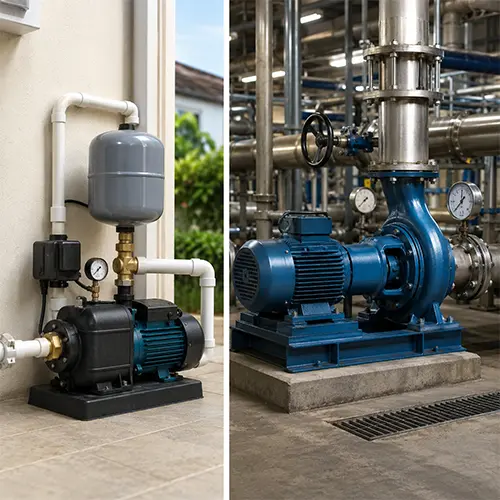
Domestic Pump vs Industrial Pump: Which One Should You Choose for Your Application?
A domestic pump is suitable for clean-water, simple, intermittent, and low-risk applications such as household water supply, garden irrigation, small tank transfer, and light water boosting. An industrial pump is safer for longer operation, difficult liquids, critical systems, engineering documentation, and applications where downtime creates business or safety risk.
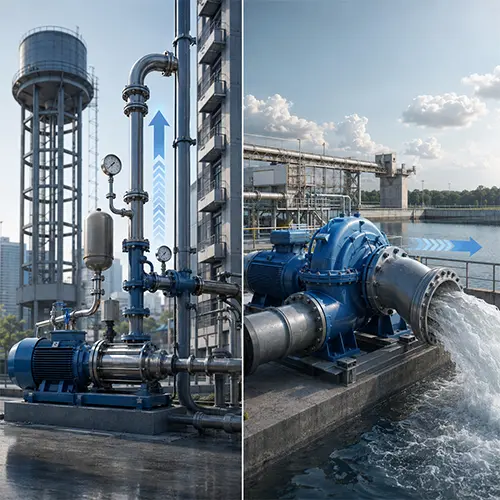
High Head Pump vs High Flow Pump: Which One Does Your System Really Need?
A high head pump is designed to overcome pressure, elevation, long pipelines, valves, filters, and system resistance. A high flow pump is designed to move large liquid volume at low or moderate head. The correct choice depends on whether the system needs pressure, volume, or an engineered combination of both.

Cheap Pump vs Premium Pump: Which Is the Better Choice for Industrial Buyers?
A cheap pump can be a practical choice for simple clean-water transfer, temporary pumping, seasonal irrigation, and low-risk applications where replacement is easy. A premium pump is usually better for continuous-duty operation, critical systems, corrosive or abrasive liquids, remote sites, and projects where downtime costs more than the pump itself.
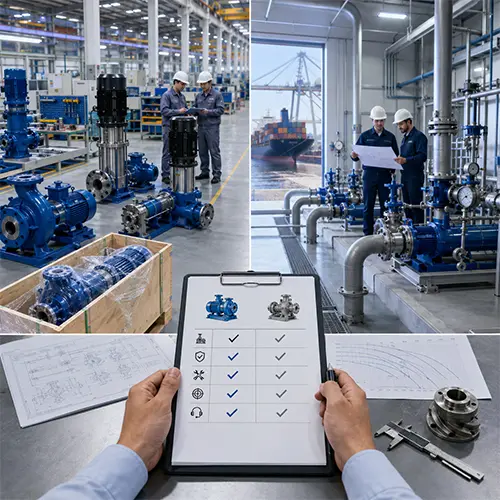
Chinese-Made Pumps vs Pumps Made in Other Countries: How Should Industrial Buyers Evaluate Origin, Quality, Cost, and Long-Term Risk?
Pump country of origin is a sourcing factor, not a quality certificate. A pump’s real reliability depends on hydraulic selection, material compatibility, manufacturing quality, testing level, installation quality, maintenance condition, spare parts support, and supplier accountability.
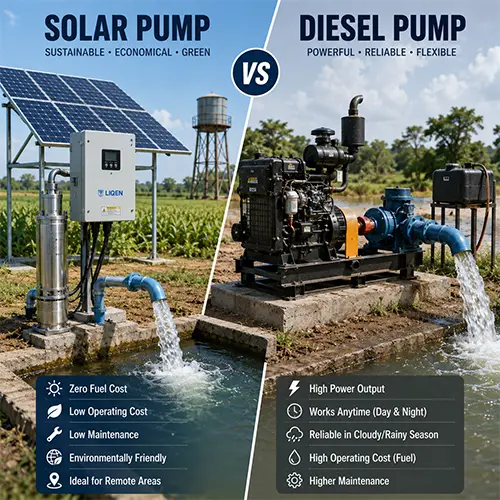
Solar Pump vs Diesel Pump: Which Is Better for Irrigation, Remote Water Supply, and Industrial Pumping?
A solar pump is usually better for long-term daytime water supply where sunlight is stable, water storage is possible, and diesel delivery is expensive. A diesel pump is usually better for emergency pumping, mobile projects, night operation, high-flow applications, cloudy-season reliability, or short-term work requiring immediate output.
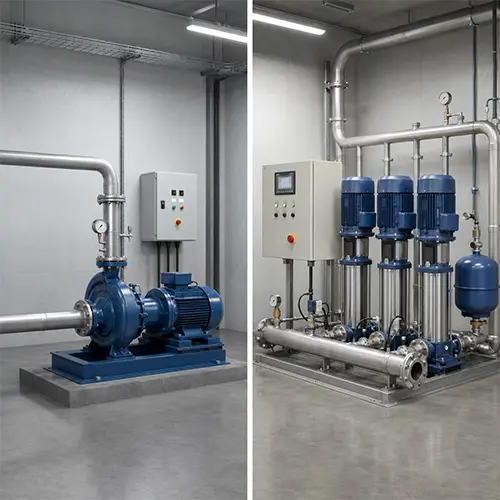
Booster Set vs Single Pump: Which Is Better for Stable Water Pressure and Industrial Pumping Systems?
A booster set is usually better for variable demand, constant pressure control, redundancy, and critical water supply, while a single pump is usually better for simple fixed-flow applications with lower cost and easier maintenance. This guide helps buyers choose the correct pumping configuration based on real operating conditions.
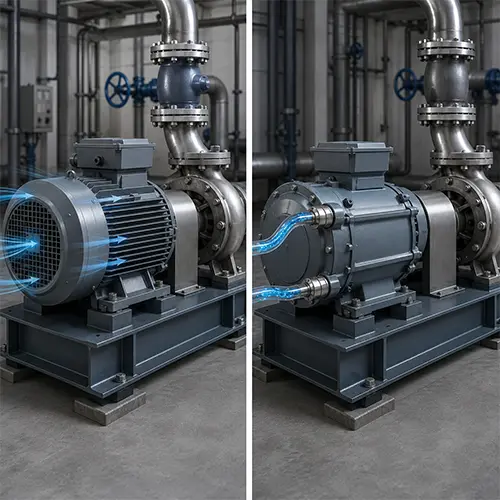
Water-Cooled vs Air-Cooled Pump Motor: Which Cooling Method Is Better for Industrial Pump Applications?
Water-cooled pump motors are usually better for high-power, continuous-duty, hot, enclosed, or noise-sensitive pump systems, while air-cooled pump motors are usually better for standard clean pump rooms with good ventilation and lower maintenance requirements. This guide helps engineers and procurement teams choose the right cooling method based on real operating conditions.
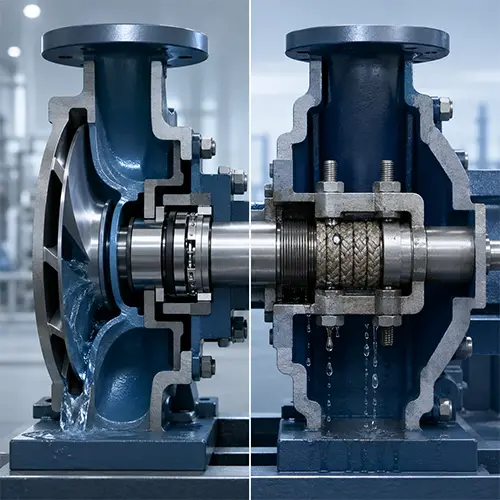
Mechanical Seal vs Packing Seal: Which Pump Sealing Method Should Industrial Buyers Choose?
This guide helps pump buyers choose between mechanical seals and packing seals by comparing liquid conditions, pressure, temperature, maintenance capability, spare parts availability, failure symptoms, retrofit risks, and supplier quotation red flags. It is designed for B2B procurement, engineering, and maintenance decision-making.
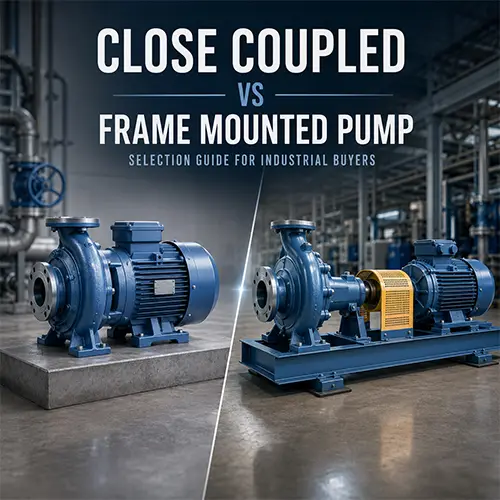
Close Coupled vs Frame Mounted Pump: Which Design Should Industrial Buyers Choose?
This article compares close coupled vs frame mounted pumps from the perspective of industrial buyers, engineers, and maintenance teams. It explains the structural differences, installation requirements, bearing support, coupling alignment, maintenance access, lifecycle cost, and reliability risks that affect pump selection. The guide helps buyers decide when a compact close coupled pump is suitable and when a frame mounted pump is the safer choice for continuous or heavy-duty operation.
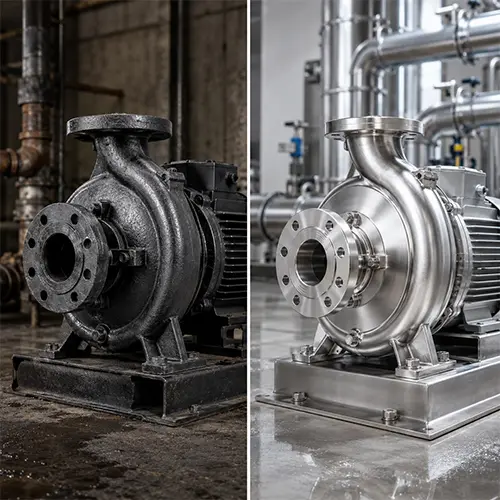
Cast Iron vs Stainless Steel Pump: Which Material Is Better for Corrosion, Cost, and Service Life?
This article compares cast iron and stainless steel pumps from a buyer’s perspective, explaining how liquid chemistry, pH value, chloride content, corrosion risk, cleanliness requirements, maintenance access, and lifecycle cost affect pump material selection.

Submersible vs Surface Pump: Which Pump Is Better for Deep Wells, Drainage, and Easy Maintenance?
This article compares submersible pumps and surface pumps from a buyer’s perspective, explaining how water source depth, suction lift, NPSH, maintenance access, dry-running risk, electrical protection, solids content, and lifecycle cost affect pump selection.
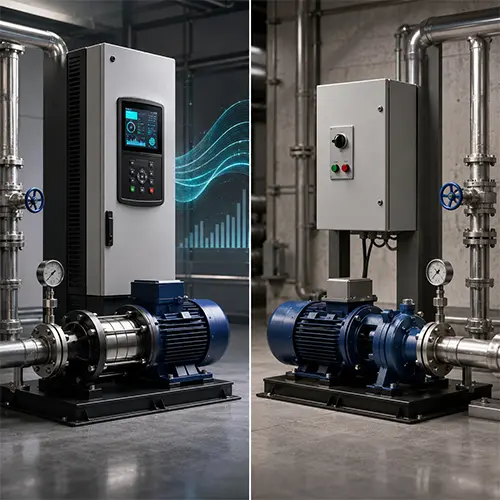
VFD Pump vs Fixed Speed Pump: Which Control Method Is Better for Energy Savings, Pressure Stability, and Long-Term Cost?
This article compares VFD pumps and fixed speed pumps from a buyer’s perspective, explaining how load profile, operating hours, pressure stability, electricity cost, control complexity, maintenance capability, and lifecycle cost affect pump control selection.
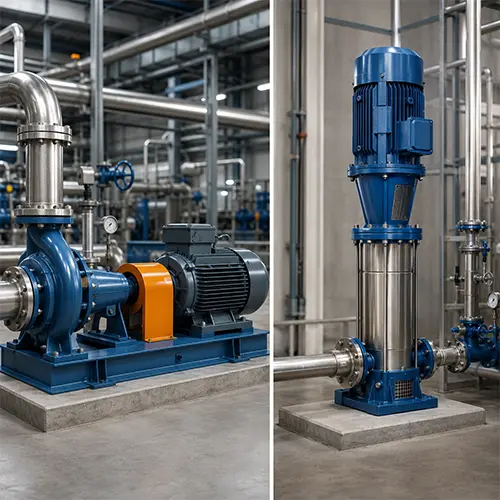
Horizontal vs Vertical Pump: Which Layout Is Better for Installation, Maintenance, and Cost?
This article compares horizontal and vertical pumps from a buyer’s perspective, explaining how installation space, ceiling height, maintenance access, suction condition, NPSH, foundation quality, vibration risk, and lifecycle cost affect pump layout selection.

Self Priming vs Centrifugal Pump: Which One Solves Suction Lift, Priming, and Startup Problems?
This article compares self priming and centrifugal pumps from a buyer’s perspective, explaining how suction lift, priming requirement, startup reliability, NPSH, air leakage risk, efficiency, liquid condition, and lifecycle cost affect pump selection.
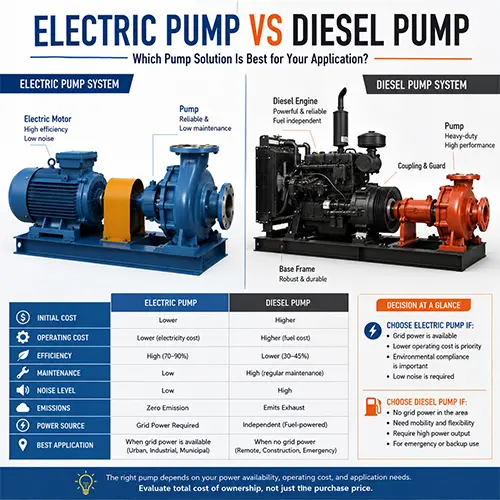
Electric Pump vs Diesel Pump: Which Power Source Is Better for Your Water Pumping System?
This article compares electric pumps and diesel pumps from a buyer’s perspective, explaining how power availability, operating hours, emergency reliability, fuel cost, electricity cost, maintenance workload, noise, emissions, and lifecycle cost affect pump power source selection.

Single Stage vs Multistage Pump: Which One Should You Choose for Pressure, Flow, and Energy Cost?
This article compares single stage and multistage pumps from a buyer’s perspective, explaining how flow rate, total dynamic head, pressure stability, pump curve position, energy cost, and maintenance conditions affect the final pump selection. It helps engineers and procurement teams avoid choosing pumps only by price or motor power.

End Suction vs Inline vs Multistage Pump: Which One Fits Your System?
The article includes a direct comparison table, pump type definitions, when-to-choose and when-not-to-choose guidance, head and flow selection logic, installation and maintenance comparison, energy and cost analysis, application-based selection table, wrong selection risk table, supplier checklist, and FAQ.
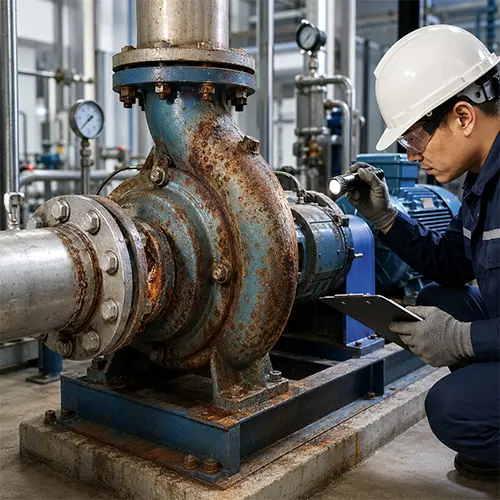
Why Does a Pump Corrode Quickly? Causes, Material Checks, and Prevention
Pump corrosion happens quickly when the pump material, liquid chemistry, operating condition, and site environment do not match. This article explains how pH, chloride concentration, salinity, temperature, dissolved oxygen, chemical additives, solids, cavitation, galvanic corrosion, coating failure, and stagnant liquid can cause a pump to rust, pit, leak, or lose material faster than expected.
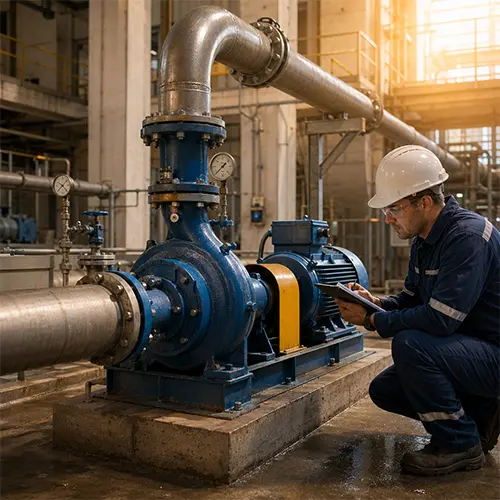
Why Does a Pump Fail in Summer? Heat, Cavitation, Motor, and Seal Checks
Pump failure in summer usually happens because high ambient temperature, warmer liquid, lower suction level, higher system demand, poor cooling, longer runtime, and electrical stress reduce the pump system’s safety margin. This article explains why pumps trip, overheat, lose flow, cavitate, leak at the seal, or show bearing temperature rise during hot weather.
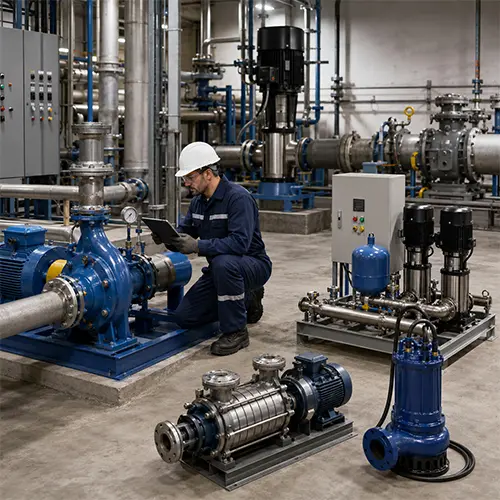
Complete Pump Troubleshooting Checklist by Pump Type: Causes, Checks, and Fixes
This complete pump troubleshooting checklist helps engineers, maintenance teams, contractors, and pump buyers diagnose pump failures by pump type instead of using one generic checklist for every system. It covers end suction centrifugal pumps, split case pumps, multistage pumps, inline pumps, booster systems, submersible pumps, sewage pumps, slurry pumps, chemical pumps, and diesel-driven pumps.
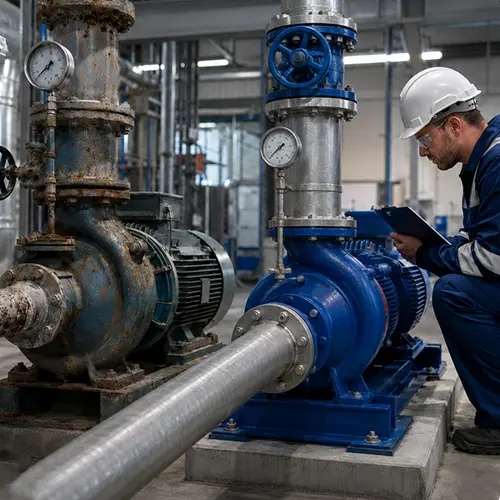
Why Does a New Pump Perform Worse Than the Old Pump? Causes, Checks, and Fixes
When a new pump has lower flow, lower pressure, higher current, more vibration, or worse stability than the old pump, the correct decision is to separate pump selection, installation, system resistance, electrical supply, control logic, supplier configuration, and liquid condition. This guide helps customers decide whether to adjust controls, repair installation, clean the system, reselect the pump, request supplier inspection, or return the pump.
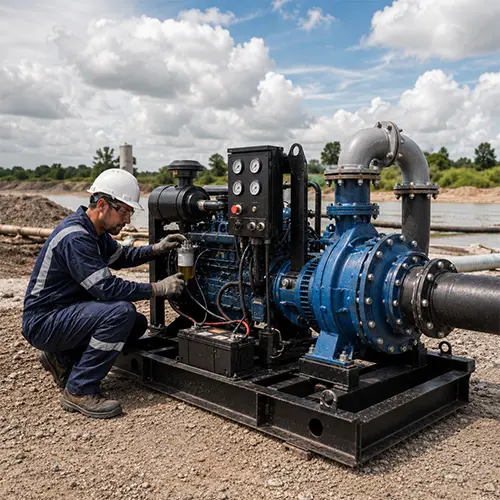
Why Is Your Diesel Pump Hard to Start? Causes, Checks, and Fixes
When a diesel pump is hard to start, repeated cranking without diagnosis can damage the starter, battery, fuel system, engine, coupling, or pump. This article provides a pre-start inspection checklist, smoke color diagnosis table, repair decision framework, supplier responsibility vs site responsibility table, warranty and safety warnings, and supplier data checklist to help customers decide whether to service, repair, replace, or request technical support.
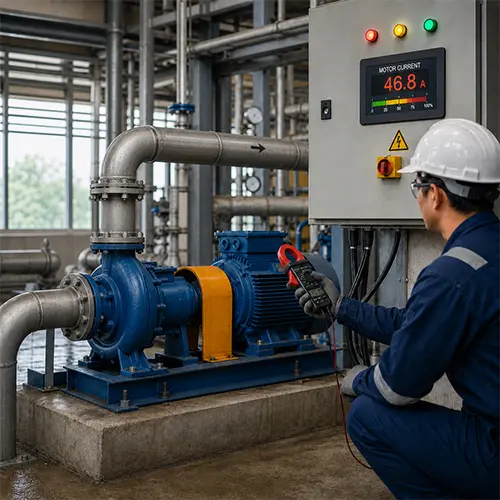
Why Does a Pump Overload at Full Flow? Causes, Checks, and Fixes
Pump overload at full flow happens when the pump requires more shaft power than the motor, VFD, or overload protection system can safely support at the actual operating point. This article explains how excess flow, low system resistance, oversized impeller, high speed, heavier liquid, incorrect motor sizing, VFD settings, electrical issues, and mechanical friction can cause high current or trips when the pump runs at full flow.

Why Your Submersible Pump Stops Working: Causes, Troubleshooting, and Repair Decisions
This guide helps customers troubleshoot why a submersible pump is not working before replacing it. It covers power supply faults, control panel problems, cable damage, insulation failure, float switch issues, low water level, dry running, clogged impellers, blocked discharge pipes, check valve problems, motor overload, and water ingress.
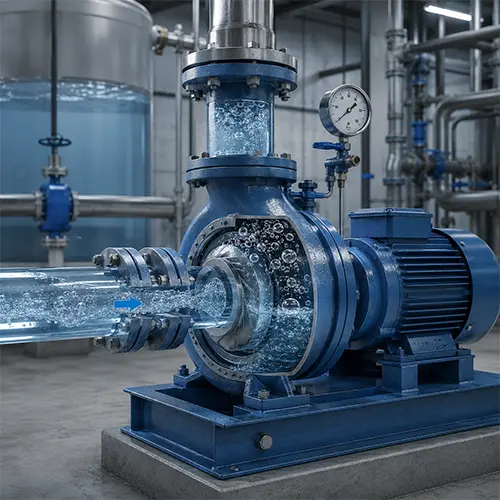
Why Is There Air Inside Your Pump? Causes, Troubleshooting, and Prevention
When air appears inside a pump, the safest response is to determine whether the issue is minor trapped air, suction leakage, air lock, cavitation, low liquid level, or piping design failure. This article explains when to stop the pump, when venting is enough, when suction sealing is required, when piping redesign is needed, and what data to send to a pump supplier or engineer for accurate diagnosis.
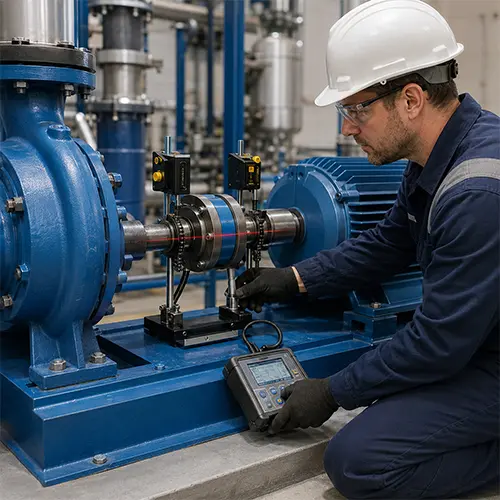
Why Does Pump Shaft Misalignment Happen? Causes, Symptoms, and Fixes
Pump shaft misalignment happens when the pump shaft and driver shaft are no longer positioned on the correct operating centerline. This article explains the main causes of pump shaft misalignment, including poor initial alignment, soft foot, pipe stress, baseplate distortion, poor grouting, loose anchor bolts, thermal growth, coupling wear, bearing damage, shaft runout, and foundation settlement.
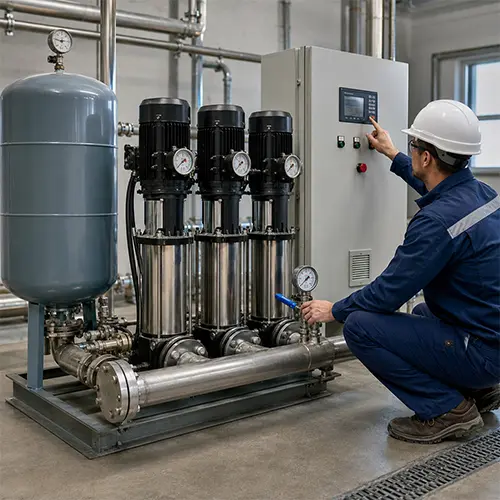
Why Booster Pump Pressure Is Unstable
Booster pump pressure is unstable when the pump system cannot maintain steady discharge pressure under normal water demand. This article explains the main causes of booster pump pressure fluctuation, including pressure tank pre-charge errors, damaged bladder tanks, pressure switch misadjustment, unstable VFD control, insufficient inlet pressure, suction-side air, discharge leakage, check valve problems, and incorrect pump sizing.
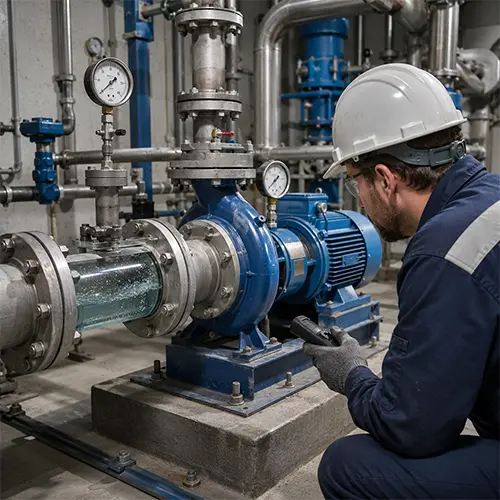
Causes of Sudden Pump Flow Reduction and Troubleshooting Methods
This troubleshooting guide helps users identify why pump flow suddenly reduced and what to check first. It covers common causes such as clogged suction strainers, air leaks, low tank level, discharge valve restrictions, blocked filters, stuck check valves, impeller clogging, cavitation, wrong rotation direction, and VFD speed problems. The article also provides decision tables for cleaning, repair, adjustment, or replacement.
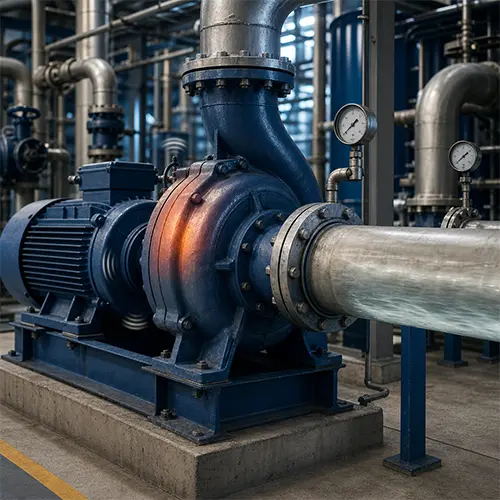
Why Pump Efficiency Drops
When a pump uses more electricity but delivers less flow, the problem may come from the pump, the piping system, the suction condition, or the control method. This article explains how to identify the cause of pump performance decline and how different pump applications—such as cooling water systems, RO feed systems, wastewater stations, slurry transfer, and booster systems—experience efficiency loss differently.
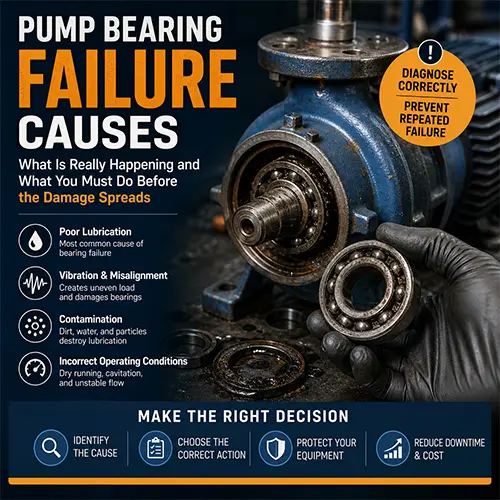
Pump Bearing Failure Causes: What Is Really Happening and What You Must Do Before the Damage Spreads
A practical guide explaining pump bearing failure causes and how to make the correct shutdown or repair decision.