
Why Pump Efficiency Drops
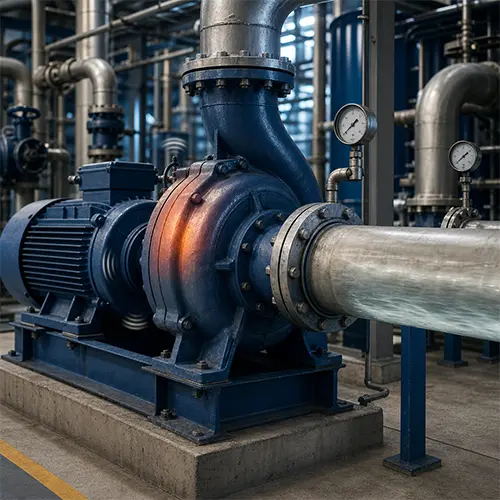
Pump efficiency drops when a pump consumes more energy but delivers less useful flow, pressure, or system output than it should. For engineers, maintenance teams, plant managers, and B2B pump buyers, this is not just a performance issue. It is a cost issue, a reliability issue, and often a warning sign that the pump, the piping system, or the operating condition is no longer working as originally designed.
In real industrial operation, pump efficiency loss usually appears before complete failure. The pump may still run every day, but the system begins to show small warning signs: lower flow, unstable discharge pressure, higher motor current, unusual vibration, frequent seal leakage, rising bearing temperature, or higher electricity bills. If these signs are ignored, the problem can develop into cavitation damage, impeller wear, motor overload, repeated downtime, and unnecessary replacement cost.
A practical way to understand why pump efficiency drops is to separate the problem into four areas: hydraulic performance, mechanical condition, system resistance, and operating control. A pump does not work alone. It works together with the suction line, discharge pipeline, valves, filters, fluid properties, motor, and control method. This is why replacing one part without checking the system often fails to solve the real problem.
For a buyer or maintenance team, the goal is not only to know the theory. The real goal is to answer practical questions: Is the pump worn? Is the system blocked? Is the pump oversized? Is cavitation damaging the impeller? Should the pump be repaired, resized, or replaced? This guide explains the main causes of pump efficiency loss, how to diagnose them step by step, and how to make a more reliable maintenance or purchasing decision.
Quick Answer: Why Does Pump Efficiency Drop?
Pump efficiency usually drops because the pump is no longer operating near its Best Efficiency Point, internal parts are worn, suction conditions are poor, system resistance has changed, or mechanical losses have increased. In many cases, the pump is not the only problem; the piping system, valves, filters, fluid condition, and control method must also be checked.
The fastest way to diagnose pump efficiency loss is to compare current field data with the original pump curve. The most important data includes flow rate, suction pressure, discharge pressure, motor current, power consumption, vibration, liquid temperature, and operating hours. Without this data, any repair or replacement decision is mostly guesswork.
| Main Cause | Common Field Symptom | How to Confirm | Best Next Decision |
| Pump operating away from BEP | Vibration, noise, unstable flow, high energy use | Compare actual flow and head with pump curve | Recheck duty point, resize pump, or adjust control |
| Impeller or wear ring wear | Flow and head gradually decline | Inspect impeller, wear rings, internal clearance | Repair hydraulic parts if original selection is correct |
| Cavitation | Gravel-like noise, vibration, pitted impeller | Check suction pressure, NPSH margin, liquid level | Fix suction condition before replacing impeller |
| Pipe or filter resistance | Lower flow, higher pressure loss | Check filters, strainers, valves, pipe scaling | Clean, repair, or redesign the system |
| Mechanical friction | Higher current, heat, vibration | Check bearing temperature, alignment, lubrication | Repair bearings, coupling, shaft, or seal system |
| Oversized pump | Throttled valve, low-flow operation, wasted energy | Check actual flow against pump BEP | Resize pump or consider suitable VFD control |
| Air entrainment | Fluctuating pressure, unstable flow, loss of prime | Check suction leaks, vortex, priming condition | Repair suction leakage and improve inlet design |
This table should be used before replacing parts. If the same pump repeatedly suffers from seal failure, bearing damage, or impeller wear, the root cause is usually not only the failed component. It is often the operating condition behind the failure.
What Pump Efficiency Drop Means in Real Operation
Pump efficiency drop means the pump still consumes input power, but less of that power becomes useful hydraulic output. In simple terms, the customer is paying for electricity, but the system receives less usable flow, pressure, or process performance.
Most users do not first notice pump efficiency loss through a formula. They notice it through operation: the cooling system becomes less stable, the water supply pressure drops, the RO system cannot maintain feed pressure, the wastewater pit takes longer to empty, or the motor runs hotter than before. These field symptoms are more important than theory because they show how efficiency loss affects production and maintenance cost.
Pump efficiency is commonly understood as the ratio between hydraulic output power and input power. A well-matched pump converts a reasonable portion of motor power into liquid movement. An inefficient pump wastes more power through turbulence, internal leakage, friction, vibration, heat, cavitation, or operation at the wrong duty point.
| What the Customer Sees | What It May Mean | Business Impact |
| Electricity cost increases | More power is needed for the same system output | Higher operating cost every month |
| Flow rate decreases | Pump output is lower than required | Production capacity or water supply may decline |
| Pressure becomes unstable | Pump or system condition is changing | Process control becomes less reliable |
| Pump noise increases | Cavitation, air, or hydraulic instability may exist | Impeller, seal, and bearing life may shorten |
| Seal leakage repeats | The seal may be damaged by vibration, heat, or dry running | Maintenance cost and downtime increase |
| Bearing temperature rises | Misalignment, overload, vibration, or lubrication issue may exist | Risk of sudden failure increases |
The key point is that a pump can run and still be inefficient. A running pump is not always a healthy pump. If the pump uses more energy, causes more failures, and delivers less stable flow, the system is already losing money even before complete breakdown happens.
Why Operating Away from the Best Efficiency Point Reduces Pump Efficiency
Pump efficiency drops quickly when the pump operates far away from its Best Efficiency Point, often called BEP. The Best Efficiency Point is the operating range where the pump converts power into hydraulic energy most effectively, with lower vibration, lower radial load, and better component life.
When a pump runs too far to the left or right of its BEP on the pump curve, hydraulic stress increases. If the flow is too low, liquid may recirculate inside the casing and impeller. This creates turbulence, heat, vibration, and uneven pressure. If the flow is too high, the pump may overload the motor, suffer from suction instability, or move toward cavitation.
Low-Flow Operation
Low-flow operation happens when the pump is forced to run below its intended flow range. This is common when the pump is oversized, when valves are throttled, or when actual system demand is much lower than the design flow.
At low flow, energy remains inside the pump instead of being carried away by the liquid. This can cause internal recirculation, heat buildup, vibration, and seal stress. In severe cases, the liquid inside the casing may become hot enough to damage seals or create vapor pockets. For the user, the pump may appear powerful, but the system is wasting energy and damaging components.
High-Flow Operation
High-flow operation happens when the pump delivers more flow than the system was designed to handle. This may happen when system resistance is lower than expected, when the pump is undersized for head but oversized for flow, or when the wrong pump curve was selected.
At high flow, motor current may increase, suction pressure may drop, and the pump may move closer to cavitation. The impeller and casing experience higher hydraulic load, and bearings may be affected by unstable radial forces. The user may see high motor current, noise, vibration, or rapid wear.
Oversized Pump Selection
Oversized pump selection is one of the most common causes of long-term efficiency loss. Many buyers choose a larger pump because they believe it provides a safety margin. In reality, a pump that is too large often operates inefficiently for most of its service life.
The system may then require throttling to reduce flow. Throttling creates artificial pressure loss and wastes energy. The customer pays for a larger pump, a larger motor, higher electricity use, and more maintenance, while still not operating near the ideal efficiency point.
If the efficiency issue comes from wrong pump configuration or unclear pump type selection, this end suction vs centrifugal pump selection guide can help project teams compare practical application boundaries before choosing a replacement pump.
How System Changes Cause Pump Efficiency Loss
Pump efficiency drops when the system curve changes after installation. The system curve represents the resistance created by the pipeline, valves, fittings, filters, elevation, and process equipment. If the system resistance changes, the pump’s actual operating point also changes.
This is a critical point for customers: the pump may not be defective. It may simply be operating in a changed system. Replacing the pump with the same model may not solve the problem if the piping, valves, filters, or process demand have changed.
Filter and Strainer Blockage
Filter and strainer blockage increases resistance on the suction or discharge side. When blockage develops slowly, operators may not notice it immediately. Flow drops gradually, pressure readings change, and the pump may move away from its original duty point.
The correct check is to measure pressure before and after the filter or strainer. If the pressure difference is higher than normal, cleaning or replacement should be done before blaming the pump.
Pipe Scaling and Internal Corrosion
Pipe scaling and corrosion reduce the effective pipe diameter and increase friction loss. This is common in older water systems, cooling systems, and industrial circulation loops.
A pump selected for a clean and new pipeline may become inefficient after years of pipe scaling. The pump works harder against higher resistance, while the system receives less flow. If the pipe condition is not checked, the user may incorrectly assume the pump has failed.
Valve Throttling and Poor Control Logic
Valve throttling can control flow, but it wastes energy. When a discharge valve is partly closed for long periods, the pump still produces energy, but much of that energy is lost across the valve.
For occasional adjustment, throttling may be acceptable. For continuous operation, it is often inefficient. If the pump is frequently throttled, the system should be reviewed. A smaller pump, a trimmed impeller, or a suitable Variable Frequency Drive, also called VFD, may reduce energy waste depending on the application.
Process Demand Changes
Process demand changes are often ignored during troubleshooting. A factory may add new equipment, extend pipelines, increase production capacity, change fluid temperature, or add branches to the system. These changes can make the original pump selection unsuitable.
When efficiency drops after a system modification, the first question should be: has the duty point changed? If the answer is yes, the system should be recalculated before buying spare parts.
| System Change | Efficiency Effect | What to Check |
| Dirty filter | Higher resistance, lower flow | Differential pressure |
| Partly closed valve | Energy wasted as pressure loss | Valve position and control method |
| Scaled pipe | Higher friction loss | Pipe inspection and pressure trend |
| Added branch line | Changed flow demand | Updated system calculation |
| Changed fluid | Different viscosity or density | Fluid data and motor load |
| Modified process | Pump no longer matches demand | New duty point |
How Internal Wear Reduces Pump Efficiency
Internal wear reduces pump efficiency because worn components cannot transfer energy to the liquid as effectively as new components. This is especially common after long operating hours or when the pumped liquid contains solids, chemicals, or abrasive particles.
Wear does not always cause sudden failure. It often causes gradual performance decline. The pump still runs, but flow and head slowly become lower than the pump curve indicates. The user may compensate by running the pump longer, opening valves, or increasing speed, but these actions do not fix the hydraulic loss inside the pump.
Impeller Wear
Impeller wear changes the blade profile and reduces the pump’s ability to add velocity and pressure to the liquid. In clean water applications, this may happen slowly. In abrasive or corrosive applications, it may happen much faster.
Typical signs include lower flow, lower head, higher vibration, and sometimes visible erosion on the impeller surface. If the impeller has lost its original geometry, the pump cannot perform according to its original curve.
Wear Ring Clearance Increase
Wear rings help reduce internal leakage from the high-pressure side back to the low-pressure side. When wear ring clearance increases, more liquid recirculates inside the pump instead of moving into the discharge line.
This is a classic reason for efficiency loss. The pump may consume similar power, but useful output decreases. If the original pump selection is correct and the casing is still in good condition, restoring the proper clearance can recover part of the lost performance.
Casing and Volute Erosion
The casing and volute guide the liquid after it leaves the impeller. If these areas become eroded, rough, or damaged, hydraulic losses increase. Flow becomes less stable, turbulence increases, and efficiency declines.
In abrasive service, casing erosion should be part of scheduled inspection. In chemical service, corrosion resistance should be checked during pump selection, not after failure.
If repeated leakage appears together with lower pump performance, this pump seal leak troubleshooting guide can help maintenance teams identify whether the seal is the symptom or the root cause before replacing seal parts too quickly.
Why Cavitation Causes Serious Efficiency Loss
Cavitation causes pump efficiency loss because vapor bubbles form and collapse inside the pump, damaging hydraulic surfaces and interrupting smooth liquid flow. It is one of the most destructive causes of pump performance decline.
Cavitation usually happens when the pressure at the pump inlet or impeller eye becomes too low. When pressure falls below the liquid’s vapor pressure, bubbles form. When these bubbles move into a higher-pressure area, they collapse violently and damage the metal surface.
How Cavitation Appears in the Field
Cavitation often sounds like gravel, stones, or marbles moving through the pump. Operators may also notice vibration, unstable pressure, reduced flow, and rapid impeller damage.
When the pump is opened, the impeller may show pitting, rough surfaces, or broken edges. If cavitation continues, seal and bearing life also becomes shorter because vibration and hydraulic instability increase.
Why Replacing the Impeller Alone Is Not Enough
Replacing a cavitation-damaged impeller without correcting the suction condition is a common mistake. The new impeller may perform well for a short time, but the same damage will return.
The root cause may be low liquid level, long suction pipe, undersized suction pipe, clogged suction strainer, high fluid temperature, poor inlet design, excessive suction lift, or insufficient Net Positive Suction Head. Net Positive Suction Head, known as NPSH, means the pressure margin available at the pump inlet to keep liquid from vaporizing.
What to Check When Cavitation Is Suspected
When cavitation is suspected, the team should check suction pressure, liquid level, fluid temperature, suction pipe diameter, suction pipe length, inlet valve position, strainer condition, and whether the pump is operating too far to the right of the curve.
The correct decision is to fix the suction problem first. Only after the root cause is corrected should damaged hydraulic parts be replaced.
How Air Entrainment and Poor Priming Lower Pump Output
Air entrainment reduces pump efficiency because the impeller is designed to move liquid, not air. When air enters the suction line or pump casing, the pump cannot transfer energy efficiently.
Poor priming is similar. If the pump casing and suction line are not filled properly before operation, the pump may lose output, run dry, or fail to build pressure.
Common Causes of Air Problems
Air may enter through suction pipe leaks, loose flange joints, poor gasket sealing, low tank level, vortex formation, or incorrect suction pipe design. In some systems, the pump may work normally when the tank level is high but perform poorly when the level drops.
This intermittent nature can make air entrainment difficult to diagnose. The pump may not fail every time, but the system becomes unstable.
Field Symptoms of Air Entrainment
Common symptoms include fluctuating discharge pressure, unstable flow, noise, vibration, and loss of prime. In transparent or open systems, bubbles may be visible. In closed systems, pressure fluctuation and unstable motor load may be the main clues.
The correct action is to inspect the suction line carefully before disassembling the pump. A small suction leak can create major performance problems.
How Mechanical Problems Increase Energy Loss
Mechanical problems reduce pump efficiency by increasing the power consumed before energy reaches the liquid. Even if the hydraulic parts are acceptable, mechanical friction can waste energy and create heat, vibration, and early failure.
This type of problem is often found through motor current, bearing temperature, vibration measurement, and alignment inspection.
Bearing Wear
Bearing wear increases friction and vibration. As bearings deteriorate, the shaft may no longer rotate smoothly. This can affect seals, coupling alignment, and impeller position.
A bearing problem may first appear as rising temperature, abnormal noise, or vibration. If ignored, it can lead to shaft damage, seal failure, or sudden shutdown.
When vibration and heat appear together with efficiency loss, this pump bearing failure diagnosis guide gives maintenance teams a clearer inspection path before replacing bearings, seals, or motors.
Coupling Misalignment
Coupling misalignment increases mechanical load on the shaft and bearings. It can occur after installation, foundation movement, pipe strain, or poor maintenance work.
Misalignment may not immediately reduce flow, but it increases power consumption and failure risk. In long-term operation, it can cause seal leakage, bearing failure, and vibration.
Excessive Seal Friction
Mechanical seals are designed to control leakage, but poor installation, dry running, wrong seal material, or poor flushing can increase friction and heat. Excessive seal friction wastes energy and may cause repeated seal damage.
If seals fail repeatedly, the correct question is not only “which seal should we buy?” The better question is “what condition is damaging the seal?”
Step-by-Step Diagnosis When Pump Efficiency Drops
Pump efficiency troubleshooting should follow a clear sequence. Starting with data prevents unnecessary repairs and helps the customer identify whether the problem is hydraulic, mechanical, electrical, or system-related.
A useful diagnosis does not begin with disassembly. It begins with comparing actual field performance against the original pump curve and system requirement.
Step 1: Record Current Operating Data
The first step is to collect field data. Without real data, it is difficult to know whether the pump is inefficient, the system has changed, or the measurement expectation is wrong.
The customer should record actual flow rate, suction pressure, discharge pressure, motor current, voltage, pump speed, valve position, liquid temperature, operating hours, vibration, and noise condition. If possible, this data should be compared with previous records.
Step 2: Compare Field Data with the Pump Curve
The pump curve shows the expected relationship between flow, head, efficiency, and power. If the pump is operating far from its intended range, efficiency loss is likely.
If the actual flow and head are much lower than the curve suggests, internal wear, blockage, suction problems, or air entrainment may exist. If the pump operates far from BEP, the issue may be selection or system mismatch.
Step 3: Check Suction Conditions
The suction side should be checked early because poor suction can create cavitation, air entrainment, low output, and repeated damage.
The inspection should include liquid level, suction pipe size, suction pipe length, suction valve position, strainer condition, air leakage, vortex formation, and fluid temperature. Many pump problems are solved only after the suction side is corrected.
Step 4: Check Discharge-Side Resistance
The discharge side should be checked for clogged filters, partly closed valves, fouled heat exchangers, scaled pipes, and changed process demand.
If resistance has increased, the pump may move to a lower-flow operating point. The pump may not be defective, but the system no longer allows it to deliver the expected flow.
Step 5: Check Mechanical Condition
Mechanical inspection should include bearing temperature, lubrication, alignment, coupling condition, shaft condition, seal friction, and vibration.
If current is high but flow does not improve, mechanical friction or overload may be involved. If vibration is high, both hydraulic and mechanical causes should be considered.
Step 6: Inspect Internal Hydraulic Parts
Internal inspection should be done when external system checks do not explain the performance loss. The impeller, wear rings, casing, diffuser, shaft, and seal chamber should be inspected.
This step is important, but it should not be the first step unless there is clear evidence of internal damage. Disassembly costs time and may not solve the problem if the root cause is outside the pump.
| Test Result | Likely Cause | What to Do Next |
| Flow drops and current rises | Mechanical friction, overload, high resistance | Check bearings, valves, pipe blockage, fluid density |
| Flow drops and current drops | Suction starvation, air, blockage, internal wear | Check suction line, strainer, impeller |
| Pressure fluctuates | Air entrainment or cavitation | Check suction leakage, NPSH, liquid level |
| Vibration increases | Cavitation, misalignment, bearing wear, BEP deviation | Check suction, alignment, bearing condition, pump curve |
| Repeated seal failure | Dry running, vibration, heat, wrong seal condition | Check suction, alignment, flush, operating point |
| Low flow after system modification | Changed system curve | Recalculate duty point and pump selection |
Repair, Adjust, or Replace: How to Make the Right Decision
The right decision depends on whether the pump efficiency drop comes from local wear, system change, poor operation, or wrong selection. A good decision should compare repair cost, future energy cost, downtime risk, and expected remaining service life.
The cheapest immediate option is not always the lowest-cost long-term option. Replacing a seal may be cheap, but replacing the same seal many times is expensive. Buying a new pump may seem costly, but it may be cheaper than years of high electricity cost and downtime.
Repair the Pump When the Original Selection Is Correct
Repair is suitable when the pump was correctly selected, the system has not changed significantly, and the problem is mainly normal component wear.
Examples include worn wear rings, damaged bearings, worn seals, or a repairable impeller. In these cases, restoring clearances and replacing damaged components may recover performance.
Adjust the System When the Pump Is Not the Root Cause
System adjustment is suitable when the pump is healthy but the system condition has changed. This includes clogged filters, changed pipeline resistance, valve throttling, fouled heat exchangers, or process changes.
In this case, replacing the pump may waste money. The system should be cleaned, adjusted, or recalculated first.
Replace or Resize the Pump When It Is Fundamentally Mismatched
Replacement or resizing is suitable when the pump operates far from its efficient range, repeatedly fails, or cannot meet the current duty point economically.
This is especially important when the pump is oversized and throttled daily, undersized for current demand, repeatedly damaged by cavitation, or consuming excessive energy. In these cases, the lifecycle cost of keeping the old pump may be higher than selecting a better-matched pump.
| Condition | Better Choice | Reason |
| Local wear, correct duty point | Repair | Lower cost and likely performance recovery |
| Filter, valve, or pipe problem | Adjust system | Pump is not the root cause |
| Pump constantly throttled | Resize or evaluate VFD | Energy is being wasted daily |
| Repeated cavitation damage | Redesign suction or reselect pump | New parts will fail again |
| Frequent seal and bearing failure | Full system diagnosis | Repeated parts failure indicates deeper stress |
| High energy cost and poor output | Replace or resize | Lifecycle cost may justify new equipment |
Get A Quote

Get A Quote
0 Comments