
Why Booster Pump Pressure Is Unstable
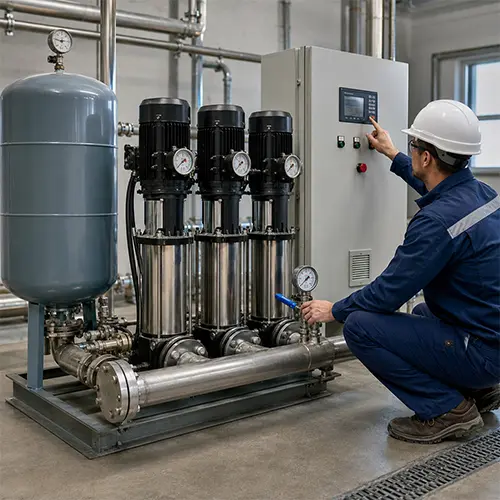
Booster pump pressure is unstable when the pump system cannot maintain a steady discharge pressure under normal water demand. For building managers, facility engineers, maintenance teams, contractors, and B2B pump buyers, this problem is more than an inconvenience. It can cause weak water supply on upper floors, pressure surging at user points, frequent pump start-stop cycles, pipe vibration, water hammer, higher energy consumption, and premature damage to pressure tanks, valves, seals, and motors.
Unstable booster pump pressure does not always mean the booster pump itself is defective. In many field situations, the real cause is a failed pressure tank, incorrect pre-charge pressure, pressure switch misadjustment, VFD control instability, insufficient inlet water supply, air entering the suction line, a stuck check valve, pipeline leakage, blocked filters, or a system demand that has changed after installation. Replacing the pump without checking these conditions can waste money and leave the pressure fluctuation unresolved.
The correct approach is to treat the booster pump as part of a complete pressure system. The pump, pressure tank, controller, suction supply, discharge pipeline, valves, sensors, and water demand must work together. This article explains why booster pump pressure is unstable, what to check first, when the pump should be stopped, how to diagnose the root cause step by step, and when the correct decision is adjustment, repair, resizing, or replacement.
Scope of This Guide: Applicable Pump Types and Operating Conditions
This troubleshooting guide is mainly written for booster pump systems designed to maintain stable water pressure in buildings, commercial facilities, irrigation networks, industrial utility water systems, and municipal booster stations. It is most useful when the problem appears as fluctuating discharge pressure, frequent pump start-stop cycles, unstable VFD pressure control, weak upper-floor pressure, or pressure surging at user points.
This guide is not a universal troubleshooting method for every pump type. Booster pump pressure instability usually involves the pressure tank, pressure switch, VFD controller, pressure sensor, suction supply, check valve, pipeline leakage, or changing water demand. Other pump types may show pressure fluctuation for very different reasons and may require a different diagnostic priority.
For this article, the term “booster pump pressure instability” mainly refers to pressure fluctuation in clean water or relatively low-solids water pressure boosting systems. If the pump is used for abrasive slurry, sewage, chemicals, high-temperature fluids, fire protection, or deep well extraction, this guide can still provide a basic diagnostic structure, but the final troubleshooting sequence should be adjusted according to the pump type, fluid properties, pressure level, and safety requirements.
| Pump System Type | Is This Checklist Suitable? | Notes |
| Building booster pump | Yes | Highly suitable for pressure tank, switch, VFD, and zoning diagnosis |
| Hotel / apartment booster system | Yes | Useful for peak demand, short cycling, tank sizing, and VFD tuning |
| Industrial utility water booster system | Yes | Suitable if the fluid is clean water or low-solids service water |
| Irrigation booster pump | Mostly yes | Add checks for zone valves, filters, regulators, and air in long pipelines |
| Municipal booster station | Yes, with system-level review | Multi-pump staging and sensor location should also be checked |
| Slurry pump | Partially | Wear, solids concentration, and pipe settlement require priority checks |
| Sewage pump | Partially | Clogging, ragging, level control, and check valve blockage are more important |
| Chemical process pump | Partially | Material compatibility, seal system, corrosion, and process control matter more |
| Boiler feed pump | Limited | High-pressure safety and boiler control logic require specialized diagnosis |
| Fire pump | Limited | Must follow fire safety codes and approved inspection procedures |
| Deep well pump | Limited | Well water level, submersible motor, cable, and borehole conditions must be checked |
The main takeaway is simple: this article is a booster pump pressure troubleshooting guide, not a one-size-fits-all pump failure manual. Use it when the key problem is unstable outlet pressure in a pressure boosting system. For other pump types, use the logic carefully and adjust the inspection order based on the pump design and application risk.
Quick Answer: Why Booster Pump Pressure Is Unstable
Booster pump pressure is usually unstable because the pump, pressure tank, pressure switch, VFD controller, suction supply, check valve, pipeline, or water demand is not working as a matched system. The fastest diagnosis is to compare the pressure fluctuation pattern, pump start-stop frequency, motor current, tank pre-charge pressure, valve condition, suction pressure, and actual water usage pattern.
In practical operation, the most important first question is not “Is the pump broken?” The better question is “Which part of the pressure system has lost balance?” If the pump starts and stops every few seconds, the pressure tank or pressure switch may be the main issue. If pressure drops only during peak demand, the pump may be undersized or inlet supply may be insufficient. If pressure fluctuates with noise and vibration, air entrainment or cavitation may be involved. If pressure is stable near the pump but unstable at user points, the issue may be pipe layout, zoning, leakage, or valves.
| Field Symptom | Likely Cause | What to Check First | Recommended Action |
| Pressure rises and falls quickly | Pressure tank failure or wrong pre-charge | Tank air pressure, bladder condition | Re-charge tank or replace bladder/tank |
| Pump starts and stops too often | Short cycling, small tank, wrong pressure switch setting | Start/stop pressure, tank size, water demand | Adjust pressure range or resize tank |
| Pressure drops during peak demand | Pump undersized or inlet supply insufficient | Flow demand, suction pressure, pump curve | Recalculate duty point |
| Pressure fluctuates with noise | Air in system or cavitation | Suction pipe, liquid level, air leaks | Remove air and correct suction condition |
| Pressure high but flow weak | Pipe blockage, valve restriction, clogged filter | Discharge valve, filters, pipe restriction | Clean or open restricted components |
| Pressure unstable after installation | Wrong wiring, VFD setting, or pump selection | Rotation, VFD parameters, system curve | Correct installation or reselect pump |
| Pressure unstable only on upper floors | Insufficient head or wrong zoning | Building height, floor demand, pressure zones | Review booster system design |
This table should be used as a first decision tool. It helps separate control problems, tank problems, suction problems, pipe problems, and pump sizing problems before parts are replaced unnecessarily.
Is the Pressure Instability Caused by the Pump or the System?
Booster pump pressure instability is often caused by the system around the pump rather than the pump body itself. The pressure tank, pressure switch, VFD, suction supply, discharge valves, pipeline leakage, and real water demand can all create unstable pressure even when the pump is mechanically healthy.
This distinction matters because the repair decision changes completely. If the pressure tank has lost its air cushion, replacing the pump will not stop short cycling. If the suction supply is unstable, a new pump may still cavitate or lose pressure. If the system demand has increased after building expansion, controller adjustment alone may not solve the issue. A correct diagnosis must identify whether the pressure problem comes from the pump, the control system, the tank, the inlet supply, or the demand side.
How to Separate Pump Problems from System Problems
Pump-side problems usually appear when the booster pump cannot produce the required pressure even under stable inlet supply and normal control settings. Possible causes include worn impellers, incorrect rotation, low speed, internal wear, cavitation damage, or a pump that is too small for the duty point.
System-side problems usually appear as pressure fluctuation linked to demand, tank condition, valve position, pipe leakage, or control response. If the pump starts and stops rapidly, the tank or switch is often involved. If pressure drops only when many users open taps at the same time, the system may be undersized. If pressure falls when no one is using water, leakage or a failed check valve may be present.
A useful field rule is this: compare the pressure gauge at the pump with pressure behavior at the user points. If pressure is unstable at the pump outlet, focus on pump, tank, controller, suction, and check valves. If pressure is stable near the pump but unstable on upper floors or distant branches, focus on pipe layout, zoning, pressure loss, and demand distribution.
Why Replacing the Pump First Is Often the Wrong Decision
Replacing the pump first is often the wrong decision because pressure instability is frequently caused by control or system components. A booster pump can be completely functional, but still operate poorly if the pressure tank is waterlogged, the pressure switch range is too narrow, the VFD PID setting is unstable, or the suction line cannot supply enough water.
From a customer’s cost perspective, this matters. A new pump will not fix a damaged bladder tank, a leaking pipe, a blocked inlet filter, or a wrongly placed pressure sensor. The better sequence is to measure pressure behavior, check tank condition, confirm control settings, inspect suction supply, check valves and leaks, then evaluate whether the pump itself is correctly sized.
First Safety Checks When Booster Pump Pressure Is Unstable
Booster pump pressure instability should first be evaluated for safety risk. Severe pressure fluctuation can damage pipes, valves, fittings, pressure tanks, water heaters, filters, seals, bearings, and connected equipment.
A booster system operates under pressure, so unstable pressure should not be ignored. If the pump is short cycling, running dry, producing loud noise, or creating water hammer, continued operation may increase the repair cost and safety risk. Before adjusting settings or replacing parts, the maintenance team should decide whether the system can continue operating safely.
When You Should Stop the Booster Pump Immediately
The booster pump should be stopped immediately if pressure rises above the safe system limit, the pump starts and stops every few seconds, motor current becomes abnormal, the pump casing overheats, loud cavitation noise appears, the pressure tank leaks or shakes heavily, pipeline vibration becomes severe, water hammer occurs, mechanical seal leakage increases, or a burning smell appears near the motor or control cabinet.
These warning signs indicate that the system is operating under damaging conditions. For example, short cycling can overheat the motor and wear electrical components. Cavitation can damage impellers and seals. Water hammer can damage valves, pressure gauges, pipe joints, and tanks. Heavy leakage or overheating should always be treated as a serious warning.
If unstable pressure is followed by seal leakage, overheating near the seal chamber, or repeated seal replacement, the seal may be a symptom rather than the root cause. In that case, this pump seal leak troubleshooting guide can help maintenance teams check whether dry running, cavitation, vibration, or poor operating conditions are damaging the seal.
When Short-Term Monitoring Is Acceptable
Short-term monitoring may be acceptable if the pressure fluctuation is minor, the pump runs smoothly, motor current is normal, there is no abnormal noise, there is no heavy leakage, and the system pressure remains within the safe operating range. However, monitoring should not mean ignoring the issue.
During short-term monitoring, the operator should record suction pressure, discharge pressure, pressure fluctuation range, pump start-stop frequency, motor current, tank condition, and water demand. If fluctuation becomes worse, if the pump starts more frequently, or if vibration and noise appear, the system should be stopped and inspected.
What Data Should Be Recorded Before Troubleshooting
Before troubleshooting begins, record suction pressure, discharge pressure, pressure fluctuation range, pump start pressure, pump stop pressure, start-stop frequency, motor current, VFD frequency if applicable, pressure tank pre-charge pressure, valve position, and the current water demand condition.
It is also important to record whether the problem happens all day or only during peak demand. Note whether the system was recently installed, repaired, rewired, modified, or expanded. Pressure instability after maintenance often has a different cause from pressure instability that develops slowly over time.
Pressure Tank Problems That Cause Booster Pump Pressure Fluctuation
Pressure tank problems are one of the most common causes of unstable booster pump pressure. If the tank cannot store and release pressure correctly, the pump may start and stop too often, and the pressure gauge may rise and fall quickly.
The pressure tank acts as a buffer. It stores pressurized water and reduces how often the pump needs to start. When the tank air charge is wrong, the bladder is damaged, the tank is too small, or the tank connection is isolated by a closed valve, the system loses this buffer. The result is short cycling, pressure fluctuation, and pump stress.
Wrong Pressure Tank Pre-Charge
Pressure tank pre-charge is the air pressure inside the tank before water enters. It must be matched to the pump’s cut-in pressure. If the pre-charge is too low, the tank stores less usable water and the pump may cycle frequently. If the pre-charge is too high, water cannot enter the tank properly, so pressure drops quickly when users open taps.
A common field method is to stop the pump, drain water pressure from the tank, and then measure air pressure at the tank air valve. The measured air pressure should be compared with the system’s cut-in pressure. The exact target depends on the system design, but the key principle is that pre-charge must be checked with the water side depressurized.
Wrong pre-charge is often misdiagnosed as pump failure because the symptom appears at the pump: rapid start-stop and unstable pressure. But the root cause may be the tank’s inability to provide stable drawdown volume.
Damaged Bladder or Diaphragm
A damaged bladder or diaphragm prevents the tank from separating water and air correctly. Once the bladder fails, the tank may become waterlogged and lose its pressure buffering function.
Common symptoms include rapid pump cycling, fast pressure gauge movement, water coming out of the air valve, a tank that feels unusually heavy, and pressure dropping quickly after the pump stops. If water comes from the air valve when pressed briefly, the bladder or diaphragm may be damaged.
When the bladder is damaged, simply adding air may provide only temporary improvement. The correct decision is usually to replace the bladder if serviceable or replace the tank if the tank is not repairable.
Pressure Tank Too Small for the System
A pressure tank that is too small can cause frequent pump starts even when the tank itself is not damaged. This often happens in apartment buildings, hotels, factories, irrigation systems, or facilities with many intermittent water users.
A small tank has limited drawdown volume, which means only a small amount of water can be used before pressure drops to the pump start point. The pump then starts repeatedly, causing pressure cycling, electrical stress, and possible motor overheating.
| Tank Issue | Field Symptom | How to Confirm | Best Action |
| Pre-charge too low | Pump starts too often | Check tank air pressure when drained | Re-charge to correct value |
| Pre-charge too high | Pressure drops quickly | Compare pre-charge with cut-in pressure | Adjust pre-charge |
| Bladder damaged | Water from air valve | Press air valve briefly after depressurizing | Replace bladder or tank |
| Tank too small | Short cycling under normal demand | Compare drawdown volume with demand | Resize pressure tank |
| Tank isolated by valve | No pressure buffering | Check tank connection valve | Open or repair valve |
Pressure tank diagnosis should come early in the troubleshooting process because it is one of the fastest ways to identify the cause of pressure instability.
Pressure Switch or Control Setting Problems
Booster pump pressure can become unstable when the pressure switch, pressure sensor, controller, or VFD settings do not match actual system demand. Control problems often appear after installation, maintenance, rewiring, sensor replacement, or parameter changes.
The controller decides when the pump starts, stops, speeds up, slows down, sleeps, and wakes. If the control signal is wrong or the settings are too aggressive, the pump may chase pressure instead of maintaining it smoothly. This is why pressure instability can happen even in a new booster system.
Pressure Switch Cut-In and Cut-Out Settings Are Too Close
Cut-in pressure is the pressure at which the pump starts. Cut-out pressure is the pressure at which the pump stops. If the difference between cut-in and cut-out is too narrow, the pump may start and stop too frequently.
A narrow pressure range can create short cycling, especially when the pressure tank is small or water demand is intermittent. The pump reaches stop pressure quickly, stops, pressure drops quickly, then the pump starts again. This repeated cycle can shorten motor, contactor, relay, and seal life.
A practical check is to observe the pressure gauge during operation. If the pump starts and stops over a very small pressure range, the pressure switch setting should be reviewed together with the tank condition.
Pressure Sensor Reading Is Unstable or Incorrect
A pressure sensor can create unstable pump operation if its reading is inaccurate, blocked, poorly located, electrically noisy, or slow to respond. In VFD-controlled booster systems, the sensor signal is especially important because the controller adjusts speed based on that pressure feedback.
If the sensor is installed too close to turbulence, valves, elbows, or pressure pulses, the signal may fluctuate. If the sensing port is blocked by scale or debris, the controller may respond to false readings. If wiring is loose or signal shielding is poor, the VFD may receive unstable input.
When pressure instability appears without clear hydraulic cause, the sensor should be checked before replacing the pump.
VFD Parameters Are Not Matched to Water Demand
A Variable Frequency Drive, or VFD, can help stabilize booster pump pressure by changing motor speed. However, VFD systems can still have unstable pressure if PID parameters, acceleration time, deceleration time, minimum frequency, maximum frequency, sleep pressure, wake pressure, or sensor feedback are not set correctly.
If the PID response is too aggressive, pressure may overshoot and undershoot. If the response is too slow, users may experience pressure drops before the pump reacts. If sleep and wake settings are wrong, the pump may start and stop at the wrong times.
A VFD is not a universal solution. It needs correct pump sizing, stable suction supply, proper sensor placement, and suitable control parameters. If pressure instability also comes with rising energy consumption or operation far from the efficient range, this pump efficiency loss guide can help engineers identify whether the pump is operating away from its efficient working range.
Control Cabinet or Electrical Issues
Control cabinet and electrical issues can also cause pressure instability. Loose wiring, faulty contactors, unstable voltage, relay problems, phase loss, overload trips, or poor grounding can cause irregular pump operation.
Electrical checks should be done by qualified personnel. From a troubleshooting perspective, signs include irregular pump starts, unexpected stops, unstable motor current, alarms on the VFD, abnormal contactor noise, or control panel readings that do not match field pressure gauges.
Suction-Side Problems That Make Booster Pump Pressure Unstable
A booster pump cannot maintain stable pressure if the inlet water supply is unstable. Low suction pressure, air entering the suction line, clogged inlet filters, or insufficient source water can cause pressure fluctuation even when the booster pump itself is healthy.
This point is often overlooked. A booster pump increases pressure, but it cannot create stable discharge pressure if it does not receive enough water at the inlet. The suction side must be checked before assuming that the pump or controller has failed.
Insufficient Inlet Pressure or Water Supply
Insufficient inlet pressure is a common reason for unstable booster pressure. If the municipal water supply pressure is too low, the storage tank level is too low, the inlet pipe is undersized, or the inlet valve is partially closed, the booster pump may not receive enough water.
When inlet supply is weak, the pump may lose pressure during peak demand. The discharge pressure may appear acceptable during low demand but drop sharply when many users open taps. In severe cases, the pump may cavitate or draw air into the suction line.
The first checks should include inlet pressure, tank level, inlet valve position, and whether the problem occurs during peak demand.
Clogged Inlet Filter or Suction Strainer
A clogged inlet filter or suction strainer restricts water entering the booster pump. This can cause low suction pressure, discharge pressure fluctuation, cavitation noise, and unstable flow.
This issue is common where the supply water contains sediment, rust, sand, scale, or construction debris. After new pipe installation or maintenance, debris may move through the system and block filters or strainers.
If unstable pressure is accompanied by lower flow or abnormal noise, this pump flow drop troubleshooting guide can help maintenance teams check whether suction restriction, cavitation, or air entrainment is reducing system performance.
Air Enters the Suction Line
Air entering the suction line can make booster pump pressure rise and fall irregularly. Air may enter through loose joints, poor gaskets, low tank level, vortex formation, or high points in the suction pipe where air is trapped.
Air reduces the pump’s ability to move water smoothly. It can cause pressure fluctuation, noise, vibration, and loss of prime in some systems. Suction-side air leaks are difficult to find because the pipe may draw air inward without visible water leakage.
If the pressure gauge fluctuates with noise or bubbles are suspected, suction joints, flange gaskets, air release points, and tank level should be inspected carefully.
Cavitation in Booster Pump Systems
Cavitation occurs when pressure at the pump inlet drops low enough for vapor bubbles to form and collapse inside the pump. In booster systems, cavitation usually comes from poor inlet supply, blocked inlet filters, excessive suction losses, or operating at a flow condition the suction system cannot support.
Cavitation can cause noise, vibration, pressure fluctuation, impeller damage, seal leakage, and bearing stress. If cavitation is present, adjusting the pressure switch or VFD will not solve the root cause. The suction condition must be corrected first.
Discharge-Side Problems That Cause Booster Pump Pressure Surging
Discharge-side restrictions and demand-side changes can cause booster pump pressure to surge or drop suddenly. The pump may be working correctly, but the system after the pump may be blocking, releasing, or consuming water unevenly.
The discharge side includes outlet valves, check valves, filters, pressure regulators, pipelines, user branches, and fixtures. Any sudden restriction or leakage can disturb pressure stability.
Partially Closed Valves or Blocked Filters
Partially closed discharge valves, clogged filters, or blocked pipeline sections can create unstable pressure. The pump may build pressure, but water cannot pass smoothly through the system.
This condition may show as high pressure near the pump but weak flow at user points. It may also cause the controller to respond incorrectly because the measured pressure does not represent actual demand at the user side.
A practical check is to compare pressure before and after suspected components. A large pressure difference across a filter, valve, or heat exchanger usually indicates restriction.
Leaks in the Pipeline
Pipeline leakage can cause pressure to fall even when no one is using water. The pump may start frequently because the system cannot hold pressure.
Leaks can occur in underground pipes, concealed building lines, valve connections, expansion joints, or fittings. Small leaks may not be visible immediately but can still cause repeated pressure drop and pump cycling.
A useful field test is to observe whether pressure falls when all user outlets are closed. If pressure continues to drop and the check valve is functional, leakage should be suspected.
Water Hammer and Sudden Valve Closure
Water hammer is a pressure surge caused by sudden changes in water velocity, often from quick valve closure, pump start-stop events, or check valve slam. It can create loud banging sounds, pipe vibration, and sharp pressure spikes.
Water hammer can damage pipes, pressure gauges, valves, fittings, and tanks. If unstable pressure is accompanied by strong pipe movement or banging sounds, the system should be checked for valve closing speed, check valve type, pump control logic, and pressure tank function.
Uneven Demand from Multiple Users
Uneven water demand can cause pressure fluctuation in hotels, apartment buildings, factories, irrigation systems, and commercial facilities. When multiple users open and close water outlets at different times, the booster system must respond smoothly.
If the pump is controlled poorly or the tank is too small, the pressure may swing during demand changes. In larger systems, zoning, multiple pumps, or variable-speed control may be needed to maintain stable pressure across different demand levels.
Pump Sizing Problems Behind Unstable Booster Pump Pressure
Booster pump pressure can be unstable when the pump is oversized, undersized, or selected without matching the real duty point. Correct sizing should consider flow demand, required pressure, building height, pipe loss, peak demand, inlet pressure, pressure tank size, and control method.
Sizing is not only about choosing a pump that can reach a certain pressure. The pump must operate stably across the actual demand range. A pump that is too large may create pressure surges and short cycling. A pump that is too small may fail during peak demand.
Oversized Booster Pump
An oversized booster pump can raise pressure too quickly, causing short cycling, pressure overshoot, valve noise, water hammer, and energy waste. The system may need throttling or frequent control correction, which reduces reliability.
Oversizing often happens when buyers add a large safety margin without calculating actual demand. In variable-demand systems, a single oversized pump may perform poorly under low-flow conditions. A properly staged multi-pump system may be more stable than one large pump.
Undersized Booster Pump
An undersized booster pump may maintain pressure during low demand but fail during peak demand. This is common in buildings where upper floors lose pressure during morning or evening use, hotels with peak shower demand, or industrial systems with changing process demand.
If pressure drops while the pump continues running at full speed, the pump may not be able to meet the required flow and head. The system duty point should be recalculated using actual peak demand, pipe loss, and building height.
Wrong Pump Curve for the System
A wrong pump curve can cause unstable pressure even when the rated flow and head look acceptable on paper. The pump must match the system curve, not just a single design number.
If the pump operates in an unstable or inefficient part of its curve, pressure may fluctuate when demand changes. The system may also experience vibration, noise, low efficiency, or short component life.
When the System Needs Multiple Pumps Instead of One Large Pump
Systems with wide demand variation often need multiple pumps instead of one large pump. A multi-pump booster system can stage pumps on and off, allowing better pressure stability and energy efficiency across different demand levels.
For buildings, hotels, commercial facilities, and municipal booster stations, staged pumps or variable-speed pump groups are often more stable than a single oversized unit. If unstable pressure appears after a system expansion or pump replacement, this water pump types explained guide can help buyers compare pump categories before requesting a new booster pump configuration.
Why Booster Pump Pressure Is Unstable After Installation or Maintenance
Booster pump pressure instability after installation or maintenance often points to installation, wiring, rotation direction, valve position, controller settings, tank connection, or trapped air. The timing of the problem is an important diagnostic clue.
If pressure was stable before maintenance and unstable immediately after, the first inspection should focus on what was changed. Do not assume that a new pump or controller is defective before confirming basic installation details.
Wrong Rotation Direction
Wrong rotation direction can happen after three-phase motor wiring, motor replacement, or electrical maintenance. The pump may still run, but flow and pressure may be much lower than expected.
Always compare motor rotation with the direction arrow on the pump. Wrong rotation should be corrected before any hydraulic parts are replaced.
Air Not Removed from the System
Air trapped in the pump casing, pipeline high points, pressure tank connection, or discharge line can cause pressure fluctuation after installation or maintenance. Air compresses and expands, making pressure unstable.
Air release valves, high points, tank connections, and priming procedures should be checked. In some systems, repeated venting may be needed after initial startup.
Pressure Tank Valve Left Closed
A pressure tank valve left closed after maintenance can remove the system’s pressure buffer. The pump may then start and stop rapidly, and the pressure gauge may move quickly.
This is a simple but common issue. Always confirm that the pressure tank is connected to the system and not isolated by a closed valve.
VFD or Controller Parameters Changed
VFD or controller parameters may be reset or changed during maintenance. If pressure instability appears after control work, check pressure setpoint, PID settings, minimum and maximum frequency, sleep and wake settings, acceleration time, and sensor input configuration.
A small parameter error can create large pressure swings. Restoring the correct settings may solve the problem without replacing mechanical parts.
Step-by-Step Troubleshooting for Booster Pump Pressure Instability
A reliable troubleshooting process should start with simple external checks before replacing components. The best sequence is to check pressure readings, tank condition, control settings, inlet supply, valves, leaks, motor current, and pump performance.
This sequence helps customers avoid unnecessary spending. Many pressure instability problems are solved by correcting tank pre-charge, adjusting pressure settings, cleaning filters, opening valves, removing air, or fixing leaks.
Step 1: Confirm the Pressure Fluctuation Pattern
First identify how the pressure fluctuates. Does pressure move rapidly up and down? Does it slowly drop after the pump stops? Does it only drop during peak demand? Does the pump start every few seconds? Does pressure fluctuate only at upper floors or distant user points?
The pattern determines the likely cause. Rapid rise and fall often points to tank or control issues. Slow pressure drop with no water use may indicate leakage or check valve failure. Peak-demand pressure drop may indicate undersizing or inlet supply limitations.
Step 2: Check Pressure Tank Pre-Charge and Bladder Condition
Stop the pump, isolate safely if required, drain water pressure from the tank, and measure the tank air pressure. Compare the tank pre-charge with the system cut-in pressure. Then check whether water comes out of the air valve, which may indicate bladder failure.
If the tank is waterlogged, undercharged, overcharged, or too small, pressure stability will suffer. Correcting the tank is often the fastest solution to short cycling and pressure fluctuation.
Step 3: Check Pressure Switch, Sensor, and Controller
Check the pressure switch cut-in and cut-out settings, sensor signal stability, controller display, VFD frequency, PID parameters, and sleep/wake settings. Confirm that the controller reading matches a reliable mechanical pressure gauge.
If the controller reacts to false or unstable pressure signals, the pump may start, stop, speed up, or slow down at the wrong time. Sensor cleaning, relocation, replacement, or parameter adjustment may be required.
Step 4: Check Suction Supply
Check inlet pressure, water tank level, inlet valve position, inlet filter condition, suction pipe air leakage, and cavitation noise. The booster pump cannot maintain stable discharge pressure if the inlet supply is unstable.
If unstable pressure is worse during peak demand, suction supply should be inspected carefully. Insufficient inlet supply may require larger inlet piping, a storage tank review, filter cleaning, or system redesign.
Step 5: Check Discharge-Side Restrictions and Leaks
Check outlet valves, check valves, clogged filters, pipeline leakage, pipe vibration, and water hammer. If pressure drops when no users are drawing water, leakage or check valve backflow should be suspected.
Discharge-side checks are especially important when pressure near the pump differs from pressure at user points. A blocked filter or partially closed valve may create misleading pressure behavior.
Step 6: Check Pump Sizing and Duty Point
Check required flow, required pressure, building height, pipe loss, peak demand, inlet pressure, and the pump curve. If the system has expanded or demand has changed, the original pump selection may no longer be correct.
If unstable pressure appears together with vibration, bearing heat, or abnormal noise, this pump bearing failure diagnosis guide can help maintenance teams check whether hydraulic instability is damaging mechanical components.
Troubleshooting Tools Checklist for Booster Pump Pressure Instability
A booster pump pressure problem should be diagnosed with basic field tools before parts are replaced. The goal is to verify pressure, electrical load, tank condition, controller behavior, flow demand, leakage, and suction supply using measurable data rather than guesswork.
The tools below are suitable for most booster pump pressure systems. For high-voltage, high-pressure, chemical, boiler feed, or fire pump applications, qualified technicians should follow the applicable safety procedures and site standards before testing.
| Tool | What It Checks | Why It Matters |
| Pressure gauge | Suction pressure and discharge pressure | Confirms whether pressure fluctuation starts before or after the pump |
| Tank pressure gauge / tire pressure gauge | Pressure tank pre-charge | Helps diagnose wrong pre-charge, waterlogged tank, or short cycling |
| Clamp meter | Motor current | Shows whether the motor is overloaded, underloaded, or unstable |
| Flow meter | Actual water flow | Confirms whether pressure instability is related to real demand change |
| VFD display or controller panel | Frequency, alarms, setpoints, PID response | Helps identify control instability, sleep/wake errors, and speed fluctuation |
| Multimeter | Voltage, wiring, sensor signal | Helps detect electrical supply or signal problems |
| Leak inspection tools | Hidden pressure loss | Useful when pressure drops even with no visible water use |
| Infrared thermometer | Motor, bearing, and pump casing temperature | Helps detect overheating caused by short cycling or abnormal load |
| Vibration checker or vibration app | Abnormal vibration | Useful when pressure fluctuation comes with cavitation or mechanical stress |
| Soap solution / leak test method | Suction-side air leakage | Helps identify air entering through joints or fittings |
| System layout drawing | Pipe route, zones, valves, tank position | Helps diagnose zoning, pipe loss, and poor sensor location |
| Pump curve and duty point data | Pump selection match | Confirms whether the pump is oversized, undersized, or working outside the stable range |
| Root Cause | Best Decision | Why |
| Wrong tank pre-charge | Adjust pre-charge | Low cost and often solves short cycling |
| Bladder damaged | Replace bladder or tank | Tank can no longer buffer pressure |
| Pressure switch range too narrow | Adjust settings | Prevents frequent start-stop |
| Sensor signal unstable | Replace or clean sensor | Controller may react to false pressure |
| VFD PID unstable | Tune parameters | Prevents pressure hunting |
| Inlet pressure too low | Improve suction/source supply | Pump cannot boost stable pressure without stable inlet |
| Discharge leakage | Repair pipeline | System cannot hold pressure |
| Pump oversized | Resize pump or improve control | Reduces pressure surge and short cycling |
| Pump undersized | Replace or add pump | Current pump cannot meet peak demand |
| Demand varies widely | Multi-pump variable-speed system | Better pressure stability under changing load |
Get A Quote

Get A Quote
0 Comments