
Types of Water Pumps in the World
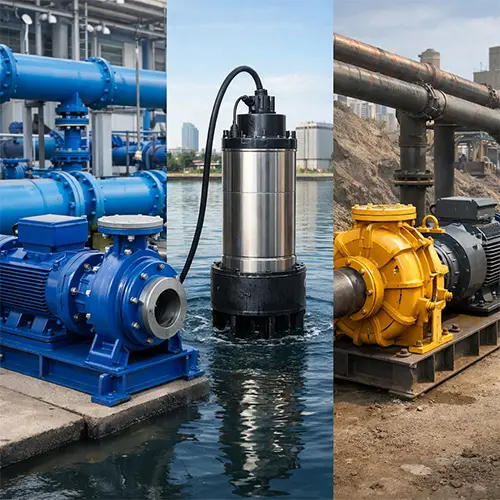
Introduction
Water pumps are among the most important machines in human civilization, but they are also among the easiest to misunderstand. Almost everyone has seen a pump, heard a pump, or relied on a pump, yet many people still think of pumps as simple devices that merely “push water from one place to another.” In real systems, a pump does much more than that. It must overcome gravity, pipe friction, pressure demand, fluid behavior, and changes in operating conditions over time. That is why two pumps that look similar can perform very differently in practice, and why a pump that appears to work well at startup can become inefficient or unstable later.
A pump is essentially a machine that transfers energy to a fluid. That energy makes the fluid move through a system. This sounds simple, but the way a pump transfers energy depends heavily on its type. Some pumps accelerate fluid and convert velocity into pressure. Others physically trap and move a fixed volume of fluid. Some are designed for clean water. Others are built for sewage, slurry, or chemical handling. Some are best for high flow. Others are best for high pressure. The diversity of pump designs exists because real fluid systems are diverse.
If you want a broad technical starting point for pump history and classification, the Wikipedia page on pumps is a useful reference and helps place the subject in a larger engineering context: Pump on Wikipedia. However, most users do not need a historical survey. What they need is a practical understanding of what pump types exist, how they work, where they fit, and how to avoid confusion when choosing between them.
This article is written to provide exactly that. It explains the major pump categories used in the world today, how they differ, why those differences matter, and what a user should look at before deciding which type is suitable for a real application. The goal is not just to define pump types, but to make them understandable enough that a buyer, engineer, or operator can use the information to make better decisions.
What a Water Pump Really Does
A pump does not simply move water forward. It adds energy to water so the fluid can overcome resistance inside a real system.
When people first encounter pumps, they often imagine a pump as something that forces water through a pipe in the same way a person might blow air through a straw. That image is not entirely wrong, but it is too simple to explain real pump behavior. A pump does not just “push.” It creates the conditions that allow fluid to move through a system that is resisting movement at every point.
That resistance comes from several sources. The most obvious one is elevation. If water must be lifted from a low reservoir to a higher tank, the pump must overcome gravity. But elevation is only part of the story. Water moving through a pipe also loses energy to friction. The longer the pipe, the rougher the surface, the smaller the diameter, or the more fittings and valves the line contains, the greater the resistance becomes. In many systems, pressure is required at the outlet as well, which means the pump must do more than merely move the water; it must also maintain a pressure level that makes the application work.
This is why a pump can never be understood separately from the system. The pump adds energy, but the system determines how much of that energy is needed. The real operating condition is created by the interaction between the pump and the system. A pump may be capable of large flow under light resistance, but that same pump may produce much less flow when the system becomes heavier. This is not necessarily a sign of poor equipment. It is simply how pumps behave.
Understanding this point makes everything else clearer. Pump type matters because each pump type responds to system resistance differently. That is the foundation of pump classification and the reason pump choice is a design decision, not just a purchasing decision.
The Two Main Families of Pumps
Although pump designs are diverse, almost all water pumps belong to one of two major families: dynamic pumps and positive displacement pumps.
From an engineering perspective, the global world of pumps is much easier to understand once it is reduced to its two core families. The first family is dynamic pumps, commonly represented by centrifugal pumps. The second family is positive displacement pumps.
A dynamic pump works by continuously adding velocity to the fluid and then converting that velocity into pressure. The fluid is kept in motion by the rotating elements inside the pump. A positive displacement pump works differently. It traps a fixed amount of fluid and physically moves that volume from inlet to outlet.
This distinction has major practical consequences. A dynamic pump is sensitive to system resistance. If resistance increases, flow decreases. A positive displacement pump behaves differently. It tends to maintain flow, which means pressure rises as resistance increases. That is why positive displacement pumps are often associated with high-pressure or precision-flow applications, while dynamic pumps dominate large-flow water handling applications.
These two families are not competing versions of the same tool. They solve different problems. Understanding which family your system belongs in is often more important than comparing individual models.
Comparison of the Two Main Pump Families
| Pump family | Basic working principle | Typical strength | Typical limitation |
| Dynamic pump | Adds velocity and converts it to pressure | High flow, simple water systems | Performance changes with resistance |
| Positive displacement pump | Moves fixed volume per cycle | Stable flow, high pressure, difficult fluids | Pressure can rise sharply if system is restricted |
Dynamic Pumps and Why They Dominate Water Applications
Dynamic pumps, especially centrifugal pumps, are the most common water pumps because they are efficient, simple, and well suited to large-flow applications.
In most water systems around the world, the pump in use is a centrifugal pump or a close variation of one. This is not accidental. Centrifugal pumps are relatively simple in design, easy to maintain, and highly effective when handling clean or moderately contaminated water at medium pressure and substantial flow.
The principle is straightforward. Water enters the pump near the center of a rotating impeller. As the impeller spins, the fluid is thrown outward. This creates velocity. Inside the pump casing, part of that velocity is converted into pressure. The result is a continuous movement of water through the system.
Because the pump delivers continuous flow and does so efficiently, it is extremely useful for water supply, irrigation, circulation, cooling, firefighting support, municipal transfer, and many industrial services. In these roles, it offers a strong combination of efficiency, simplicity, and cost-effectiveness.
But centrifugal pumps also have limits. They depend on the hydraulic relationship between pump curve and system curve. If system resistance rises, the pump’s delivered flow changes. This means that a centrifugal pump must be selected with real operating conditions in mind. A system that is expected to change significantly over time can turn a seemingly good centrifugal pump selection into a problematic one. That is why users sometimes believe a centrifugal pump “lost performance,” when in fact the system became heavier than originally assumed.
End Suction Pumps
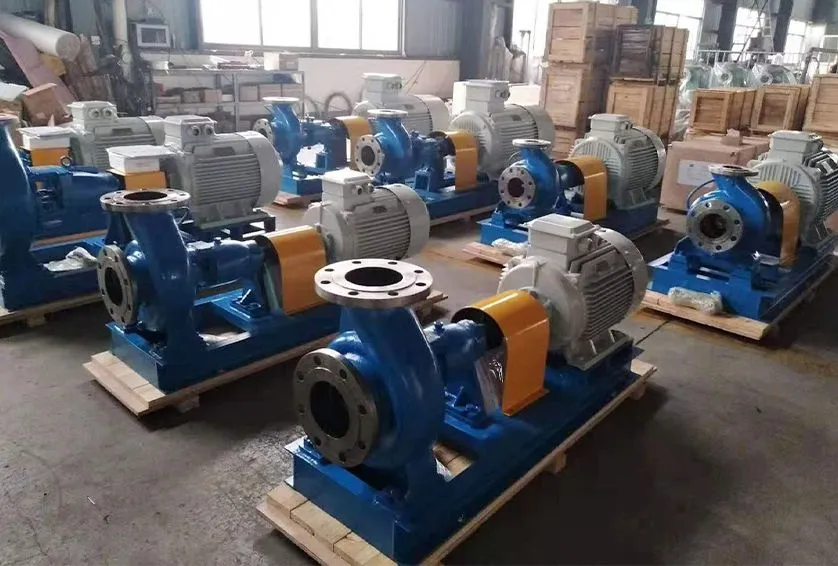
End suction pumps are the most familiar centrifugal pumps and are widely used in general water applications because of their simplicity and flexibility.
Among centrifugal pumps, the end suction pump is one of the most common forms. Water enters from the front or side in line with the impeller eye and exits from the top. This layout is simple and practical, which is why end suction pumps are so widely used in commercial buildings, industrial facilities, and water transfer applications.
Their main advantages are straightforward installation, relatively easy maintenance, broad availability, and suitability for clean or lightly contaminated water. They work well when the system requirement is not unusually complex and when the fluid is not highly abrasive or viscous.
However, their simplicity does not mean they are suitable for all conditions. If the system experiences heavy solids, severe abrasion, or unusual suction challenges, a different pump type may be needed. The key point is that end suction pumps are excellent standard pumps, but they are standard pumps for standard conditions. They are not universal solutions.
Multistage Pumps

Multistage pumps are designed to generate higher pressure by passing water through multiple impellers in sequence.
In some systems, the issue is not moving a large amount of water but building significant pressure. This is where multistage pumps become important. Instead of using one impeller, they use several stages in sequence. Each stage adds more energy to the fluid, increasing the total pressure.
These pumps are commonly used in boiler feed systems, pressure boosting, high-rise building water supply, and long-distance transfer applications where pressure requirement is more demanding than in standard circulation systems.
The practical advantage of a multistage pump is that it can create higher head without requiring one extremely large impeller. The tradeoff is that the design becomes more complex, and the pump must be selected carefully because operating it far from its intended range can reduce reliability and efficiency.
Axial Flow and Mixed Flow Pumps
Axial flow and mixed flow pumps are used where very high flow is needed and pressure requirements are relatively low to moderate.
Not all water systems need conventional centrifugal behavior. In large-scale drainage, flood control, and some irrigation applications, the goal is to move a very large volume of water over a relatively small head. In those cases, axial flow pumps are often used.
An axial flow pump moves water more like a propeller than a standard radial impeller. The fluid moves largely in the direction of the shaft rather than being thrown outward. Mixed flow pumps sit between axial and radial designs, combining characteristics of both.
These pumps are especially useful when the system is defined more by volume than by pressure. Their role is not to replace standard centrifugal pumps in ordinary systems, but to solve large-volume hydraulic problems efficiently.
Positive Displacement Pumps and Why They Behave Differently
Positive displacement pumps move a fixed volume each cycle, making them ideal when stable flow or high pressure matters more than large volume.
Positive displacement pumps operate on a completely different principle from centrifugal pumps. Instead of relying on velocity and dynamic conversion, they capture and move a specific amount of fluid with each cycle. That means the pump’s behavior is much less sensitive to system resistance in terms of flow. Instead of flow dropping sharply when resistance rises, the pump tends to maintain output while pressure increases.
This is exactly why positive displacement pumps are so useful in applications involving viscous liquids, controlled dosing, chemical transfer, or high-pressure service. They can deliver stable flow where a centrifugal pump would lose performance.
But this is also why they must be respected. If the discharge path is blocked or the system becomes too restrictive, pressure can rise rapidly. Unlike a centrifugal pump, which tends to move less water under rising resistance, a positive displacement pump continues trying to move its fixed volume. That means pressure protection is essential.
This family includes piston pumps, diaphragm pumps, gear pumps, screw pumps, lobe pumps, and other designs. Each has its own application range, but they all share the same core principle of displacing a volume rather than relying on velocity conversion.
Piston and Plunger Pumps
Piston and plunger pumps are positive displacement pumps used when very high pressure is required.
These pumps move fluid using a reciprocating element inside a cylinder. As the piston or plunger moves, it draws fluid in and then forces it out under pressure. Their strength lies in pressure generation rather than sheer volume.
They are commonly found in high-pressure cleaning systems, hydraulic services, and specialized industrial processes. They are not the default choice for ordinary water supply because their strength is highly specific. When a system needs sustained high pressure rather than large flow, however, they are extremely effective.
Diaphragm Pumps
Diaphragm pumps are versatile positive displacement pumps suitable for corrosive, dirty, or sensitive fluids.
A diaphragm pump uses a flexible membrane that moves back and forth, changing chamber volume and moving fluid through check valves. One of its major advantages is that the fluid can be isolated from many of the pump’s mechanical parts, which makes it especially useful for corrosive or dirty liquids.
In practical terms, diaphragm pumps are valued because they can handle difficult fluids more safely than many standard pump designs. They are often used in chemical dosing, wastewater treatment, and systems where leakage control matters.
Gear and Screw Pumps
Gear and screw pumps are commonly used for viscous fluids and applications where smooth, controlled flow is required.
Gear pumps use rotating gears to trap and move fluid, while screw pumps use screw-like rotating elements. These designs are especially useful when handling oils, lubricants, and other viscous media. They are not usually the first choice for ordinary water service, but they become extremely relevant when the fluid is thick or when smooth, controlled displacement matters.
Their presence in a discussion of water pumps is important because many users assume all “liquid pumps” behave like water pumps. That assumption often leads to poor selection. Viscous fluids require a different mindset.
Submersible Pumps
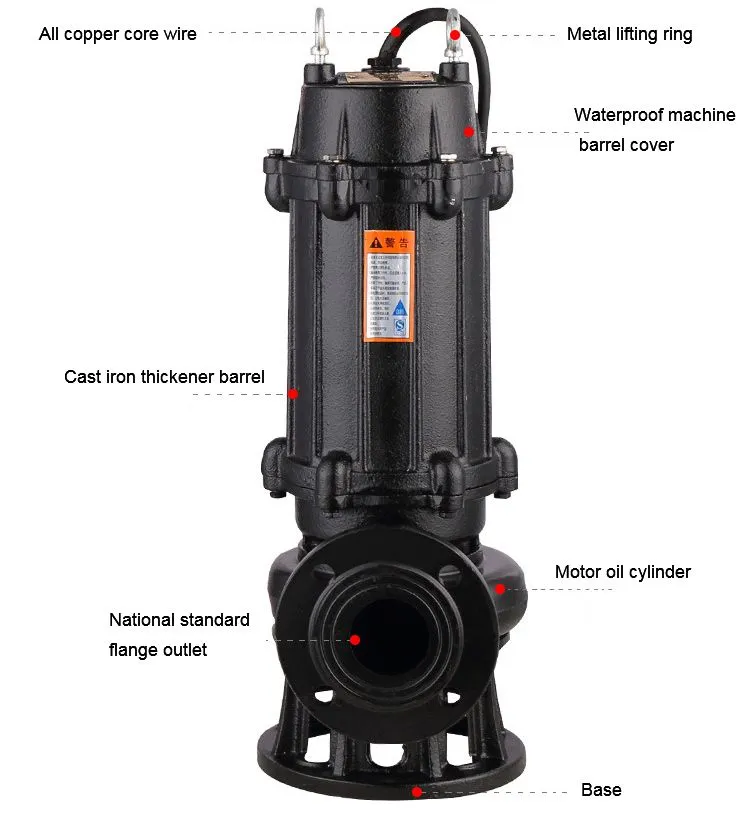
Submersible pumps are designed to operate while submerged in the fluid, making them especially useful for wells, sewage, and drainage.
A submersible pump integrates the motor and pump into a single sealed unit that can operate underwater. This design provides several practical benefits. It avoids many suction-lift limitations, reduces priming issues, and allows direct installation in deep or submerged environments.
Submersible pumps are widely used in deep well pumping, dewatering, sewage transfer, basement drainage, and flood control. However, not all submersible pumps are the same. A deep-well submersible designed for clean water is very different from a sewage submersible designed to pass solids.
That difference matters. Users sometimes treat “submersible” as a single pump type, when it is actually a mounting and operating configuration that includes several specialized designs.
Slurry and Solids-Handling Pumps
When the fluid contains solids, abrasives, or heavy contamination, specialized pump designs are required.
One of the most common pump selection mistakes in the real world is assuming that dirty water can be treated like clean water with only a small allowance. In many cases, that assumption is wrong. Once the fluid contains significant solids, the pump is dealing not only with hydraulic movement but also with abrasion, clogging risk, and changing resistance.
That is why slurry pumps and solids-handling pumps exist. They are designed with geometry, materials, and internal clearances that account for abrasive and contaminated service. Their purpose is not simply to move fluid, but to survive and maintain performance in conditions that would quickly damage ordinary clean-water pumps.
This is one of the clearest examples of why pump type matters. The wrong pump may still move the fluid temporarily, but it will do so inefficiently and with a short service life.
How Pump Type Changes System Behavior
Choosing a pump type means choosing how the system will react when conditions become harder.
This is the real decision point that many users miss. A pump is not just a machine with a flow rating. It is part of a hydraulic behavior pattern.
A centrifugal pump tends to respond to rising resistance by delivering less flow. A positive displacement pump tends to respond by increasing pressure. A slurry pump tolerates abrasive conditions that would destroy a standard pump. A submersible pump solves installation and suction challenges that would make a surface-mounted pump less suitable.
So when you choose a pump type, you are also choosing the way the system will behave under stress, change, fouling, or variation.
Practical Comparison of Pump Behavior
| Pump type | Best known for | What happens when resistance rises |
| Centrifugal pump | Efficient water movement | Flow tends to fall |
| Positive displacement pump | Stable flow and high pressure | Pressure tends to rise |
| Submersible pump | Underwater installation | Depends on internal pump design |
| Slurry pump | Abrasive fluid handling | Maintains service in dirty conditions better than standard pumps |
Why the Wrong Pump Type Creates Expensive Problems
Choosing the wrong pump type often causes more cost over time than the initial purchase price difference between models.
In real projects, the cost of a pump is not determined by what you paid for it on day one. It is determined by how the system behaves over months and years.
A pump that is fundamentally mismatched to the system may still run, but it will often consume more energy, require more adjustment, wear faster, and create repeated maintenance events. In many cases, the user thinks they are saving money by using a familiar or lower-cost pump type, only to pay more later through fuel, electricity, maintenance labor, downtime, and replacement parts.
The effect becomes even more obvious when the pump is driven by a diesel engine or used in a harsh fluid service. In those cases, a small selection error can create a large lifecycle penalty.
This is why pump type selection should not be treated as a superficial choice. It is a long-term operating cost decision.
How to Choose the Right Pump Type in Practice
The correct pump type is chosen by looking at the system’s real demand, not by starting with a preferred pump model.
A practical selection process begins by asking what the system truly needs. Is the main requirement large flow, or high pressure? Is the fluid clean water, or does it contain solids or viscosity that changes the hydraulic picture? Is the system stable, or does it vary? Does the pump need to tolerate changing conditions gracefully, or must it deliver precise output regardless of resistance?
If the system needs large volumes of clean water under relatively stable conditions, a centrifugal pump is usually the most logical choice. If the system requires controlled flow under rising resistance, a positive displacement pump may be more appropriate. If the fluid contains abrasive solids, a slurry-capable design should be considered. If the pump must be installed underwater, submersible configuration may be essential.
The important point is that the choice must start with system behavior. If the choice starts with brand familiarity or appearance, the selection process has already gone in the wrong direction.
Decision Table for First-Level Pump Type Choice
| System condition | Most likely pump direction |
| Clean water, large flow, moderate head | Centrifugal pump |
| High pressure or precise flow requirement | Positive displacement pump |
| Deep well or submerged installation | Submersible pump |
| Solids, abrasives, or slurry | Slurry/solids-handling pump |
Get A Quote

Get A Quote
0 Comments