
PUMP INSIGHTS: Global Trends, Engineering Deep Dives & B2B Sourcing Tips
Stay ahead of the curve with Liqen official blog – your essential source for the latest pump technology innovations, fluid mechanics expertise, and global market trends. We share valuable insights tailored for B2B buyers, distributors, and large project specifiers, helping you maximize efficiency, reduce sourcing risk, and gain a competitive edge.
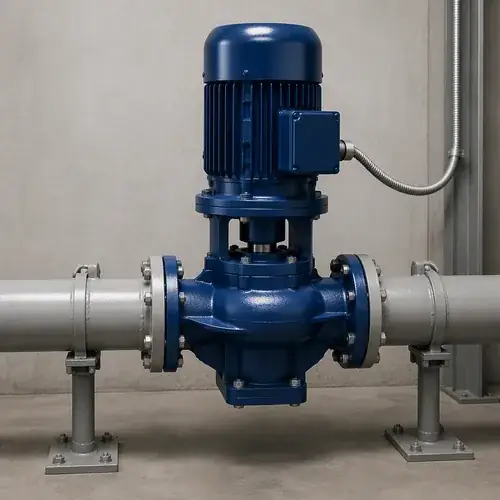
Inline Pump Selection Guide for Water Supply and HVAC Systems
This inline pump selection guide gives mechanical and procurement teams a practical framework for choosing inline centrifugal pumps in HVAC and water supply systems. It covers flow and TDH sizing, NPSH margin, vertical vs horizontal layout, motor and VFD compatibility, and common oversizing mistakes. A supplier RFQ checklist and post-installation BEP verification steps help buyers compare bids using complete technical data instead of assumptions.

What Is a Vertical Multistage Pump? How It Works and When Buyers Should Use It
A vertical multistage pump is a centrifugal pump with multiple impeller stages arranged in a vertical pump body. It is commonly used when clean-water systems require higher head or pressure in limited floor space. This guide explains its working principle, applications, limitations, installation requirements, and RFQ data for buyers.

>What Is a Multistage Pump? How It Works, Uses, and Buyer Selection Basics
A multistage pump is a centrifugal pump that uses multiple impeller stages arranged in series to increase head or discharge pressure. This guide explains how multistage pumps work, when buyers should use them, and what RFQ data suppliers need for accurate selection.

Water Transfer Pump vs Trash Pump vs Dewatering Pump: How Buyers Should Choose the Right Pump Type
A water transfer pump is usually suitable for clean water movement, a trash pump is often used when debris and clogging are the main risks, and a dewatering pump is selected when the job is site water removal from pits, trenches, sumps, or construction areas.

Construction Dewatering Pump Selection: Clean Water, Muddy Water, Solids, Head, Flow, and Backup Planning
This article explains how construction buyers should select a dewatering pump by checking water quality, mud, solids, total head, required flow, pump placement, power supply, and backup planning before sending an RFQ.

Multistage Pump Selection for High-Head Water Supply: When to Use It and What Data Suppliers Need
This article explains when buyers should use a multistage high pressure water pump and what data suppliers need to prevent overpressure, poor efficiency, oversized selection, and unstable operation.

Slurry Pump Selection Guide: Abrasion, Solids Size, Material Choice, Head Loss, and Maintenance Risk
This article explains how B2B buyers should select a slurry pump by reviewing abrasion, solids size, slurry density, material choice, head loss, suction condition, spare parts, and supplier verification before sending an RFQ.

Pump Motor Selection: kW/HP, Voltage, Phase, Service Factor, Efficiency, and Protection for Water Pumps
This pump motor selection guide helps B2B buyers choose the right water pump motor by checking kW/HP, pump absorbed power, voltage, phase, frequency, service factor, efficiency, enclosure, protection, starting method, and site electrical conditions. It explains why HP alone is not enough and how to verify supplier quotations before ordering.

Pump Cavitation Troubleshooting: Symptoms,NPSH Checks, Root Causes, and Corrective Actions
This pump cavitation troubleshooting guide helps buyers, engineers, and maintenance teams diagnose water pump noise, vibration, flow loss, pressure fluctuation, seal damage, and impeller pitting. It explains how to check NPSHa versus NPSHr, identify suction-side problems, separate installation and selection issues, and choose corrective actions before replacing the pump.

How to Read a Pump Curve Before Buying: Flow, Head, Efficiency, Power, NPSH, and Duty Point
This guide explains how to read a pump curve before buying by checking flow, pump head, efficiency, absorbed power, NPSH required, duty point, impeller diameter, speed, and the relationship between pump curve and system curve. It helps procurement and engineering teams avoid selecting pumps only by model number or motor power.

Wastewater Lift Station Pump Sizing: Flow, Head, Solids, Redundancy, Controls, and Maintenance Access
This wastewater lift station pump sizing guide helps municipal and commercial buyers select the right lift station pump by checking peak flow, total dynamic head, wastewater solids, wet well volume, pump redundancy, controls, emergency operation, and maintenance access. It explains why a sewer pump station should be sized as a complete system instead of choosing a pump by horsepower alone.

Irrigation Pump Troubleshooting: Low Pressure, Low Flow, Air Leaks, Clogging, and Pump Sizing Errors
This irrigation pump troubleshooting guide helps farmers, irrigation contractors, and agricultural buyers diagnose low pressure, low flow, suction air leaks, clogged filters, weak sprinkler zones, pressure switch problems, solar irrigation pump instability, and pump sizing errors before replacing the pump. It explains how to check the complete system from water source to field outlet.

Fire Pump System Troubleshooting: Pressure Loss, Jockey Pump Cycling, Controller Alarms, and Acceptance Tests
This fire pump system troubleshooting guide helps buyers, contractors, and facility teams diagnose pressure loss, jockey pump cycling, fire pump controller alarms, diesel fire pump issues, electric fire pump problems, fire pump testing failures, and acceptance test risks from a complete system perspective.

Centrifugal Pump Buying Checklist: Curve Data, NPSH Margin, Materials, Testing, and RFQ Requirements
This centrifugal pump buying checklist helps B2B buyers verify pump curve data, duty point, NPSH margin, impeller type, materials, mechanical seal, motor, testing requirements, and RFQ documents before approving a supplier. It is designed for buyers comparing centrifugal water pumps, self priming centrifugal pumps, and multistage centrifugal pump specifications, features, and applications.

Booster Pump Not Building Pressure: Causes, Checks, and Correct Pump System Fixes
This guide helps buyers and maintenance teams troubleshoot a booster pump that is not building pressure by checking suction supply, discharge pressure, pump curve mismatch, blocked valves, filters, leaks, cavitation, pressure tank settings, controller logic, electrical problems, and system demand. It explains how to identify whether the correct fix is repair, adjustment, replacement, or full booster pump system redesign.

Sewage Pump vs Effluent Pump: How to Choose the Right Pump for Wastewater, Drainage, and Solids
This guide helps B2B buyers choose between a sewage pump, effluent pump, sump pump, trash pump, electric trash pump, or submersible sewage pump by comparing liquid source, solids size, solids type, flow, total head, installation method, duty cycle, system components, and supplier verification requirements. It is designed for buyers who need to convert wastewater, drainage, septic effluent, and dirty-water projects into a clear pump RFQ.

Water Transfer Pump RFQ Checklist: Flow, Head, Suction Lift, Pipe Loss, Duty Cycle, and Site Conditions
This guide helps B2B buyers prepare a professional water transfer pump RFQ by converting temporary water transfer, tank transfer, construction dewatering, farm water movement, and site drainage requirements into flow, total head, suction lift, pipe loss, duty cycle, liquid condition, power supply, and site-condition data. It is designed for buyers who search for transfer pump but need a clear checklist before asking suppliers for a quotation.

Submersible Water Pump Selection Guide: Flow, Head, Depth, Cable, Motor Protection, and Site Risks
This guide helps B2B buyers prepare a complete submersible pump RFQ by explaining how to specify flow, total dynamic head, well depth, static and dynamic water level, pump setting depth, cable length, motor protection, liquid condition, power supply, and site risks. It is designed for buyers who know they need a submersible water pump but need a practical selection and inquiry checklist before contacting suppliers.

Deep Well Pump Troubleshooting: Low Flow, No Water, Short Cycling, Sand, and Motor Failure
This article explains how to troubleshoot deep well pump problems before pulling the pump. It covers no water, low flow, short cycling, sand in discharge water, motor trips, water level checks, voltage and current testing, pressure tank diagnosis, check valve inspection, pump pulling decisions, RFQ preparation, and supplier verification.

Preventive Maintenance Plan for Industrial Pumps: Practical Checklist and Schedule
This article explains how to build a preventive maintenance plan for industrial pumps. It covers daily, weekly, monthly, quarterly, and annual maintenance tasks, mechanical seal inspection, bearing and lubrication control, vibration monitoring, performance review, spare parts planning, CMMS records, stop criteria, supplier verification, RFQ requirements, and lifecycle cost control.

How to Align Pump Shaft Correctly: Practical Guide for Industrial Pump Users
This article explains how to align a pump shaft correctly for industrial pump systems. It covers soft foot correction, pipe strain control, shaft and coupling runout checks, angular and parallel alignment, laser alignment, dial indicator setup, pump alignment tolerance, cold and hot alignment, startup abnormal symptoms, alignment reports, supplier verification, and RFQ requirements.
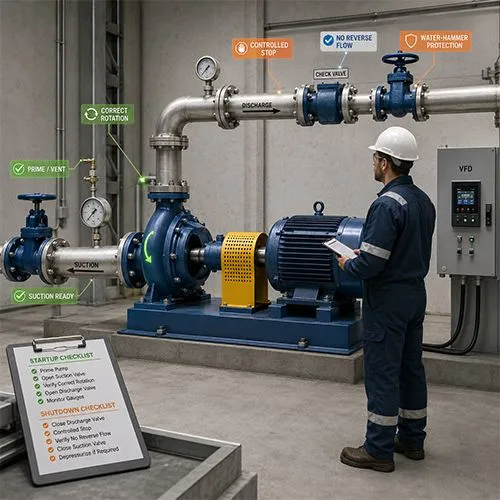
Correct Pump Startup and Shutdown Guide: Practical SOP for Industrial Pump Users
This article explains the correct pump startup and shutdown procedure for industrial pump users. It covers suction supply, priming, venting, valve position, mechanical seal protection, motor and VFD readiness, startup monitoring, shutdown sequence, water hammer prevention, reverse flow control, commissioning records, supplier verification, and RFQ requirements.
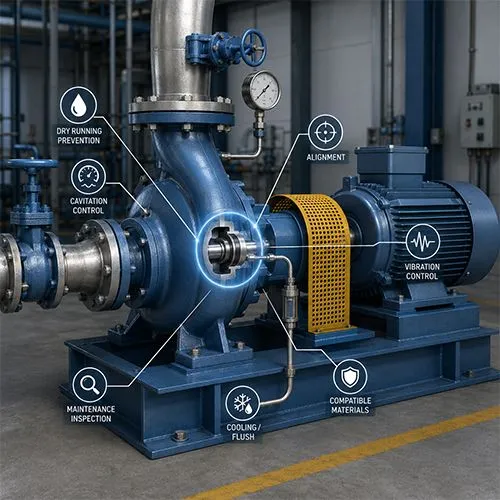
How to Extend Mechanical Seal Life: A Practical Guide for Industrial Pump Users
This article explains how to extend mechanical seal life in industrial pump systems by controlling dry running, cavitation, suction instability, off-BEP operation, vibration, misalignment, material compatibility, seal flush, cooling, installation quality, maintenance records, supplier verification, and post-repair acceptance.

Complete Pump Maintenance Checklist: A Practical Guide for Industrial Buyers and Maintenance Teams
This article provides a complete pump maintenance checklist for industrial buyers, operators, engineers, and maintenance teams. It explains daily, weekly, monthly, quarterly, annual, and condition-based pump checks covering flow, suction pressure, discharge pressure, vibration, leakage, bearing temperature, lubrication, coupling, alignment, motor current, VFD alarms, spare parts, maintenance logs, responsibility ownership, and post-maintenance acceptance.

Best ROI Pump Upgrades: A Practical Guide for Industrial Buyers and Engineers
This article explains how industrial buyers and engineers can choose the best ROI pump upgrades by measuring baseline flow, head, input kW, operating hours, valve position, duty profile, pump curve position, and maintenance history before approving equipment changes. It compares VFD tuning, bypass correction, pump sequencing optimization, impeller trimming, hydraulic wear repair, motor upgrade, pipe correction, and pump replacement by payback, risk, and verification method.

Energy Audit for Industrial Pump Systems: A Practical Guide for Buyers and Engineers
This article explains how buyers and engineers can perform an energy audit for industrial pump systems by measuring actual flow, head, input kW, operating hours, pump speed, valve position, suction condition, vibration, and control settings. It shows how to compare the real duty point with pump curves, BEP, power curve, and system curve to identify avoidable energy losses and verify savings after commissioning.
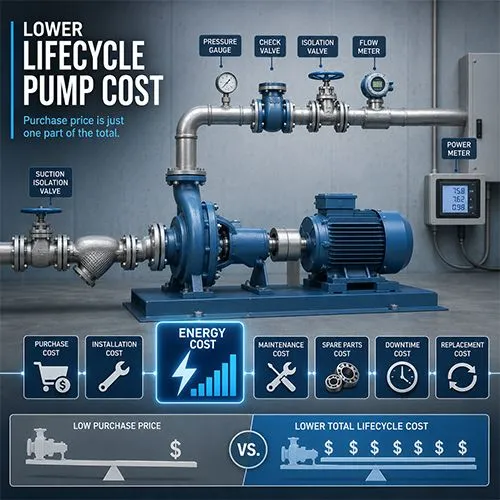
How to Lower Lifecycle Pump Cost: A Practical Guide for Industrial Buyers and Engineers
This article explains how industrial buyers and engineers can lower lifecycle pump cost by evaluating total ownership cost instead of purchase price alone. It covers energy cost, operating hours, pump efficiency, BEP, oversizing, maintenance cost, spare parts, downtime risk, installation quality, VFD suitability, repair versus replacement, supplier verification, RFQ preparation, and commissioning data.

Pump Efficiency Improvement Checklist: A Practical Guide for Industrial Buyers and Engineers
This article provides a practical pump efficiency improvement checklist for industrial buyers and engineers. It explains how to improve pump efficiency by measuring flow, head, kW, current, speed, valve position, pump curve position, BEP, system curve, throttling loss, bypass flow, suction condition, hydraulic wear, motor efficiency, VFD control, supplier data, ROI, and commissioning results.
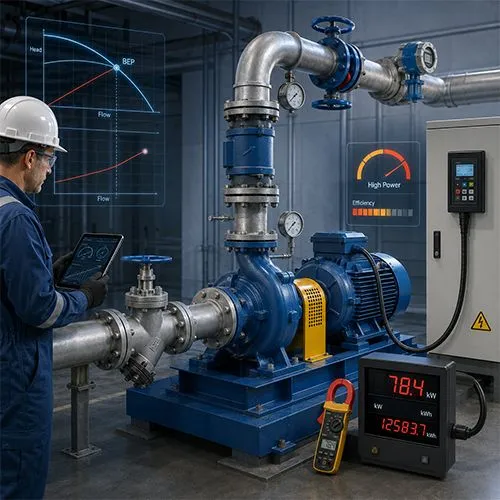
Why Pumps Consume Too Much Power: A Practical Troubleshooting Guide for Industrial Buyers and Engineers
This article explains why pumps consume too much power and how industrial buyers can diagnose excessive pump power consumption using measured flow, head, kW, current, valve position, pump speed, pump curve, system curve, power curve, and commissioning baseline data.
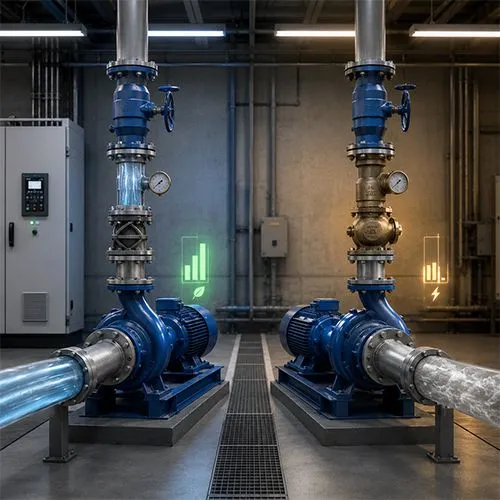
VFD vs Fixed Speed Energy Comparison: How Buyers Can Choose the Lower-Cost Pump System
A VFD vs fixed speed energy comparison should be based on real system data, not generic supplier claims. This guide helps buyers evaluate pump curves, system curves, power curves, demand variation, motor compatibility, annual electricity cost, hidden VFD costs, payback period, commissioning results, and supplier verification data before choosing a pump system.