
Wet Rotor vs Dry Rotor Circulation Pump: Which One Is Better for Your System?
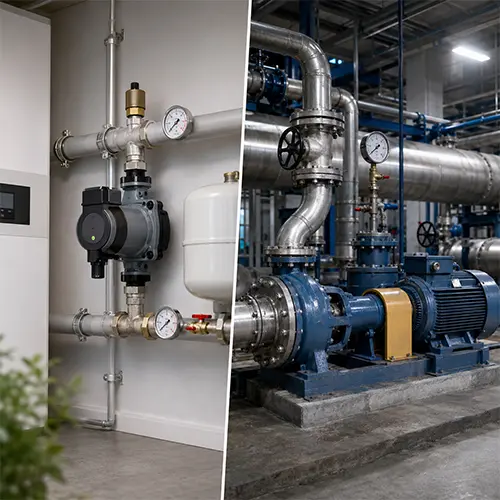
Wet rotor vs dry rotor circulation pump selection should be based on system size, liquid quality, flow rate, head, noise requirement, operating hours, maintenance access, energy cost, spare parts strategy, installation space, and downtime risk—not on pump price, motor power, or supplier habit alone. A wet rotor circulation pump is usually better for small to medium clean closed-loop systems that need quiet operation, compact installation, and low routine maintenance. A dry rotor circulation pump is usually better for larger commercial, HVAC, district heating, industrial cooling, and process circulation systems that need higher duty, stronger serviceability, and easier mechanical maintenance.
For buyers, contractors, HVAC engineers, facility managers, and procurement teams, the real question is not: “Is a wet rotor pump better than a dry rotor pump?” The better question is: “Which rotor structure matches my system’s flow, head, water quality, noise requirement, operating hours, installation space, and maintenance strategy?”
A wet rotor pump is not a “low-end” pump. In the right clean closed-loop heating or hot-water circulation system, it can be quiet, compact, simple, and cost-effective. A dry rotor pump is not automatically the best choice either. In a small residential heating loop or noise-sensitive apartment system, a dry rotor pump may create unnecessary noise, higher maintenance points, larger installation requirements, and avoidable upfront cost.
Most selection problems happen when the buyer looks only at rated power, pipe connection size, or purchase price. A circulation pump may run many hours per day. If the rotor type does not match the system condition, the buyer may face noise complaints, rotor sticking, mechanical seal leakage, bearing noise, poor circulation, high energy cost, difficult maintenance, and repeated replacement.
Choose a wet rotor circulation pump when the system is clean, closed-loop, quiet, compact, and small to medium in duty. Choose a dry rotor circulation pump when the system is larger, longer-running, easier serviceability is required, or pump failure creates commercial or industrial downtime risk.
Quick Decision Summary for Buyers
A wet rotor circulation pump is usually the better choice for quiet, compact, low-maintenance clean closed-loop systems. A dry rotor circulation pump is usually the better choice for larger flow, higher head, easier mechanical repair, and commercial or industrial circulation systems. This first decision table helps buyers make a fast but practical judgment before detailed pump sizing.
| Buyer Condition | Better Direction | Why It Matters |
|---|---|---|
| Residential heating loop, villa HVAC, small hot-water circulation | Wet rotor circulation pump | Quiet, compact, low maintenance |
| Small to medium closed-loop clean water system | Wet rotor circulation pump | The liquid lubricates and cools the rotor |
| Noise-sensitive buildings such as apartments, hotels, offices | Wet rotor circulation pump | Lower operating noise |
| Large commercial HVAC, district heating, industrial cooling loop | Dry rotor circulation pump | Higher power range and easier mechanical maintenance |
| Large flow or higher head circulation system | Dry rotor circulation pump | Better for larger duty and higher hydraulic load |
| Dirty water, poor water treatment, or scale risk | Dry rotor may be safer | Wet rotor rotor chamber is more sensitive to contamination |
| Maintenance team needs seal/bearing access | Dry rotor circulation pump | Mechanical parts are easier to inspect and replace |
| Lowest maintenance for small clean loop | Wet rotor circulation pump | No external mechanical seal in many designs |
| Long operating hours with high energy cost | Depends on size and efficiency class | Lifecycle cost matters more than purchase price |
| Critical system where downtime is costly | Engineered selection | Redundancy, spare parts, and service access matter |
The practical decision is simple: Choose a wet rotor pump for clean, quiet, compact, small to medium closed-loop circulation. Choose a dry rotor pump for larger, more serviceable, higher-duty commercial or industrial circulation.
Key Takeaway for Buyers
Wet rotor circulation pumps are best for clean, quiet, compact, small to medium closed-loop systems. Dry rotor circulation pumps are better for larger, longer-running, serviceable commercial and industrial systems. Poor water quality, high hydraulic duty, component-level maintenance needs, or high downtime risk should push buyers toward dry rotor or specialist pump selection.
This takeaway is useful because many buyers over-focus on whether the pump is “wet rotor” or “dry rotor.” The rotor type is only one part of selection. The buyer must also confirm flow, head, liquid temperature, water quality, operating hours, noise limit, installation space, and maintenance strategy.
If the circulation loop is clean, small, and close to occupied rooms, wet rotor is usually the first option to evaluate. If the circulation system is large, mechanical-room based, long-running, or maintained by facility engineers, dry rotor is usually the first option to evaluate.
30-Second Decision Table for Buyers
This table gives procurement and facility teams a fast first filter before requesting a detailed quotation. It does not replace pump curve selection, but it prevents the most common mistake: choosing by price or habit before understanding the real system duty.
| If Your System Is... | Choose First | Why |
|---|---|---|
| Small, clean, closed-loop, quiet | Wet rotor | Compact, low noise, low routine maintenance |
| Residential heating or domestic hot-water recirculation | Wet rotor | Comfort and quiet operation matter |
| Small office or villa HVAC loop | Wet rotor or small dry rotor | Depends on flow, head, and maintenance preference |
| Large commercial HVAC central plant | Dry rotor | Larger duty and easier service access |
| Industrial cooling water loop | Dry rotor | Long operation and maintenance planning matter |
| Dirty or poorly treated water loop | Dry rotor or improve water treatment first | Wet rotor rotor chamber is more vulnerable |
| Corrosive, abrasive, chemical, seawater, or slurry liquid | Specialist pump | Rotor type alone is not enough |
| No trained maintenance team and small clean loop | Wet rotor | Lower routine service requirement |
| Maintenance team wants seal/bearing repair | Dry rotor | Component-level service is easier |
| Failure creates major downtime | Dry rotor with redundancy or engineered selection | Serviceability and spare parts planning matter |
This table should be used as a first decision guide. Final selection still requires correct flow, head, temperature, water quality, and pump curve confirmation.
Scope of This Guide: Applicable Pump Types and Operating Conditions
This guide applies mainly to circulation pumps used in heating, hot-water recirculation, HVAC chilled water, HVAC heating water, cooling water, district heating secondary loops, boiler circulation, and industrial utility circulation. It helps buyers decide whether a wet rotor or dry rotor structure better matches the actual system.
This guide applies well to:
- Wet rotor circulator pumps
- Dry rotor circulation pumps
- Inline circulation pumps
- HVAC circulation pumps
- Hot-water circulation pumps
- Heating circulation pumps
- Cooling water circulation pumps
- Commercial building circulation pumps
- Industrial utility circulation pumps
- Small closed-loop booster circulation systems
- Closed-loop water circulation pumps
This guide is especially useful for:
- Residential heating circulation
- Villa and apartment hot-water circulation
- HVAC chilled water circulation
- HVAC heating water circulation
- Commercial building circulation
- Hotel hot-water loops
- Office building HVAC loops
- District heating secondary loops
- Industrial cooling water circulation
- Process utility water circulation
- Boiler circulation support
- Heat exchanger circulation
This guide needs adjustment or separate engineering verification for:
- Open-loop dirty water circulation
- Slurry circulation
- Sewage circulation
- Chemical circulation
- Seawater circulation
- High-temperature thermal oil systems
- Explosion-proof pump systems
- Food-grade sanitary circulation
- Abrasive liquid systems
- Systems with severe scaling or poor filtration
- Fire pump circulation governed by local code
For special liquids or regulated systems, the buyer should not choose only by “wet rotor” or “dry rotor.” Material compatibility, temperature, viscosity, solids content, sealing design, local codes, certification, and safety requirements may control the final selection.
If the buyer is still comparing general pump structures before deciding on rotor type, this end suction vs inline vs multistage pump guide can help clarify how pump layout, flow, head, and installation space affect the final selection.
Engineering Boundary: When Rotor Type Is Not Enough
Wet rotor vs dry rotor is not enough for every circulation pump decision. In special systems, liquid chemistry, temperature, viscosity, solids, safety code, material compatibility, and certification may be more important than rotor structure.
The buyer should move beyond simple rotor comparison when the system includes:
| Special Condition | Why Rotor Type Alone Is Not Enough | What Buyers Should Verify |
|---|---|---|
| High-temperature water or thermal oil | Standard circulation pump materials and seals may not fit | Temperature limit, seal design, bearing cooling, material |
| High glycol concentration | Higher viscosity changes flow, head, and motor load | Glycol percentage, viscosity, pump curve correction |
| Corrosive water or chemical liquid | Pump casing, impeller, seal, and elastomers may fail | pH, chloride, chemical concentration, material compatibility |
| Slurry, sand, or abrasive particles | Standard circulation pumps may wear quickly | Solids size, concentration, impeller type, wear parts |
| Open-loop dirty water | Contamination and oxygen increase corrosion and clogging risk | Filtration, material, solids, water treatment |
| Seawater circulation | Chloride corrosion risk is high | Stainless grade, duplex, bronze, coating, seal material |
| Food-grade sanitary circulation | Hygiene and cleanability dominate | Sanitary design, certification, surface finish |
| Explosion-proof area | Motor and electrical safety dominate | ATEX/IECEx/local code, motor certification |
| Fire pump system | Local fire code controls selection | NFPA/local approval, listed equipment, controller |
| Critical process cooling | Downtime risk dominates | Redundancy, spare parts, alarms, maintenance plan |
This boundary matters for trust. A wet rotor pump may be excellent in residential heating, but unsuitable for abrasive or chemically aggressive liquid. A dry rotor pump may be serviceable, but still fail if the seal material does not match the liquid. For special conditions, buyers should request engineered selection rather than a simple wet/dry rotor recommendation.
Practical Buyer Rule for Wet Rotor vs Dry Rotor Circulation Pump
A wet rotor circulation pump is suitable when the system is clean, closed-loop, relatively small, quiet, and designed for low routine maintenance. A dry rotor circulation pump is suitable when the system is larger, has higher flow or head, requires component-level repair, runs for long hours, or supports a critical commercial or industrial process.
This rule is important because the pump body alone does not tell the whole story. Two circulation pumps may have similar connection sizes or similar rated flow, but they may not have the same noise behavior, maintenance method, water quality tolerance, or service life in the same system.
Before choosing, buyers should answer five questions:
- Is the system clean and closed-loop, or is contamination likely?
- Is low noise a major requirement?
- How many hours per day will the pump run?
- Does the maintenance team prefer low-touch replacement or component-level repair?
- What is the cost if the circulation pump fails?
If the answers point to clean water, quiet buildings, compact space, and low routine maintenance, wet rotor is often the better starting point. If the answers point to large flow, long duty, industrial operation, maintenance access, and downtime risk, dry rotor is usually safer.
What Is a Wet Rotor Circulation Pump?
A wet rotor circulation pump is a pump in which the motor rotor is surrounded by the pumped liquid. The circulating liquid helps cool and lubricate the rotor area, while the motor stator is separated from the liquid by a protective can, sleeve, or barrier.
This design is common in small and medium heating, hot-water, and HVAC circulation systems because it can be quiet, compact, and low maintenance when the circulating water is clean and properly treated.
Definition of Wet Rotor Circulation Pump
A wet rotor circulation pump is a circulator pump where the rotor operates in contact with the pumped liquid, while the stator remains protected from the liquid. The liquid helps reduce friction and remove heat from the rotor area.
Important terms buyers should understand:
- Wet rotor: A motor design where the rotor area is in contact with the circulating liquid.
- Circulation pump: A pump used to keep water or another liquid moving through a loop, such as heating, cooling, or hot-water recirculation.
- Rotor: The rotating part of the motor.
- Stator: The stationary motor winding section.
- Closed-loop system: A system where liquid circulates inside the piping loop instead of being continuously discharged and replaced.
- Lubrication: The process of reducing friction between moving parts.
- Canned motor structure: A design where the wet rotor area is separated from the stator by a protective sleeve or can.
The key idea is that a wet rotor pump uses the system liquid as part of its internal cooling and lubrication strategy. This is efficient for clean closed-loop systems but risky when the water contains sludge, rust, air, or scale.
Typical Applications of Wet Rotor Circulation Pumps
Wet rotor circulation pumps are usually selected when quiet operation, compact size, simple installation, and low routine maintenance are more important than large power range or heavy mechanical serviceability.
- Residential heating circulation
- Villa hot-water circulation
- Apartment heating loops
- Domestic hot-water recirculation
- Small commercial HVAC loops
- Floor heating systems
- Small boiler circulation
- Small heat exchanger loops
- Low-noise building water circulation
- Small closed-loop clean water systems
For example, an apartment hot-water recirculation loop may not require a large pump, but it may require quiet operation. A wet rotor pump is often a better fit than a dry rotor pump in this situation.
Common Advantages of Wet Rotor Circulation Pumps
Wet rotor pumps are attractive because they are compact, quiet, and usually require less routine mechanical maintenance in clean closed-loop systems. This makes them suitable for residential and small commercial building applications.
| Advantage | Buyer Meaning |
|---|---|
| Low noise | Suitable for residential, hotel, office, and noise-sensitive areas |
| Compact size | Easier to install in small mechanical rooms or tight spaces |
| Low routine maintenance | Fewer external service points in small systems |
| No external mechanical seal in many designs | Lower leakage risk in clean closed-loop duty |
| Liquid-cooled rotor | Good for compact circulator design |
| Simple installation | Suitable for small and medium HVAC loops |
| Good comfort application fit | Often preferred where occupant comfort matters |
The main value of a wet rotor pump is not only its price. Its value is quiet and simple circulation when the system condition is clean and controlled.
Common Limitations of Wet Rotor Circulation Pumps
Wet rotor pumps are not suitable for every circulation system because the rotor area depends on clean liquid for stable operation. Poor water quality can affect lubrication, cooling, rotor movement, and pump life.
| Limitation | Buyer Risk |
|---|---|
| Sensitive to dirty water | Particles may affect rotor movement |
| Sensitive to air in the system | Air can reduce lubrication and increase noise |
| Limited larger power range | Not ideal for very large circulation systems |
| Harder internal rotor service | Replacement may be easier than repair |
| Efficiency may be lower in larger duties | Lifecycle cost should be checked |
| Scaling risk | Hard water or poor treatment can shorten life |
| Sludge or magnetite risk | Rotor sticking and noise may occur |
A wet rotor pump should not be treated as a universal circulation pump. It performs best when the system water is clean, treated, and free of air pockets and sludge.
What Is a Dry Rotor Circulation Pump?
A dry rotor circulation pump keeps the motor rotor separated from the pumped liquid. The pump hydraulic end handles the liquid, while the motor rotor remains dry. A shaft seal or mechanical seal prevents leakage where the shaft passes between the wet pump side and the dry motor side.
This design is common in larger commercial, HVAC, district heating, and industrial circulation systems because it supports higher power ranges, component-level maintenance, and better serviceability.
Definition of Dry Rotor Circulation Pump
A dry rotor circulation pump is a circulator pump where the motor rotor does not contact the pumped liquid. The pump uses a shaft, bearing arrangement, coupling, and sealing structure to transmit power from the motor to the hydraulic end.
Important terms buyers should understand:
- Dry rotor: A motor structure where the rotor stays dry and does not contact the pumped liquid.
- Mechanical seal: A sealing component that prevents liquid leakage around the rotating shaft.
- Bearing: A component that supports the rotating shaft and reduces friction.
- Coupling: A component that connects the motor shaft and pump shaft.
- Serviceability: How easily the pump can be inspected, repaired, and maintained.
- Alignment: The correct positioning of motor and pump shafts to reduce vibration and mechanical stress.
The key idea is that dry rotor pumps separate motor operation from the circulating liquid. This makes them easier to maintain in many large systems, but it also introduces mechanical seal and bearing maintenance requirements.
Typical Applications of Dry Rotor Circulation Pumps
Dry rotor circulation pumps are usually selected when the system requires larger hydraulic duty, better service access, industrial reliability, or planned maintenance.
- Large commercial HVAC systems
- District heating circulation
- Industrial cooling water loops
- High-flow building circulation
- Large heat exchanger circulation
- Boiler room circulation
- Utility water circulation
- Process support circulation
- Commercial hot-water systems
- Municipal or campus circulation systems
- Central plant chilled water circulation
- Long-running facility circulation systems
For example, an industrial cooling water loop may run for many hours or continuously. In that case, the buyer may prefer a dry rotor pump because seals, bearings, motor components, and spare parts can be planned and serviced more easily.
Common Advantages of Dry Rotor Circulation Pumps
Dry rotor pumps are often better for larger systems where serviceability, motor options, bearing maintenance, and high-duty operation matter more than compactness or ultra-low noise.
| Advantage | Buyer Meaning |
|---|---|
| Better for larger flow/head ranges | Suitable for commercial and industrial circulation |
| Easier mechanical maintenance | Seal, bearing, and motor access can be better |
| Wider motor options | Supports higher power and efficiency classes |
| Better serviceability | Easier for maintenance teams to repair |
| More suitable for harsh duty | Better for demanding systems when correctly selected |
| Better for system-critical applications | Spare parts and maintenance planning are easier |
| Better component-level repair | Reduces full-unit replacement in larger systems |
A dry rotor pump is often more suitable when the facility has a maintenance team and the pump is part of a larger operating system.
Common Limitations of Dry Rotor Circulation Pumps
Dry rotor pumps are not always the best choice for small quiet systems because they may require more space, more maintenance, and more careful installation.
| Limitation | Buyer Risk |
|---|---|
| More noise than wet rotor in many small systems | May not suit apartments, hotels, and quiet zones |
| Mechanical seal maintenance | Seal wear can create leakage risk |
| Larger installation space | Mechanical rooms must allow service access |
| More installation requirements | Alignment and piping stress matter |
| Higher upfront cost for small systems | May be over-specified for small loops |
| More routine maintenance points | Maintenance team must plan inspection |
| Vibration risk if poorly installed | Pipe stress, alignment, or base issues may appear |
A dry rotor pump should be selected for the right reason: larger duty, service access, long operation, or industrial reliability—not simply because it looks more “industrial.”
Wet Rotor vs Dry Rotor Circulation Pump: Core Difference for Buyers
The core difference between wet rotor and dry rotor circulation pumps is whether the motor rotor contacts the circulating liquid. This structural difference affects noise, lubrication, cooling, sealing, maintenance, efficiency, serviceability, and suitable system size.
| Comparison Point | Wet Rotor Circulation Pump | Dry Rotor Circulation Pump | Buyer Meaning |
|---|---|---|---|
| Rotor contact with liquid | Rotor is wet | Rotor stays dry | Determines structure and maintenance |
| Noise level | Usually lower | Usually higher | Wet rotor is better for quiet buildings |
| Maintenance | Lower routine maintenance | Easier mechanical repair | Depends on maintenance strategy |
| Mechanical seal | Often no external seal | Usually has mechanical seal | Dry rotor has seal maintenance |
| Water quality sensitivity | Higher | Lower in motor area, but pump end still matters | Wet rotor needs cleaner circulation water |
| Power range | Better for small to medium duty | Better for larger duty | System size controls selection |
| Serviceability | Often replace-oriented | More repairable | Dry rotor is better for maintenance teams |
| Installation size | Compact | Larger | Mechanical room space matters |
| Best use | Residential, small commercial, quiet closed loops | Large commercial, industrial, high-duty circulation | Application controls choice |
The simplest buyer conclusion is: Wet rotor pumps are usually selected for quiet, compact, low-maintenance clean circulation systems. Dry rotor pumps are usually selected for larger, more serviceable, higher-duty commercial or industrial circulation systems.
Wet Rotor vs Dry Rotor for HVAC Systems
HVAC circulation pump selection depends on whether the system is small and comfort-oriented or large and service-oriented. Wet rotor pumps are often suitable for small HVAC loops where low noise and compact installation matter. Dry rotor pumps are usually better for larger commercial HVAC systems where flow, head, efficiency, and maintenance access are more important.
Small HVAC Loops
Small HVAC loops in villas, small offices, small commercial buildings, or compact mechanical rooms may use wet rotor pumps when the system is clean, closed-loop, and not too large. The main benefits are low noise, compact installation, and simple operation.
- Flow and head are moderate.
- The system is closed-loop.
- Water quality is treated.
- The pump is near occupied areas.
- Maintenance staff is limited.
- Replacement is easier than component repair.
For small HVAC loops, wet rotor often fits the comfort and maintenance expectations better than dry rotor.
Large Commercial HVAC Systems
Large commercial HVAC systems usually require dry rotor circulation pumps because the hydraulic duty, operating hours, and service access requirements are higher. These systems may include hotels, malls, hospitals, office towers, campuses, and central plants.
- Flow rate is high.
- Head requirement is higher.
- Operating hours are long.
- Energy cost matters.
- Maintenance staff are available.
- Spare parts planning is required.
- Pump room access supports repair.
For these systems, component-level repair and serviceability can reduce long-term risk.
Chilled Water and Heating Water Systems
Both chilled water and heating water systems can use wet rotor or dry rotor pumps depending on size, duty, and maintenance strategy. The liquid temperature range, glycol percentage, operating hours, and system volume should be reviewed before selection.
Wet rotor may fit small closed-loop heating or chilled water systems with clean treated water. Dry rotor may fit larger chilled water or heating water loops with longer operating hours and higher flow.
If the system uses glycol, the buyer should tell the supplier the glycol percentage. Higher glycol concentration increases viscosity, which can change pump performance and motor load.
Variable Demand HVAC Systems
Variable demand HVAC systems should be reviewed for speed control and lifecycle cost, not only rotor type. A wet rotor or dry rotor pump can still waste energy if it runs at the wrong operating point or lacks suitable control.
For circulation systems with variable demand, this VFD pump vs fixed speed pump guide can help buyers decide whether automatic speed control is needed.
Residential Heating vs Industrial Cooling: Why the Rotor Choice Changes
Residential heating and industrial cooling have different priorities, so the rotor choice often changes. Residential heating values low noise, compact size, clean closed-loop operation, and simple maintenance. Industrial cooling values long duty, serviceability, spare parts, reliability, and downtime control.
| Selection Factor | Residential Heating | Industrial Cooling |
|---|---|---|
| Main priority | Quiet comfort | Stable continuous operation |
| Common rotor direction | Wet rotor | Dry rotor |
| Water condition | Usually closed-loop treated water | May be larger, hotter, more contaminated, or process-related |
| Noise sensitivity | High | Usually lower if in plant room |
| Maintenance strategy | Low routine maintenance, replacement-based | Component repair and spare parts planning |
| Downtime impact | Comfort complaint | Production or equipment risk |
| Pump size | Small to medium | Medium to large |
| Documentation need | Moderate | Higher |
This comparison helps buyers avoid copying one project’s pump selection into another project. A wet rotor pump that performs well in a villa heating loop may not be suitable for a factory cooling loop. A dry rotor pump that is ideal in a central plant may be unnecessary and noisy in a small residential system.
Why Buyers Confuse Wet Rotor and Dry Rotor Circulation Pumps
Buyers often confuse wet rotor and dry rotor circulation pumps because both can be used in heating, HVAC, hot-water, and cooling circulation systems. In some catalog data, the flow and head values may look close, but the internal structure and maintenance logic are very different.
This confusion can lead to wrong expectations. A buyer may choose wet rotor for a dirty loop and later face rotor sticking. Another buyer may choose dry rotor for a quiet apartment loop and later receive noise complaints.
Mistake 1: Choosing Only by Purchase Price
Choosing only by purchase price can lead to wrong lifecycle cost. A lower upfront price does not guarantee lower long-term cost if the pump is difficult to maintain, fails early, or causes downtime.
- Early rotor blockage
- Mechanical seal leakage
- Higher noise complaints
- Poor serviceability
- Wrong lifecycle cost
- Repeated replacement
- Higher energy cost
- Maintenance disputes
The buyer should compare purchase price together with water quality, operating hours, maintenance access, spare parts, and downtime cost.
Mistake 2: Thinking Wet Rotor Always Means Less Maintenance
Wet rotor pumps usually require less routine maintenance in clean small loops, but poor water quality can quickly create problems. Because the rotor is in contact with the circulating liquid, sludge, rust, scale, and air can affect movement and lubrication.
- Rotor sticking
- Increased noise
- Reduced flow
- Overheating
- Poor circulation
- Shortened service life
- Failure after seasonal restart
Wet rotor pumps are low maintenance only when the system condition is suitable. They are not maintenance-free in poor water quality.
Mistake 3: Thinking Dry Rotor Is Always More Industrial and Better
Dry rotor pumps may be better for larger commercial or industrial systems, but they can be unnecessary for small quiet systems. A dry rotor pump may add noise, service points, space requirements, and maintenance tasks that the system does not need.
- Higher purchase cost
- More noise
- More maintenance points
- Larger installation space
- Mechanical seal leakage risk
- Unnecessary mechanical complexity
- Over-specification for small loops
A dry rotor pump is valuable when the application needs its strengths. It should not be chosen only because it appears more heavy-duty.
Water Quality: A Critical Factor in Wet Rotor vs Dry Rotor Selection
Water quality is one of the most important selection factors for wet rotor and dry rotor circulation pumps. Wet rotor pumps are especially sensitive because the circulating liquid passes through or around the rotor area and affects cooling, lubrication, and movement.
Dry rotor pumps are more protected in the motor rotor area, but the pump end, impeller, casing, and mechanical seal still require suitable liquid conditions.
Why Wet Rotor Pumps Need Clean Circulating Water
Wet rotor pumps need clean circulating water because the rotor area relies on the system liquid for cooling and lubrication. If the water contains particles, sludge, air, or scale, internal resistance and wear can increase.
- Suspended particles
- Rust
- Scale
- Magnetite sludge
- Air bubbles
- Hard water
- Chemical imbalance
- Poor filtration
- Old piping debris
- Improper commissioning
Magnetite sludge is dark iron oxide sludge that can form in closed heating systems, especially where corrosion control is poor. It can affect small passages and moving parts.
If a wet rotor pump becomes noisy, loses flow, or fails after seasonal startup, poor water quality, trapped air, or rotor sticking should be checked before replacing the pump.
Why Dry Rotor Pumps Are More Tolerant in the Motor Area
Dry rotor pumps keep the motor rotor away from the liquid, so motor rotor contamination is not the main issue. This can make dry rotor pumps safer in larger systems where water quality is not always ideal.
However, dry rotor does not mean the pump can ignore liquid condition. Dirty, corrosive, or abrasive liquid can still damage:
- Impeller
- Pump casing
- Mechanical seal
- Shaft sleeve
- Wear rings
- Bearings indirectly through vibration or leakage
- Downstream equipment
If the liquid is aggressive, the buyer must still select suitable materials and seals.
Buyer Water Quality Checklist
Buyers should confirm water quality before choosing the rotor type. This is especially important in older heating systems, district heating loops, and industrial cooling circuits.
| Water Condition | Selection Impact |
|---|---|
| Clean closed-loop treated water | Wet rotor can be suitable |
| Rust or magnetite sludge | Wet rotor risk increases |
| Hard water with scaling | Wet rotor and seal life may be affected |
| Poor filtration | Rotor sticking or impeller wear risk |
| Corrosive water | Material and seal selection required |
| Dirty open loop | Dry rotor or specialist pump may be safer |
| Air not properly vented | Wet rotor noise and lubrication risk increase |
| Glycol mixture | Check viscosity and material compatibility |
If the circulation liquid contains chloride, rust, scale, or aggressive water chemistry, this pump corrosion troubleshooting guide can help buyers check whether material and water quality are contributing to early pump failure.
Practical Water Treatment Actions Before Pump Selection
Buyers should not only ask whether the water is clean; they should confirm how the system will keep the water clean during operation. This is especially important when selecting wet rotor pumps for old heating systems or long-running HVAC loops.
- Flush the system before installing a new pump.
- Remove trapped air during commissioning.
- Install or clean strainers before pump startup.
- Use magnetic dirt separators where magnetite sludge is likely.
- Check water hardness where scaling is common.
- Maintain proper corrosion inhibitor levels in closed loops.
- Confirm glycol concentration if antifreeze is used.
- Avoid long dry running or air-bound operation.
- Check whether old steel pipes are producing rust or sludge.
- Review water treatment records before replacing failed pumps.
This step is important because a new pump may fail again if the real problem is system contamination. In many wet rotor failures, the rotor type is blamed, but the root cause is poor water treatment, trapped air, or sludge.
Noise and Comfort: Which Rotor Type Is Better for Buildings?
Noise is a major decision factor in apartments, villas, hotels, offices, hospitals, and occupied buildings. Wet rotor pumps are usually preferred in small and medium noise-sensitive circulation systems because their structure is compact and liquid-damped.
Dry rotor pumps can still be used in buildings, especially larger mechanical rooms, but installation quality and vibration isolation become more important.
Wet Rotor for Noise-Sensitive Applications
Wet rotor circulation pumps are often better for noise-sensitive applications because they usually operate more quietly than comparable dry rotor pumps in small systems. This makes them suitable for buildings where pump noise can affect comfort.
- Apartments
- Hotels
- Villas
- Office buildings
- Residential heating systems
- Domestic hot-water recirculation
- Small mechanical rooms near occupied areas
- Clinics or quiet commercial spaces
In these systems, even a technically correct pump can become a customer complaint if vibration or motor noise travels through pipes and walls.
Dry Rotor Noise Considerations
Dry rotor pumps may produce more noise because of motor cooling, bearings, mechanical seals, coupling structure, larger motor power, and installation vibration. This does not mean dry rotor pumps are unsuitable for buildings, but they need proper installation and isolation.
- Mechanical room location
- Vibration isolation
- Pipe support
- Coupling alignment
- Motor speed
- Operating point
- Acoustic requirements
- Flexible connectors if appropriate
- Baseplate rigidity
- Nearby occupied rooms
A dry rotor pump installed in a proper mechanical room may be acceptable. A dry rotor pump installed near bedrooms, offices, or hotel rooms may create avoidable noise risk.
Maintenance and Serviceability: Which Pump Is Easier to Manage?
Wet rotor and dry rotor circulation pumps follow different maintenance strategies. Wet rotor pumps usually reduce routine maintenance in small clean systems, while dry rotor pumps usually offer better component-level serviceability in larger systems.
The better option depends on whether the buyer prefers simple replacement, internal maintenance, spare parts planning, or long-term repairability.
Wet Rotor Maintenance Logic
Wet rotor pumps are attractive when the buyer wants low routine maintenance and simple operation. In small systems, replacing the pump or rotor module may be easier than carrying out detailed mechanical repair.
Wet rotor pumps suit:
- Small property managers
- Residential buildings
- Small HVAC systems
- Low-noise applications
- Sites with limited maintenance staff
- Clean closed-loop systems
- Systems where replacement is easy
Buyers should still manage:
- System water cleanliness
- Air removal
- Strainer cleaning
- Proper chemical treatment
- Avoiding dry running
- Seasonal startup checks
- Preventing long stagnation with dirty water
A wet rotor pump is simple only when the system is kept clean and properly vented.
Dry Rotor Maintenance Logic
Dry rotor pumps are more serviceable in larger systems because maintenance teams can inspect mechanical seals, bearings, couplings, and motor components. This makes them practical in commercial and industrial sites where repair planning matters.
Dry rotor pumps suit:
- Commercial buildings
- Industrial plants
- District heating operators
- Facilities with maintenance teams
- Systems requiring spare parts planning
- Large HVAC mechanical rooms
- Critical circulation systems
Buyers should plan for:
- Mechanical seal inspection
- Bearing condition monitoring
- Coupling alignment
- Vibration monitoring
- Motor protection
- Pipe stress control
- Spare parts availability
- Scheduled shutdown windows
Dry rotor pumps are more repairable, but they are not maintenance-free. The buyer must have a maintenance plan.
Maintenance Comparison Table
Maintenance strategy is one of the clearest differences between wet rotor and dry rotor pumps. Wet rotor is often simpler for small systems; dry rotor is often better for repairable larger systems.
| Maintenance Factor | Wet Rotor Pump | Dry Rotor Pump | Buyer Meaning |
|---|---|---|---|
| Routine maintenance | Lower | Higher | Wet rotor easier for small systems |
| Mechanical seal | Often no external seal | Requires seal monitoring | Dry rotor needs maintenance plan |
| Bearing service | Less accessible | More serviceable | Dry rotor easier for repair teams |
| Water quality sensitivity | Higher | Moderate | Wet rotor needs cleaner water |
| Repair strategy | Replace module/pump | Repair components | Depends on downtime and spare parts |
| Maintenance skill | Lower | Higher | Dry rotor needs trained technicians |
| Spare parts planning | Often module-based | Seal, bearing, motor parts | Dry rotor needs inventory planning |
The buyer should choose based on the site’s maintenance ability, not only on the pump’s purchase price.
Energy Efficiency and Lifecycle Cost
Wet rotor vs dry rotor pump selection should include lifecycle cost, especially when circulation pumps run many hours per day. Small systems may favor wet rotor because of compactness and low maintenance. Larger systems may favor dry rotor because of efficiency options, motor choices, and serviceability.
Lifecycle Cost Formula
Lifecycle cost helps buyers compare real long-term cost instead of only purchase price. This is important because circulation pumps often run daily or continuously.
Lifecycle cost = purchase price + energy cost + maintenance cost + spare parts cost + downtime cost + replacement cost
This formula helps avoid false savings. A lower-cost pump may become expensive if it consumes more energy, fails early, or causes downtime. A higher-cost pump may be justified if it runs efficiently and can be maintained without full replacement.
When Wet Rotor May Have Lower Lifecycle Cost
Wet rotor pumps may have lower lifecycle cost when the system is small, clean, quiet, and easy to maintain by replacement. In these systems, the cost of complex mechanical service may not be justified.
- The loop is small to medium.
- Water is clean and treated.
- Noise sensitivity is high.
- Maintenance staff is limited.
- Replacement is easy.
- Operating hours are moderate.
- Downtime cost is low.
- Installation space is limited.
For a villa heating loop or small apartment hot-water recirculation system, a properly selected wet rotor pump may be the most practical lifecycle choice.
When Dry Rotor May Have Lower Lifecycle Cost
Dry rotor pumps may have lower lifecycle cost when the system is larger, runs longer, and requires repairability or higher efficiency options. In these systems, energy and downtime can matter more than purchase price.
- Flow and head are larger.
- Operating hours are long.
- The application is commercial or industrial.
- Energy cost is significant.
- Spare parts planning is possible.
- Maintenance staff is available.
- The system is critical.
- Component-level repair reduces downtime.
For a large hotel central HVAC system or industrial cooling loop, dry rotor may provide better long-term serviceability and lifecycle economics.
When to Choose a Wet Rotor Circulation Pump
A wet rotor circulation pump is a strong choice for clean, closed-loop, quiet, small to medium, low-maintenance circulation systems. Its core value is comfort, compactness, simple operation, and lower routine maintenance.
The buyer should still confirm flow, head, temperature, water quality, and operating hours. Wet rotor does not mean “no engineering selection.”
Choose Wet Rotor for Residential Heating and Hot-Water Recirculation
Wet rotor pumps are commonly used in residential and small building heating or hot-water loops because they are quiet and compact. They are especially useful when the pump is installed near occupied areas.
- Clean treated water
- Closed-loop circulation
- Low noise requirement
- Moderate flow and head
- Limited installation space
- Simple maintenance strategy
- Low to moderate duty
- Easy replacement access
For residential heating and domestic hot-water recirculation, the comfort benefit of low noise can be more important than component-level repairability.
Choose Wet Rotor for Small and Medium HVAC Loops
Small commercial HVAC loops may use wet rotor pumps when the duty is not too large and water quality is controlled. This can include small offices, villas, small hotels, and light commercial facilities.
- Small building HVAC
- Office or villa loop
- Light commercial system
- Treated closed-loop water
- Moderate operating hours
- Limited mechanical space
- Low noise requirement
- Easy pump replacement
If the HVAC loop becomes larger, runs longer, or requires planned maintenance, a dry rotor option should also be reviewed.
Choose Wet Rotor When Noise Is More Important Than Heavy Serviceability
Wet rotor pumps are often the better option when low noise is more important than component-level repair. This applies especially in occupied buildings where noise complaints are costly.
- Apartments
- Hotels
- Villas
- Offices
- Residential heating rooms
- Quiet equipment rooms
- Small closed-loop systems near occupants
For these systems, the buyer should still control water quality and air venting, because poor system condition can make even a wet rotor pump noisy.
When to Choose a Dry Rotor Circulation Pump
A dry rotor circulation pump is a strong choice for larger systems, higher power, longer operation, and stronger serviceability requirements. Its core value is larger duty range, component-level maintenance, spare parts planning, and suitability for commercial or industrial systems.
The buyer should choose dry rotor when system size and maintenance strategy justify the higher complexity.
Choose Dry Rotor for Large Commercial HVAC Systems
Large commercial buildings often need higher flow, higher head, and more serviceable circulation pumps. Dry rotor pumps are commonly selected because they support larger hydraulic duty and easier service access.
- Large office buildings
- Shopping malls
- Hotel central plants
- Hospital HVAC systems
- Campus heating and cooling loops
- Large mechanical rooms
- District energy secondary loops
- Central chilled water plants
In these systems, pump downtime can affect many users. Serviceability and spare parts availability are important.
Choose Dry Rotor for Industrial Cooling Circulation
Industrial cooling loops often run for long hours and require maintainability, spare parts, and stable performance. Dry rotor pumps are often safer when circulation supports equipment cooling or process stability.
- Factory cooling water
- Process utility cooling
- Heat exchanger circulation
- Industrial chiller loops
- Production support circulation
- Continuous operation
- Large utility water systems
- Cooling tower circulation
If the pump failure can shut down equipment, dry rotor serviceability and maintenance planning may be more valuable than compactness.
Choose Dry Rotor When Maintenance Access Matters
Dry rotor pumps are often better when trained maintenance staff need access to seals, bearings, couplings, and motor components. This is common in facilities that prefer repair over full pump replacement.
- Maintenance team available
- Spare parts stocked locally
- Planned shutdown windows
- Larger pump power
- Critical circulation system
- Long operating hours
- Need for bearing or seal inspection
- Need for vibration monitoring
Dry rotor pumps are not chosen because they are automatically better. They are chosen because the system’s duty and maintenance strategy require them.
When NOT to Choose a Wet Rotor Circulation Pump
Wet rotor pumps should not be used when the system condition exceeds their clean, compact, small-to-medium design advantages. If water quality is poor, duty is large, or component-level repair is required, wet rotor may become the wrong choice.
Do Not Choose Wet Rotor for Dirty or Poorly Treated Water
Poor water quality can affect rotor lubrication, cooling, and movement in a wet rotor pump. This is one of the most common reasons wet rotor pumps become noisy or fail early.
- Rotor sticking
- Noise increase
- Flow reduction
- Overheating
- Shorter service life
- Seasonal startup failure
- Internal wear from particles
- Sludge accumulation
If the system is old, rusty, poorly flushed, or not treated, the buyer should not assume a wet rotor pump will be trouble-free.
Do Not Choose Wet Rotor for Very Large Commercial or Industrial Duty
Wet rotor pumps are usually not the best fit when the system requires high power, high flow, high head, long duty, or strong repairability. In such cases, dry rotor or another industrial circulation pump design may be more suitable.
- Large central plant
- Continuous operation
- High hydraulic load
- Large pipe network
- Long-distance circulation
- Critical cooling duty
- Need for repairable components
A wet rotor pump may be compact, but compactness is not enough for large commercial or industrial duty.
Do Not Choose Wet Rotor Where Component-Level Repair Is Required
Wet rotor systems are often easier to replace as a pump or module than repair component by component. If the buyer needs seal-level, bearing-level, or motor-level service, dry rotor may be better.
- Downtime must be controlled.
- Maintenance staff prefer repair.
- Spare parts inventory is planned.
- Full pump replacement is costly.
- System access is difficult.
- The pump is part of a critical loop.
For large facilities, repairability may be more important than simple initial installation.
When NOT to Choose a Dry Rotor Circulation Pump
Dry rotor pumps should not be selected blindly for every circulation system. If the system is small, quiet, clean, and simple, dry rotor may add unnecessary cost, noise, space requirements, and maintenance points.
Do Not Choose Dry Rotor Only Because It Looks More Industrial
A dry rotor pump may be over-specified for small residential or small HVAC loops. More industrial-looking equipment does not always produce better system performance.
- Higher purchase cost
- Higher noise
- More maintenance
- Larger installation space
- More complex installation
- Mechanical seal maintenance
- Unnecessary service burden
If the system is a small quiet loop, a wet rotor pump may provide better practical value.
Do Not Choose Dry Rotor Without Maintenance Planning
Dry rotor pumps require mechanical seal, bearing, coupling, and motor attention. If the facility has no maintenance plan, dry rotor lifecycle cost may increase.
- Seal inspection interval
- Bearing inspection
- Coupling alignment
- Vibration checks
- Motor protection
- Spare parts stocking
- Maintenance access
- Repair responsibility
A dry rotor pump without maintenance planning may become more troublesome than a wet rotor pump in a simple system.
Do Not Choose Dry Rotor Without Checking Installation Space
Dry rotor pumps usually need more space for installation, inspection, and service access. If the mechanical room is tight, maintenance can become difficult and expensive.
- Pump footprint
- Motor removal space
- Seal access
- Bearing access
- Pipe support
- Lifting access
- Valve clearance
- Electrical cabinet position
- Noise isolation space
Space is not only an installation issue. It is also a maintenance issue.
Real Application Cases: Wet Rotor Success and Dry Rotor Necessity
Real application cases show why the correct rotor choice depends on system duty, not on the idea that one structure is always better. The same wet rotor pump that works well in a clean apartment loop may fail in an old sludge-filled heating system. The same dry rotor pump that works well in a central plant may be noisy and over-specified in a villa heating room.
| Case | Initial Choice | Result | Better Decision |
|---|---|---|---|
| Apartment hot-water loop with clean treated water | Wet rotor | Quiet operation and low routine maintenance | Wet rotor is correct |
| Small villa floor heating system | Wet rotor | Compact and quiet operation | Wet rotor is usually correct |
| Old heating loop with rust and magnetite sludge | Wet rotor | Noise, rotor sticking, and poor circulation risk | Water treatment first; dry rotor review if duty is larger |
| Small office HVAC loop near occupied rooms | Wet rotor | Lower noise if flow/head are moderate | Wet rotor or small dry rotor depending on duty |
| Hotel central HVAC plant | Dry rotor | Easier maintenance and larger duty range | Dry rotor is usually safer |
| Shopping mall chilled water loop | Dry rotor | Better for high flow and service access | Dry rotor is correct |
| Factory cooling loop running long hours | Wet rotor | Overload, poor serviceability, and downtime risk | Dry rotor |
| District heating secondary loop | Dry rotor | Better for larger duty and maintenance planning | Dry rotor |
| Dirty open-loop circulation | Wet rotor | Rotor chamber contamination risk | Dry rotor or specialist pump |
| Corrosive or chemical circulation | Standard dry rotor | Seal or material failure risk | Specialist pump with material verification |
These cases help buyers explain the decision internally. Procurement may compare prices, but engineering and facility teams should compare system duty, water quality, noise, service access, and downtime consequence.
Quotation Review: How to Compare Wet Rotor and Dry Rotor Pump Offers
A pump quotation should be reviewed by technical completeness, not only by model name and price. Wet rotor offers should clearly state water quality requirements, flow/head performance, noise expectations, installation limits, and replacement strategy. Dry rotor offers should clearly state seal, bearing, motor, installation, and service requirements.
| Quote Item | Wet Rotor Offer | Dry Rotor Offer | Buyer Check |
|---|---|---|---|
| Flow/head | Must match duty point | Must match duty point | Ask for pump curve, not only max values |
| Pump curve | Required for proper sizing | Required for proper sizing | Confirm required flow and head are on the curve |
| Noise | Important for building use | Needs installation review | Ask about application reference or noise level if required |
| Water quality | Critical | Important | Ask for water quality limits and exclusions |
| Rotor design | Wet rotor / canned structure | Dry motor rotor | Confirm maintenance strategy |
| Mechanical seal | Often no external seal | Mechanical seal required | Check seal material and replacement method |
| Bearing | Less serviceable | More serviceable | Check repair and replacement plan |
| Motor data | Power, voltage, speed, protection | Power, voltage, IP, insulation, efficiency | Confirm duty and environment |
| Installation dimensions | Compact dimensions | More service clearance needed | Check mechanical room space |
| Spare parts | Pump/module/rotor assembly | Seal, bearing, motor, impeller parts | Check local availability |
| Warranty exclusions | Often water quality and dry running | Seal wear, wrong duty, dry running | Read exclusions before approval |
| Supplier experience | Helpful for small systems | Important for commercial/industrial duty | Ask for similar application references |
A lower quotation is not necessarily a better quotation. A complete quotation should help the buyer understand performance, installation, maintenance, and risk.
Troubleshooting Matrix: Did You Choose the Wrong Rotor Type?
Troubleshooting helps buyers identify whether poor circulation performance comes from rotor type, water quality, pump sizing, installation, or maintenance problems. This is useful when a system already has noise, leakage, low flow, vibration, or repeated pump failure.
| Site Symptom | More Likely Cause | What to Check |
|---|---|---|
| Wet rotor pump becomes noisy | Air in system or dirty water | Venting, water quality, strainer |
| Wet rotor pump stops after some time | Rotor sticking or overheating | Scale, sludge, dry running risk |
| Low flow in heating loop | Wrong pump size or clogged system | Flow/head, filter, valve position |
| Dry rotor pump leaks | Mechanical seal wear | Seal material, operating pressure, water quality |
| Dry rotor pump vibrates | Alignment or pipe stress | Coupling, base, pipe support |
| Motor temperature high | Wrong duty point or overload | Pump curve, current, flow/head |
| Repeated bearing noise | Mechanical load or installation issue | Bearing, alignment, vibration |
| Noise complaint in apartment | Wrong pump type or poor isolation | Rotor type, speed, pipe support |
| Wet rotor fails after seasonal restart | Sludge, air, or rotor sticking | Flush system, vent air, check water treatment |
| Dry rotor seal fails repeatedly | Wrong seal or poor operating condition | Temperature, pressure, water chemistry, dry running |
This matrix helps buyers avoid replacing a pump without solving the root cause. For example, changing to another wet rotor pump may not solve a sludge problem. Replacing a dry rotor pump may not solve pipe stress or alignment problems.
Supplier Verification: What Buyers Should Ask Before Purchase
Buyers should ask suppliers to prove the selected rotor type fits the actual circulation system. A correct quotation should not only show model and price. It should explain flow, head, water quality requirements, installation requirements, maintenance method, and spare parts strategy.
| Verification Item | Wet Rotor Pump | Dry Rotor Pump |
|---|---|---|
| Pump curve | Required for proper sizing | Required |
| Flow/head data | Required | Required |
| Water quality requirement | Very important | Important |
| Noise level | Important | Important for buildings |
| Motor efficiency | Important | Important |
| Seal information | Usually internal design | Required for dry rotor |
| Bearing information | Usually limited | Important |
| Installation dimensions | Required | Required |
| Maintenance instructions | Required | Required |
| Spare parts strategy | Replacement/module | Seal, bearing, motor parts |
| Warranty condition | Check water quality exclusions | Check seal and duty exclusions |
| Similar application experience | Helpful | Important for larger systems |
A supplier who recommends a pump without asking about system size, water quality, operating hours, noise requirement, and maintenance strategy is not providing a complete selection.
Step-by-Step Buyer Checklist Before Final Selection
A structured checklist helps buyers compare wet rotor and dry rotor circulation pumps before sending an RFQ or approving a quotation. This checklist can be used by procurement, engineering, and facility teams together.
| Step | Buyer Question | Why It Matters |
|---|---|---|
| 1 | Is the system residential, commercial, or industrial? | Defines duty level |
| 2 | Is the system closed-loop or open-loop? | Affects water quality and contamination risk |
| 3 | What is the required flow rate? | Determines pump capacity |
| 4 | What is the required head? | Determines pressure requirement |
| 5 | Is low noise important? | Favors wet rotor in small systems |
| 6 | Is water quality controlled? | Critical for wet rotor |
| 7 | How many hours per day will it run? | Affects lifecycle cost |
| 8 | Is maintenance staff available? | Affects wet vs dry rotor strategy |
| 9 | Is downtime costly? | Affects redundancy and serviceability |
| 10 | Are spare parts locally available? | Reduces downtime risk |
| 11 | Is energy cost important? | Compare efficiency and lifecycle cost |
| 12 | Is installation space limited? | Wet rotor is more compact |
| 13 | Is glycol used? | Viscosity may change pump performance |
| 14 | Is the system old or contaminated? | Wet rotor risk may increase |
| 15 | Is a specialist pump required? | Special liquid or code may override rotor type |
The buyer should not approve the pump only from connection size or price. The pump must match the loop condition and long-term operation.
RFQ Checklist for Wet Rotor vs Dry Rotor Circulation Pump Procurement
A clear RFQ helps suppliers recommend the right circulation pump instead of quoting by habit or lowest price. RFQ means Request for Quotation, but for circulation pumps it should request both technical fit and commercial terms.
| RFQ Item | Information to Provide |
|---|---|
| Application | Heating, hot water, HVAC, cooling, industrial circulation |
| System type | Closed loop, open loop, treated water, untreated water |
| Liquid | Clean water, glycol mixture, hot water, cooling water |
| Flow rate | m³/h, L/min, L/s, or GPM |
| Head | m or ft |
| Liquid temperature | Normal, hot water, chilled water |
| Water quality | Clean, treated, hard, rusty, scaled, dirty |
| Operating hours | Intermittent, daily, continuous |
| Noise requirement | Residential, commercial, industrial |
| Installation space | Compact room, large mechanical room |
| Maintenance strategy | Replace unit, repair components |
| Required documents | Pump curve, datasheet, drawing, manual |
| Spare parts | Rotor module, seal, bearing, motor, impeller |
| Control method | Fixed speed, variable speed, VFD |
| Special condition | Glycol, corrosion, sludge, solids, code requirement |
A good RFQ should ask the supplier to confirm whether wet rotor or dry rotor is recommended and why. The explanation should be based on system duty, not only product availability.
Best Option by Scenario: Wet Rotor or Dry Rotor Circulation Pump?
Different circulation systems require different rotor structures. This scenario table helps buyers quickly identify the first selection direction before detailed engineering confirmation.
| Scenario | Better Pump Direction | Reason |
|---|---|---|
| Residential heating loop | Wet rotor | Quiet and compact |
| Apartment hot-water recirculation | Wet rotor | Low noise matters |
| Small villa HVAC loop | Wet rotor | Small closed-loop clean system |
| Office small HVAC loop | Wet rotor or small dry rotor | Depends on flow, noise, and maintenance |
| Large hotel central HVAC | Dry rotor | Larger duty and serviceability |
| Shopping mall chilled water loop | Dry rotor | High flow and maintenance access |
| Industrial cooling water | Dry rotor | Long duty and repairability |
| Dirty open-loop circulation | Dry rotor or specialist pump | Wet rotor contamination risk |
| District heating secondary loop | Dry rotor | Larger duty and service planning |
| Small boiler circulation | Wet rotor or dry rotor | Depends on size and temperature |
| Old heating system with sludge | Dry rotor or wet rotor with water treatment review | Water quality controls risk |
| Quiet occupied building area | Wet rotor | Lower noise and compact installation |
| Corrosive water circulation | Specialist pump | Material and seal compatibility dominate |
| Variable demand HVAC loop | Wet or dry rotor with proper speed control | Control method affects energy cost |
The table gives a first direction, not a final selection. Final pump choice still requires flow, head, temperature, water quality, operating hours, installation space, and maintenance strategy.
Final Decision Matrix: Wet Rotor, Dry Rotor, or Specialist Pump?
The final decision should classify the system by water quality, size, noise requirement, maintenance strategy, and downtime risk. This matrix helps buyers make a practical final decision before purchase.
| Real Condition | Recommended Choice | Buyer Reasoning |
|---|---|---|
| Clean closed-loop + small to medium duty | Wet rotor | Quiet, compact, low maintenance |
| Residential heating or hot-water recirculation | Wet rotor | Comfort and low noise matter |
| Noise-sensitive hotel or apartment system | Wet rotor | Lower noise risk |
| Small clean HVAC loop | Wet rotor or small dry rotor | Depends on flow, head, and maintenance preference |
| Large commercial HVAC loop | Dry rotor | Larger duty and serviceability |
| Industrial cooling circulation | Dry rotor | Long operation and repair access matter |
| Poor water quality, sludge, or scale risk | Dry rotor or water treatment before wet rotor | Wet rotor rotor chamber risk increases |
| Component-level maintenance required | Dry rotor | Seal, bearing, motor service is easier |
| Tight installation space with low duty | Wet rotor | Compact installation helps |
| Critical circulation with downtime cost | Dry rotor with redundancy | Maintenance and spare parts planning matter |
| Corrosive, abrasive, chemical, seawater, or slurry liquid | Specialist pump | Material and seal design dominate |
| Repeated noise or leakage after installation | Recheck sizing, water quality, and installation | Rotor type may not be the only problem |
| High glycol concentration | Engineered selection | Viscosity affects pump curve and motor load |
| Regulated safety system | Specialist/code-compliant pump | Code and certification override preference |
The best pump is not always the quietest, largest, or cheapest. The best pump is the one that matches the system’s real duty and risk profile.
FAQ About Wet Rotor vs Dry Rotor Circulation Pump
These FAQ answers address common buyer questions about noise, maintenance, water quality, efficiency, system size, and practical selection. The goal is to help buyers avoid choosing by habit or price alone.
Is a Wet Rotor Pump Better Than a Dry Rotor Pump?
A wet rotor pump is not always better than a dry rotor pump. Wet rotor pumps are usually better for quiet, compact, small to medium clean closed-loop systems. Dry rotor pumps are usually better for larger, higher-duty, more serviceable commercial or industrial circulation systems.
The better choice depends on system size, water quality, noise requirement, operating hours, maintenance access, and downtime risk.
Which Pump Is Quieter?
Wet rotor pumps are usually quieter in small and medium circulation systems. The rotor is surrounded by liquid, and the design is compact, which helps reduce operating noise.
Dry rotor pumps may be noisier because of motor cooling, bearings, mechanical seals, coupling structure, and larger power range. They can still be suitable when installed in a proper mechanical room with vibration isolation.
Which Pump Requires Less Maintenance?
Wet rotor pumps usually require less routine maintenance in clean closed-loop systems. They often have fewer external mechanical service points.
Dry rotor pumps have more service points, such as mechanical seals, bearings, and couplings, but they are easier to repair at component level. For large commercial or industrial systems, this repairability can be an advantage.
Is a Dry Rotor Pump More Efficient?
A dry rotor pump may offer better efficiency options in larger sizes, but it is not automatically more efficient in every system. Efficiency depends on pump design, motor class, duty point, control method, and whether the pump is correctly sized.
Buyers should compare pump curves, motor efficiency, operating point, and lifecycle cost rather than assuming one rotor type is always more efficient.
Can Wet Rotor Pumps Handle Dirty Water?
Wet rotor pumps are not ideal for dirty water because the rotor chamber can be affected by particles, rust, sludge, scale, and air. Clean treated water is important for stable wet rotor operation.
If the system is old or contaminated, buyers should improve filtration, flushing, air removal, and water treatment before selecting a wet rotor pump.
Can Dry Rotor Pumps Handle Dirty Water?
Dry rotor pumps keep the motor rotor away from the liquid, but the pump end and mechanical seal still require proper liquid compatibility. Dirty water can still damage the impeller, casing, seal, or hydraulic passages.
For very dirty, abrasive, corrosive, or solids-containing liquid, a specialist pump may be required.
Which Is Better for Residential Heating?
Wet rotor circulation pumps are usually better for residential heating because they are quiet, compact, and low maintenance when water quality is controlled. They are commonly used in small closed-loop heating and hot-water systems.
The buyer should still confirm flow, head, water quality, and air venting.
Which Is Better for Industrial Cooling Circulation?
Dry rotor circulation pumps are usually better for industrial cooling loops because they support larger duty, better serviceability, and spare parts planning. Industrial cooling systems often run for long hours and may require component-level maintenance.
For critical cooling systems, buyers should also consider redundancy and spare parts availability.
Why Does a Wet Rotor Circulation Pump Become Noisy?
A wet rotor circulation pump may become noisy because of air in the system, poor water quality, sludge, scale, rotor sticking, incorrect pump speed, or operation outside the correct duty point. Since the rotor area depends on circulating liquid for cooling and lubrication, air and contamination can quickly affect noise.
Buyers should check air venting, strainer condition, water treatment, flow/head selection, and whether the system was flushed before pump installation.
Why Does a Dry Rotor Circulation Pump Leak?
A dry rotor circulation pump usually leaks when the mechanical seal is worn, damaged, poorly matched to the liquid, or exposed to improper operating conditions. High temperature, poor water quality, dry running, vibration, wrong seal material, or excessive pressure can shorten seal life.
Buyers should check seal material, operating pressure, liquid temperature, water chemistry, pump alignment, vibration, and whether the pump has run dry.
What Should I Ask the Supplier Before Choosing?
Buyers should ask for flow, head, pump curve, water quality requirement, noise level, motor data, seal or bearing details, installation dimensions, maintenance method, spare parts, and warranty terms. The supplier should explain why wet rotor or dry rotor is suitable for the specific system.
A quotation without system duty information is incomplete.
What Is the Safest Buying Rule?
The safest buying rule is to choose by system duty and risk, not by rotor label. Wet rotor is safer for clean, quiet, compact, small to medium closed-loop circulation. Dry rotor is safer for larger, longer-running, serviceable, commercial or industrial circulation.
If the buyer is unsure, request both options and compare flow/head, noise, maintenance method, water quality requirements, efficiency, spare parts, and lifecycle cost.
Conclusion: How Buyers Should Choose Between Wet Rotor and Dry Rotor Circulation Pumps
The final decision between a wet rotor and dry rotor circulation pump should be based on system size, water quality, noise requirement, maintenance strategy, operating hours, and lifecycle cost. Wet rotor pumps are usually better for clean, closed-loop, small to medium, low-noise, low-maintenance systems. Dry rotor pumps are usually better for larger, commercial, industrial, long-running, and more serviceable systems.
Buyers should not choose a wet rotor pump only because it is compact or quiet. They should also not choose a dry rotor pump only because it looks more industrial. Both choices can be wrong if the pump does not match flow, head, liquid quality, operating hours, installation space, and maintenance capability.
Choose a wet rotor circulation pump when the system is clean, closed-loop, quiet, compact, and small to medium in duty. Choose a dry rotor circulation pump when the system is larger, longer-running, easier serviceability is required, or failure creates commercial or industrial downtime risk.
Before final purchase, buyers should verify required flow, head, system type, water quality, liquid temperature, noise limit, daily operating hours, maintenance access, spare parts availability, pump curve, installation space, and warranty conditions. That is the difference between buying a circulation pump by habit and selecting a reliable circulation system.
Get A Quote

Get A Quote
0 Comments