
What Is a Multistage Pump? A Complete Guide to Working Principle, Applications, Selection, Operation, and Troubleshooting
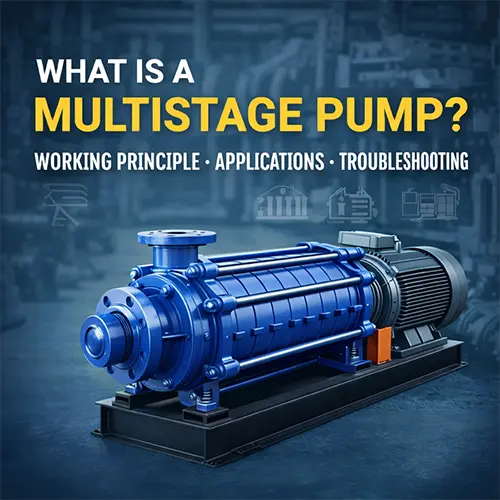
A multistage pump is one of the most widely used pump types in industrial systems that require high head, stable pressure, and reliable continuous operation. It is commonly used in boiler feed service, building pressure boosting, reverse osmosis systems, long-distance water transfer, and mine dewatering. Even so, many buyers, engineers, and project teams still misunderstand what a multistage pump actually is. In many purchasing discussions, it is described too simply as “a high-pressure pump,” which is directionally true but not enough for real engineering decisions. In practice, understanding how a multistage pump builds pressure, where it fits, where it does not fit, and how it behaves when problems appear is far more important than memorizing a headline specification.
In real projects, a multistage pump often becomes the center of attention only after something goes wrong. The discharge pressure may be lower than expected, the flow may not match the design value, the pump may start vibrating, or the unit may make noise after installation even though it is brand new. When that happens, many people immediately assume the pump is defective. However, in industrial applications, the root cause is often not the pump alone. It is usually a combination of pump selection, system resistance, suction conditions, installation quality, operating range, and the way the system actually behaves under load. That is why a technically correct article on multistage pumps must do more than define the pump. It must help the reader understand how the pump and the system interact.
This guide is written from the perspective of industrial buyers, engineers, and technical decision-makers who need more than a basic definition. The goal is to explain what a multistage pump is, how it works, when it should be used, when it should not be used, how to choose the right model, how to operate it correctly, and how to interpret the most common field problems. By the end, the reader should not only understand the term multistage centrifugal pump, but also be able to make a more confident decision when evaluating a project or troubleshooting an installed system. If you are still comparing different pump categories before confirming a multistage solution, you may also refer to How Do I Choose the Right Pump Type for My Application to understand how different pump types match different system requirements.
What Is a Multistage Pump and Why Is It Different from a Standard Centrifugal Pump?
A multistage pump is a type of centrifugal pump that uses multiple impellers arranged in series on a single shaft so that the liquid gains pressure in stages as it passes through the pump. That is the most important structural fact about it, and it is also the reason this pump type is used for high-head applications. A standard single-stage centrifugal pump usually performs one main hydraulic pressure-building step. A multistage design repeats that process several times inside the same pump casing or pump assembly. Each stage adds more head to the liquid, and the final discharge pressure is the result of these combined stages.
This difference matters because many buyers assume that a multistage pump is simply a stronger version of a normal pump. It is more accurate to say that it is a more specialized hydraulic solution. Its advantage is not that it automatically provides higher flow or solves every transfer problem. Its real advantage is that it can generate much higher head in a more controlled way, especially in systems where pressure demand is the real challenge. In boiler feed service, high-rise water boosting, and pressure-sensitive industrial systems, that staged pressure build-up is exactly what the application requires.
A useful way to understand the difference is to separate the ideas of flow and head. A multistage pump is usually selected when the system needs more head rather than simply more volume. If the job mainly requires moving a large amount of liquid over a short distance with relatively low resistance, another pump type may be more appropriate. If the job requires overcoming significant elevation, pipeline resistance, process backpressure, or a demanding discharge condition, then a multistage pump becomes a strong candidate. In other words, the pump is not better by default. It is better only when the duty really needs staged head generation. If your application already involves high-pressure water delivery or vertical lift, you can also review How to Select a Multistage Pump for High-Pressure Water Systems for a more application-focused explanation.
Key Difference Between Multistage and Single-Stage Pumps
The most practical difference for buyers is not just the number of impellers, but the kind of duty each pump is meant to handle. A multistage pump is designed for pressure-focused service, while a single-stage pump is usually more suitable for simpler flow-focused transfer work. This difference affects not only performance but also installation logic, energy efficiency, and lifecycle cost.
| Item | Multistage Pump | Single-Stage Pump |
| Pressure generation | Built gradually across multiple stages | Built in one main stage |
| Best suited for | High-head, pressure-sensitive systems | Low- to medium-head transfer systems |
| Typical flow profile | Medium flow with higher head | Higher flow with lower head |
| Internal structure | More complex | Simpler |
| Selection priority | Pressure capability and TDH match | Flow rate and simple transfer duty |
How Does a Multistage Pump Work in Real Industrial Service?
The multistage pump working principle is based on the same centrifugal force concept used in other centrifugal pumps, but the hydraulic path is longer and more structured. Liquid enters the first impeller, where it gains velocity and energy from rotation. It then passes through a diffuser or guide vane section that helps convert part of that velocity into pressure. At that point, the liquid does not leave the pump. Instead, it is directed into the next impeller, where the same hydraulic process happens again. This sequence continues through multiple stages until the required discharge head is built.
This staged process explains why a high-head pump can be achieved without relying on one oversized hydraulic event. Each impeller contributes part of the total head. The result is a pump that can develop much higher discharge pressure than a comparable single-stage unit of similar overall size. In practical terms, this means the system can receive the pressure it needs without forcing a single impeller to do all the work. That is why multistage pumps are commonly used in applications where pressure consistency matters more than dramatic flow volume.
This operating principle also explains why multistage pumps are more sensitive to system behavior than many buyers expect. The pump may still rotate normally even when hydraulic performance has already deteriorated. If suction conditions become unstable, if internal wear grows, if the system resistance is higher than expected, or if the pump operates far from its intended duty point, the final performance may fall even though the motor continues to run. That is why understanding the principle is not just academic. It helps the reader recognize that a multistage pump must be evaluated as part of a hydraulic system, not as a standalone machine.
How Pressure Builds Stage by Stage
When buyers or engineers try to visualize what is happening inside the pump, it helps to break the process into stages. The pump does not create full discharge pressure in one instant. It increases pressure step by step, which is exactly why it works so well in high-head service.
| Stage | What Happens | Result |
| First stage | Liquid enters the first impeller and gains velocity | Initial pressure increase |
| Intermediate stages | Liquid is redirected and re-pressurized | Head builds progressively |
| Final stage | Liquid exits after cumulative pressure gain | Required discharge head is achieved |
Where Is a Multistage Pump Commonly Used?
A multistage pump application is typically found in systems where total dynamic head is the dominant design challenge. Boiler feed systems are among the clearest examples. Boiler feed water does not simply need to be moved from one place to another. It must be delivered into a pressurized system with enough head to maintain stable service. A low-head pump may move water, but it may not do so under the required pressure conditions. A multistage pump is better suited because it is designed to build that pressure in a controlled, repeatable way.
High-rise building water supply is another common application. As building height increases, static lift becomes a major part of the total head requirement. Once pipe friction, valve losses, and delivery pressure requirements are added, the real duty often enters a range where a multistage pump is more practical than a simpler pump design. Reverse osmosis systems are also a strong match because they often need stable pressure rather than simple water transfer. Long-distance transfer systems with meaningful elevation change and industrial process loops with pressure-sensitive conditions can fall into the same category.
At the same time, it is important to be clear about what a multistage pump is not. It is not always the right choice for every water transfer job. If the system is mainly low head and high flow, the benefits of a multistage design may not justify the added complexity. If the fluid contains significant solids, fibers, or abrasive particles, standard multistage pumps may also be a poor fit because their internal stage geometry and close hydraulic clearances are more vulnerable to wear and restriction. This matters because many poor purchasing decisions happen when a pump is selected because it sounds more advanced rather than because it matches the actual duty.
Typical Applications and Why They Fit
Different applications choose multistage pumps for different reasons, but the common theme is always pressure demand. The table below makes that logic easier to compare.
| Application | Why a Multistage Pump Fits |
| Boiler feed water | Requires stable high pressure to enter a pressurized system |
| High-rise water supply | Must overcome vertical lift plus friction loss |
| Reverse osmosis systems | Needs stable pressure for membrane performance |
| Long-distance transfer | Must handle line loss over extended distance |
| Mine dewatering | Often combines depth, pressure, and continuous duty |
When Should You Use a Multistage Pump, and When Should You Avoid It?
Choosing a multistage pump should always start with system requirements rather than assumptions or marketing language. Many buyers ask whether a multistage pump is the “better” option, but that is not the right engineering question. The correct question is whether the system is mainly a pressure problem or a flow problem. If the duty requires high total head, long pipeline service, vertical lift, stable discharge pressure, or strong resistance handling, a multistage pump is often the correct direction. If the duty is mainly low head and high flow, then the multistage design may add cost and complexity without providing real value.
A multistage pump is especially appropriate when pressure stability matters as much as pressure magnitude. Boiler feed water, building water boosting, pressure-sensitive process systems, and reverse osmosis feed applications usually fall into this category. In these systems, the challenge is not simply moving liquid but doing so while holding the right pressure across varying real-world conditions. That is where staged head generation becomes highly valuable.
A multistage pump should be considered more carefully when the fluid is dirty, abrasive, or fiber-laden, or when the installation environment cannot support good suction conditions, alignment control, and maintenance discipline. In those cases, a simpler pump may offer better lifecycle value. The best buying decision comes from matching the hydraulic reality of the system, not from assuming that a more complex design is automatically a more professional one.
Quick Decision Comparison
This comparison is useful for early-stage pump selection discussions, especially when a buyer is still deciding whether the system is fundamentally pressure-driven or flow-driven.
| System Condition | More Suitable Choice |
| High head, medium flow, pressure-sensitive duty | Multistage pump |
| Low head, high flow transfer duty | Single-stage pump |
| Dirty or abrasive fluid | Alternative heavy-duty pump type |
| Simple utility transfer | Standard centrifugal pump |
Multistage Pump vs Single-Stage Pump: What Buyers Really Need to Know
The comparison between a multistage pump and a single-stage pump is one of the most important decisions in industrial pump selection. Both belong to the centrifugal pump family, but they do not solve the same hydraulic problem in the same way. A single-stage pump is often better suited to duties where the required head is moderate and the desired flow is relatively high. It is usually simpler, easier to maintain, and often more economical for general transfer applications.
A multistage pump becomes more attractive when the system needs substantial head and stable pressure. It provides a more practical path to high-pressure performance because the total head is built progressively across several hydraulic stages rather than concentrated in one. This allows the pump to serve demanding systems more effectively without forcing a single-stage unit beyond its comfortable hydraulic range.
From a buyer’s perspective, the main lesson is simple. The correct pump is not the pump with the most impressive catalog values. It is the pump that fits the system duty most naturally. If the project is fundamentally a high-head pressure service, the multistage design often makes more sense. If the project is a lower-head flow service, a single-stage pump may provide better value with less complexity.
How Should a Multistage Pump Be Operated Correctly?
Correct operation is one of the most overlooked parts of multistage pump performance. Many systems are selected reasonably well on paper but then suffer because the startup procedure, suction preparation, or running condition is wrong. A multistage pump is generally not a pump that can be started carelessly. It depends on stable hydraulic conditions, and if those conditions are not present, performance and component life can decline quickly.
Before startup, the pump and suction line usually need to be properly filled with liquid. Most multistage pumps are not intended for dry running, and many do not self-prime in a way that can tolerate poor preparation. If air remains trapped inside the pump or suction line, the pump may rotate without developing the hydraulic condition needed for stable service. Mechanical seals can overheat, and the pump may fail to establish normal head. This is one reason why field teams sometimes say the pump is “running but not pumping correctly.” The machine is turning, but the hydraulic state is not yet valid.
A multistage pump should stay reasonably close to its intended duty point during normal operation. Long-term operation too far to the left of the curve can increase internal recirculation, heat build-up, and hydraulic instability. Operating too far to the right can increase mechanical stress, vibration risk, and overload tendency. This is why a pump that is technically large enough or powerful enough can still perform poorly over time. Correct operation is not just about whether the pump turns on. It is about whether it is being allowed to work in a range where its hydraulic design remains stable.
Startup and Operating Risks at a Glance
The table below is not a replacement for detailed procedures, but it helps buyers and operators quickly understand why operating discipline matters.
| Operating Condition | Main Risk |
| Dry running | Seal damage and overheating |
| Air trapped in suction line | Poor priming and unstable pressure |
| Continuous operation far from BEP | Vibration, recirculation, efficiency loss |
| Excessive load or overload | Motor stress and shortened pump life |
How Do You Select the Right Multistage Pump?
A multistage pump selection should start with the system, not the catalog. The two most important numbers are required flow and total dynamic head, but both must be based on real operating conditions rather than optimistic assumptions. If you need a deeper understanding of how flow, head, pipe size, and NPSH interact in real pump selection, see How to Select the Right Pump: Flow, Head, Pipe Size & NPSH Guide.
Flow determines how much liquid the system must receive continuously. Total dynamic head determines how much pressure the pump must develop under that flow condition. The mistake many buyers make is treating head as simple elevation. Real TDH must also include friction loss, valve loss, filter resistance, required discharge pressure, and any operating variation that the system will actually see. For a more detailed breakdown of friction loss and real-world head calculation, you can also read How to Calculate Total Dynamic Head (TDH) for Industrial Pump Systems.
That is why a pump may appear correct in a quotation stage but disappoint in the field. The catalog may not be wrong. The duty estimate may be incomplete. Once the true resistance of the line appears during operation, the real system curve may be much higher than expected. The pump then lands at a different operating point than the one used during purchase.
The liquid itself also matters. Clean water, warm water, corrosive liquid, and solids-laden service do not place the same demands on materials, seals, or stage geometry. Installation conditions matter as well. A vertical multistage pump can be attractive where floor space is limited, while a horizontal multistage pump may be preferred in layouts where access and service visibility matter more. The best choice is not universal. It depends on how the pump will actually live in the plant.
Key Inputs for Pump Selection
This table is especially useful for procurement discussions, because it shows what data should be prepared before asking for a quotation or engineering recommendation.
| Selection Input | Why It Matters |
| Flow rate | Defines delivery requirement |
| Total dynamic head | Defines real pressure demand |
| Fluid type and temperature | Affects materials and sealing |
| Suction condition | Affects cavitation risk and stability |
| Installation layout | Affects pump arrangement and serviceability |
| Control method | Affects operating range and efficiency |
Multistage Pump Pressure Not Enough: Why Head Is Low and How to Find the Real Cause
A multistage pump with low pressure is one of the most frequent complaints in the field. The user may say that the pump cannot reach the required floor, cannot build enough discharge pressure, or cannot maintain the expected head once the system is running. In many cases, the pump itself has not suddenly failed. The more common reality is that the system head is higher than originally assumed, or the operating point has shifted away from the intended duty.
The most common cause is incomplete head calculation. Designers and buyers often focus on static elevation but overlook real friction loss, fitting losses, valve resistance, filter loss, and localized restrictions. Once those losses are added, the true system curve rises. The pump still runs, but the operating point moves to a lower head result. This is one reason why the complaint “pressure not enough” often points to system mismatch more than immediate pump damage.
Another common situation is that the system changes after installation. A new process branch may be added, a filter may become restricted, a valve may not be fully open, or the line may have been modified. These changes can make the system harder to serve even when the pump itself remains mechanically healthy. If the pump runs smoothly, current draw is normal, and there is no obvious mechanical warning, the first suspicion should often be system-side head increase rather than pump-side failure.
When discharge pressure is lower than expected, the problem is often in the system rather than the pump alone. You can also review How to Select the Right Industrial Pump: A Practical Engineering Guide for Buyers to understand how selection affects performance.
Typical Causes of Low Pressure
This table helps separate system-side causes from pump-side assumptions.
| Cause | What It Usually Means |
| Incomplete TDH calculation | Original selection underestimated real duty |
| Valve or filter restriction | System resistance increased |
| Pipeline modification | Duty changed after installation |
| Higher-than-expected discharge requirement | Pump may no longer match the system |
Multistage Pump Vibration: Why a New or Existing Pump Starts to Shake
A multistage pump vibration problem should never be dismissed as a small nuisance. In this type of pump, vibration is often an early warning that something in the mechanical or hydraulic condition has moved away from normal. If ignored, it can progress into bearing damage, seal leakage, coupling wear, and eventually shaft or rotor problems.
In many cases, especially with new pumps, the root cause is installation quality rather than manufacturing defect. Multistage pumps are often more sensitive to alignment, base rigidity, and pipe strain than simpler pump types because their rotating assembly is longer and their hydraulic structure is more sensitive. A new pump can vibrate badly if the pump and motor are not aligned correctly, if the base is not stable, or if unsupported piping loads are transmitted into the pump casing.
Vibration can also come from bearing condition, poor lubrication, internal deposits, hydraulic instability, or wear. The pattern matters. If the vibration is strong immediately after startup, installation and alignment are often the first things to suspect. If vibration increases as the machine runs and heats up, bearing condition and internal mechanical problems become more likely. The most effective diagnosis comes from looking at vibration together with temperature, current, sound, and installation condition rather than trying to guess the failed part too early.
Common Vibration Sources
| Symptom Pattern | More Likely Cause |
| Strong vibration immediately after startup | Alignment, base, pipe stress |
| Vibration increases with operating time | Bearing wear or lubrication issue |
| New pump vibrates despite matching specs | Installation issue more likely than pump defect |
| Vibration with unstable pressure or noise | Hydraulic instability or cavitation may be involved |
Multistage Pump Flow Too Low: Why Actual Flow Drops Below Design
A multistage pump with low flow does not always mean the pump is worn out. In many systems, flow is not continuously measured, so the first sign may be indirect. The tank fills more slowly, the process responds later, or the delivery performance drops compared with earlier operation. In hydraulic terms, this usually means the operating point has shifted.
System resistance is one of the most common reasons for flow drop. A restricted filter, a partially closed valve, pipe deposits, scaling, or local blockage can raise system resistance and push the pump toward a lower-flow operating point. In these cases, the pump is still doing what the system allows it to do. The flow is lower because the path is harder to push through.
Internal wear is another major cause. In a multistage pump, worn impeller edges, increased stage clearances, and internal recirculation can gradually reduce hydraulic efficiency. The typical customer description is that the pump “used to be fine and has slowly gotten worse.” That pattern often points toward wear rather than a sudden external restriction. Speed or control issues can also contribute if the motor or control system is not maintaining the intended operating condition.
If low flow is the main field symptom, our article Pump Flow Rate Problems Explained: Causes, Diagnosis & Practical Solutions goes deeper into blockage, air leakage, impeller wear, pipeline resistance, and how these issues change actual pump performance.
| Cause | Typical Effect |
| Blocked filter or suction restriction | Flow drops while pump still runs |
| Valve not fully open | Artificial system resistance increase |
| Internal impeller wear | Gradual reduction in hydraulic performance |
| Pipe scaling or deposits | Higher friction loss over time |
Multistage Pump Cavitation: The Most Dangerous Problem You Should Not Ignore
A multistage pump cavitation problem is one of the most serious conditions this pump type can face. It is often first noticed as a crackling or gravel-like noise, sometimes with increased vibration and unstable performance. Many users delay action because the pump still runs. That delay is costly. Once cavitation becomes established, internal damage can progress quickly.
Cavitation is fundamentally a suction-side problem. When the pressure at some point in the pump inlet region falls too low, the liquid begins to vaporize locally and form bubbles. Those bubbles then collapse violently in higher-pressure regions inside the pump. The repeated collapse creates intense local impact forces that damage metal surfaces over time. In severe cases, hydraulic performance also begins to drop quickly.
Poor suction design is a common cause. A suction pipe that is too long, too narrow, or too restricted can reduce inlet conditions. High liquid temperature, excessive suction lift, low source level, or poor NPSH margin can make the risk even worse. The fact that the motor is running does not mean suction conditions are acceptable. If cavitation is already affecting noise, vibration, or hydraulic stability, our article Why Is My Pump Cavitating? Causes, NPSH, Damage & How to Fix explains the suction-side conditions, damage patterns, and prevention logic in much more detail.
Typical Cavitation Triggers and Symptoms
| Item | Typical Sign |
| Poor suction piping | Unstable inlet condition |
| Low liquid level | Reduced NPSH available |
| High fluid temperature | Increased vapor formation risk |
| Cavitation in operation | Noise, vibration, pressure instability |
FAQ: Real Questions from Buyers
This section answers the kinds of questions buyers, engineers, and operators actually ask during selection, installation, and troubleshooting. These are not just definition questions. They are the questions that directly affect purchasing decisions, startup success, and long-term reliability.
Can a multistage pump run dry?
A multistage pump should generally not be allowed to run dry. Most designs depend on the pumped liquid for cooling and lubrication in critical areas, especially around the seal. Dry running can damage the seal very quickly and may also affect internal components if it continues. A pump that is rotating without liquid is not operating safely just because the motor is still turning.
Why does my multistage pump lose pressure after some time?
This often means that the system condition changes during operation. Filters may load up, temperatures may rise, liquid level may shift, or suction stability may worsen. In many cases the pump has not suddenly weakened. The system has become harder to serve as operation continues. That is why this symptom should trigger a system review before a pump replacement decision.
How many stages do I need?
The correct number of stages depends on the required total head at the target flow, not on an abstract idea that more stages are always better. Too few stages mean insufficient head. Too many stages add cost, complexity, and possibly hydraulic loss. The right number is the one that fits the actual duty.
Can a multistage pump handle dirty water?
Standard multistage pumps are usually not ideal for dirty or abrasive liquids because their stage construction and internal clearances are more sensitive to wear and blockage. If solids are expected, the buyer should ask not only whether it can run, but how quickly wear and maintenance burden will rise. In many dirty-water duties, another pump type is usually a better fit.
What is the difference between a multistage pump and a booster pump?
A multistage pump is a pump design. A booster pump describes the purpose of increasing pressure. A multistage pump can be used as a booster pump, but not every booster pump is a multistage. This distinction matters because buyers often ask for a “booster pump” when what they really need is a specific hydraulic structure capable of delivering high head.
Is a multistage pump always better than a single-stage pump?
No. A multistage pump is better only when the duty truly requires high head and stable pressure. If the service is low head and relatively high flow, a single-stage pump may be simpler, cheaper, and more appropriate. The right pump is the one that fits the system, not the one with the more complex internal design.
Why is my pump noisy even though it is still running?
Noise can come from vibration, cavitation, alignment issues, bearing condition, or unstable hydraulic behavior. Continued operation does not mean the condition is harmless. Noise should be interpreted together with pressure, flow, vibration, and temperature behavior. In many cases, unusual noise is an early warning rather than a cosmetic issue.
Why does a new pump vibrate right after installation?
This often points to alignment, foundation, pipe strain, or installation issues rather than immediate manufacturing fault. Because multistage pumps are sensitive to installation quality, a new unit can perform badly if the installation is wrong. The correct reaction is to inspect the installation logic before assuming product defect.
Why is actual flow lower than the rated value?
Rated flow is tied to a specific duty point. The field system has its own resistance, backpressure, and operating conditions. If the actual system curve differs from the assumption used in selection, the flow in service may also differ. This is one reason why field verification should always focus on the system and pump together.
Why does the pump trip or overload?
A trip or overload can be caused by off-design operation, excessive load, internal friction increase, electrical issues, bearing trouble, or control misconfiguration. A trip is not merely an electrical event. It often indicates that the hydraulic or mechanical condition has shifted away from intended duty. Treating it only as a reset problem usually leads to repeated shutdowns.
Can I increase speed to solve low pressure?
Increasing speed may improve head temporarily, but it is not always a sound correction. Higher speed changes flow, head, power demand, and internal hydraulic behavior together. If the real issue is wrong head calculation or poor suction conditions, increasing speed may create larger problems instead of solving the original one. If variable speed control is part of your solution strategy, it is worth reviewing When Do VFDs Actually Save Energy in Pump Systems? because speed control only helps when the duty pattern and operating logic truly support it.
How do I know whether the problem is the pump or the system?
If the pump runs smoothly, current is normal, and there are no strong mechanical warning signs, the system is often the first place to investigate. If the pump also shows heat, vibration, noise, or steadily worsening hydraulic performance, then pump condition or installation quality may also be involved. In practice, good diagnosis usually comes from checking both together rather than trying to isolate one side too early.
What information should I prepare before asking for pump selection advice?
The most useful inputs include required flow, total dynamic head, liquid type, temperature, suction condition, installation arrangement, control method, and power supply details. Good pump selection depends on complete duty information. The more realistic the data, the more reliable the recommendation.
Is multistage pump maintenance difficult?
Maintenance is not necessarily difficult, but it is more dependent on proper selection, installation, and operation than many buyers expect. If the pump is well matched and run correctly, maintenance can be manageable and predictable. If the pump is mismatched or forced into unstable service, maintenance quickly becomes more frequent and more expensive.
Should I choose a vertical or horizontal multistage pump?
That depends on installation conditions, available space, maintenance preference, and pipe layout. Vertical models often save floor area. Horizontal models may be easier to access in some plants. The correct answer depends on the project, not on a universal ranking. Buyers should decide based on actual layout and service conditions rather than a generic preference.
Should I choose electric motor drive or diesel engine drive?
That depends on the project environment, power availability, and operating priorities. Electric motor drive is common where stable power is available and control is important. Diesel engine drive is often considered where the site is remote, off-grid, or exposed to unstable electrical supply. If your project is in a remote, off-grid, or unstable-power environment, you may also want to read Diesel vs Electric Water Pump: How to Choose the Right Pump for Your Project before deciding on the drive method.
Conclusion
A multistage pump should not be understood as simply a high-pressure machine. It is a staged hydraulic solution for systems that genuinely require high head and pressure stability. That is why it performs so well in some industrial duties and becomes an unnecessary complication in others.
The most important lesson for buyers and engineers is that pump performance must always be judged together with system reality. Flow, total head, suction condition, fluid properties, installation quality, and operating discipline all affect whether the pump will meet expectations. When those conditions are properly understood and managed, a multistage pump can be an extremely reliable and efficient choice. When they are ignored, even a high-quality pump may fail to satisfy the application.
For that reason, the right pump is not the most impressive pump on paper. It is the pump that matches the real duty, operates in a stable range, tolerates the actual site conditions, and supports the system over the long term. If you are dealing with repeated pressure, flow, vibration, or suction-related issues in the field, you can continue with Why Is My Pump Not Working Properly? 10 Common Pump Problems & Solutions or Why Pumps Fail Repeatedly: A Practical Root Cause Guide for broader troubleshooting logic.
If you are evaluating options or need to match a pump to your actual working conditions, you can review available configurations and engineering details here:
👉 Explore Multistage Pump Solutions
This page provides real product structures, application scenarios, and configuration references that can help you verify whether a multistage pump is the correct choice for your project.
Get A Quote

Get A Quote
0 Comments