

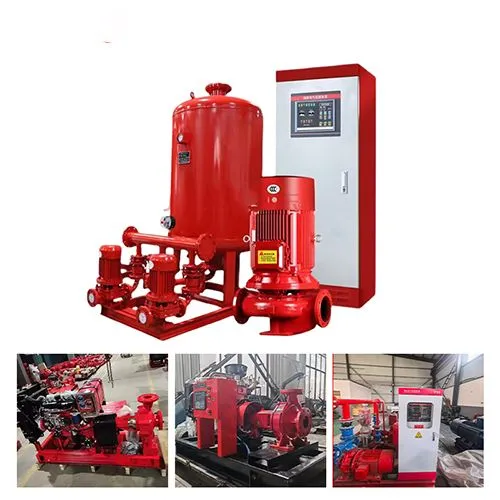
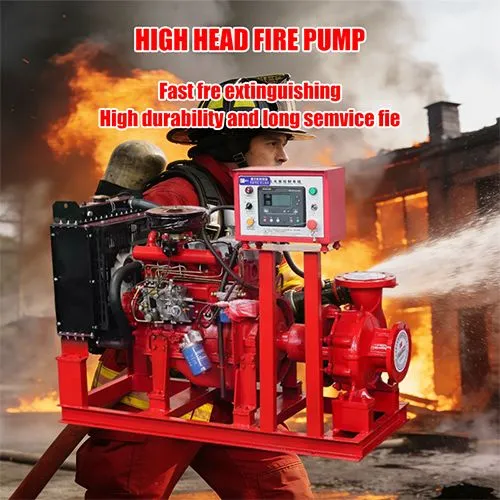
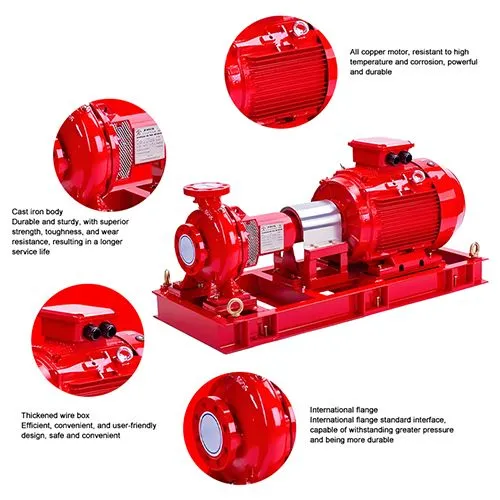
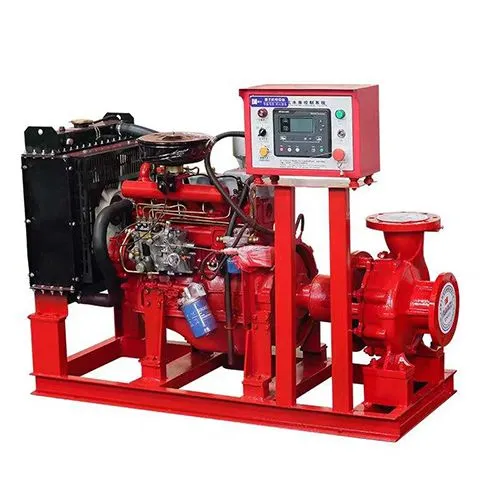
Fire Fighting Pump System with Electric Motor or Diesel Engine
Guaranteed Operation in Emergency Situations
Designed for fire protection systems where failure is not an option. Diesel engine backup ensures operation even during complete power outages.
Engineered for Real Project Requirements
From flow rate to head and pipe configuration, each fire fighting pump system can be tailored to match your exact installation conditions.
Reduce Procurement Cost, Increase Project Margin
Factory-direct supply helps you control costs and stay competitive in project bidding.
Proven Reliability Before Shipment
Every unit is tested and verified to ensure consistent performance in demanding fire protection environments.
Flexible Order & Fast Deployment
Start from 1 unit for testing or scale for large projects. Fast production and delivery support urgent installations.
| Category | Specification |
| Pump Type | Centrifugal Fire Pump |
| Drive Options | Diesel Engine / Electric Motor |
| Power | 50HP (37kW) |
| Material | Cast Iron / Stainless Steel |
| System Type | Integrated Fire Pump System |
| Configuration | Pump + Engine + Controller |
| Medium | Clean Water |
| Customization | OEM / ODM Available |
| Installation | Skid Mounted |
| MOQ | 1 Set |
This fire fighting pump system is designed for reliable operation in emergency situations, offering both electric and diesel driven configurations to ensure continuous water supply even during power failure.
Product Description
A fire fighting pump system is a critical component in fire protection applications, designed to deliver stable water pressure and flow during emergency situations. This system is available with electric motor or diesel engine drive, ensuring reliable operation even during power failure.
The system typically integrates a centrifugal fire pump, driver (diesel engine or electric motor), control panel, and optional jockey pump, forming a complete fire protection solution for industrial and commercial projects.
Engineered for performance and reliability, this fire fighting pump system provides fast response, consistent pressure, and continuous operation under demanding fire protection conditions.
Key Features
- Dual Power Options (Electric & Diesel)
Flexible configuration allows selection based on project requirements, ensuring continuous operation even during power outages. - Reliable Emergency Operation
Diesel-driven systems can operate independently from the power grid, ensuring uninterrupted fire protection in critical situations. - High-Performance Centrifugal Pump Design
Delivers stable flow and pressure with efficient hydraulic performance, suitable for fire sprinkler and hydrant systems. - Integrated System Design
Includes pump, engine/motor, controller, and optional jockey pump, reducing installation complexity and improving system reliability. - Smart Control & Monitoring (Optional)
Real-time monitoring of pressure, temperature, RPM, and operating status ensures safe and efficient operation. - Factory Tested Before Delivery
Each unit undergoes hydraulic testing and inspection to ensure performance meets project requirements. - Customizable Configuration (OEM/ODM)
Flow rate, head, materials, and system layout can be customized for specific project conditions.
Typical Applications
This fire fighting pump system is widely used in:
- Industrial plants and factories
- Commercial buildings and shopping centers
- Warehouses and logistics centers
- High-rise buildings
- Infrastructure and municipal projects
Fire pumps are typically installed when the available water supply cannot provide sufficient pressure for fire protection systems.
How to Select the Right Model
Choosing the correct fire fighting pump system depends on your project requirements:
| Requirement | Recommended Solution |
| Stable power supply available | Electric fire pump system |
| Unstable or no electricity | Diesel fire pump system |
| High reliability / backup required | Electric + Diesel dual system |
| Pressure stabilization needed | Add jockey pump |
| High flow demand | Split case or high-capacity centrifugal pump |
Fire Pump Selection Guide
Choosing the right fire fighting pump system does not require complex engineering calculations. Use the simple guide below to match your project requirements.
Step 1 – Choose Power Source
| Condition | Recommended Solution |
| Stable electricity available | Electric Fire Pump |
| Power supply unstable / remote area | Diesel Fire Pump |
| Critical system (backup required) | Electric + Diesel System |
Step 2 – Choose Pump Type
| Condition | Recommended Solution |
| Stable electricity available | Electric Fire Pump |
| Power supply unstable / remote area | Diesel Fire Pump |
| Critical system (backup required) | Electric + Diesel System |
Step 3 – System Configuration
| Requirement | Recommendation |
| Need stable pressure | Add Jockey Pump |
| Automatic operation required | Control Panel System |
| Outdoor installation | Diesel Engine System |

Tell us your flow rate, head, and installation environment, and our engineers will recommend the most suitable fire fighting pump system for your project.
Frequently Asked Questions (FAQ)
This FAQ section is designed to address the key technical concerns, system configuration decisions, and operational risks associated with fire fighting pump systems, helping engineers and procurement professionals select the right solution with confidence.
❓1. What type of pumps are typically used in fire fighting systems?
Most fire protection systems rely on centrifugal pumps, with the exact type depending on the project scale and pressure requirements.
In practice:
- End suction pumps are commonly used for small to medium applications such as commercial buildings or warehouses.
- Split case pumps are preferred for large-scale systems requiring high flow and long-term reliability.
- Multistage pumps are used where higher discharge pressure is needed, such as in high-rise buildings.
The final selection should always be based on system flow, pressure requirements, and layout.
❓2. Should I choose a diesel or electric fire pump?
The choice mainly depends on power reliability and safety requirements.
- If a stable power supply is available → an electric fire pump is typically sufficient.
- In remote areas or where power is unreliable → a diesel fire pump is the safer option.
- For critical fire protection systems → a combined electric + diesel setup is strongly recommended.
In many cases, fire protection standards require a backup power source to ensure system reliability.
❓3. What is the difference between end suction and split case pumps?
The main difference lies in capacity, maintenance accessibility, and application scale.
- End suction pumps are compact, cost-effective, and easier to install.
- Split case pumps are designed for higher flow rates and offer better durability and easier maintenance due to their horizontally split casing.
For large industrial or municipal systems, split case pumps are generally the preferred solution.
❓4. How do I determine the correct pump capacity?
Pump selection is primarily based on flow rate and total dynamic head (TDH).
Key factors include:
- Required flow rate
- Total dynamic head (TDH)
- Pipe length and friction losses
- Elevation differences
For accurate results, it is recommended to perform proper hydraulic calculations or consult with an experienced supplier.
❓5. Why is a jockey pump important in a fire pump system?
A jockey pump helps maintain system pressure and prevents unnecessary operation of the main pump.
Without a jockey pump:
- The main pump may start too frequently
- System pressure may fluctuate
- Equipment lifespan may be reduced
For most systems, a jockey pump is considered essential rather than optional.
❓6. What standards should a fire pump system comply with?
Compliance depends on the project location and application requirements.
Common standards include:
- NFPA 20 (widely used in the U.S. and international projects)
- UL / FM certification for high-end or regulated applications
- ISO or CE standards for general export markets
It is important to confirm compliance requirements early in the project to avoid delays or redesign.
❓7. How does a diesel fire pump start during an emergency?
Diesel fire pumps are designed to start automatically when system pressure drops.
Typical start methods include:
- Automatic start triggered by pressure drop
- Manual start
- Remote control operation
The system is usually equipped with a control panel, battery system, and monitoring functions to ensure reliable startup.
❓8. What maintenance is required for a fire pump system?
Regular testing and inspection are critical to ensure system readiness.
Typical maintenance includes:
- Weekly or periodic test runs
- Pressure and performance checks
- Fuel system inspection (for diesel units)
- Battery and electrical checks
- Inspection of seals, bearings, and mechanical components
A structured maintenance plan is strongly recommended.
❓9. What are the most common issues in fire pump systems?
Most problems are related to installation or maintenance rather than the pump itself.
Common issues include:
- Air leakage in suction lines
- Cavitation due to improper suction conditions
- Engine starting failures
- Incorrect pump sizing or system design
Proper installation and regular testing can prevent most of these issues.
❓10. Can the system be customized for specific projects?
Yes, fire pump systems are typically tailored to match project requirements.
Customization options may include:
- Pump type and configuration
- Diesel engine brand and specifications
- Control system design
- Skid-mounted or containerized solutions
A customized approach ensures better performance and system compatibility.
❓11. What information is needed to get an accurate quotation?
Providing complete project details is essential for correct system selection.
You should prepare:
- Required flow rate
- Total head or pressure
- Installation environment
- Power availability
- Application type
With this information, suppliers can provide a precise and efficient solution.
❓12. What is the typical delivery time?
Lead time depends on system configuration and customization level.
- Standard systems: typically 7–15 days
- Customized systems: typically 15–30 days
Early planning helps avoid project delays.
Related Products


Get A Quote
After submitting your inquiry, you will receive an accurate quote within 2 hours.,We have a team of good service ready to support you in your business, you will get best services.
You can contact us by email. You may also submit your request. If you have any questions about the products, please feel free to contact us. We will try our best to solve your problem within 24 hours.
+8619933532256 (Wechat, Whatsapp)
No. 9 Ping'an North Street, Nan San Tiao Area, Chang'an District, Shijiazhuang City, Hebei Province, China