
What Is a Pipeline Pump? Complete Guide to Working Principle, Applications, Selection, Common Problems, and Troubleshooting
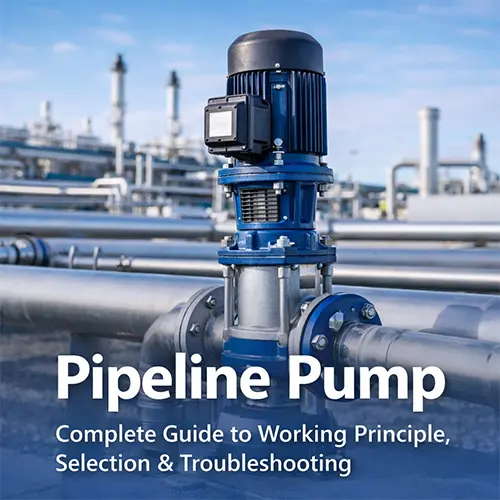
A pipeline pump is one of the most commonly used pump types in HVAC circulation, industrial water transfer, chilled water systems, hot water loops, and many building service applications. On the surface, it looks simple. It is compact, installed directly into the pipeline, and often appears easier to select than many other centrifugal pump types. That is exactly why it is so often chosen for the wrong reasons.
In real projects, buyers frequently assume that a pipeline pump is the safest choice whenever space is limited or whenever the system uses straight piping. But actual pump performance is not determined by how easy the pump is to install. It is determined by whether the pump is hydraulically matched to the system. A pipeline pump can perform very well in the right conditions, but once the actual duty requires more head than expected, or once the pipeline resistance is underestimated, the system begins to show familiar symptoms: insufficient pressure, unstable flow, high power consumption, vibration, seal leakage, overheating, or early bearing wear.
This is why a proper article about pipeline pumps must do more than define the product. A serious buyer does not only want to know what a pipeline pump is. The buyer wants to know when it is the correct choice, when it is the wrong choice, what problems it is most likely to face in real operation, how to identify whether the problem is in the pump or the system, and what data should be prepared before talking to a supplier. If those questions are not answered clearly, the pump may look correct in the catalog and still fail to satisfy the project after installation.
This guide is written from the perspective of industrial buyers, engineers, and technical decision-makers. It explains what a pipeline pump is, how it works in a real system, where it is commonly used, how to select it correctly, why common failures happen, and how to troubleshoot them in a practical order. By the end, the reader should be able to decide whether a pipeline pump is suitable for the actual duty, whether another pump type would be more appropriate, and how to approach pressure, flow, vibration, and operating stability problems with a clearer engineering logic.
What Is a Pipeline Pump in Real Industrial Applications?
A pipeline pump, also called an inline pump, is a centrifugal pump designed with its suction and discharge nozzles arranged along the same centerline. In other words, the fluid enters and exits the pump in a straight-line flow path, which allows the pump to be installed directly into the pipe system rather than beside it. Structurally, this makes the pump very attractive in projects where floor space is limited or where a compact piping layout is preferred.
In practical use, this inline arrangement provides several advantages. It reduces installation footprint, simplifies pipe routing, and often makes the pump station or plant room cleaner and easier to organize. In closed-loop systems such as chilled water circulation, hot water circulation, and industrial process cooling, these advantages are very real. The pump becomes part of the line itself, which can reduce unnecessary offsets and make the system easier to build.
However, the same feature that makes the pipeline pump attractive also makes it easy to misunderstand. Because the pump sits neatly inside the line, many buyers unconsciously treat it like a universal answer for any pipeline-based system. That is a mistake. A pipeline pump is not automatically the best pump for every application that uses piping. It is most effective in systems where the main requirement is stable circulation or moderate boosting rather than high-head pressure generation. Once the actual duty moves into higher-head territory, or once the system becomes more sensitive to suction conditions, the inline pump may no longer be the right hydraulic solution.
This distinction matters because many project problems begin at exactly this point. The pump is chosen because it fits the pipe layout, but not because it fits the hydraulic duty. The installation looks correct, but the operating result is disappointing. When that happens, the pump is blamed first, even though the original selection logic was the actual source of the failure.
How Does a Pipeline Pump Work in a Real System?
A pipeline pump works according to the same centrifugal principle as many other industrial pumps. The impeller rotates, liquid enters the impeller eye, and the rotating motion adds velocity to the fluid. That velocity is then partially converted into pressure as the fluid moves through the casing and returns to the pipeline. From a purely theoretical perspective, this is standard centrifugal pump behavior.
What makes the pipeline pump different in practice is not the impeller principle itself, but the way the pump interacts with the system. Because the pump is installed directly in the line, its behavior is strongly influenced by the piping layout before and after the pump. Pipe diameter, straight pipe length, elbows near the suction side, valve placement, branch flow changes, and total system resistance all affect the real operating point. This is why two identical pipeline pumps can perform very differently in two systems that appear similar on paper.
In a well-designed system, the inline arrangement helps maintain efficient circulation with limited installation complexity. In a badly designed system, the same arrangement amplifies hydraulic instability because the pump has little room to “hide” from poor pipework conditions. If the suction-side approach is turbulent, if air is not properly vented, or if the system resistance is much higher than expected, the pump may operate far away from its best efficiency point. When that happens, the customer may see lower flow, more noise, higher energy use, or unstable pressure, even though the pump is still mechanically running.
This is why understanding the working principle is not only about knowing how the impeller spins. The real issue is understanding that the pump and the pipeline form one hydraulic unit. The pump cannot be judged correctly unless the system around it is also understood.
Why the Inline Layout Changes Real Performance
The inline design makes a pipeline pump compact and attractive, but it also means the system can influence the pump more directly than many buyers expect. The table below shows how common system conditions affect actual pump behavior.
| System Condition | What Happens to the Pipeline Pump | Practical Result |
| Good straight pipe approach | Smoother inlet flow | More stable performance |
| Too many elbows near suction | Turbulence increases | Noise, instability, lower efficiency |
| Pipe diameter too small | Friction loss rises | Lower flow and pressure |
| Heavy throttling | Operating point shifts away from BEP | Heat, vibration, wasted energy |
| Air in the line | Hydraulic continuity is disturbed | Unstable pressure and flow |
Where Are Pipeline Pumps Commonly Used?
Pipeline pumps are most commonly used where the primary requirement is stable flow and compact installation rather than extreme pressure generation. HVAC systems are one of the clearest examples. In chilled water and hot water loops, the duty is usually continuous circulation through coils, exchangers, and branch circuits. The pressure requirement is often moderate, but stable flow is essential. In these systems, a pipeline pump can provide a compact and practical solution.
Industrial circulation systems are another common use case. Cooling water loops, utility water recirculation, and certain process transfer duties often benefit from the inline arrangement. The pump is easy to integrate into the line, and the plant layout remains relatively clean. In such systems, the pump is not being asked to generate very high head. Instead, it is being asked to maintain reliable flow over long operating periods.
Some building water systems also use pipeline pumps for moderate booster duty, especially when installation space is limited. But this is also where misapplication begins. The pump may be physically easy to install, yet hydraulically insufficient for the real duty. Once the head requirement becomes too high, the inline pump may no longer be the right answer, even though it still looks convenient.
This is why application fit is more important than structural preference. A pump should be selected because it fits the hydraulic duty, not because it fits neatly into the pipe run.
Typical Applications and Their Suitability
| Application | Why a Pipeline Pump Often Fits | Main Risk If Misapplied |
| HVAC chilled water circulation | Stable circulation, compact installation | Underestimated resistance in larger systems |
| HVAC hot water circulation | Continuous loop duty, inline layout | Heat-related seal/material mismatch |
| Cooling water circulation | Good for moderate head, steady operation | Flow instability if system curve is misjudged |
| Industrial utility water loops | Space-saving and easy line integration | Wrong pump if pressure demand increases later |
| Moderate booster applications | Works where head is limited | Insufficient pressure in high-head service |
When Should You Use a Pipeline Pump, and When Should You Not?
A pipeline pump should be used when the system is fundamentally a circulation or moderate boosting system and when the required head remains within the practical range of a single-stage inline design. If the application involves relatively clean fluid, stable operating conditions, compact installation space, and the need for a straightforward in-line arrangement, the pipeline pump is often a very good choice.
It should not be used simply because it looks easy to install. If the system requires high head, significant pressure rise, difficult suction behavior, or tolerance to poor fluid quality, the pipeline pump may not be the right hydraulic answer. In those cases, using it anyway usually creates long-term performance problems that no amount of minor system adjustment will truly solve. The pump may seem to function, but it will never feel fully correct in operation.
This is one of the most important decision points for buyers. The right question is not, “Can this pump fit in the pipe?” The right question is, “Does this pump match the real duty of the system?” If the duty is moderate head and steady circulation, the answer may be yes. If the duty is actually high-head pressure service, then the project may need a multistage pump or another alternative.
Quick Decision Logic
| System Type | Better Choice | Why |
| Closed-loop circulation with moderate resistance | Pipeline Pump | Compact and efficient for continuous flow |
| Moderate inline booster duty | Pipeline Pump | Works if head demand remains reasonable |
| High-head water supply or pressure boosting | Multistage Pump | Better suited to higher head requirements |
| Dirty or abrasive liquid service | Alternative pump type | Standard inline designs are less tolerant |
| General transfer duty with more layout space | End suction or similar centrifugal pump | Often more flexible hydraulically |
How Do You Select the Right Pipeline Pump?
Pipeline pump selection should begin with system data, not product appearance. The pump must be selected according to the real flow requirement, total dynamic head, fluid condition, control method, and installation constraints. If even one of these factors is guessed incorrectly, the pump may operate outside its efficient range and become a source of recurring problems.
The most common selection error is underestimating total dynamic head. Many project teams calculate only the obvious vertical component or assume the line resistance must be low because the installation looks compact. In real systems, the total head includes more than elevation. It includes friction through the pipe, fittings, control valves, filters, branch conditions, and required delivery pressure. If these losses are ignored, the selected pipeline pump may not meet the real duty.
The second major error is oversizing. Buyers often think that a larger pump is safer, but in circulation systems this often creates instability. The pump may need constant throttling, may consume more energy than necessary, and may operate away from its best efficiency point. In real operation, this can produce heat, vibration, and control problems that make the system feel “hard to stabilize.”
Fluid condition also matters. Water temperature, fluid cleanliness, and even expected operating variation affect the correct selection. A pipeline pump chosen for hot water service should not be treated the same as one selected for room-temperature utility water. Seal material, casing design, and motor arrangement all need to align with the service condition.
If your project requires a broader pump selection logic before finalizing the inline design, this selection-focused article is the most natural next read: How to Choose the Right Pump for Your Application.
Pipeline Pump Selection Reference
| Selection Factor | What Should Be Done | Common Error | Likely Result |
| Flow rate | Match actual system demand | Choose “bigger for safety” | Waste, instability |
| Total dynamic head | Include friction, fittings, valves, pressure demand | Calculate only vertical height | Low pressure |
| Pipe diameter | Confirm actual line resistance | Assume line is “easy” because it is compact | Flow loss |
| Fluid condition | Match temperature and cleanliness | Treat all water-like liquids the same | Seal/material problems |
| Installation condition | Check support, orientation, accessibility | Focus only on pipe connection | Vibration and service difficulty |
Why Does a Pipeline Pump Fail to Deliver Enough Pressure?
Low pressure is one of the most common complaints in pipeline pump systems. In most cases, the immediate assumption is that the pump is not powerful enough. Sometimes that is true, but more often the real issue is that the system requires more head than the original calculation predicted.
Long piping runs, additional bends, throttled valves, fouled strainers, branch imbalances, and partially closed balancing devices all add resistance. As resistance rises, the operating point moves, and the pump delivers less flow and less effective pressure. The pump may still be running correctly from a mechanical standpoint, but hydraulically it is no longer serving the duty that was assumed during selection.
Air in the system can create a similar effect. In vertical piping or poorly vented loops, trapped air can disrupt the hydraulic path and reduce pressure stability. The system then behaves as if the pump were underperforming, even though the real issue is incomplete fluid continuity.
There is also the possibility that the system simply requires a different pump type. If the duty is actually high-head service, a pipeline pump may not be capable of reaching the required pressure reliably. In such cases, the complaint is not a failure symptom alone. It is evidence that the original pump choice was wrong for the application.
| Step | What to Check | What It Usually Means | What to Do |
| 1 | Actual discharge pressure | Confirms whether the pressure gap is real | Compare with design requirement |
| 2 | Valve positions | Partial closure increases resistance | Open or reset valves |
| 3 | Strainers and filters | Fouling increases head loss | Clean or replace |
| 4 | Air in system | Air pockets reduce hydraulic stability | Vent and bleed the system |
| 5 | Pump curve vs actual duty | May reveal wrong operating point | Reassess selection |
| 6 | Total dynamic head calculation | Original estimate may be incomplete | Recalculate full system head |
For more troubleshooting logic related to pressure and flow symptoms, you can also continue with Pump Low Flow Troubleshooting Guide.
Why Does a Pipeline Pump Overheat or Use More Power Than Expected?
When a pipeline pump overheats or uses more energy than expected, the most likely explanation is that it is operating inefficiently within the system. This usually happens when the pump is oversized, heavily throttled, or forced into a low-flow condition. In these situations, the pump is still working, but not in the range it was designed to work efficiently.
Low-flow operation is especially harmful because internal recirculation increases. That recirculation creates heat and reduces hydraulic stability. Over time, it damages seals, increases wear, and reduces pump life. In many real systems, the pump was selected too large “for safety,” and operators later try to control the result by throttling valves. The system then pays for that decision through wasted energy and reliability problems.
High energy use can also indicate a larger system mismatch. If the actual system resistance is higher than expected, the pump may be working harder to deliver less useful output. In such cases, the motor is not necessarily the problem. The pump is simply being forced to operate in a poor hydraulic condition.
Why Does a Pipeline Pump Vibrate or Make Noise?
Vibration and noise are often the first signs that the pipeline pump is not working in a stable mechanical or hydraulic condition. Because the pump is installed directly in the line, any pipe stress, poor support, or misalignment can transfer straight into the casing and rotor assembly. That is why a brand-new pipeline pump can vibrate immediately after installation even though the unit itself is not defective.
Hydraulic instability can create similar symptoms. If the pump operates too far from its best efficiency point, internal flow becomes less stable and more turbulent. This often produces noise that operators notice before they notice measurable performance loss. Over time, that same condition can lead to bearing wear, seal leakage, and shortened service life.
Vibration should never be treated as a minor annoyance. It is a system-level warning sign. Whether the cause is mechanical or hydraulic, leaving it unresolved usually turns a manageable issue into a repair problem.
Pipeline Pump Vibration Diagnosis Table
| Symptom | Likely Cause | Explanation | Action |
| Constant vibration from startup | Pipe stress or poor alignment | External load transferred into pump body | Re-align and improve support |
| Noise that changes with flow | Off-BEP operation | Hydraulic instability inside the pump | Adjust system operating point |
| High-frequency vibration | Bearing damage or imbalance | Mechanical issue within rotating parts | Inspect and replace damaged parts |
| Intermittent rough sound | Air or unstable flow conditions | System-side hydraulic disturbance | Check venting and system stability |
Pipeline Pump vs Multistage Pump: Which One Should You Choose?
Buyers often compare pipeline pumps and multistage pumps because both can appear in water systems, but the hydraulic purpose of the two pump types is different. A pipeline pump is usually selected for compact inline circulation or moderate pressure support. A multistage pump is selected when the system requires much higher head and stronger pressure generation than a single-stage inline design can practically provide.
The confusion usually comes from looking at installation before looking at duty. If the project is pressure-driven and needs high head, a pipeline pump may always seem a little weak no matter how convenient it is to install. If the project is really a circulation duty with moderate resistance, then using a multistage pump may add complexity and cost without creating proportional value.
This is why the decision should always be made from the system requirement first. If the application clearly needs higher pressure rather than just circulation, this is the right point to compare it with your related pillar article: Multistage Pump Selection and Troubleshooting Guide.
Pipeline Pump vs Multistage Pump
| Factor | Pipeline Pump | Multistage Pump |
| Installation style | Inline, compact | Horizontal or vertical high-head design |
| Main strength | Circulation and moderate boosting | High-head pressure service |
| Head capability | Moderate | High |
| Space efficiency | Excellent in compact systems | Depends on arrangement |
| Typical wrong use | Chosen for high-head duty | Chosen for simple circulation duty |
FAQ: Real Questions Buyers Ask About Pipeline Pumps
Before purchasing a pipeline pump, most buyers are not asking academic questions. They are trying to solve practical problems. They want to know whether the pump will meet pressure requirements, whether it will run reliably, and what the most likely risks are if the system is not perfectly matched. That is why the following questions are written from the customer’s point of view rather than from a catalog point of view.
Can a pipeline pump run dry?
No. A pipeline pump should not run dry because the pumped liquid is needed to lubricate and cool the seal and internal hydraulic surfaces. If the pump runs without liquid, the seal can overheat very quickly and fail in a short time. In practical terms, a dry-run event is not a minor inconvenience. It is often an immediate life-shortening event for the pump.
Why is my pipeline pump not delivering enough flow?
This usually means the real system resistance is higher than expected or that the pump is operating away from its design point. Partially closed valves, fouled strainers, air pockets, pipe scaling, or a wrong original selection can all reduce flow. Low flow does not automatically mean the pump is damaged. It often means the system is harder to serve than the original selection assumed.
Can a pipeline pump increase pressure significantly?
A pipeline pump can increase pressure within a moderate range, but it is not the best solution for true high-head service. If the system requires strong pressure gain across a demanding duty, the pump type itself may need to change. This is why some building and industrial water systems eventually need a multistage design instead of an inline pump.
Why does my pipeline pump make noise after installation?
Noise after installation usually points to pipe stress, alignment problems, poor support, trapped air, or hydraulic instability. It is often an early warning sign that the system around the pump is not well balanced. This should be investigated early, because the same issue can later show up as vibration, seal failure, or bearing damage.
How do I know if my pipeline pump is oversized?
If the pump needs heavy throttling, runs hot, consumes more energy than expected, or behaves unstably at normal duty, oversizing is a real possibility. Oversizing often looks safe at the buying stage but creates inefficiency and instability in operation.
Can a pipeline pump handle hot water?
Yes, but only if the material, seal arrangement, and motor configuration are suitable for the service temperature. Hot water affects sealing, expansion, reliability, and in some cases hydraulic behavior. It should always be treated as a specific service condition during selection.
Why does the pump consume more energy than expected?
This usually means the pump is operating outside its efficient range. The most common causes are oversizing, throttling, underestimated system resistance, or poor duty matching. High energy use is often a symptom of hydraulic mismatch, not simply a motor problem.
Should I install the pipeline pump vertically or horizontally?
That depends on the system layout, service access, and air-handling behavior in the line. The correct orientation should be chosen with the system design in mind, not just installation convenience. Wrong orientation can sometimes make venting and maintenance more difficult.
Is a pipeline pump a good choice for building booster systems?
It can be, but only where the required head is moderate. Once the building needs a stronger pressure rise, the system may be better served by a multistage pump. This is why building service selection should always start with the real head calculation rather than with the easiest physical installation.
What should I prepare before asking for a pipeline pump quotation?
You should prepare the required flow, total dynamic head, pipe diameter, fluid type, fluid temperature, installation orientation, control method, and expected operating pattern. Without this information, the supplier can only offer a rough recommendation. A real engineering recommendation depends on a real system description.
Conclusion: When Is a Pipeline Pump the Right Choice?
A pipeline pump is the right choice when the system needs compact installation, stable flow, and moderate head in a relatively clean and predictable hydraulic environment. It is not the right choice just because it fits into the line neatly. In real projects, the best results come when the inline design matches the true duty rather than when the duty is forced to fit the pump.
Most pipeline pump problems are not caused by poor manufacturing. They are caused by incorrect selection, underestimated resistance, poor support, trapped air, or operation far away from the intended point. Once you understand that, it becomes much easier to judge whether the pump is really suitable for your application.
If you are already at the product-comparison stage and want to match real project data with available inline pump options, the most natural next step is to review the actual product page here: Pipeline Pump.
Get A Quote

Get A Quote
0 Comments