
Centrifugal Pump Material Selection: Avoid Corrosion & Abrasion Failure
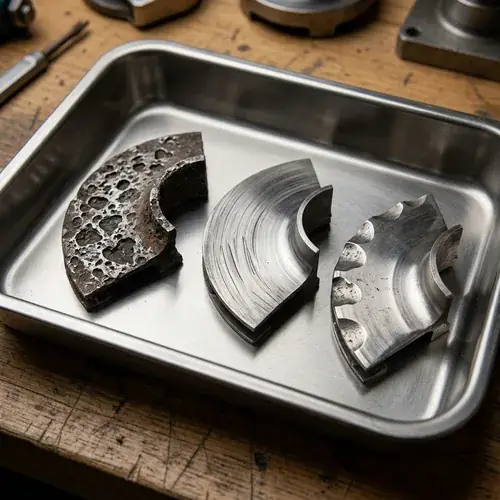
Most centrifugal pump material selection mistakes happen before the RFQ is ever sent. A buyer specifies "stainless steel," thinks the problem is solved, and six months later pulls an impeller that looks like it spent a decade at the bottom of the ocean. The real question isn't "which metal is best." It's which material system—casing, impeller, shaft, wear rings, seal faces—survives your specific combination of chemistry, solids, temperature, and operating hours at a lifecycle cost your project can actually absorb.
This guide is built for engineers, EPC contractors, and industrial buyers who need to move past generic material charts and into component-level decisions. You'll learn how to map actual fluid conditions to wetted-part materials, recognize when corrosion and abrasion are working together (they usually are), and verify that what the supplier delivers matches what you specified. If you are preparing an RFQ or reviewing a supplier's technical proposal, this page gives you the evaluation framework you need.
The focus here is on practical decision boundaries: where common pump materials perform reliably, where they fail under real operating conditions, and what verification documents buyers should request before approving a specification or supplier proposal. The goal is to connect fluid conditions and operating realities to component-level material choices without drifting into unnecessary metallurgy theory.
Quick Answer: How to Choose Centrifugal Pump Materials
Centrifugal pump material selection starts with four data points most RFQs leave out: chloride concentration, solids particle size distribution, operating temperature, and pH range. If you only have "water" or "chemical" as your fluid description, stop and collect real numbers first.
Once you have those numbers, the decision logic works like this:
- No solids, pH 6-8, chlorides under 100 ppm, temperature under 80°C: standard cast iron or ductile iron casings with a 304 stainless steel shaft and impeller are usually sufficient. This covers many clean water, HVAC, and low-risk transfer applications.
- Chlorides over 200-300 ppm at ambient temperature, or seawater: 316 stainless steel at a minimum, and duplex stainless often becomes the safer choice if temperature exceeds 40°C or the pump experiences intermittent dry-running. Standard 304 risks pitting, sometimes in a matter of months.
- Acids, pH under 4: no single answer. Full chemical compatibility verification is essential. 316L, duplex, high-silicon cast iron, or non-metallic linings may be candidates depending on the specific acid, concentration, and temperature. A compatibility chart gives a starting point; supplier experience and test data should drive the final decision.
- Abrasive solids—slurry, sand, mining tailings: material hardness often matters more than corrosion resistance. High-chrome white iron, natural rubber linings, or polyurethane linings can handle wear far better than any standard stainless steel. Plan for impeller and liner replacements on a maintenance schedule, not when they fail.
- High temperature—over 120°C: elastomer linings generally drop off the table. Ductile iron, cast steel, 316 stainless, or duplex become the primary options. Verify the pressure-temperature rating of the casing material with the supplier.
The single most common procurement error is selecting the casing material based on corrosion resistance and forgetting that the mechanical seal faces and elastomers need separate compatibility checks. A 316 stainless pump with EPDM O-rings can leak in hydrocarbon service even if the metal is fine.
Scope of This Guide
This reference covers material selection for centrifugal pump wetted components: casing, impeller, shaft/shaft sleeve, wear rings, mechanical seal faces, and elastomers. It assumes you are an industrial buyer, specification engineer, or maintenance manager evaluating pumps for process, utility, wastewater, mining, or chemical transfer duty.
What we will cover: corrosion mechanisms, abrasion mechanisms, erosion-corrosion interaction, fluid property thresholds, component-level material logic, slurry material systems, seal compatibility, lifecycle cost tradeoffs, supplier verification methods, and RFQ data requirements.
What we will not cover: positive displacement pump materials (gear, diaphragm, piston), deep metallurgy theory, full slurry system hydraulics, hazardous-area certification selection, or motor/bearing material decisions beyond shaft sleeve and seal chamber interfaces.
If you already understand that cast iron and stainless steel are different but need the next level of detail—what actually happens when a 316 impeller meets 10% solids at 40°C, or when someone chooses a cheap casing and pays for it five times in seal replacements—this page is written for you.
Why Centrifugal Pump Material Selection Fails in Real Industrial Service
Pumps rarely fail from a single cause. What the maintenance report calls "corrosion" is often corrosion accelerated by abrasion. What the supplier calls "normal wear" might be erosion-corrosion from a velocity that was fine in clean water but destructive with 2% sand. If you do not identify the dominant wear mechanism, you will choose a material that solves the wrong problem.
Corrosion vs Abrasion vs Erosion-Corrosion
Buyers who treat these as three separate categories miss the point. In real installations, the boundaries blur.
| Mechanism | What causes it | Typical symptoms | Most affected pump parts | Material property that counters it |
|---|---|---|---|---|
| Corrosion | Electrochemical reaction between fluid and metal | Uniform wall thinning, pitting, crevice attack at gaskets or O-ring grooves | Casing, impeller, shaft, seal chamber | Corrosion resistance—high chromium, nickel, molybdenum content |
| Abrasion | Hard solid particles sliding or impacting against surfaces | Grooving, smooth wear patterns, thinning of impeller vanes and volute cutwater | Impeller, casing volute, wear rings, liners | Hardness—high-chrome iron, rubber, polyurethane |
| Erosion-corrosion | Fluid velocity strips away protective oxide layers, exposing fresh metal to chemical attack | Localized deep attack in high-velocity zones, especially at impeller exits and volute tongue | Same as abrasion, but damage accelerates rapidly once passive film is gone | Requires combined hardness + corrosion resistance, or reduced operating velocity |
For a practical example: a wastewater pump handling screened effluent with grit carryover. The fluid is near-neutral pH, so a buyer might think cast iron is fine. But grit particles hitting the volute cutwater at pump discharge velocity strip the thin oxidation layer from the iron. Fresh iron is exposed, oxidized, and stripped again. This is erosion-corrosion, and it can significantly shorten component life compared to clean-water service. The solution is not necessarily a more expensive metal—it might be a replaceable wear plate in the volute and a hard-facing on the impeller wear ring area.
Buyers should not guess the mechanism. If a failed pump is available, photograph the damage before cleaning. Show it to the pump supplier—not just the purchasing contact, but their application engineer. The wear pattern often tells you what the fluid analysis missed.
How to Select Pump Materials by Fluid Condition
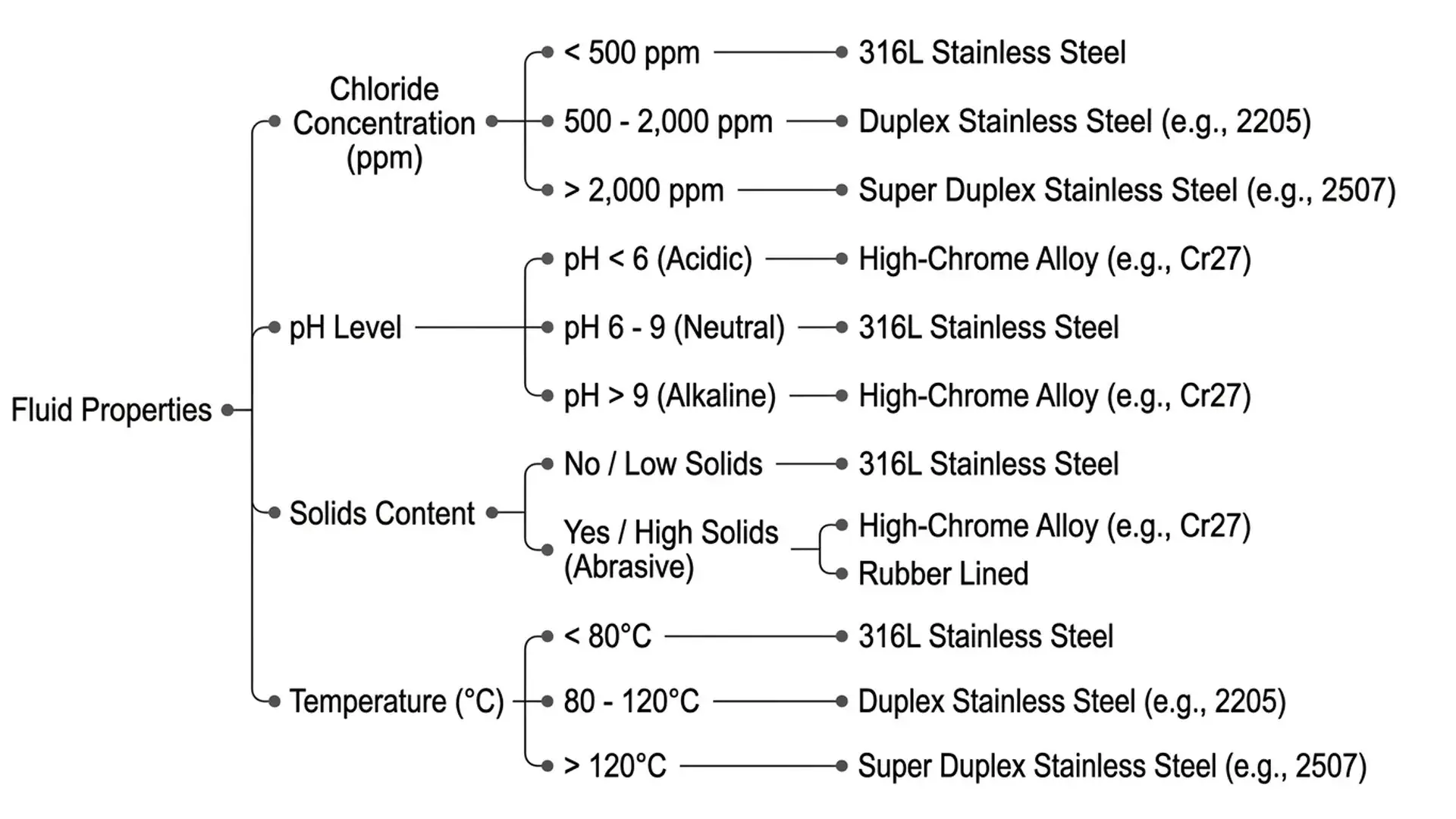
Fluid properties create the selection envelope. The more you know, the narrower and safer your material choice becomes. The less you know, the more you are gambling.
Before any centrifugal pump material selection decision, you need at minimum:
- Full liquid chemical composition (not just "acid"—which acid, what concentration)
- pH range during normal operation, startup, shutdown, and cleaning cycles
- Chloride concentration (ppm or mg/L) — this single number decides whether 304, 316, or duplex stainless is even an option
- Solids content as % by weight or volume
- Solids particle size distribution (PSD) — are particles fine silt (<50 µm), sand (0.1–2 mm), or gravel (>2 mm)?
- Operating temperature, plus any temperature excursions during process upsets
- Flow velocity at the impeller eye and volute discharge
- Presence of dissolved gases, especially H₂S or CO₂ (acidifies the fluid)
- Cleaning-in-place (CIP) chemicals if applicable—caustic or acid flushes can be more aggressive than the process fluid itself
If your supplier quotes a pump without asking for most of these, they are not doing material selection. They are selling you whatever is on the shelf.
If any of the fluid data is incomplete, it is safer to delay the RFQ than to guess. A common practice among experienced buyers is to send the actual fluid analysis report directly to two or three pump manufacturers and ask them to propose materials and explain their reasoning in the quotation. This puts the engineering burden on the supplier but gives you comparable technical responses to evaluate.
Clean Water and Mild Chemical Service
Clean water—municipal drinking water, cooling tower makeup, HVAC closed loops—is the easiest case. Cast iron casing, bronze or 304 stainless impeller, 304 or 420 stainless shaft, standard carbon/ceramic mechanical seal with EPDM or NBR elastomers. Ductile iron is preferred over grey cast iron if the pump may experience water hammer or pressure surges, because it has better impact resistance.
But "clean water" is a sloppy description. Ask for a water analysis anyway. Some groundwater sources may contain enough chloride to make 304 stainless internals risky. Some cooling tower water cycles up to chloride concentrations that will attack standard stainless after a few concentration cycles. If the chloride number is unknown, the buyer is gambling, and I've seen 304 impellers suffer severe pitting in less than two years in what the operator thought was just cooling water.
Mild chemicals—dilute acids or bases at near-ambient temperature—often work with 316L stainless. But the concentration threshold matters. Sulfuric acid at 5% concentration and 25°C may be manageable with 316L. At 80°C and 20% concentration, 316L would likely fail. This is where you need the chemical compatibility chart from the pump supplier, not generic internet guidance. Insist on it.
Chloride and Seawater Conditions
This is where most stainless steel pump selections go wrong. The common buyer assumption is "stainless = corrosion-resistant," and the common sales shortcut is "316 is marine grade." Neither is fully true in a pump.
- 304 stainless steel: generally limited to chloride levels under 100-200 ppm at ambient temperature, and even lower at elevated temperatures. Pitting and crevice corrosion become likely above these thresholds.
- 316 stainless steel: extends the chloride tolerance to roughly 400-500 ppm at ambient temperature, maybe higher if the fluid is constantly moving and deposits cannot form. In stagnant conditions or under gaskets and O-rings, the crevice corrosion risk rises sharply.
- Seawater (typically 19,000-23,000 ppm chlorides): 316 stainless is marginal at best. It might survive in a continuously running pump with no stagnant periods. It will likely pit at the seal chamber, O-ring grooves, and any dead zones. Many seawater pump specifications now require duplex stainless steel (UNS S31803/S32205) or super duplex (UNS S32750) as the minimum wetted material, especially for pumps that are not running 24/7.
- Duplex stainless steel: with roughly 22-25% chromium and 4-7% nickel plus molybdenum, duplex provides significantly better pitting resistance (higher PREN—Pitting Resistance Equivalent Number) than 316. It also has roughly double the yield strength of standard austenitic stainless steels, which can allow thinner casing walls or higher pressure ratings in some designs. The premium over 316 varies by supplier but can range from 40% to 80% extra on cast components depending on the supplier and design. Whether the premium is worth it depends on downtime risk, which is almost always higher for seawater than the cost difference.
A buyer should ask: does the pump stop at night, on weekends, or during season changes? If yes, crevice corrosion risk goes up, and the material choice should shift toward higher PREN grades. If the supplier says "316 is fine for seawater," ask them to warrant it for crevice corrosion resistance and see how the conversation changes. A related topic that helps here is our full cast iron vs stainless steel pump comparison, which goes deeper into the cost and service life tradeoffs buyers face when upgrading from standard iron to stainless.
Slurry and Abrasive Solids Service
When solids are present, centrifugal pump material selection flips its priority: hardness and wear resistance become more important than corrosion resistance. A chemically resistant stainless impeller that erodes in a few thousand hours can be a worse choice than a high-chrome iron impeller that shows negligible wear over a much longer period, even if the iron would corrode slightly in clean fluid.
Key material groups for slurry:
- High-chrome white iron (ASTM A532 Class III): typically 25-28% chromium, hardness in the 550-650 HB (Brinell) range. This is the standard material for slurry pump impellers, casings, and wear plates in mining, mineral processing, and dredging. It resists sliding abrasion very well. It has limited corrosion resistance—acceptable in neutral to mildly alkaline slurries, poor in acidic conditions. Brittle; cannot be welded easily and can crack under heavy impact.
- Natural rubber linings: excellent for fine-particle (<3-5 mm) slurries at moderate temperature (<70°C typically). Rubber absorbs particle impact energy and rebounds, reducing wear compared to hard metal in some fine-solids applications. Not suitable for sharp, angular particles that cut the rubber, or for hydrocarbons/swelling agents, or for high-temperature service.
- Polyurethane linings: harder than rubber, better cut resistance, works at somewhat higher temperatures. Common in vertical sump pump liners and smaller slurry pump wear parts.
- Ceramic-lined or hard-faced components: niche but important for extreme abrasion where metal and elastomer linings both wear too fast. Ceramic tiles bonded to casing internals; impeller hard-facing with tungsten carbide or similar. Expensive and requires careful handling to avoid tile detachment or thermal shock.
The buyer should also consider impeller type: an open impeller with a large passage reduces clogging risk in large-particle slurries but typically trades away some efficiency. A closed impeller with wear rings maintains higher efficiency initially but the efficiency drops as the wear rings and impeller clearances open up. This is a lifecycle tradeoff—in abrasive service, the "efficient" closed impeller may degrade faster than an open impeller simply because the wear ring clearances increase with operation. For deeper guidance on solids handling and related material wear risks, see our slurry pump material and abrasion selection guide.
High-Temperature Chemical Applications
Above about 120°C, several material options become constrained:
- Elastomer linings and seals (EPDM, NBR, natural rubber, polyurethane) are generally out—they soften, swell, or thermally degrade.
- Standard cast iron tends to lose strength above 200-230°C and can suffer graphitic corrosion in certain chemical environments at elevated temperature.
- Ductile iron and cast carbon steel extend the temperature range somewhat further.
- 316/316L stainless and duplex stainless are the typical go-to materials for chemical pumps in the 120-300°C range, provided chemical compatibility is confirmed at the operating temperature. A material that is fine at 25°C may corrode much faster at 200°C.
- Mechanical seals must switch to high-temperature face combinations (carbon vs. silicon carbide, or silicon carbide vs. silicon carbide) and Viton or FFKM (perfluoroelastomer) secondary seals. Standard NBR or EPDM O-rings will fail rapidly.
For any pump running above 200°C, the buyer should also account for thermal expansion: casing mounting, pipe supports, and alignment can all shift as the pump heats up. The material selection itself is only part of the design—but it's the foundation.
Material Comparison for Pump Casings, Impellers, Shafts, and Seals
One of the most useful shifts a buyer can make is to stop asking "what material is the pump?" and start asking "what material is the casing, impeller, shaft, and seal?" Pumps are frequently built with mixed materials—a ductile iron casing, a 316 stainless impeller, a duplex shaft, and a silicon carbide mechanical seal. This is normal and often the most cost-effective configuration. Upgrading every component to the most corrosion-resistant option drives cost without proportional benefit if the less noble materials can be isolated from the aggressive fluid.
Cast Iron vs Stainless Steel vs Duplex Stainless
| Material | Typical applications | Chloride limit (ambient temp) | pH range limit | Abrasion resistance | Relative cost (casing + impeller) | Best for |
|---|---|---|---|---|---|---|
| Grey cast iron (ASTM A48) | Clean water, HVAC, general transfer | <100 ppm | Generally 6-8 | Low | Base reference | Low-cost water service without corrosion risk |
| Ductile iron (ASTM A536) | Water, wastewater, higher-pressure systems | <100 ppm | Generally 6-8 | Low-moderate | Typically +15-30% over grey iron | Where impact resistance or pressure containment matters more than corrosion |
| 304 SS (UNS S30400) | Food, potable water, mild chemicals | <200 ppm (ambient) | ~4-10 (depends on specific chemical) | Low | Typically +50-100% over cast iron | Clean fluids where iron staining or contamination is unacceptable |
| 316 SS (UNS S31600) | Chemical, marine atmosphere, wastewater with moderate Cl⁻ | <400-500 ppm (ambient) | ~3-10 | Low-moderate | Typically +70-130% over cast iron | Mildly corrosive fluids; not for seawater stagnation |
| Duplex SS (UNS S32205) | Seawater, high-chloride process, offshore | >1,000 ppm typical | Wide, depends on grade | Moderate | Typically +150-250% over cast iron | High-chloride, high-strength, crevice-corrosion-prone service |
This table shows why "stainless steel pump" is not a specification—it's a family of materials with vastly different chloride tolerance and cost.
High Chrome Alloys for Abrasive Slurry
For slurry pumps, the casing and impeller material selection moves away from stainless steels entirely in many cases. High-chrome white iron (often designated as A05 or similar in supplier catalogs, referencing ASTM A532) provides 550-650 HB hardness, which directly translates to longer wear life in sliding-abrasion conditions. The buyer should ask for the actual hardness specification (Brinell or Rockwell C), not just the material grade name, and should request hardness test results as part of the inspection documentation.
Note that high-chrome iron is not weld-reparable in the field by standard methods. If the maintenance team expects to weld-repair worn casings, this material may cause problems. Ductile iron or cast steel with replaceable wear liners is a more maintenance-friendly alternative in some plants, even if the initial wear life is shorter.
Rubber, Polyurethane, and Replaceable Liners
Replaceable liners are not a "cheap" option—they are a lifecycle strategy. A pump with a cast iron or ductile iron casing shell and an internal rubber or polyurethane liner gives the buyer two advantages:
- The wetted surface is optimized for the wear mechanism (rubber for fine-particle abrasion, polyurethane for coarser or sharper particles).
- When the liner wears out, replacement is a planned maintenance event at a predictable cost, not a surprise casing replacement. The casing shell itself rarely needs replacement.
Buyers should verify with the supplier what thickness of liner is supplied, what the expected wear life range is under stated solids conditions, and whether the liner is bonded or mechanically retained. Mechanically retained liners are easier and cheaper to replace but may have small gaps where solids can accumulate; bonded liners provide continuous protection but require factory or specialized workshop replacement.
Mechanical Seal Face and Elastomer Compatibility
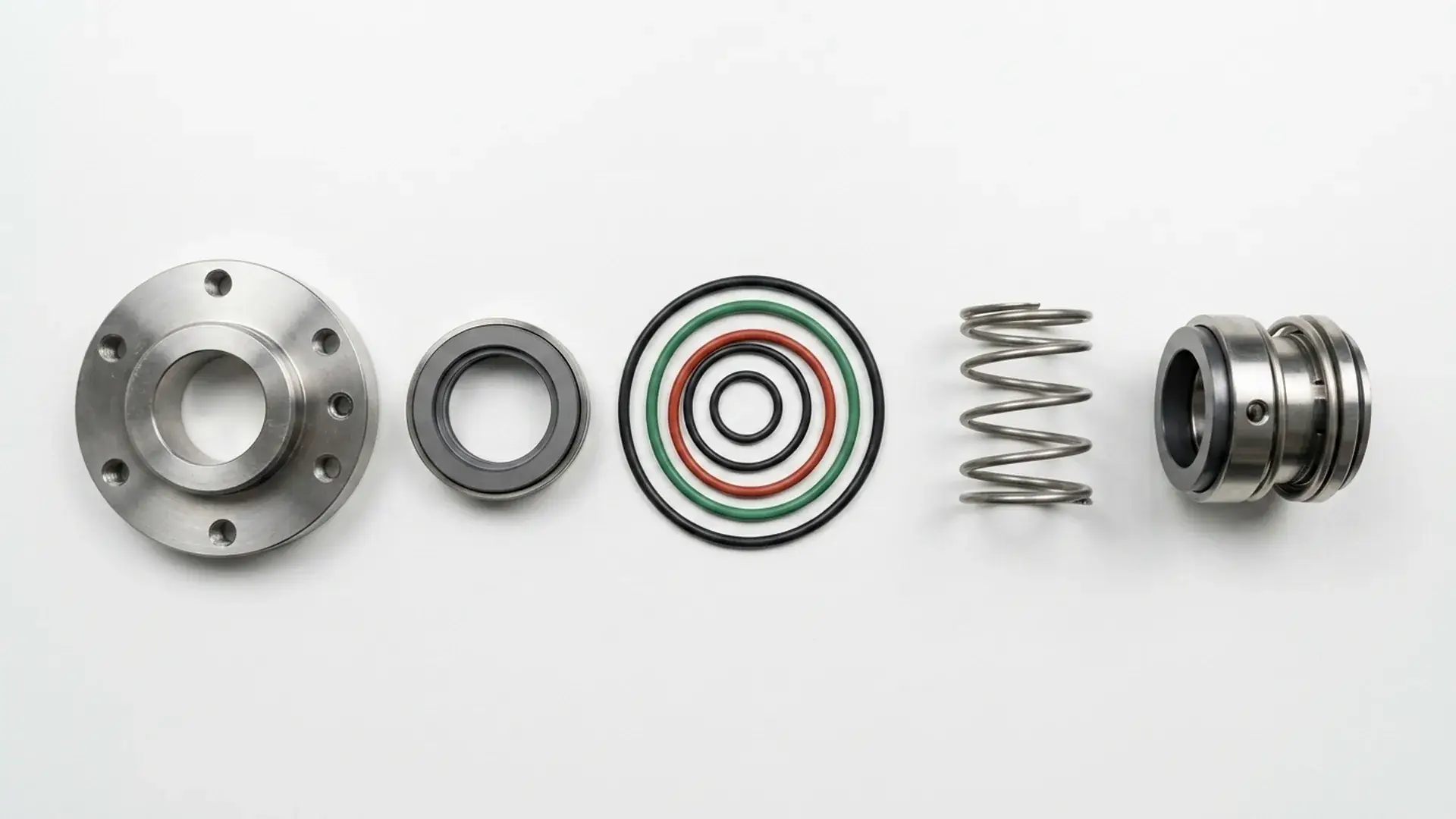
A 316 stainless pump with incompatible seal materials is a leaking pump. The seal faces and elastomers must be selected for the specific fluid, not chosen from a generic "water" or "chemical" label.
Common seal face material pairs and their general suitability:
| Rotating face | Stationary face | Typical service | Watch out for |
|---|---|---|---|
| Carbon | Ceramic (Al₂O₃) | Clean water, general duty | Abrasives destroy ceramic; acids attack carbon binder |
| Carbon | Silicon carbide | General chemical, higher reliability | Standard industrial pair; wide compatibility |
| Silicon carbide | Silicon carbide | Abrasive slurries, high temperature, chemicals | Brittle; avoid dry running and thermal shock |
| Tungsten carbide | Tungsten carbide | Very abrasive, high pressure | Expensive; check for cobalt binder in corrosive service |
Elastomer selection for O-rings, gaskets, and secondary seals:
| Elastomer | Temperature range (approx.) | Good with | Avoid with |
|---|---|---|---|
| NBR (Nitrile) | -30°C to +100°C | Water, oils, general industrial | Strong acids, ketones, ozone |
| EPDM | -40°C to +130°C | Water, steam, mild chemicals | Hydrocarbons, oils, solvents |
| Viton (FKM) | -20°C to +200°C | Hydrocarbons, oils, many chemicals | Hot water/steam, some amines, low-molecular-weight esters |
| FFKM (perfluoroelastomer) | -20°C to +300°C | Universal chemical resistance | Extremely high cost; verify if FKM is sufficient first |
A failure on seal elastomers is often misdiagnosed as a mechanical failure. If the O-ring swells, the seal faces lose flatness, and the leak path opens. A buyer should always specify the pumped fluid when requesting a seal quotation, including any trace chemicals or cleaning agents that might contact the seal during CIP or system flushing. For more on the tradeoffs buyers face between different sealing approaches and the material implications, see our mechanical seal material selection guide.
Material Selection Tradeoffs Buyers Often Miss
Even with the right material on paper, real operating conditions create hidden failure paths.
Velocity kills corrosion resistance. A material that is fully resistant to a chemical in a static immersion test can fail in a pump because the fluid velocity strips protective oxide layers faster than they can reform. This is the erosion-corrosion mechanism described earlier. In many industrial services, velocity effects start becoming a screening concern once casing velocities move into the several-meters-per-second range and impeller exit velocities climb higher, but the actual acceptable limits depend heavily on alloy grade, solids loading, particle shape, pump geometry, temperature, and fluid chemistry. These values should be treated as preliminary evaluation references only; the final allowable velocity envelope requires supplier or project-specific validation for the exact service conditions.
Galvanic corrosion happens when you mix noble and less-noble metals in the same conductive fluid. A stainless steel impeller on a cast iron shaft in brackish water creates a galvanic cell where the iron corrodes preferentially. The solution can be material selection (matching or isolating dissimilar metals) or adding a sacrificial component designed to corrode first. This is especially common in pumps where stainless wear rings run against cast iron casing rings—the smaller iron surface corrodes aggressively.
Dry running can destroy many mechanical seals and some pump materials very quickly, sometimes within seconds. If the process has any risk of the pump running without liquid—suction tank running empty, operator error, valve sequencing fault—tell the supplier. Certain seal face combinations (silicon carbide vs. silicon carbide with a dry-running secondary containment design) survive brief dry running better than others. Some lined pumps can handle short dry-run periods; others delaminate the liner instantly.
Temperature cycling is harder on materials than constant high temperature. A pump that cycles from ambient to 180°C and back daily sees thermal expansion stresses that a continuously hot pump does not. Linings can debond, gaskets can relax and leak, and castings with internal stresses can crack. If the pump is in cyclic service, verify that the supplier's material recommendation accounts for the thermal cycle range, not just the maximum temperature.
Lifecycle Cost vs Initial Purchase Price
One of the most expensive procurement mistakes is choosing the lowest-cost material that meets the minimum specification. In many continuously operated industrial systems, the purchase price of a centrifugal pump represents a relatively small share of total lifecycle cost compared with energy, maintenance, and downtime. The exact balance varies significantly by pump size, operating hours, efficiency, energy pricing, process criticality, and maintenance environment. Large process pumps running continuously may be dominated by energy cost over time, while smaller intermittent-duty pumps can have a much higher share of cost tied to the initial purchase and spare parts.
Why does material selection matter to lifecycle cost?
- Efficiency degradation: in abrasive service, internal clearances open up as wear rings and impeller vanes erode. A pump that starts at 82% efficiency may drop to 70% after some thousands of operating hours if the materials are not wear-resistant enough. That drop in efficiency, on a moderate-sized motor running a typical industrial schedule, can add a significant annual energy penalty—often far more than the material upgrade cost.
- Downtime: a spare pump sitting on the shelf costs less than four hours of unplanned process downtime in most chemical plants. If upgrading from cast iron to duplex stainless extends the mean time between repairs from 18 months to 5 years, the material premium can pay back on the first avoided outage. But you need the site-specific downtime cost number to do that math—there is no universal answer.
- Maintenance frequency: some materials require more frequent seal replacements, packing adjustments, or wear ring changes than others. A pump in a remote mining site with limited maintenance crew availability may justify a higher upfront material spec to reduce the number of site visits per year.
While the exact calculations are project-specific, the buyer's mindset should shift from "what's the cheapest pump that meets the spec" to "which material system gives us the lowest total cost over the planned operating period." We have a more detailed walkthrough of this calculation approach in our lowering lifecycle pump cost guide, which covers energy, maintenance, and downtime tradeoffs that tie directly back to material selection decisions.
| Cost factor | How material choice influences it | Example: clean-water pump | Example: mining slurry pump |
|---|---|---|---|
| Purchase price | Base casing/impeller material, seal grade | Cast iron: $; 316 SS: $$ | High-chrome iron: $$; rubber-lined: $$ |
| Energy cost | Efficiency and efficiency retention over time | Small difference between materials | Large difference; worn clearances increase energy cost significantly |
| Maintenance labor | Frequency of seal, bearing, wear ring replacement | Low for clean water with any material | High for abrasive service; lining replacement scheduling matters |
| Spare parts | Cost and lead time of wear components | Standard parts, short lead time | Special alloys may have longer lead times; plan inventory |
| Downtime | Probability and duration of unplanned outages | Low for water service | High if wrong material chosen; can dominate TCO |
Supplier Verification and Material Quality Control
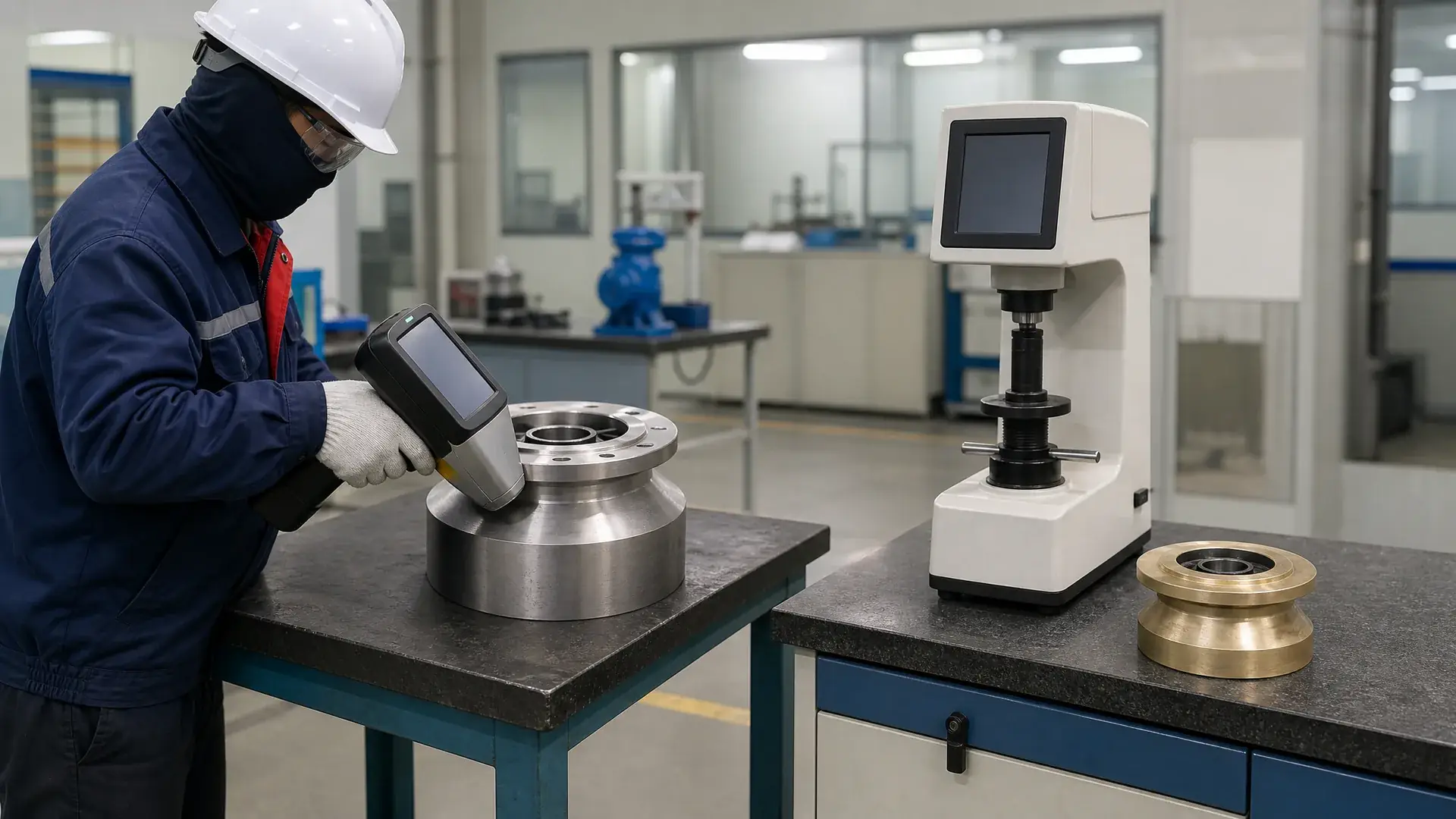
Specifying a material is one thing. Getting what you specified is another. This is where many B2B pump buying relationships break down, and it is completely avoidable with the right verification steps.
Material Test Certificates (MTCs) are wise to require for all pressure-containing and wetted components. A 3.1 certificate (per EN 10204) provides test results from the material manufacturer for the specific heat or batch. A 3.2 certificate adds independent third-party verification. The buyer should decide which level fits the project risk, but opting for no MTC at all is a gamble in any corrosive or high-pressure service.
Positive Material Identification (PMI) uses handheld XRF or OES analyzers to confirm alloy composition on the finished component. This can be done at the supplier's factory before shipment or at receiving inspection. For critical alloys—duplex stainless, high-nickel alloys, or any material where a mix-up could cause a corrosion failure—PMI is cheap insurance. A single wrong-impeller-material incident can cost more than a decade of PMI testing on every pump.
Hardness testing matters specifically for wear-resistant materials. High-chrome white iron should be checked to confirm it meets the specified Brinell or Rockwell hardness. An under-hardened impeller wears faster than expected; the buyer won't know until the pump is opened for inspection months later. Request hardness test results from the supplier, with test location and method recorded.
Hydrostatic pressure testing (hydro test) verifies casing integrity and confirms the casting has no through-wall defects. The test pressure is typically 1.5x the maximum allowable working pressure (MAWP) and held for a specified duration. This should be standard for every pump shipped; if a supplier offers to skip the hydro test to save time, find a different supplier.
Hydraulic performance testing to ISO 9906 confirms the pump meets its published flow, head, and efficiency curve. While not a material test directly, an efficiency test that shows the pump underperforming can indicate internal clearance or surface finish problems that relate back to material and manufacturing quality.
Buyers should decide during the RFQ stage what tests they want to witness, what tests they want documented but not witnessed, and what tests they trust the supplier to perform without documentation. For a seawater pump with duplex stainless specification, witnessed PMI and hydro testing may be non-negotiable. For a clean-water cast iron pump, standard MTCs plus a factory hydro test report may be sufficient.
RFQ Checklist for Centrifugal Pump Material Selection
This checklist is the minimum data packet that gives a competent pump supplier enough information to propose appropriate materials. Send this with your RFQ, not after the quotation arrives.
Fluid Data
| Data point | Your input |
|---|---|
| Liquid name / description | |
| Chemical composition (full analysis if available) | |
| pH — normal operating range | |
| pH — during cleaning / CIP / process upset | |
| Chloride concentration (ppm or mg/L) | |
| Other aggressive ions (fluoride, sulfide, sulfate if known) | |
| Solids content (% by weight or volume) | |
| Solids particle size distribution (PSD) — d50 and maximum particle size | |
| Solids description — sharp/angular or rounded, hardness if known | |
| Dissolved gases (O₂, CO₂, H₂S) | |
| Operating temperature — normal | |
| Operating temperature — maximum during upset | |
| Ambient temperature range (if pump is outdoors) |
Operating Conditions
| Data point | Your input |
|---|---|
| Flow rate required (m³/h or GPM) | |
| Total dynamic head (meters or feet) | |
| NPSH available (meters or feet) — if known | |
| Continuous or intermittent operation? Hours per day / per year | |
| Does the pump stop for extended periods (>12 hours) while filled? | |
| Risk of dry running? (yes / no / possible) | |
| Cleaning chemicals used for flushing or CIP |
Material Requirements / Supplier to Confirm
| Data point | Supplier response |
|---|---|
| Casing material recommendation and grade | |
| Impeller material recommendation and grade | |
| Shaft / shaft sleeve material recommendation | |
| Wear ring material recommendation | |
| Mechanical seal type and face/elastomer materials, with compatibility statement | |
| Gasket/O-ring materials for casing and seal chamber | |
| Material test certificates provided (EN 10204 type 3.1 or 3.2) | |
| PMI testing offered (yes / no / optional) | |
| Hardness testing offered for wear components (yes / no) | |
| Liner material and thickness, if applicable |
This RFQ structure shifts the conversation from "quote me a pump" to "tell me how you would solve this specific material challenge." The suppliers who give detailed responses with material justifications are the ones worth considering. Those who quote a standard pump with no questions asked are not doing material selection.
FAQ
These are the questions industrial buyers most often ask after reading the material selection framework above. Each answer gives you a decision boundary, not a universal rule.
Is 316 stainless steel suitable for seawater pumps?
316 stainless generally falls short for seawater pumps, especially if any stagnant periods occur. Seawater contains roughly 19,000-23,000 ppm chlorides, far above 316's typical pitting resistance threshold. A continuously running seawater pump may survive for a time, but any shutdown, low-flow condition, or dead zone behind an O-ring creates crevice conditions where 316 can pit. For seawater service, duplex stainless (UNS S31803/S32205) or super duplex (UNS S32750) is now the typical minimum for reliable long-term operation. If the project specification says "316 stainless steel seawater pump," flag it for review before procurement.
What materials are best for abrasive slurry pumps?
High-chrome white iron (ASTM A532 Class III, typically 25-28% Cr, hardness 550-650 HB) is often the workhorse for impellers, casings, and wear plates in mining and mineral slurries. Natural rubber linings perform well with fine-particle slurries under 3-5 mm at temperatures below 70°C—rubber absorbs impact and rebounds rather than being cut. Polyurethane linings suit slightly larger or sharper particles at moderate temperatures. The "best" choice depends on solids PSD, particle shape, slurry pH, and temperature. A slurry that is fine, round-particle, and neutral pH runs well in rubber. A coarse, angular, low-pH slurry typically requires hard metal or possibly ceramic-lined components.
How do buyers choose seal materials for chemicals?
Seal face and elastomer materials must be selected based on the specific chemical, concentration, and temperature—not on a generic label like "acid" or "solvent." The buyer should send the full fluid analysis to the seal manufacturer or pump supplier and request a written material compatibility statement. Carbon vs. silicon carbide faces work for most general chemical service. EPDM elastomers handle water and mild chemicals but fail in hydrocarbons. Viton (FKM) handles hydrocarbons and many chemicals but degrades in hot water and steam. FFKM provides near-universal chemical resistance at a significantly higher cost and is typically reserved for the most aggressive applications or where a seal failure carries unacceptable safety or environmental risk.
Can coatings replace stainless steel?
Coatings can extend the life of a cast iron pump in mildly corrosive or abrasive service, but they rarely match the reliability of solid stainless or duplex in aggressive conditions. A pinhole in a coating on cast iron in corrosive service can become the initiation point for under-film corrosion and rapid failure. Coatings work best as a cost-reduction strategy in moderate service, not as a replacement for metallurgical upgrades in severe service. If a coating is proposed, ask the supplier for documented coating thickness measurements on your specific pump, not just a general process description.
What standards apply to industrial centrifugal pump materials?
Several standards reference material requirements:
- API 610 (centrifugal pumps for petroleum, petrochemical, and natural gas industries) specifies material classes and requires specific material grades for various services, including NACE MR0175 compliance for sour service.
- ISO 5199 (technical specification for centrifugal pumps, Class II) references material requirements and testing standards for general industrial applications.
- ANSI/HI standards from the Hydraulic Institute provide guidance on material selection and allowable corrosion for various pump types and services.
- NACE MR0175/ISO 15156 applies when pumps handle fluids containing H₂S (sour service) and places strict limits on material hardness and alloy composition to prevent sulfide stress cracking.
Buyers should reference the appropriate standard in the RFQ. If the service conditions are not covered by a standard material class—which is common for mixed-duty corrosion-abrasion applications—the supplier must provide an engineering justification for the proposed materials.
When should duplex stainless steel be considered?
Duplex stainless should be considered when chlorides exceed roughly 400-500 ppm at ambient temperature, when the pump sees intermittent operation (crevice corrosion risk), when seawater or brackish water is the pumped fluid, when high strength is needed for pressure containment, or when erosion-corrosion is a concern due to combined moderate abrasion and corrosion. The material premium over 316 is often 40-80% on major cast components, so the decision should be driven by a lifecycle cost comparison, not by a blanket "upgrade everything" approach. For a pump that runs continuously in clean 300-ppm-chloride water, 316L may be the correct economic choice. For a pump that stops and starts daily in 1,000-ppm-chloride water, duplex is the safer specification.
Official Sources and Compliance References
This guide references the following standards and frameworks. Buyers should confirm the latest edition applicable to their project and region.
- API 610, 12th Edition: Centrifugal Pumps for Petroleum, Petrochemical, and Natural Gas Industries. Provides material class designations and references to NACE and ASTM material standards.
- ISO 5199:2002: Technical specifications for centrifugal pumps — Class II. Covers material requirements, pressure-temperature ratings, and testing for general industrial pumps.
- ISO 2858:1975: End-suction centrifugal pumps (rating 16 bar) — Designation, nominal duty point and dimensions. Relevant for dimensional standardization and material interchangeability.
- ISO 9906:2012: Rotodynamic pumps — Hydraulic performance acceptance tests. Referenced for performance curve verification, which indirectly confirms material and manufacturing quality.
- NACE MR0175 / ISO 15156: Petroleum and natural gas industries — Materials for use in H₂S-containing environments. Applies when the pumped fluid contains hydrogen sulfide and requires specific material hardness and alloy composition restrictions.
- ASTM A532 / A532M: Standard specification for abrasion-resistant cast irons. Covers the high-chrome white iron grades commonly used in slurry pump components.
For any pump in API or NACE service, the supplier should provide materials specifically qualified to the standard. A general "equivalent material" statement is not sufficient for compliance documentation.
Conclusion
Centrifugal pump material selection is not about finding the "best" material. It is about finding the material system that survives your fluid's specific combination of chemistry, solids, temperature, and operating pattern at the lowest total lifecycle cost. That sometimes means a more expensive duplex stainless casing. It sometimes means a cast iron casing with a replaceable rubber liner. It sometimes means a high-chrome impeller that wears predictably rather than a stainless impeller that corrodes unpredictably.
Before placing an order, buyers should make sure the RFQ includes complete fluid data—at minimum chloride concentration, solids PSD, and operating temperature—because missing process information is where most material-selection failures begin. Suppliers should be asked to specify materials at the component level, including casing, impeller, shaft sleeve, seal faces, and elastomers, with written compatibility confirmation for the actual fluid and temperature range. For corrosive, abrasive, or high-consequence service, material test certificates and additional verification such as PMI, hardness testing, or witnessed hydro testing are usually justified. Quotations should also be evaluated against expected maintenance frequency, downtime exposure, and efficiency retention over the operating life of the pump rather than on purchase price alone. If the fluid data is incomplete, delaying the RFQ is generally less expensive than discovering after startup that the selected material system was wrong for the service.
A pump that runs reliably for five years on a slightly higher upfront material cost will typically be cheaper overall than a pump that fails in 18 months and takes a process line down with it. There is no universal material spec—but there is a universal rule: more fluid data means better material decisions, and better material decisions mean fewer expensive surprises.
Get A Quote

Get A Quote
0 Comments