
Diesel Engine Water Pump Buying Guide: How to Choose the Right Pump for Irrigation, Construction & Emergency Drainage
Diesel engine water pumps are widely used in applications where electricity is unavailable, unreliable, or impractical. These pumps play an essential role in agricultural irrigation systems, construction site drainage projects, mining operations, municipal flood control systems, and emergency water transfer scenarios.
Unlike electric pumps that rely on grid power, diesel pumps provide independent power supply and operational mobility, making them particularly suitable for remote areas, temporary projects, and emergency pumping operations.
A diesel pump system typically consists of a diesel engine, centrifugal pump, coupling system, fuel system, and base frame. The engine converts fuel energy into mechanical power, which drives the pump to transfer water through pipelines.
However, selecting the correct diesel water pump requires more than choosing a large pump or engine. Engineers and procurement managers must evaluate several key parameters, including:
-
Flow rate
-
Total Dynamic Head (TDH)
-
Pump size and type
-
Diesel engine power
-
Fuel consumption
-
Installation environment
Incorrect pump selection can lead to insufficient water delivery, unstable system pressure, excessive fuel consumption, and premature equipment failure.
This guide explains how diesel pump systems are evaluated in real engineering projects and provides a clear framework for selecting the most appropriate diesel engine water pump.
Diesel Pump Selection Framework
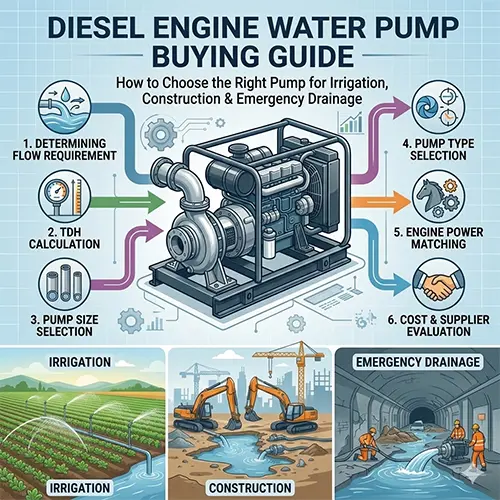
Pump selection should follow a structured engineering process. Instead of choosing pumps based only on price or pipe diameter, engineers first determine the system’s hydraulic requirements and then select the pump size, pump type, and engine power.
Typical diesel pump selection follows this logic:
Flow requirement
↓
TDH calculation
↓
Pump size selection
↓
Pump type selection
↓
Diesel engine power matching
↓
Cost and supplier evaluation
Following this process helps ensure the pump system operates efficiently and reliably.
What Is a Diesel Engine Water Pump
A diesel engine water pump is a pumping system powered by a diesel internal combustion engine rather than an electric motor. The diesel engine drives the pump through a coupling system or belt transmission, allowing the pump to operate independently of electrical infrastructure.
Main Components of a Diesel Pump System
A typical diesel pump system includes:
-
Diesel engine
-
Centrifugal pump
-
Shaft coupling
-
Fuel tank and fuel system
-
Cooling system
-
Control panel
-
Base frame
The diesel engine generates mechanical energy, while the pump converts that energy into hydraulic power to move water through pipelines.
Diesel pumps are often preferred in environments where electrical infrastructure is unavailable or unreliable.
Determine Pump System Requirements
Before selecting a diesel pump, engineers must determine the hydraulic parameters of the pumping system. These parameters define the pump performance requirements.
Flow Rate
Flow rate represents the volume of water that must be delivered within a specific time period.
Common units include:
-
m³/h
-
L/s
-
GPM
Typical application requirements:
| Application | Typical Flow |
| Agricultural irrigation | 100–500 m³/h |
| Construction drainage | 50–300 m³/h |
| Flood pumping | 500–5000 m³/h |
Selecting a pump with insufficient flow will prevent the system from delivering enough water.
Total Dynamic Head (TDH)
Total Dynamic Head represents the total pressure required to move water through a pumping system.
TDH Formula:
TDH = Static Head + Friction Loss + Pressure Head
Friction losses occur as water flows through pipelines and valves.
Pressure head represents the required outlet pressure.
If you are unfamiliar with TDH calculations, you can read our guide:
How to Calculate Total Dynamic Head in Pump Systems
This article explains how engineers determine the correct pump head in real pumping systems.
Pump Size Selection
Once flow rate and TDH are determined, the next step is selecting the appropriate pump size. Pump size is typically defined by the pump inlet and outlet diameter.
Pump Size Recommendation Table
| Flow | Head | Recommended Pump Size |
| 50 m³/h | 20 m | 3 inch pump |
| 150 mm³/h | 30 m | 6 inch pump |
| 300 m³/h | 20 m | 8 inch pump |
| 500 m³/h | 15 m | 10 inch pump |
| 1000 m³/h | 10 m | 12 inch pump |
This table provides a quick reference for selecting pump size based on flow and head requirements.
Diesel Water Pump Types
Different pump types are designed for different hydraulic conditions. Understanding these differences helps buyers select the most appropriate pump for their application.
Centrifugal Pumps
Centrifugal pumps are the most commonly used diesel pump type.
Typical applications include:
-
irrigation systems
-
water transfer
-
drainage
Advantages:
-
simple design
-
reliable operation
-
easy maintenance
Multistage Pumps
Multistage pumps are used when higher pressure or higher head is required.
These pumps contain multiple impellers arranged in series to increase pressure.
For detailed explanation see:
Multistage Pump Selection Guide
Mixed Flow Pumps
Mixed flow pumps are used for very high flow applications, such as flood control systems and large irrigation projects.
They provide higher flow rates but lower pressure compared with centrifugal pumps.
Matching Diesel Engine Power
Proper matching between diesel engine power and pump hydraulic requirements is critical for reliable operation.
Pump Power Calculation
Pump power depends on:
-
flow rate
-
head
-
pump efficiency
Formula:
Power = (Flow × Head × Density × Gravity) / Efficiency
This formula determines the minimum power required to drive the pump.
Engine Power Recommendation
Diesel engines should typically provide 10–20% additional power margin beyond the calculated pump power requirement.
This safety margin allows the system to operate reliably under variable load conditions.
Fuel Consumption and Operating Cost
Fuel consumption is one of the most important operating cost factors in diesel pumping systems.
Factors Affecting Fuel Consumption
-
engine load
-
pump efficiency
-
operating hours
-
engine design
Operating pumps close to their optimal efficiency point significantly reduces fuel consumption.
Real Application Examples
Real-world applications illustrate how diesel pumps are selected in different industries.
Irrigation Pumping System
Flow: 200 m³/h
Head: 20 m
Recommended pump:
6-inch centrifugal diesel pump
Construction Drainage
Flow: 120 m³/h
Head: 15 m
Recommended pump:
portable diesel pump
Flood Control Pumping
Flow: 1200 m³/h
Head: 10 m
Recommended pump:
trailer-mounted diesel pump
Diesel Pump Supplier Evaluation
Selecting a reliable pump manufacturer is as important as selecting the correct pump model.
| Evaluation Factor | Importance |
| Engine brand | reliability |
| Pump efficiency | energy savings |
| Casting quality | durability |
| Test reports | performance verification |
| Delivery capability | project timeline |
Common Buying Mistakes
Many diesel pump failures occur because of incorrect system design or pump selection rather than equipment defects.
Common mistakes include:
-
choosing pumps based only on price
-
ignoring TDH calculations
-
selecting oversized pumps
-
ignoring fuel efficiency
-
neglecting maintenance requirements
For more information about pump system problems, see:
Industrial Pump Failure Causes and Solutions
FAQ
Diesel pump buyers frequently ask questions related to pump sizing, operating cost, and maintenance.
What size diesel water pump do I need
Pump size depends on required flow rate and total dynamic head.
How long can diesel pumps run continuously
Industrial diesel pumps can run continuously for extended periods when properly maintained.
Are diesel pumps more expensive than electric pumps
Diesel pumps typically have higher operating fuel costs but offer greater flexibility.
What maintenance does a diesel pump require
Maintenance includes:
-
engine oil replacement
-
fuel filter changes
-
cooling system inspection
-
fuel system cleaning
Conclusion
Diesel engine water pumps are essential equipment for irrigation systems, construction drainage projects, and emergency water transfer operations. Their ability to operate independently of electrical infrastructure makes them indispensable in remote and temporary environments.
Selecting the correct diesel pump requires evaluating flow rate, total dynamic head, pump size, pump type, engine power, and operating cost factors. By following a structured pump selection process and choosing reliable suppliers, engineers and procurement professionals can ensure stable system performance and long-term operational efficiency.
Get A Quote

Get A Quote
0 Comments